Authentic Tteokbokki Recipe: Chewy Korean Spicy Rice Cakes
Master this authentic tteokbokki recipe at home. Learn how to make chewy Korean spicy rice cakes in a glossy, savory gochujang sauce with fish cakes and jammy eggs.
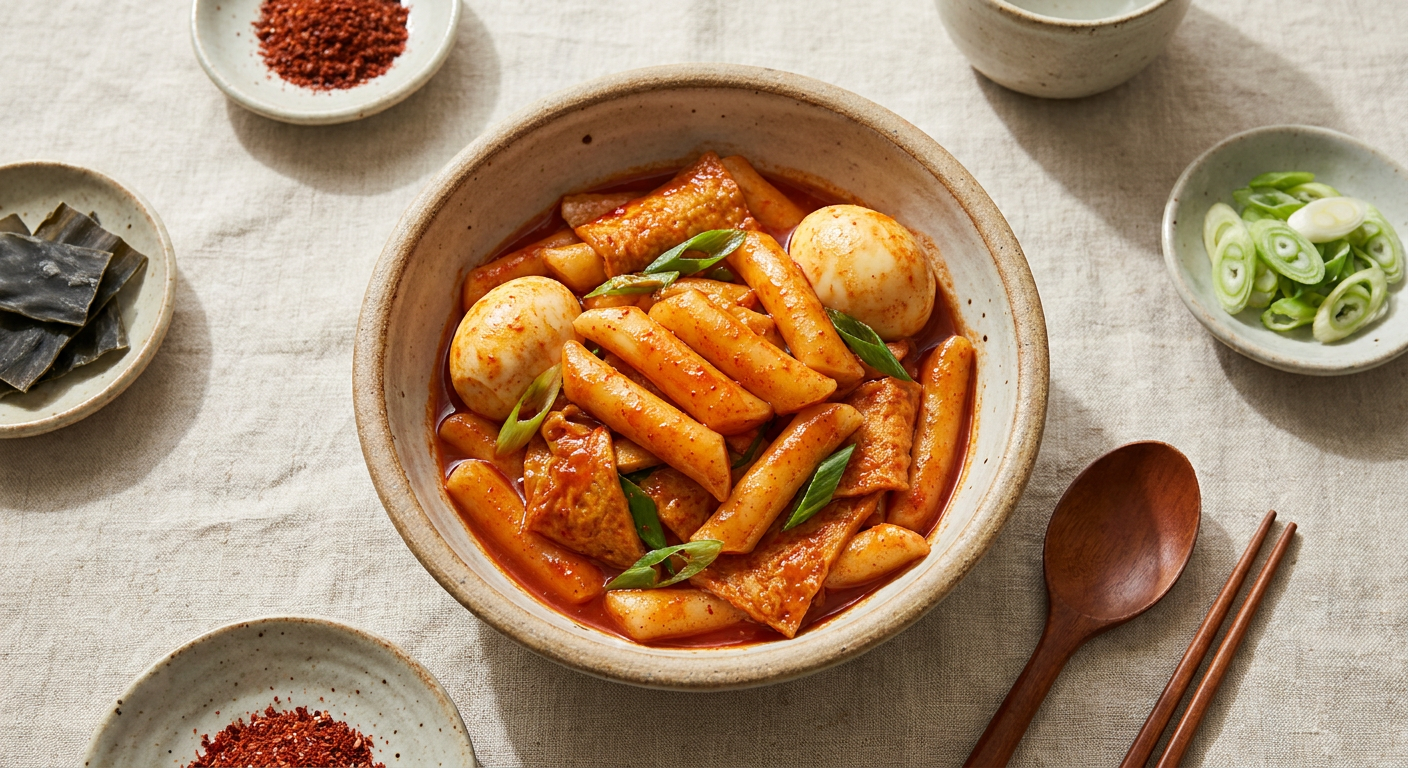

If you are looking for a reliable tteokbokki recipe that delivers that iconic street-food texture and heat, look no further. Tteokbokki is the ultimate Korean comfort food, featuring pillowy, cylinder-shaped rice cakes simmered in a vibrant, spicy-sweet sauce until it becomes thick and glossy enough to coat the back of a spoon.
Making Korean spicy rice cakes at home is surprisingly simple once you have the right pantry staples. The secret lies in the base: a concentrated anchovy and kelp broth that provides a deep umami backbone, balancing the punchy gochujang and the smoky heat of gochugaru flakes.
This easy tteokbokki version is designed for a quick weeknight craving. We finish the dish with thin sheets of fried fish cake, fresh scallions, and a jammy boiled egg to cut through the spice. It is bold, chewy, and unapologetically red.
Ingredients
The Broth
- 3 cups (710ml) water
- 5 large dried anchovies, heads and guts removed
- 1 piece dried kelp (dashima), about 3x3 inches
The Sauce Base
- 3 tablespoons gochujang (Korean red chili paste)
- 1 tablespoon gochugaru (Korean red chili flakes)
- 1 tablespoon granulated sugar
- 1 tablespoon soy sauce
- 1 teaspoon minced garlic
The Main Components
- 1 pound (450g) cylindrical Korean rice cakes (tteok), soaked in water for 10 minutes if frozen
- 4 ounces (115g) fried fish cakes (eomuk), cut into bite-sized triangles
- 2 scallions, cut into 2-inch lengths
- 2 large eggs, boiled for 6.5 minutes and peeled
- 1 teaspoon toasted sesame seeds
- 1 teaspoon toasted sesame oil
Instructions
- 1
Place the water, dried anchovies, and kelp in a wide, shallow pan or skillet.
- 2
Bring to a boil over medium-high heat, then reduce to a simmer and cook for 15 minutes to develop the broth base.
- 3
Remove the anchovies and kelp with a slotted spoon and discard, leaving the clear broth in the pan.
- 4
Whisk the gochujang, gochugaru, sugar, soy sauce, and garlic into the simmering broth until fully dissolved.
- 5
Add the soaked rice cakes to the pan, ensuring they are mostly submerged in the liquid.
- 6
Simmer the rice cakes for 8 to 10 minutes, stirring frequently to prevent them from sticking to the bottom of the pan.
- 7
Stir in the fish cakes and scallions once the rice cakes are soft and the sauce has reduced by about a third.
- 8
Continue cooking for another 3 to 5 minutes until the sauce turns thick, glossy, and clings heavily to the rice cakes.
- 9
Turn off the heat and stir in the sesame oil.
- 10
Transfer to a bowl, top with the halved jammy eggs, and garnish with sesame seeds before serving hot.
Nutrition (per serving)
Estimates only — not medical or dietary advice.
- Calories
- 645 kcal
- Protein
- 24 g
- Carbs
- 108 g
- Fat
- 13 g
- Fiber
- 4 g
- Sugar
- 11 g
- Sodium
- 1680 mg
Tips
- → If your rice cakes are fresh and soft, skip the soaking step; if they are frozen or vacuum-sealed, a 10-minute soak in room temperature water prevents them from cracking.
- → Stirring is non-negotiable. Rice cakes are pure starch and will stick to the pan the moment you look away.
- → For a deeper red color without extra heat, use a 'fine' grind gochugaru, though the standard coarse flakes work perfectly for flavor.
- → Do not overcook the fish cakes; they only need a few minutes to soften and absorb the sauce flavors.
FAQ
Can I make tteokbokki without anchovy broth?
Yes, you can substitute the homemade broth with dashi powder, chicken stock, or even plain water, though you will lose some of the traditional umami depth found in street-style versions.
Why does my tteokbokki sauce stay watery?
The sauce thickens as the starch from the rice cakes leaches into the liquid. If it is too thin, continue simmering on medium heat while stirring; the sauce will thicken significantly as it reduces.
How do I store and reheat leftovers?
Store in an airtight container for up to 2 days. Reheat in a pan with a splash of water or broth, as the rice cakes will harden and absorb the sauce while sitting in the fridge.
Can I add cheese to this tteokbokki recipe?
Absolutely. Once the sauce is glossy and the heat is off, sprinkle a handful of shredded mozzarella over the top and cover the pan for 1 minute until melted.
You might also like
 Dinner
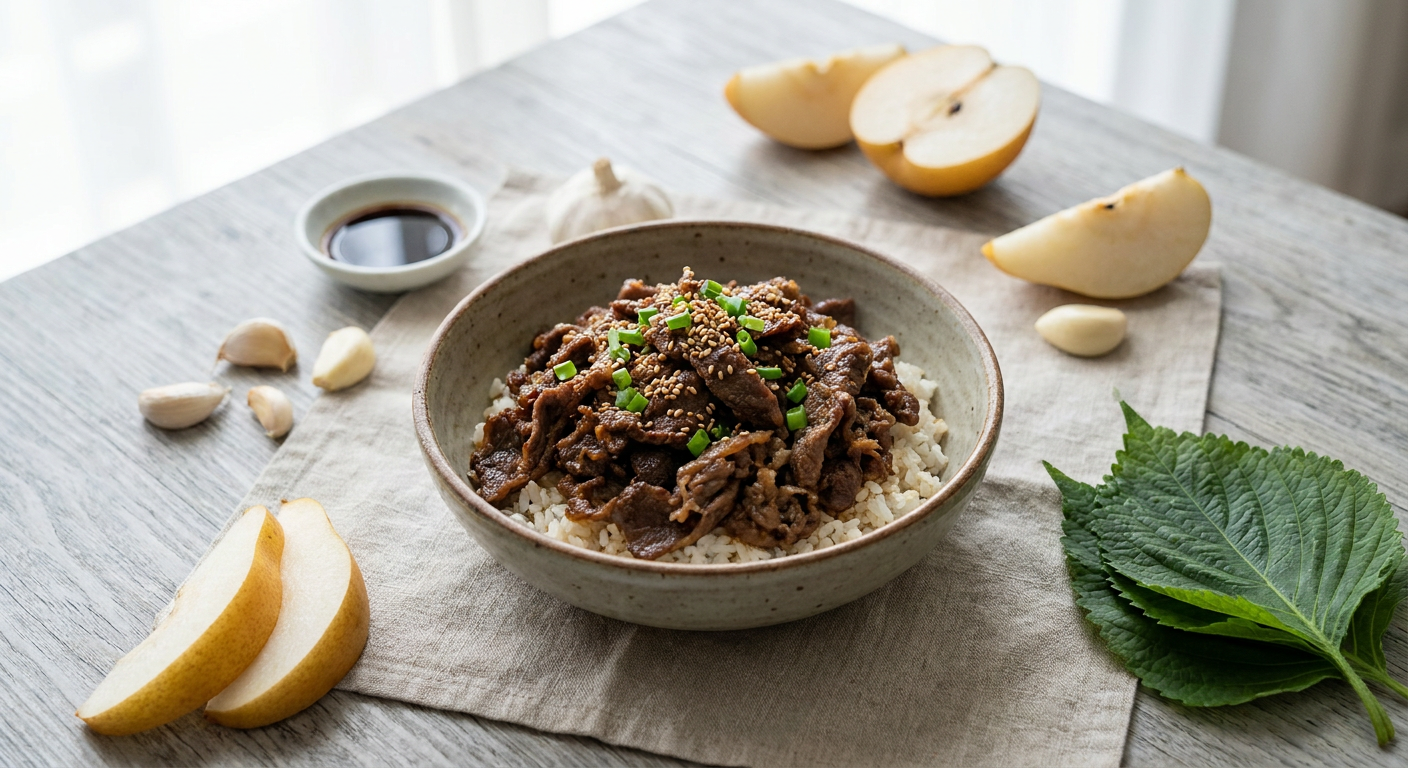
Easy Beef Bulgogi Recipe with Pear Marinade
This easy beef bulgogi recipe uses thinly sliced ribeye and a grated pear marinade to create tender, caramelized Korean BBQ at home in just 30 minutes.
 Dinner
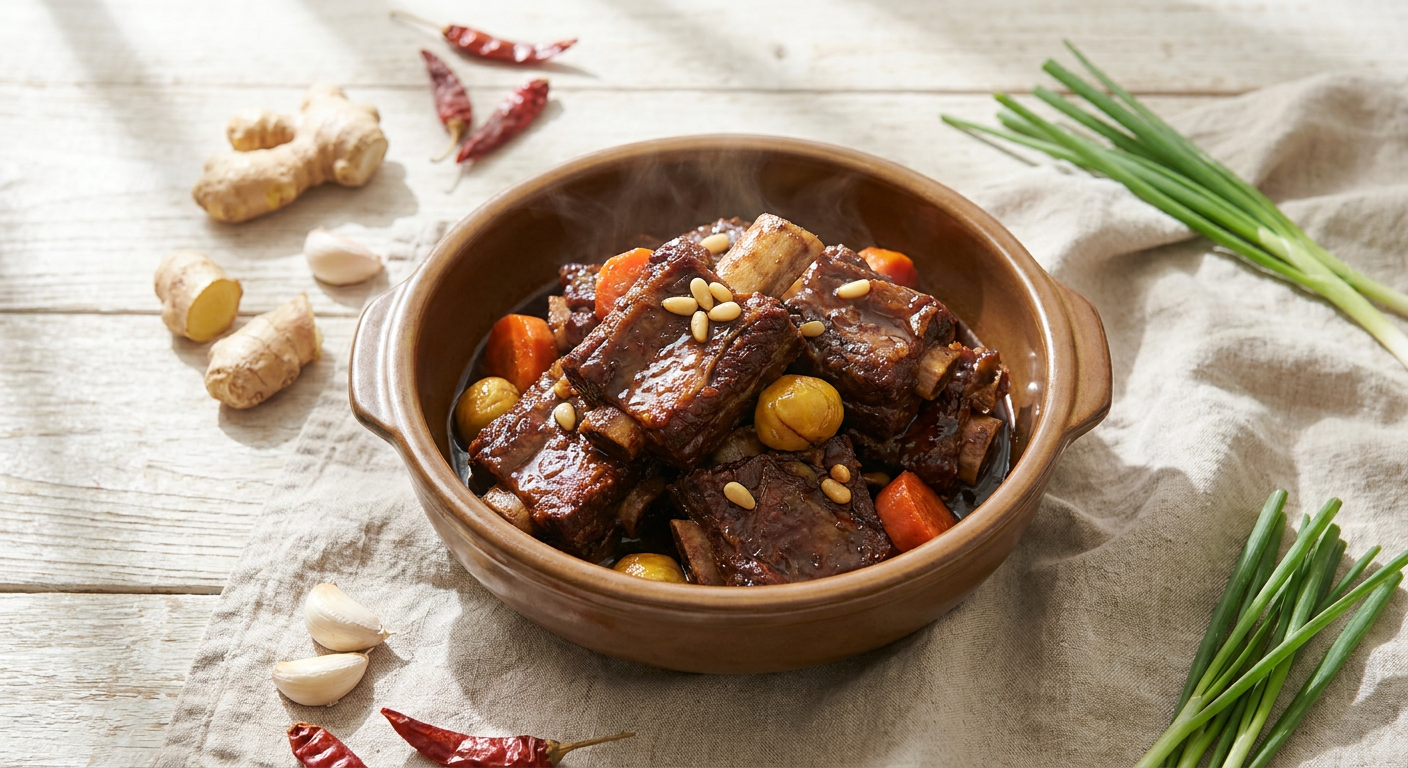
Authentic Galbijjim Recipe: Glossy Korean Braised Short Ribs
Master this galbijjim recipe for fall-off-the-bone Korean braised short ribs. Features a glossy sauce made with grated Korean pear, rice syrup, and chestnuts.
 Dinner
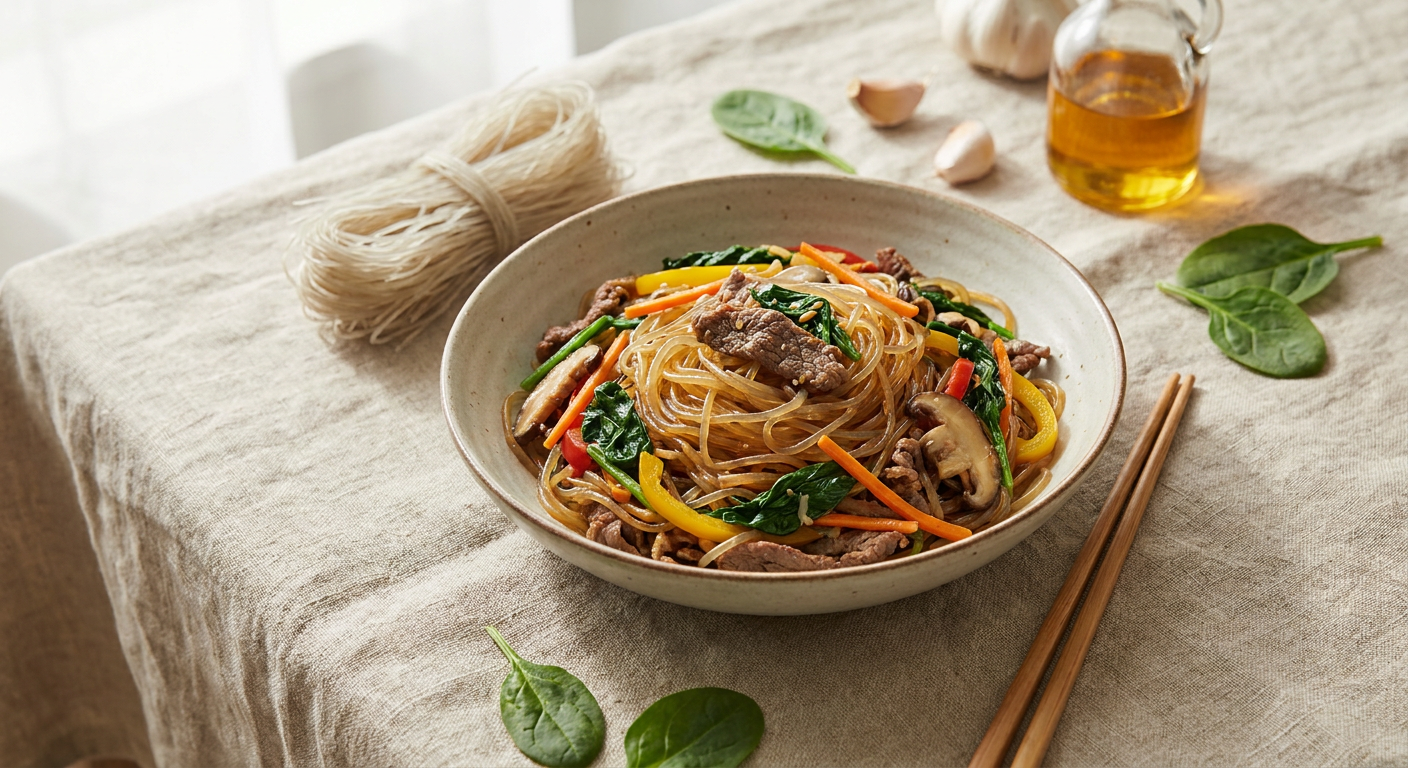
Authentic Korean Japchae (Glass Noodle Stir Fry)
Learn to make authentic Korean japchae with bouncy sweet potato starch noodles, marinated beef, and vibrant vegetables. A balanced, savory-sweet Korean glass noodle stir fry.
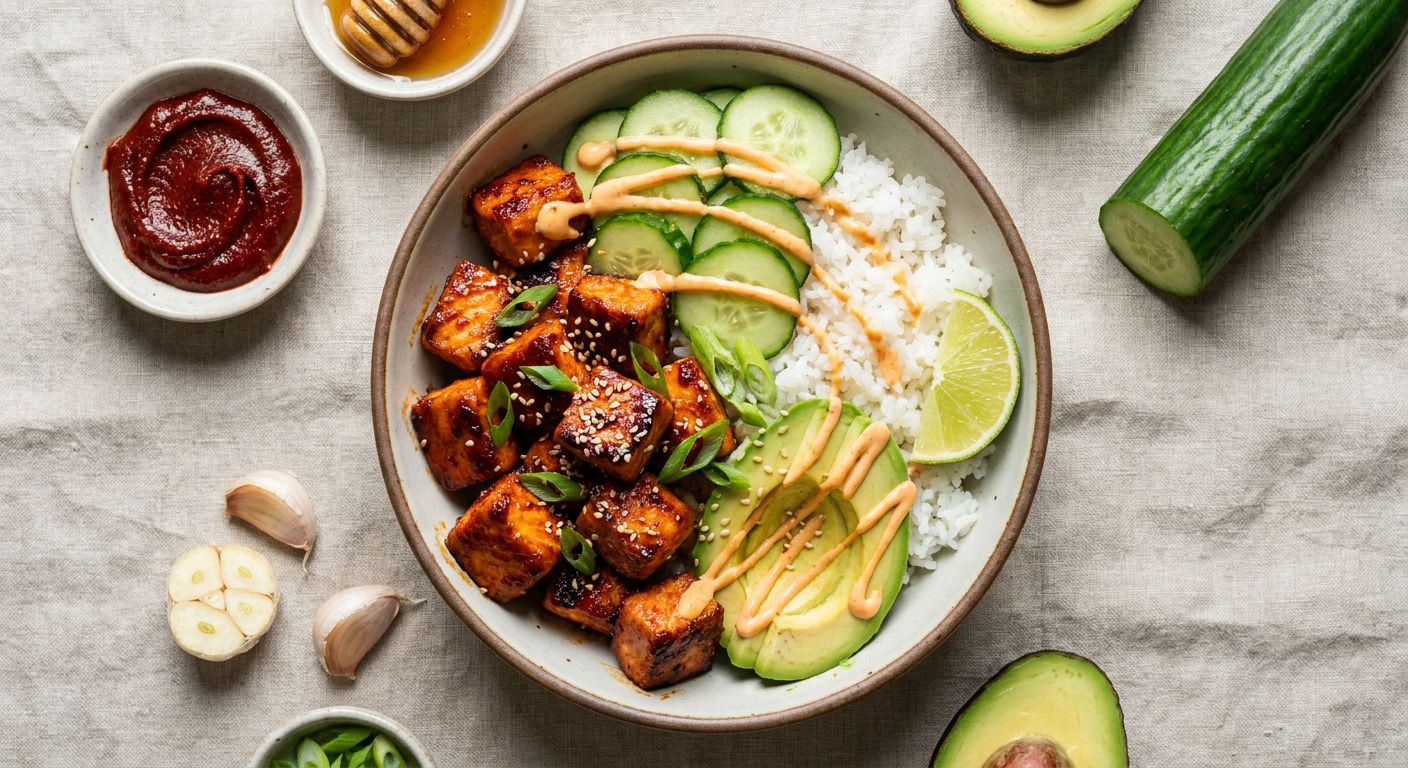 Dinner
Easy Gochujang Salmon Bowl with Honey and Garlic
This 20-minute gochujang salmon bowl features caramelized air-fried salmon bites over rice with cucumber, avocado, and spicy mayo for a perfect weeknight dinner.