Professional Homemade Puff Pastry: Classic Pâte Feuilletée
Master professional homemade puff pastry from scratch. This classic pâte feuilletée recipe features 729 buttery layers for a spectacular eight-fold rise and shatter-crisp texture.
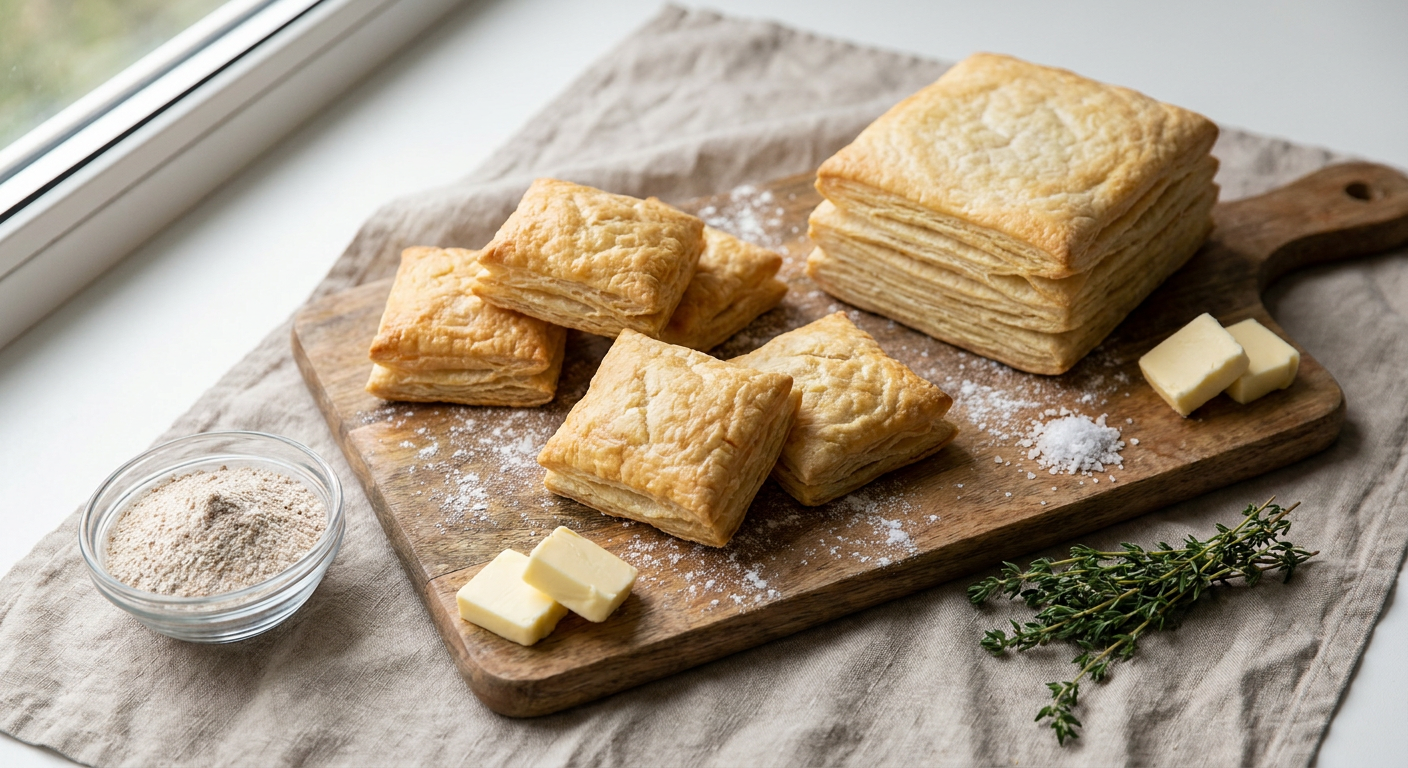

Mastering homemade puff pastry is the ultimate badge of honor for any serious home baker. While the process requires patience, there is no store-bought substitute for the flavor of high-quality butter and the incredible eight-fold rise achieved by a properly executed classic pâte feuilletée.
The secret to success when you learn how to make puff pastry from scratch lies in the temperature control and the precise lamination process. By utilizing a vinegar-spiked détrempe (the base dough) and a carefully tempered butter block, you will create 729 distinct layers that shatter upon impact.
This is not a 'rough' or 'quick' version; this is the real deal. We will perform six turns—alternating between single and double folds—with 45-minute rests to ensure the gluten remains relaxed and the butter stays solid but pliable.
Ingredients
The Détrempe (Dough)
- 450g (3 ½ cups) All-purpose flour, plus extra for dusting
- 10g (2 tsp) Fine sea salt
- 75g (5 tbsp) Unsalted butter, melted and cooled
- 225ml (1 cup) Ice-cold water
- 5ml (1 tsp) White vinegar or lemon juice
The Beurrage (Butter Block)
- 400g (1 ¾ cups) High-fat European-style butter (at least 82% butterfat), slightly softened
Instructions
- 1
Mix the flour and salt in a large bowl, then stir in the melted butter, cold water, and vinegar until a shaggy dough forms. Knead briefly for 1-2 minutes until smooth, wrap in plastic, and chill for at least 2 hours.
- 2
Prepare the butter block by placing the 400g of butter between two sheets of parchment paper and pounding it with a rolling pin into a 7-inch (18cm) square. Refrigerate until firm but still flexible (about 60°F or 15°C).
- 3
Roll the chilled détrempe into an 11-inch square. Place the butter block diagonally in the center, fold the corners of the dough over the butter like an envelope, and pinch the seams to seal completely.
- 4
Perform the first turn by rolling the dough into a long rectangle (about 8x24 inches). Fold the bottom third up to the center and the top third down over it, like a letter. This is a single fold.
- 5
Rotate the dough 90 degrees and roll out again into a long rectangle. Fold the two outer ends to meet in the exact middle, then fold the whole thing in half like a book. This is a double fold (book fold).
- 6
Wrap the dough tightly and rest in the refrigerator for 45 minutes to relax the gluten and chill the butter.
- 7
Repeat the rolling and folding process until you have completed a total of three single folds and three double folds, alternating them and resting the dough for 45 minutes between every two turns.
- 8
After the final turn, chill the pastry for a minimum of 4 hours, or preferably overnight, before rolling it out to your desired thickness (usually 1/8 to 1/4 inch) for baking.
- 9
Bake in a preheated oven at 400°F (200°C) to ensure the steam quickly separates the layers for maximum lift.
Nutrition (per serving)
Estimates only — not medical or dietary advice.
- Calories
- 395 kcal
- Protein
- 4.2 g
- Carbs
- 28.5 g
- Fat
- 29.8 g
- Fiber
- 1.0 g
- Sugar
- 0.1 g
- Sodium
- 326 mg
Tips
- → Use European-style butter. Its lower water content prevents the dough from getting soggy and ensures the layers remain distinct during the lamination process.
- → Keep it cold. If at any point the butter feels like it is melting or the dough is springing back too much, put it back in the fridge for an extra 20 minutes.
- → Dust off excess flour. Before folding the dough over itself, use a dry pastry brush to remove any loose flour, which can prevent the layers from bonding properly.
- → Use a sharp knife or pastry wheel to cut the dough. A dull blade will smash the layers together at the edges, preventing the pastry from rising.
FAQ
Why does my homemade puff pastry shrink in the oven?
Shrinkage is usually caused by under-rested gluten. Ensure you give the dough the full 45-minute rest between turns and let the final shaped pastry rest in the fridge for 30 minutes before baking.
Can I freeze homemade puff pastry?
Yes, it freezes beautifully. Wrap it tightly in multiple layers of plastic wrap and a layer of foil; it will keep for up to 3 months. Thaw overnight in the refrigerator before using.
How do I know if I've over-worked the dough?
If the dough becomes very difficult to roll out and keeps snapping back, the gluten is too tight. Stop immediately and let it rest in the fridge for an hour.
Why did my butter leak out during baking?
This happens if the oven isn't hot enough or if the butter layers were too thick/cold. Make sure your oven is fully preheated to at least 400°F to trap the fat between the rising layers of dough.
You might also like
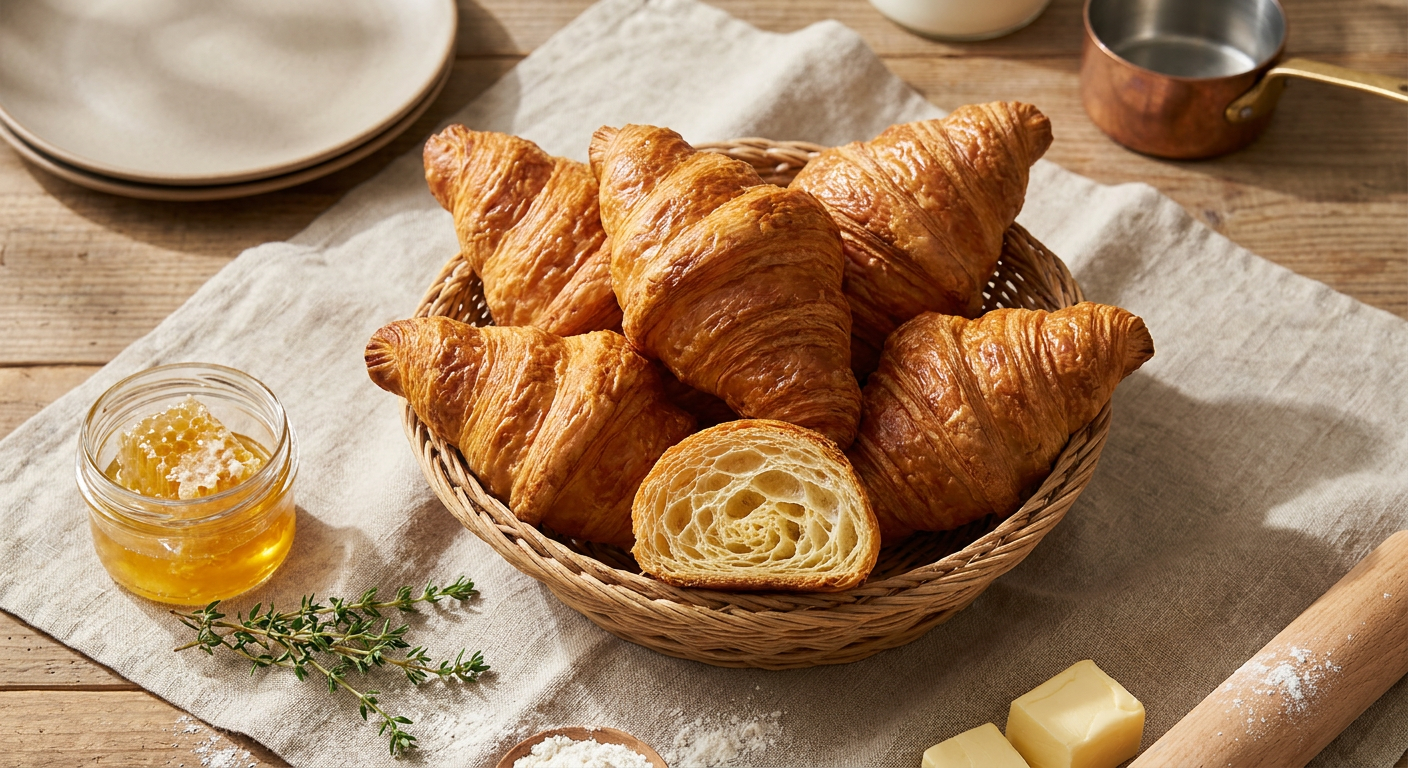 BreadChef-level
Professional Homemade Croissants with Honeycomb Layers
Master professional homemade croissants with this three-day guide featuring cold fermentation, 82% fat butter, and a slow, steam-free bake for perfect shattering layers.
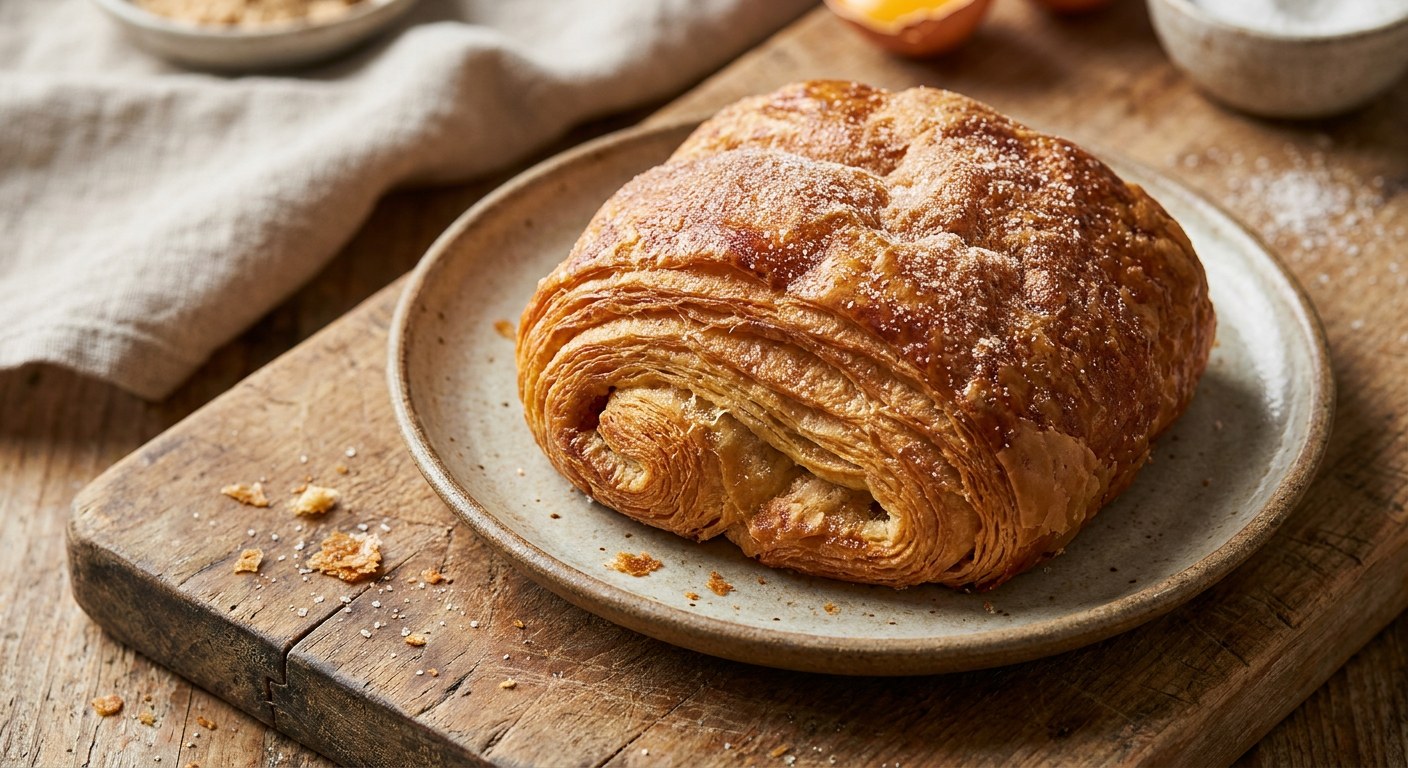 BreadChef-level
Laminated Brioche Feuilletée
Brioche dough laminated with butter like a croissant, baked into a tall, flaky-yet-tender loaf with visible layers from edge to crust. A weekend project worth the camera.
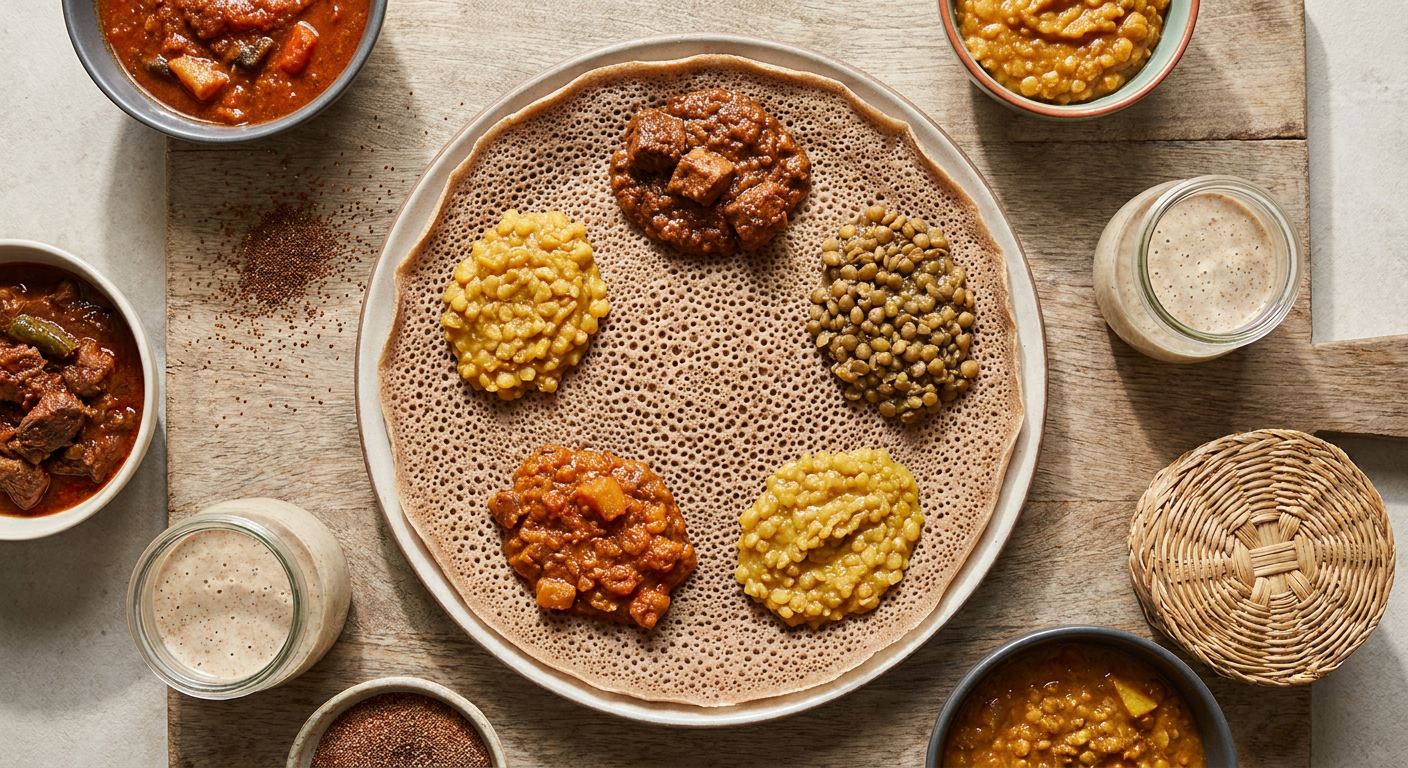 BreadAdvanced
Authentic Injera Recipe: Fermented Teff Flatbread
Master this authentic injera recipe to create the perfect tangy, bubbly Ethiopian injera at home using a 24-hour teff fermentation and the traditional absit method.
 Bread
BreadSoft and Flaky Kenyan Chapati Recipe with Layered Dough
This authentic Kenyan chapati recipe creates soft, flaky flatbreads using a traditional coiling technique. Perfect for stews, these East African chapatis are a kitchen staple.