Authentic Injera Recipe: Fermented Teff Flatbread
Master this authentic injera recipe to create the perfect tangy, bubbly Ethiopian injera at home using a 24-hour teff fermentation and the traditional absit method.
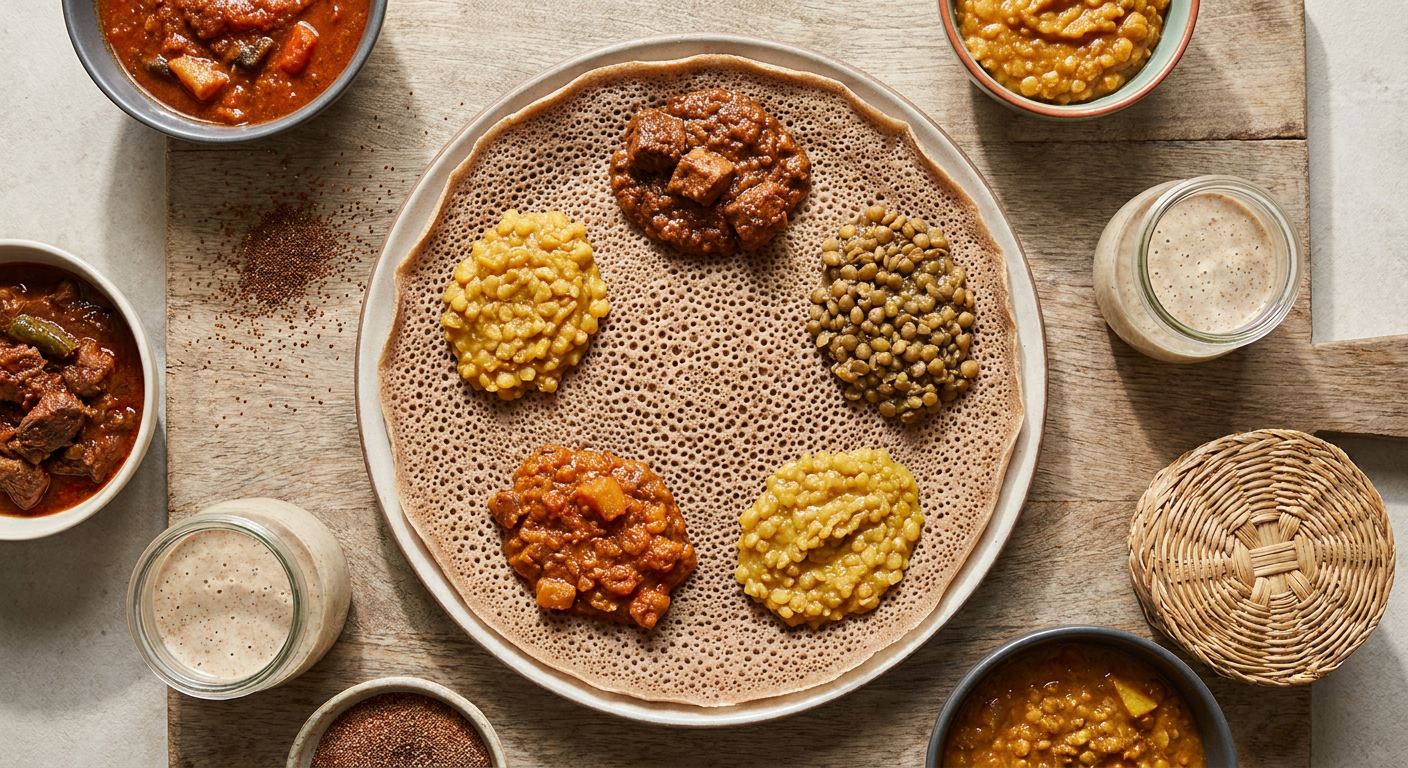

Learning a proper injera recipe is a rite of passage for any home cook obsessed with the vibrant flavors of East Africa. This teff injera fermented flatbread is the essential base for every wot and tibs, acting as both your plate and your utensil with its signature sourdough tang and sponge-like texture.
The secret to those iconic 'eyes' (the tiny bubbles on the surface) lies in the fermentation time and a specific Ethiopian technique called absit. By cooking a small portion of the fermented batter and re-incorporating it, you ensure the structure is strong enough to hold up to heavy stews without losing its delicate, airy feel.
While many shortcut versions exist, this Ethiopian injera honors the traditional process, requiring about 24 hours of patience to develop the complex acidity that defines the dish. You don't need a clay mitad to succeed; a high-quality nonstick skillet and a tight lid will produce professional results in your own kitchen.
Ingredients
The Ferment
- 2 cups (300g) brown or ivory teff flour
- 2 1/2 cups (600ml) filtered water, room temperature
- 1/4 teaspoon active dry yeast (optional, for a consistent first-time ferment)
The Absit (Cooked Starter)
- 1/2 cup of the fermented batter
- 1/4 cup (60ml) boiling water
Final Batter
- 1/2 cup to 1 cup (120-240ml) lukewarm water (for thinning)
- 1/2 teaspoon fine sea salt
Instructions
- 1
Whisk the teff flour and water in a large glass or ceramic bowl until a smooth, thin paste forms; add the yeast if using.
- 2
Cover the bowl with a clean cloth and let it sit at room temperature for 24 hours to ferment until bubbles form and it smells pleasantly sour.
- 3
Skim off any dark water that has risen to the top after the fermentation period and discard it.
- 4
Remove 1/2 cup of the fermented batter and place it in a small saucepan; whisk in 1/4 cup of boiling water.
- 5
Cook the small portion over medium heat, stirring constantly, until it thickens into a translucent, pudding-like paste (this is your absit).
- 6
Let the absit cool for 10 minutes, then whisk it back into the main bowl of fermented batter until no lumps remain.
- 7
Thin the batter with lukewarm water until it reaches the consistency of heavy cream; it should pour easily but still coat the back of a spoon.
- 8
Heat a 12-inch nonstick skillet or crepe pan over medium-high heat until a drop of water sizzles and dances on the surface.
- 9
Pour about 1/2 cup of batter into the center and quickly swirl the pan or use a circular motion to spread the batter to the edges in a thin, even layer.
- 10
Wait for the 'eyes' to form across the entire surface (about 30-45 seconds), then cover the pan with a tight-fitting lid to steam the top for another 60 seconds.
- 11
Remove the lid and slide the injera onto a plate lined with a clean kitchen towel once the edges pull away and the top is set but not browned.
- 12
Stack the finished flatbreads as you go, allowing them to cool completely before folding, as they are fragile while hot.
Nutrition (per serving)
Estimates only — not medical or dietary advice.
- Calories
- 183 kcal
- Protein
- 6.6 g
- Carbs
- 36.5 g
- Fat
- 1.2 g
- Fiber
- 6.1 g
- Sugar
- 0.4 g
- Sodium
- 196 mg
Tips
- → Do not flip the injera; it is cooked entirely on one side with the lid providing the steam necessary to cook the top.
- → Use filtered water if your tap water is heavily chlorinated, as chlorine can inhibit the natural fermentation process of the teff.
- → If your injera isn't forming enough eyes, your batter might be too thick; whisk in a tablespoon of water at a time to reach the right fluidity.
FAQ
Why does my injera not have eyes?
This usually happens if the batter hasn't fermented long enough or if the 'absit' step was skipped. The absit provides the starch structure needed to trap air bubbles as they rise.
Can I make injera without a 24-hour ferment?
While you can add more yeast to speed it up, you will lose the characteristic sour flavor and the texture will be more like a standard crepe than a true Ethiopian flatbread.
How do I store leftover injera?
Wrap them tightly in plastic wrap or place in an airtight bag at room temperature for up to 2 days. For longer storage, refrigerate, but be aware they may become slightly brittle.
You might also like
 Bread
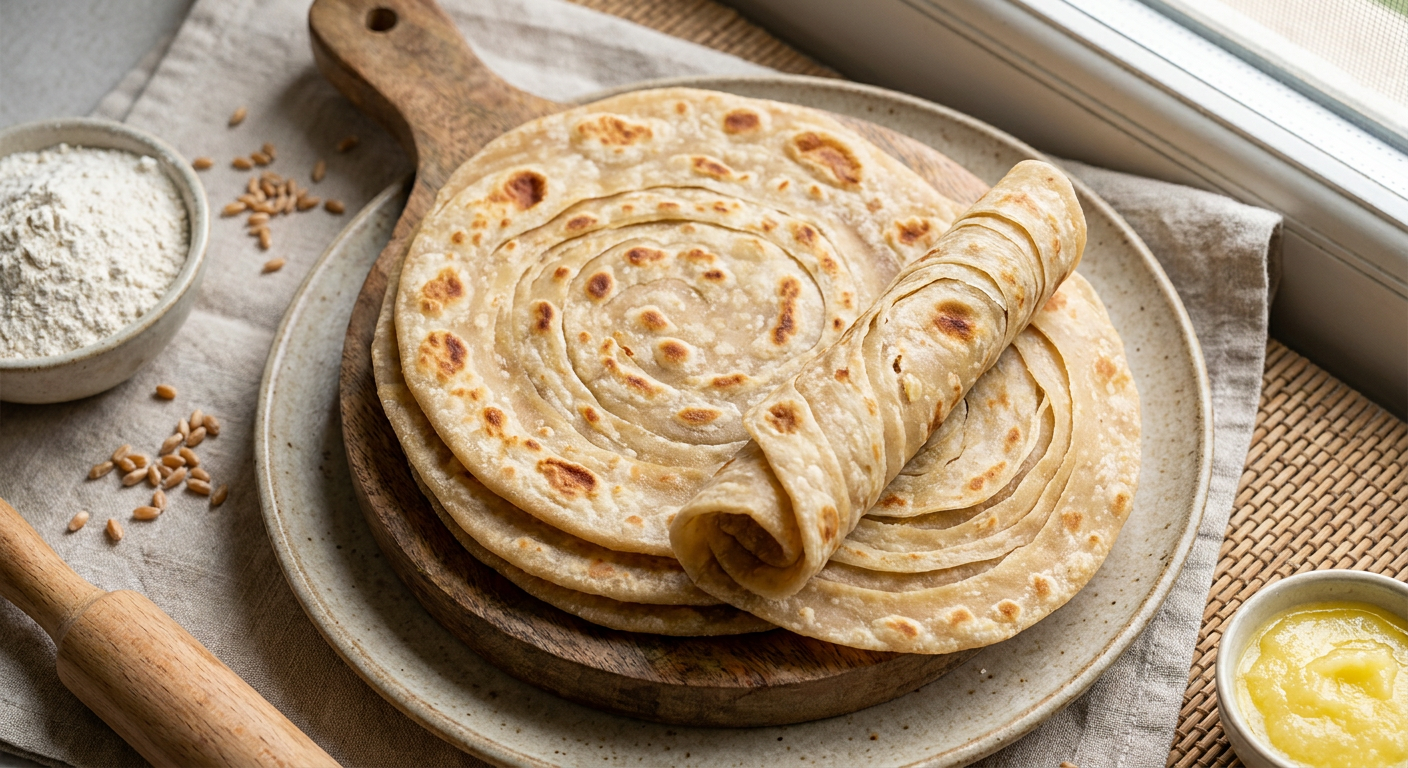
BreadSoft and Flaky Kenyan Chapati Recipe with Layered Dough
This authentic Kenyan chapati recipe creates soft, flaky flatbreads using a traditional coiling technique. Perfect for stews, these East African chapatis are a kitchen staple.
 Bread
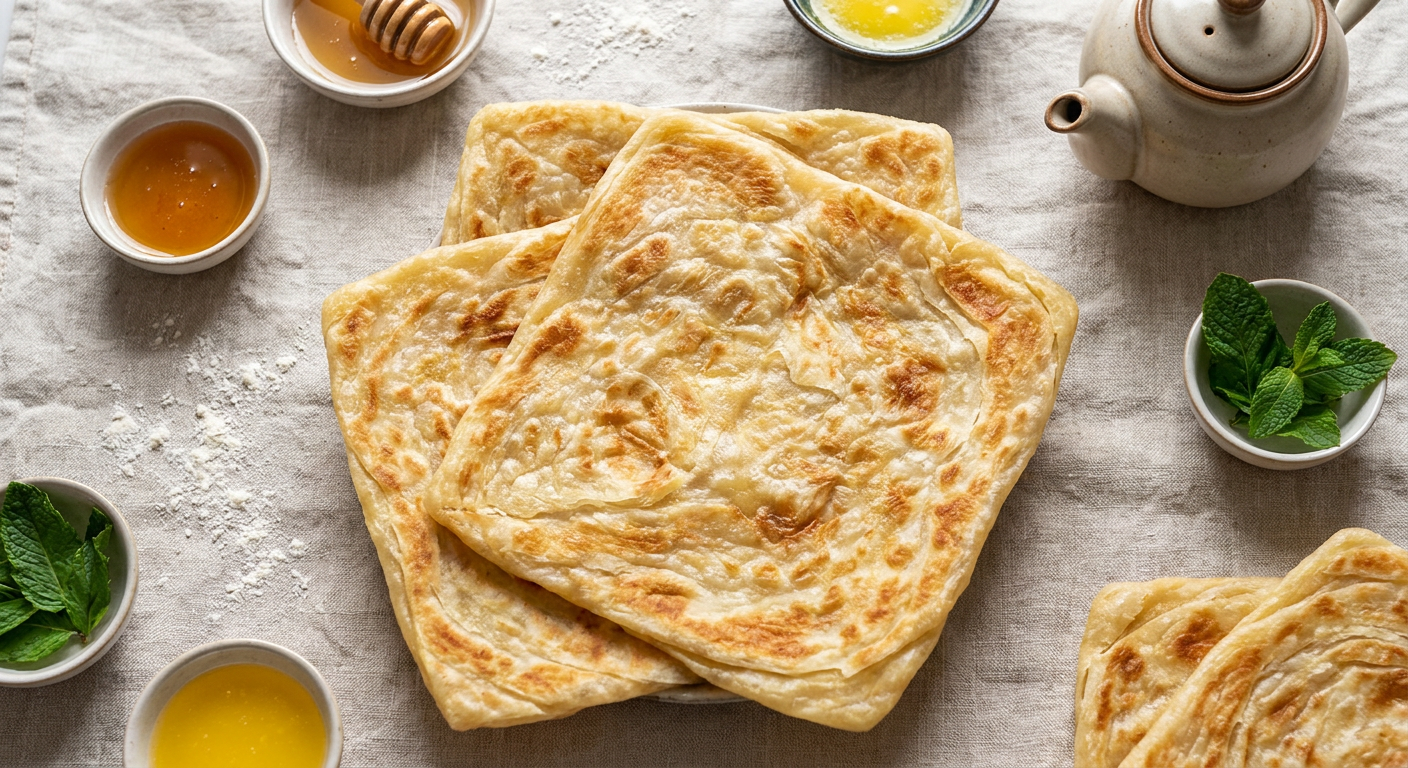
BreadAuthentic Moroccan Msemen: The Ultimate Flaky Square Flatbread
Learn to make authentic Moroccan msemen with this step-by-step guide. Master the art of folding this flaky Moroccan square flatbread for a perfect, shattering crunch.
 Bread
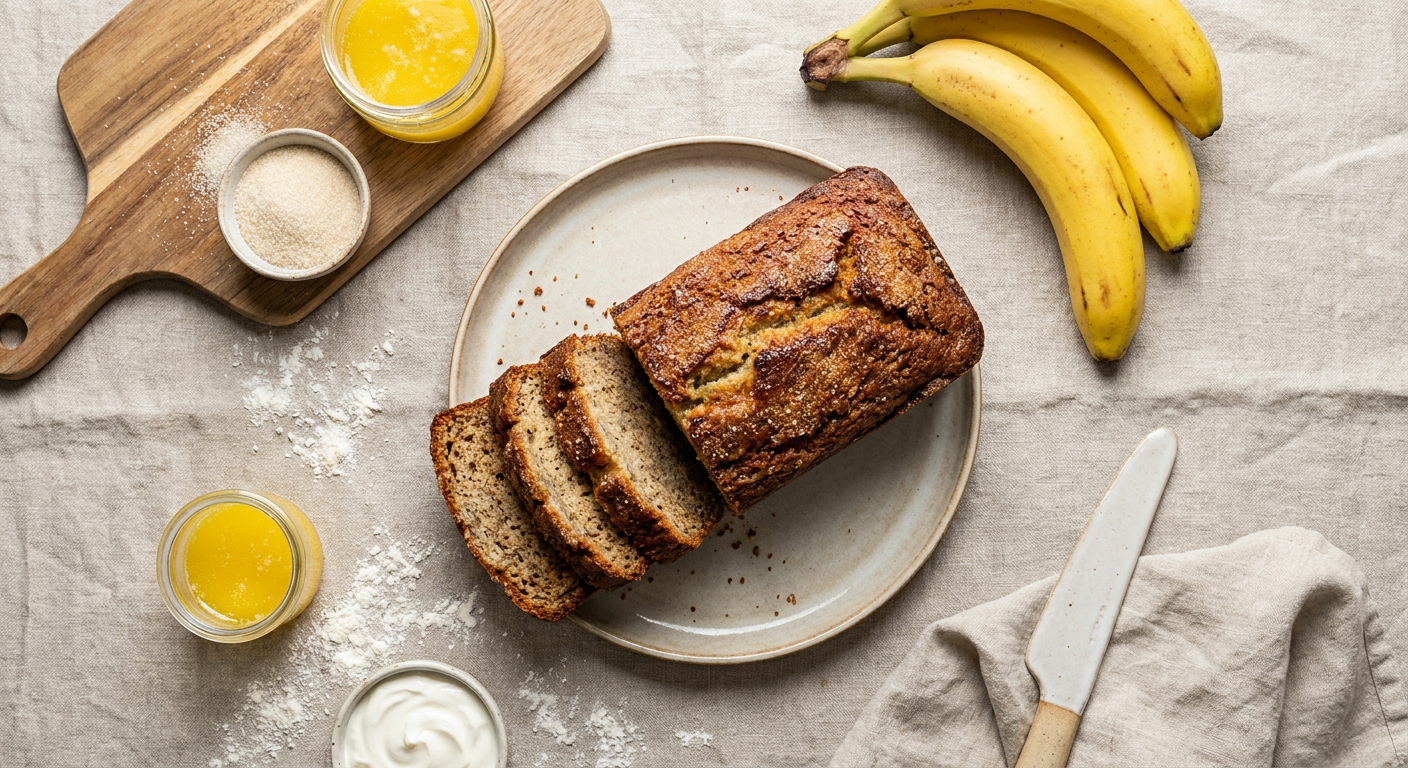
BreadMoist Banana Bread Recipe with 3 Bananas and Sugar Crust
This banana bread recipe with 3 bananas uses sour cream and melted butter for a moist, caramelized loaf. An easy one bowl banana bread with a crackly sugar top.
 BreadAdvanced
Professional Homemade Puff Pastry: Classic Pâte Feuilletée
Master professional homemade puff pastry from scratch. This classic pâte feuilletée recipe features 729 buttery layers for a spectacular eight-fold rise and shatter-crisp texture.