Professional Homemade Croissants with Honeycomb Layers
Master professional homemade croissants with this three-day guide featuring cold fermentation, 82% fat butter, and a slow, steam-free bake for perfect shattering layers.


Mastering homemade croissants is the ultimate rite of passage for any serious home baker. While many shortcuts exist, achieving that elusive shatter-crisp exterior and open honeycomb crumb requires a dedicated three-day process that prioritizes temperature control and dough development.
This recipe guides you through how to make croissants from scratch using a precise laminated croissant dough recipe. By utilizing a high-fat European-style butter block and a cold-fermented détrempe, you ensure the fat remains plastic enough to create hundreds of distinct, paper-thin layers without melting into the flour.
Be warned: this is not a project for a humid afternoon or a rushed morning. You will need a digital scale, a ruler, and a cool kitchen to transform simple pantry staples into a pastry that rivals any Parisian boulangerie.
Ingredients
The Détrempe (Dough)
- 500g (3 ¾ cups) Bread flour, at least 12% protein
- 60g (¼ cup + 1 tbsp) Granulated sugar
- 10g (2 tsp) Fine sea salt
- 10g (1 tbsp) Instant yeast
- 140g (½ cup + 2 tsp) Whole milk, cold
- 140g (½ cup + 2 tsp) Water, cold
- 50g (3 ½ tbsp) Unsalted butter, softened
The Beurrage (Butter Block)
- 250g (1 cup + 2 tbsp) European-style butter, 82-84% fat, cold
Egg Wash
- 1 Large egg yolk
- 1 tbsp Heavy cream
- Pinch of salt
Instructions
- 1
Day 1: Mix the flour, sugar, salt, and yeast in a stand mixer. Add the cold milk, water, and softened butter, kneading with a dough hook for 5 minutes on low speed until smooth but not overly developed. Shape into a flat rectangle, wrap tightly, and refrigerate for 24 hours.
- 2
Day 2: Prepare the butter block by placing cold butter between two sheets of parchment paper. Beat with a rolling pin and roll into a precise 18cm (7-inch) square. Chill for 30 minutes until firm but pliable (around 14°C/57°F).
- 3
Laminate the dough: Roll the cold détrempe into a 19x38cm rectangle. Place the butter block in the center and fold the dough flaps over to meet in the middle, sealing the butter inside.
- 4
Perform the first fold: Roll the dough length-wise to 60cm. Fold the bottom third up and the top third down, like a letter. Wrap and chill for 1 hour. Repeat this 'letter fold' two more times for a total of three folds, chilling 1 hour between each. After the final fold, chill the dough overnight.
- 5
Day 3: Roll the dough out on a lightly floured surface into a long rectangle roughly 25x70cm and 4mm thick. Use a ruler to cut triangles with a 9cm base and 25cm height.
- 6
Shape the croissants by gently stretching the base and rolling tightly toward the point. Place on a parchment-lined baking sheet with the tip tucked underneath.
- 7
Proof the croissants in a draft-free environment at exactly 26°C (79°F) for 2 to 2.5 hours. They should double in size and wobble like jelly when the pan is shaken. Do not exceed 28°C or the butter will melt.
- 8
Preheat the oven to 200°C (400°F). Gently brush the tops of the croissants with egg wash, avoiding the exposed cut layers.
- 9
Bake for 10 minutes, then lower the heat to 175°C (350°F) and bake for another 12-15 minutes until deep mahogany brown. Cool completely on a wire rack for at least 45 minutes to set the internal structure.
Nutrition (per serving)
Estimates only — not medical or dietary advice.
- Calories
- 338 kcal
- Protein
- 5.5 g
- Carbs
- 33.2 g
- Fat
- 20.8 g
- Fiber
- 1.2 g
- Sugar
- 5.8 g
- Sodium
- 342 mg
Tips
- → Use a ruler. Precision is the difference between a greasy roll and a laminated pastry; uneven edges lead to uneven layers.
- → If the dough feels elastic and bounces back while rolling, wrap it and put it in the fridge for 15 minutes to relax the gluten.
- → European butter is non-negotiable. Standard American butter has too much water content, which creates steam and destroys the lamination.
- → Avoid using the oven's 'steam' function or adding water pans; for this specific high-fat method, a dry heat creates a superior, shattering crust.
FAQ
Why does my butter shatter inside the dough?
This happens if the butter block is too cold compared to the dough. The butter should be pliable, like cold plasticine, not brittle. If it breaks, let the dough sit at room temperature for 5 minutes before continuing the fold.
Can I freeze homemade croissants before baking?
Yes. Shape the croissants, place them on a tray, and freeze until solid. Transfer to a bag for up to a month. To bake, thaw in the fridge overnight and then proceed with the 26°C proofing step as directed.
How do I know if my proofing temperature is too high?
If you see a pool of yellow liquid at the base of your croissants while proofing, the butter has melted. Move them to a cooler spot immediately, but note that the interior layers will likely be bread-like rather than flaky.
Why didn't I get a honeycomb interior?
This is usually caused by under-proofing or over-handling the dough during rolling, which 'crushes' the layers together. Ensure the dough is doubled in size and feels light before baking.
You might also like
 BreadAdvanced
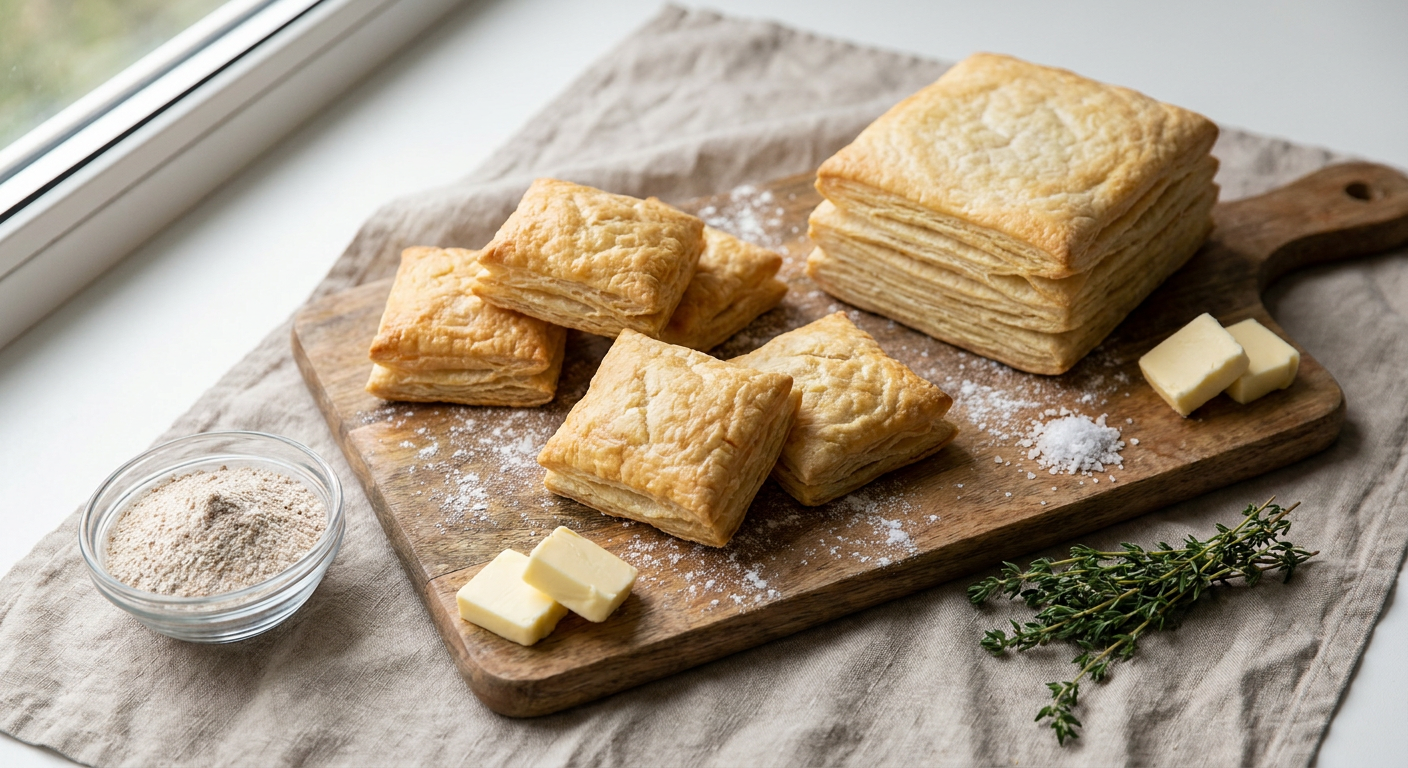
Professional Homemade Puff Pastry: Classic Pâte Feuilletée
Master professional homemade puff pastry from scratch. This classic pâte feuilletée recipe features 729 buttery layers for a spectacular eight-fold rise and shatter-crisp texture.
 BreadChef-level
Laminated Brioche Feuilletée
Brioche dough laminated with butter like a croissant, baked into a tall, flaky-yet-tender loaf with visible layers from edge to crust. A weekend project worth the camera.
 Bread
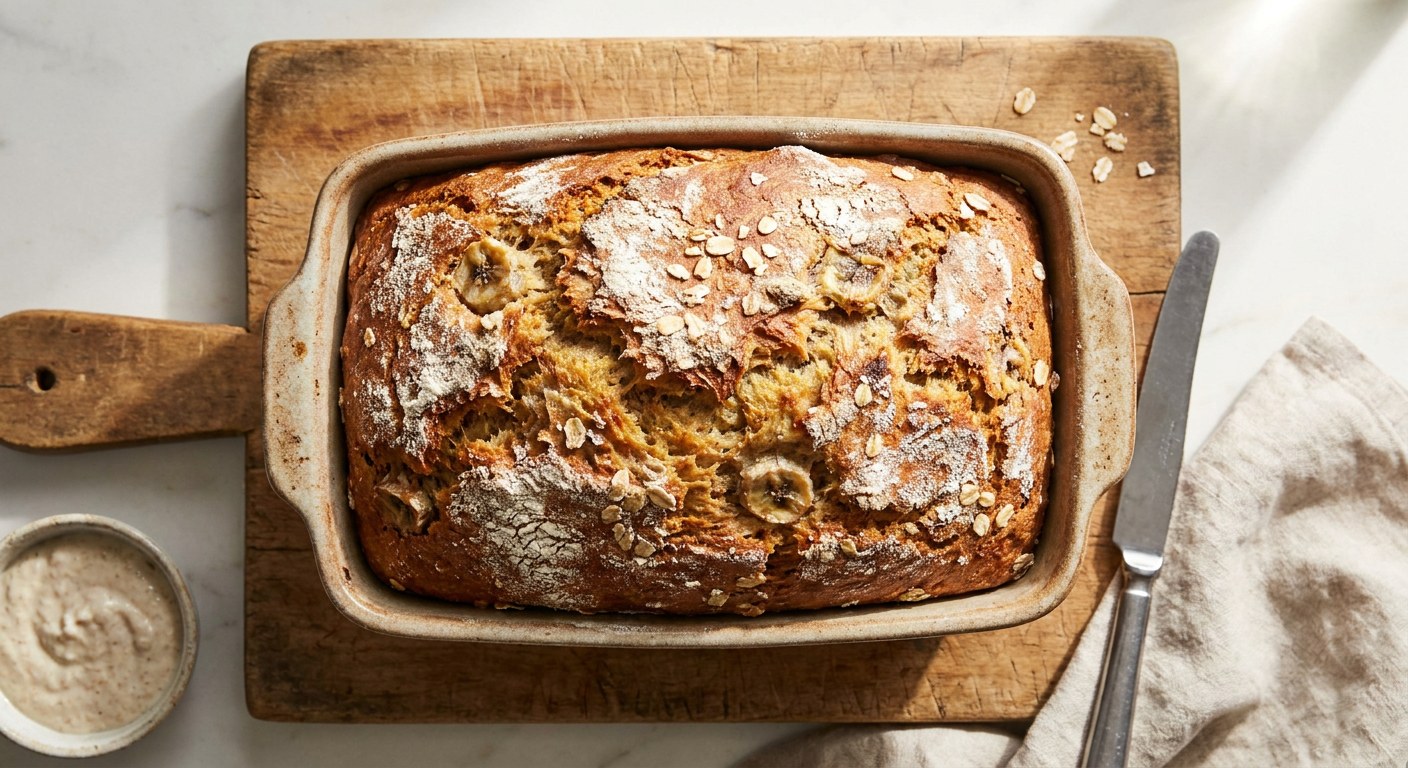
BreadOne-Bowl Tangy Sourdough Quick Bread with Banana
Learn to make a moist sourdough quick bread using your leftover discard. This easy sourdough banana bread requires no rise time and delivers a deep, tangy flavor.
 BreadAdvanced
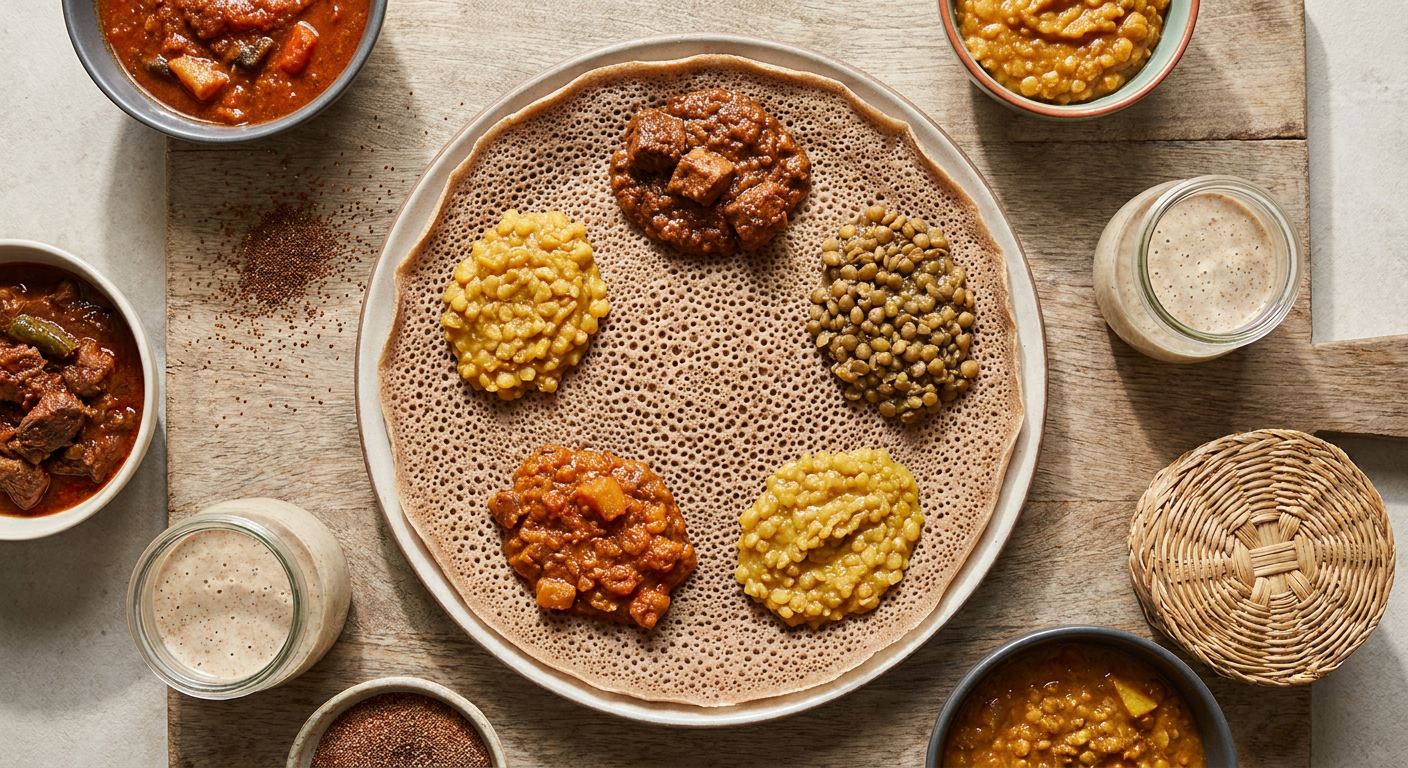
Authentic Injera Recipe: Fermented Teff Flatbread
Master this authentic injera recipe to create the perfect tangy, bubbly Ethiopian injera at home using a 24-hour teff fermentation and the traditional absit method.