September 24, 2026
20–45 Minute Meals or Weekend Braises: Tested Winter Comfort Food
Find winter comfort food that fits your time: 20–45 minute one pan dinners for weeknights or slow weekend braises, plus kitchen tested tips to cook...
20–45 Minute Meals or Weekend Braises: Tested Winter Comfort Food
When winter calls for comfort, reach for a bowl of soup, a one-pot meal, or a family casserole. Each one delivers warmth, real satisfaction, and leftovers you’ll actually want tomorrow. For tonight: a 20-minute skillet gnocchi soup. For a Sunday project: pot roast. For feeding a crowd on a Tuesday: chicken pot pie soup, ready in under 45 minutes.
TL;DR:
- Most winter soups and stews can be prepared in advance and stored in the fridge for four to five days or frozen for up to three months.
- Quick weeknight options like skillet gnocchi soup take 20 minutes, while more elaborate dishes like pot roast or braised short ribs require several hours and are suited for weekends.
- Vegetarian, vegan, and gluten-free adaptations are straightforward, often involving simple substitutions such as vegetable broth, plant-based proteins, and gluten-free grains.
- Use proper cookware and techniques such as deglazing and checking texture for optimal flavor, especially in slow-cooked or braised dishes.
- Most comfort dishes can be made healthier with small swaps like low-fat dairy, roasted vegetables, or baked instead of fried, without sacrificing flavor.
Table of Contents
- What Counts as Winter Comfort Food?
- Soups, Stews, and Chilis Worth Making Ahead
- One-Pot and Skillet Dinners for Busy Nights
- Casseroles and Pot Pies for Family Dinners
- Slow-Cooked Roasts and Braises for the Weekend
- Making Winter Vegetables the Main Event
- Sides That Finish the Meal Right
- Warm Desserts and Drinks to Close the Night
- How Forkwardkitchen Tests Every Winter Recipe
- Vegetarian, Vegan, and Gluten-Free Winter Comfort
- Choosing Between a Quick Fix and a Slow Project
- Skip the Guesswork With Tested Winter Recipes
- Sources
- FAQ
What Counts as Winter Comfort Food?
Winter comfort food is any dish built around three things: warmth, minimal fuss, and a texture that feels like a hug. That usually means soup, stew, chili, a one-pot skillet dinner, a casserole, or something slow-roasted in the oven or a crockpot while you do literally anything else with your evening. It’s less a genre than a mood, but the mood has rules: hot broth or sauce, a starch to soak it up, and a cook time that matches how much energy you actually have left after work.
Here’s a quick way to sort six solid options by how much time you’ve got tonight.
- Under 30 minutes: One-pan pasta with sausage and kale, or a 20-minute skillet gnocchi soup. Best for weeknights when you’re hungry now.
- 30 to 60 minutes: Classic beef stew (weekend-fast version using pre-cut stew meat) or a creamy white chicken chili. Best for a Sunday afternoon or a slower weeknight.
- Slow or make-ahead: Pot roast in the slow cooker, or chicken and dumplings simmered low for two hours. Best for batch cooking and next-day leftovers.
- Family-style bowl: Creamy chicken pot pie soup with puff pastry crackers blends the soup and pot pie categories into one dish. Best for guests who want something that feels special without the crust work.
- Pantry rescue: The ultimate taco soup, built from canned beans, ground beef, and a packet of seasoning. Best for nights you forgot to shop.
- Elegant but easy: Deeply caramelized French onion soup, which takes patience with the onions but almost no active effort otherwise. Best for a date night at home.
Soups, Stews, and Chilis Worth Making Ahead
Every good winter bowl starts with a base decision: broth, cream, or puree. Broth-based soups (chicken noodle, minestrone) stay light and reheat cleanly for days. Cream-based soups (potato-cheese, corn chowder) go richer but can separate slightly on reheating, so a low, slow warm-up beats the microwave. Pureed soups (butternut squash, roasted red pepper) are the most forgiving of the three; they thicken as they cool and often taste better the second day.
Six bowls worth keeping in weekly rotation:
- Classic chicken noodle soup. The reset button of comfort food. Simmer bone-in thighs for extra flavor, then shred and return the meat before adding noodles.
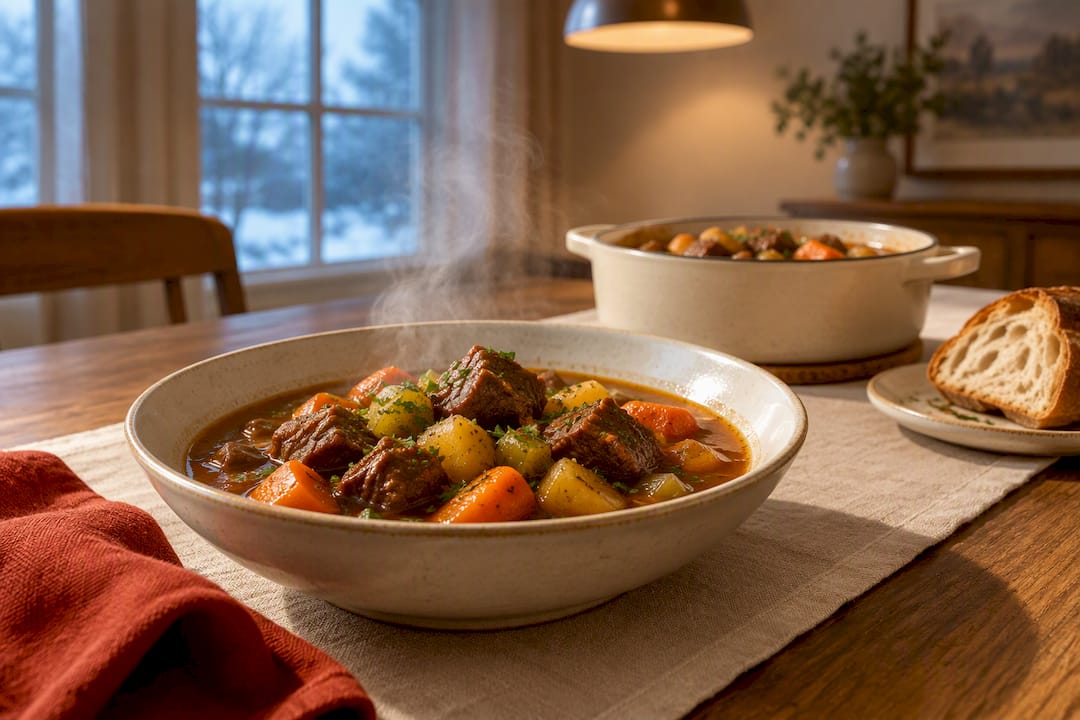
- Beef stew. Chuck roast, potatoes, carrots, and a splash of red wine or balsamic vinegar for depth. Give it at least 90 minutes at a low simmer.
- Pork and butternut squash chili. A tested version from the American Heart Association uses lean pork, jalapeño, canned tomatoes, and frozen squash puree for a bowl that balances heat with earthiness, and it freezes well for weeks.
- White chicken chili. Cannellini beans, green chiles, and shredded rotisserie chicken. Ready in 35 minutes if you skip cooking the chicken from raw.
- Potato-cheese soup. Russets break down into the broth for natural thickness; a handful of sharp cheddar stirred in at the end does the rest.
- Roasted squash soup. Kabocha or butternut, roasted first for caramelization, then blended with a bit of coconut milk or cream.
Winter squash earns its spot in half these bowls for a reason. A cup of cooked butternut squash carries about 582 milligrams of potassium and a strong dose of beta-carotene, which makes it one of the more nutrient-dense ways to bulk up a chili or soup without adding meat.
Most of these hold in the fridge for four to five days and freeze for up to three months in airtight containers. Leave headspace in the container since liquid expands as it freezes, and thaw overnight in the fridge rather than on the counter.
Pro Tip: If a soup thins out after freezing, don’t reach for flour. Simmer it uncovered for ten minutes to reduce, or stir in a spoonful of instant potato flakes off heat for near-instant body without a starchy taste.
One-Pot and Skillet Dinners for Busy Nights
The fastest weeknight formula in this whole category is protein plus starch plus vegetable plus sauce, all cooked in the same pan. Swap any piece based on what’s in the fridge: ground turkey instead of beef, rice instead of pasta, frozen peas instead of fresh green beans. The sauce is what ties it together and gives it that “this took effort” flavor even when it didn’t.
Six versions worth keeping on rotation, all landing in the 20 to 45 minute range:
- One-pan sausage and kale pasta. 25 minutes. Brown the sausage first, deglaze with a splash of pasta water, wilt the kale in at the end.
- Skillet gnocchi soup. 20 minutes. Gnocchi cooks directly in the broth, so there’s no separate pasta pot to wash.
- Chicken and rice skillet. 35 minutes. Sear chicken thighs, then simmer rice in the same pan with the drippings.
- Beef and broccoli stir-fry. 25 minutes. A hot skillet and a cornstarch slurry do most of the work.
- Shrimp and orzo skillet. 20 minutes. Orzo cooks like a risotto, absorbing broth as it goes.
- Sheet-pan sausage and vegetables. 40 minutes, mostly hands-off. Forkwardkitchen’s sheet pan dinner templates work the same protein-starch-veg logic in the oven instead of a skillet.
Pan choice matters more than most recipes admit. A wide, shallow skillet or a Dutch oven with a flat bottom lets liquid evaporate and sauces reduce; a narrow saucepan traps steam and leaves everything watery. Deglazing (adding a splash of wine, broth, or even water to a hot pan right after searing meat) lifts the browned bits stuck to the bottom, which is where most of the flavor actually lives.
Precooked rotisserie chicken, frozen chopped vegetables, and pre-shredded cheese aren’t cutting corners so much as buying back twenty minutes you’d otherwise spend chopping. Midwest outlets covering winter comfort food shortcuts make the same case: precooked proteins turn a 90-minute braise into a 30-minute weeknight dinner without sacrificing much flavor.
Pro Tip: Add pasta or rice to the pan a few minutes later than the recipe says if you like it with real bite. Starches keep absorbing liquid even after you turn off the heat, so slightly underdone at the stove usually means perfectly done by the time it hits the table.
Casseroles and Pot Pies for Family Dinners
A casserole is really just three layers stacked on top of each other: a filling, a binder that holds it together (cream sauce, egg, or a starchy base like rice), and a topping that gets crisp or golden in the oven. Pot pies follow the same logic with a crust standing in for the topping. Once you understand the structure, swapping ingredients gets a lot less intimidating.
Five that consistently show up in family rotations and potluck tables, since casseroles and pot pies scale well and can be assembled ahead and baked whenever you’re ready:
- Chicken and rice casserole. Rotisserie chicken, cooked rice, cream of mushroom soup or a homemade white sauce, topped with crushed crackers.
- Baked mac and cheese. A roux-based sauce holds up better than a straight cheese-and-milk bake, which tends to separate.
- Classic lasagna. Assemble it the night before and refrigerate; the noodles soften further overnight and it slices cleaner.
- Shepherd’s pie. Ground beef or lamb under a mashed potato lid, baked until the top turns golden.
- Chicken pot pie. Forkwardkitchen’s shatter-crust version with sherry and thyme uses a laminated crust technique that flakes apart in layers instead of going soggy under the filling.
For a family of four, a standard 9-by-13-inch casserole dish covers dinner with a serving or two left over. Doubling for a potluck usually means two separate dishes rather than one giant pan, since even baking gets uneven past a certain size.
To lighten any of these without losing the comfort factor, the American Heart Association’s holiday guidance suggests swapping in low-fat dairy for cream sauces and adding a layer of roasted vegetables (zucchini, spinach, mushrooms) between the filling and the topping, which cuts the sodium and fat load while adding bulk that stretches the dish further.
Slow-Cooked Roasts and Braises for the Weekend
Braising and roasting reward patience more than skill, which makes weekends the right time to attempt them. The process itself follows a simple sequence: brown the meat first for flavor, deglaze the pan to capture the fond, then add just enough liquid to come partway up the sides of the meat, never fully submerging it. Too much liquid and you get boiled meat instead of braised.
Oven braising gives the most even, hands-off heat and works well for anything over three pounds. A slow cooker is more forgiving on timing since it won’t scorch if you’re gone longer than planned. A pressure cooker compresses a four-hour braise into 45 minutes, useful if the weekend got shorter than you hoped.
Four worth planning a weekend around:
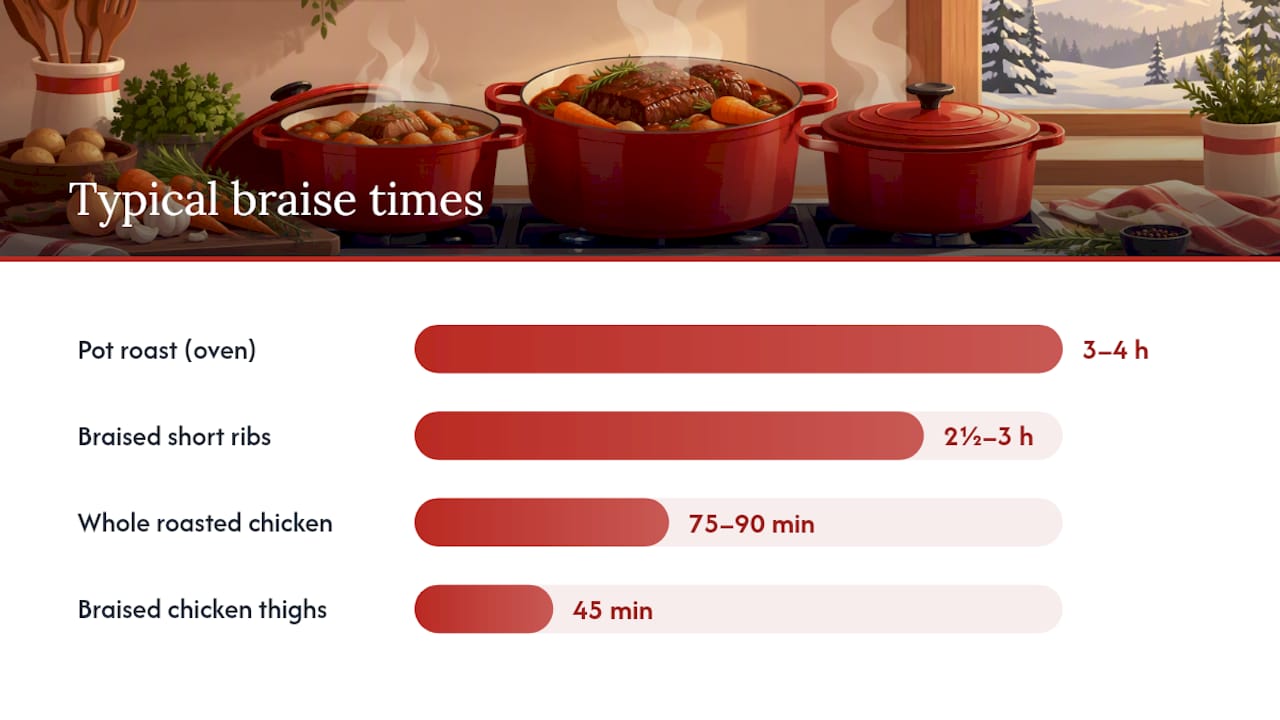
- Pot roast. Three to four hours in the oven at 325°F, or six to eight hours on low in a slow cooker.
- Braised short ribs, a dish regional roundups highlight often as a cold-weather staple. Two and a half to three hours in the oven, until the meat falls off the bone.
- Whole roasted chicken with root vegetables. 75 to 90 minutes, depending on size.
- Braised chicken thighs with white wine and mushrooms. 45 minutes, faster than most braises since thighs are thinner cuts.
Leftovers from any of these are more valuable than the first meal. Shredded pot roast turns into tacos with a squeeze of lime. Braised short rib meat, chopped fine, makes a rich shepherd’s pie filling. Leftover roast chicken shreds straight into quick pasta with garlic and lemon.
Pro Tip: Skip the clock and check texture instead. Braised beef is done when it shreds easily with two forks, not at some fixed hour mark. Squash and root vegetables are done when a knife slides in with no resistance. A splash of vinegar or lemon juice stirred in right before serving cuts through the richness of anything that’s simmered for hours.
Making Winter Vegetables the Main Event
Winter squash, mushrooms, and root vegetables can carry a whole dinner, not just sit beside one. Butternut squash roasts into sweet, caramelized cubes perfect for grain bowls. Kabocha has a drier, denser flesh that holds up well in curries. Delicata is thin-skinned enough to eat without peeling, which saves real prep time. Spaghetti squash shreds into strands that stand in for pasta under a rich sauce.
Six ways to build a vegetable-forward winter main:
- Stuffed acorn squash with wild rice, dried cranberries, and toasted pecans.
- Mushroom and barley stew, using a mix of cremini and dried shiitake for depth.
- Lentil soup, Forkwardkitchen’s pantry-friendly version built almost entirely from shelf-stable staples.
- Roasted root vegetable medley (parsnips, carrots, turnips) finished with a maple glaze.
- Chili-maple roasted sweet potatoes, Forkwardkitchen’s version with sage and yogurt works as a side or, with a scoop of black beans, a full meal.
- Spaghetti squash bolognese, using either meat or lentils for the sauce.
For protein add-ins that keep things vegetable-forward, add crispy chickpeas, a poached egg, or a handful of toasted walnuts rather than a full meat portion. Umami depth comes from miso stirred into broths, a splash of soy sauce in place of some salt, or a tray of mushrooms roasted separately until deeply browned before folding them in. A squeeze of lemon or a splash of vinegar at the end keeps richer vegetable dishes from tasting flat.
Squash specifically earns its keep nutritionally. Acorn squash carries about 9 grams of fiber per cooked cup, more than most people get from an entire day’s grain intake in one sitting.
Sides That Finish the Meal Right
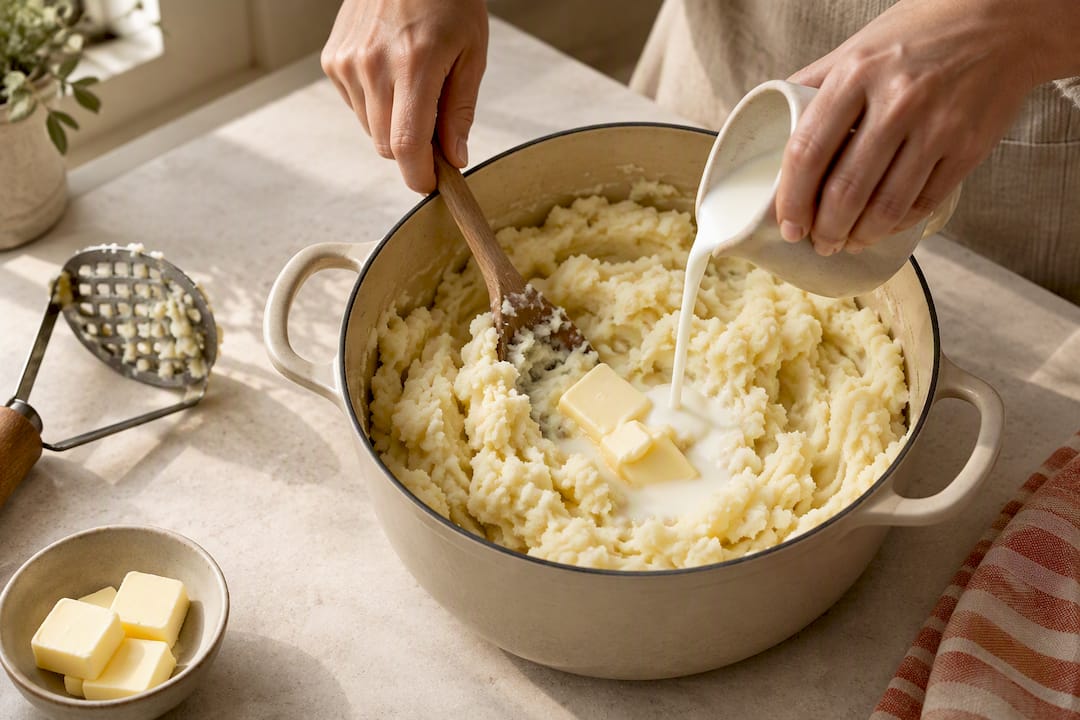
Mashed potatoes live or die on two choices: the potato variety and how dry you get them before adding fat. Russets or Yukon golds work best since they break down cleanly. Drain them thoroughly and let them sit in the dry pot over low heat for a minute to steam off excess moisture before adding butter and warm milk. Cold milk shocks the starch and makes for gluey mash.
Mac and cheese and pasta bakes get better fast with a few shortcuts: pre-shredded sharp cheddar melts unevenly compared to block cheese you shred yourself, so the extra two minutes of grating pays off in a smoother sauce. A roux (butter and flour cooked together before adding milk) prevents the separation that plain melted cheese and milk tend to suffer.
Four add-ins that change the texture of either dish:
- Crispy fried shallots or breadcrumbs on top of mac and cheese for crunch against the creamy base.
- Roasted garlic blended into mashed potatoes for sweetness without raw bite.
- Sour cream or Greek yogurt stirred into mash for tang and extra creaminess.
- A layer of caramelized onions under a pasta bake’s cheese topping.
For potlucks, both dishes hold well in a slow cooker set to warm for up to two hours, though mac and cheese benefits from a splash of milk stirred in before serving to loosen the sauce back up.
Warm Desserts and Drinks to Close the Night
Dessert doesn’t need much effort to feel like the right ending to a cold-weather dinner. Warmth and a little spice do most of the work.
- Baked apples with cinnamon and a drizzle of honey, ready in 30 minutes.
- Bread pudding made from stale bread, cheap and forgiving.
- Skillet cookie, one big cookie baked in a cast-iron pan and served with a scoop of ice cream while it’s still warm.
- Warm bananas foster over vanilla ice cream, five minutes in a hot skillet with butter and brown sugar.
- Rice pudding simmered slowly on the stove with cinnamon and a splash of vanilla.
Lighter swaps work here too: a light drizzle of honey instead of a full caramel sauce, or low-fat yogurt in place of whipped cream, following the same small-swap logic the American Heart Association recommends for holiday cooking generally.
Two drinks round out the table nicely: spiced hot chocolate with a cinnamon stick garnish, and mulled cider simmered with cloves and orange slices. For anyone skipping alcohol this winter, The Functional Sip’s roundup of alcohol alternatives offers options that pair well with either.

How Forkwardkitchen Tests Every Winter Recipe
Every recipe referenced here reflects the same standard Forkwardkitchen holds itself to: built from scratch, tested in the kitchen, and rated for difficulty honestly rather than optimistically. A recipe labeled “easy” here means someone who’s never braised short ribs before can actually pull it off on the first try.
Five kitchen-tested habits worth borrowing regardless of which recipe you’re making:
- Taste and adjust seasoning at least twice during cooking, not just at the end.
- Check doneness by texture (fork-tender, easy shred) rather than trusting the clock alone.
- Brown meat in batches if the pan gets crowded; overcrowding steams instead of sears.
- Rest braised or roasted meat for ten minutes before shredding or slicing.
- Keep a shortcut list (rotisserie chicken, frozen squash puree, canned beans) for nights the full recipe isn’t realistic.
A dish only earns an “easy” label after it’s been made in a home kitchen, by someone without professional training, using the exact instructions written down. If it doesn’t survive that test, the difficulty rating changes, not the recipe’s reputation.
Vegetarian, Vegan, and Gluten-Free Winter Comfort
Nearly every dish above adapts without losing its core comfort. For soups and stews, swap chicken or beef broth for a well-seasoned vegetable broth, and use lentils, mushrooms, or white beans in place of meat for the same heartiness. Mushrooms in particular bring a meaty chew that holds up in stews better than tofu does.
For casseroles and pot pies, a roux made with plant-based butter and unsweetened oat milk works nearly identically to a dairy version, and nutritional yeast adds a cheesy depth to vegan mac and cheese without any dairy at all. Gluten-free cooks should watch two hidden culprits: flour used to thicken gravies and stews, and standard pasta in bakes. A one-to-one gluten-free flour blend thickens sauces just as well, and gluten-free pasta shapes hold up fine in a baked casserole since the sauce keeps them from drying out.
Root vegetables and winter squash are naturally gluten-free and vegan on their own, which makes the vegetable-forward dishes in this list some of the easiest to adapt without changing much at all. Stuffed acorn squash, lentil soup, and mushroom barley stew (swapping barley for a gluten-free grain like rice or quinoa) all work as written or with one simple substitution. The goal isn’t a separate menu for dietary restrictions. It’s the same comfort, built with a different pantry.
Choosing Between a Quick Fix and a Slow Project
Winter cooking has always split into two moods for me: the night you need dinner on the table in twenty minutes, and the Sunday where the whole point is the smell that fills the house over three hours. Neither one is more “real” cooking than the other, and treating a skillet gnocchi soup as a lesser achievement than a braise misses what actually matters, which is whether the dish gets made at all on a cold, tired Tuesday.
The recipes that earn a permanent spot in rotation are the ones tested enough times that the instructions actually work on a normal weeknight, not just in a photographed kitchen. Explore the pasta recipes for fast options, or browse the full recipe hub when the weekend opens up for something slower.
— Oloru
Skip the Guesswork With Tested Winter Recipes
Some recipe platforms build recipes from scratch and test in home kitchens before they go live, providing actual timed results instead of guesses, and offer honest difficulty ratings to help cooks know what they are taking on.
That matters most in winter, when a recipe that promises “easy” but turns out to be a two-hour ordeal costs you a weeknight you didn’t have to spare. Browse the full recipe collection for soups, casseroles, and one-pot dinners sorted by real prep times, or head straight to the pasta category for tonight’s fastest option. If you’re ready for a weekend project instead, start with a braise or roast from the collection and work up from there.
Sources
- Warm up to tasty and nutritious winter squash – American Heart Association
- Pork and Butternut Squash Chili – American Heart Association Recipes
- 28 Winter Comfort Food Recipes – Midwest Living
FAQ
What Are the Top Comfort Foods for Winter?
The most consistently named winter comfort foods are chicken noodle soup, beef stew, chili, chicken and dumplings, mac and cheese, lasagna, and pot pie, according to major recipe roundups. Casseroles and slow-roasted dishes like pot roast round out the list for weekend cooking.
What Foods Feel Warm and Cozy in Winter?
Anything served hot with a thick or creamy texture tends to read as cozy: broth-based soups, cream chowders, baked casseroles with a golden top, and slow-braised meats all qualify. The common thread is heat retention, since a dish that stays hot longer feels more comforting than one that cools quickly on the plate.
What Are Good Finger Foods for a Winter Gathering?
Warm, hand-held options work best in cold weather: mini chicken pot pies, baked mac and cheese bites, stuffed mushrooms, and small cups of chili or soup served with crusty bread. Anything that can be made ahead and reheated in the oven keeps a host out of the kitchen during the party itself.
How Do I Make Winter Comfort Food Healthier Without Losing Flavor?
Small swaps preserve flavor while cutting fat and sodium: use low-fat dairy in cream sauces, add roasted vegetables to bulk up casseroles, and bake or roast instead of frying where possible. The American Heart Association’s holiday cooking guidance recommends these exact adjustments for keeping richer winter dishes in check.
Can Winter Comfort Food Recipes Be Made Ahead and Frozen?
Most soups, stews, chilis, and casseroles freeze well for up to three months in airtight containers, and pot pies can be assembled unbaked and frozen for later. Thaw overnight in the refrigerator rather than at room temperature, and reheat soups gently on the stove to avoid separating cream-based bases.