July 30, 2026
7 Weekend Cooking Projects Worth Slowing Down For
Discover seven rewarding weekend cooking projects that transform your Saturday into a satisfying culinary adventure. Get started today!
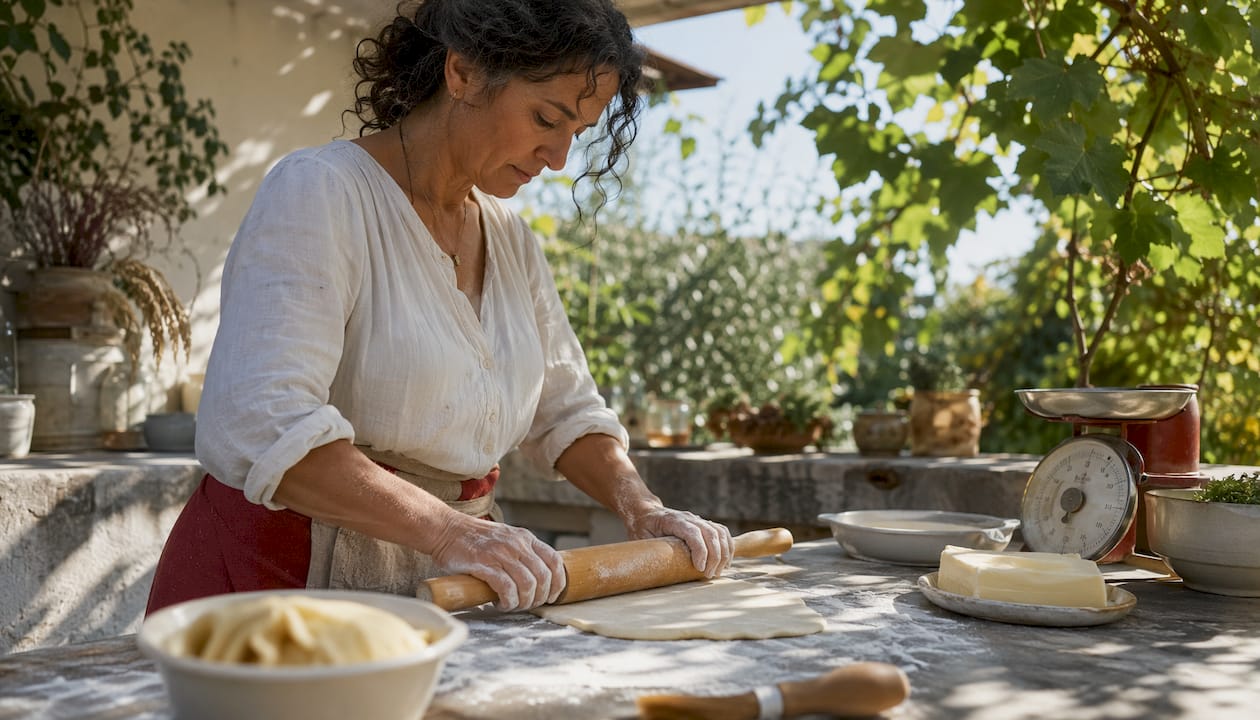
7 Weekend Cooking Projects Worth Slowing Down For
Here are seven weekend cooking projects you can pick and start this Saturday, each with estimated hands-on and passive time and an honest difficulty label. Whether you want to build a real skill, stock the freezer, or just have something genuinely satisfying to show for your Saturday, one of these fits your day.
| Project | Total Time | Hands-On | Passive | Difficulty | Energy |
|---|---|---|---|---|---|
| Croissants or laminated pastry | several hours over two days | 3–4 hrs | 7–10 hrs chilling | Advanced | High |
| Homemade pasta with ragù | several hours | 3–4 hrs | 2–3 hrs simmer | Intermediate | Medium |
| Stuffed dumplings or ravioli | several hours | 3–4 hrs | 1–2 hrs rest | Intermediate | Medium |
| Slow-braised meat (pot roast) | several hours | 1–2 hrs | 5–6 hrs braise | Beginner | Low |
| Sauerkraut or kimchi | 1–2 hrs active | 1–2 hrs | several days ferment | Beginner | Low |
| Big-batch soup or ragù | several hours | 2 hrs | 2–3 hrs simmer | Beginner | Low |
| Homemade ice cream or caramel | several hours | 2 hrs | 1–2 hrs churn/freeze | Intermediate | Medium |
These all-day cooking recipes reward patience over speed. Pick one that matches your energy, not just your ambition.
Table of Contents
- The best baking and pastry projects for a full weekend
- Savory, multi-step projects that make a whole day satisfying
- Fermentation and preserving projects you can start this weekend
- Make-ahead, batch, and freezer-friendly weekend projects
- How to pick the right weekend project for your time and kitchen
- What tools and pantry staples you actually need
- Why weekend cooking projects are worth the time
- How much do weekend cooking projects actually cost?
- Key Takeaways
- A note from the Forkward Kitchen team
- Ready to pick your project? Start here
The best baking and pastry projects for a full weekend
Baking projects earn their weekend status because the schedule is built in. Laminated doughs like croissants require multiple cold rests between folds, which means you work in short bursts and let the refrigerator do the heavy lifting between sessions. Sfogliatelle, the shell-shaped Neapolitan pastry, follows the same rhythm: several hours of chilling spread across two days, with a pasta machine doing the thinning work. Enriched breads like brioche and Japanese milk bread are more forgiving but still benefit from an overnight cold proof that deepens flavor.
| Project | Hands-On | Passive (chill/proof) | Key Equipment |
|---|---|---|---|
| Croissants | 3–4 hrs | 7–10 hrs (2 days) | Rolling pin, ruler, baking stone |
| Brioche | 2 hrs | 4–6 hrs (overnight) | Stand mixer, loaf pan |
| Milk bread | 1–2 hrs | 3–5 hrs | Stand mixer, pullman pan |
| Sfogliatelle | 2–3 hrs | 5+ hrs | Pasta machine, rolling pin |
| Multi-layer cake | 2–3 hrs | 1–2 hrs cooling | Offset spatula, cake strips |
Forkward’s desserts collection flags which builds need extra time and which can be split into easy steps, so you won’t hit a wall mid-project.
Pro Tip: Don’t time your proof by the clock. Press a floured finger gently into the dough: if the indent springs back slowly and holds its shape, the dough is ready. A fast spring means it needs more time; no spring at all means it’s overproofed. Kitchen temperature swings of even 5°F can add or subtract 30 minutes from a proof.
Savory, multi-step projects that make a whole day satisfying
The best savory weekend projects are built in stages, not marathons. Homemade pasta with a slow ragù is the classic example: you make the sauce first, let it simmer while you rest, then roll and shape pasta in the afternoon. Stuffed dumplings, ravioli, and lasagna follow the same logic. Moussaka layers a béchamel, a spiced meat sauce, and roasted eggplant, each component made separately before assembly.
A workable staging plan for an 8-hour savory project:
- 8:00 AM Gather and measure all ingredients (mise en place). Pre-measure spices, cube meat, and set out dairy to temper.
- 9:00 AM Start the longest-cooking element: brown meat, build the sauce, and set it to simmer low.
- 11:00 AM Make pasta dough or prep filling components. Rest dough in the refrigerator for 30 minutes.
- 12:30 PM Roll, shape, or fill pasta. Work in batches; keep finished pieces on a floured sheet.
- 2:00 PM Taste and adjust the sauce. Assemble lasagna or moussaka layers if applicable.
- 3:30 PM Final bake or finish. Rest the dish for at least 20 minutes before serving.
- 4:30 PM Portion leftovers into containers while the dish is still warm.
Forkward’s pasta collection covers both quick weeknight shapes and multi-step filled pastas, so you can find a project that fits your skill level without hunting across multiple sites.
Fermentation and preserving projects you can start this weekend
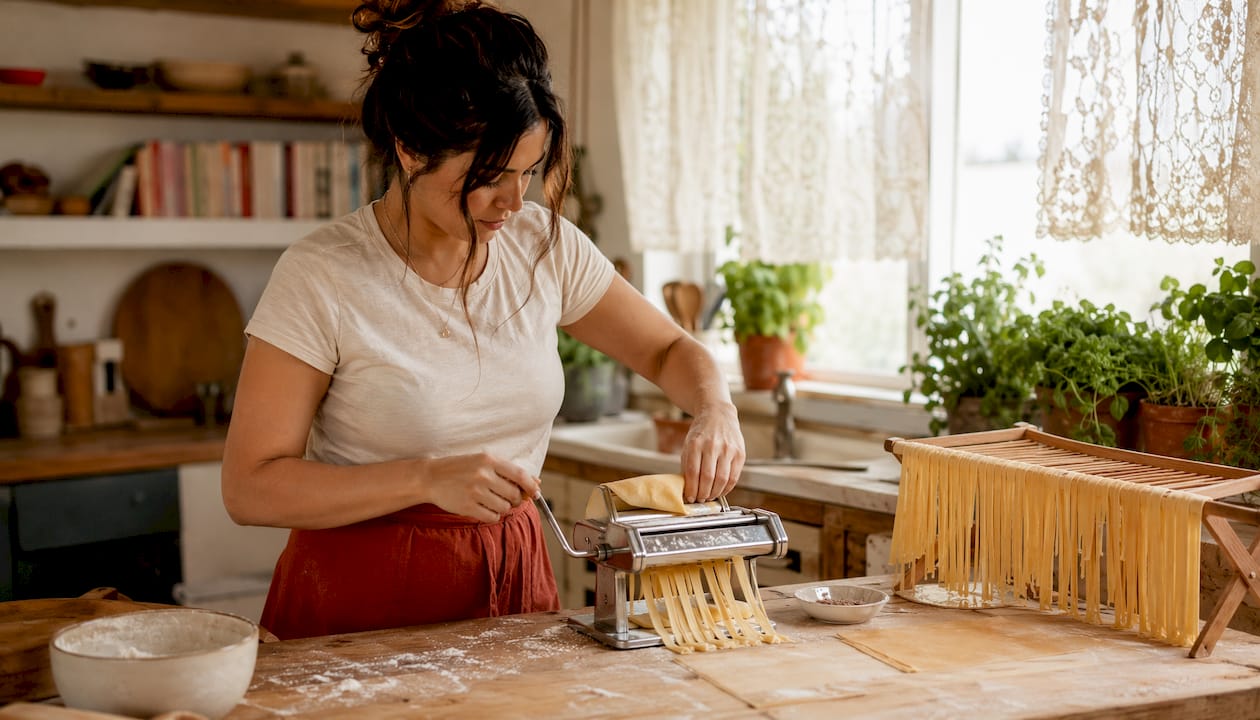
Fermentation is the weekend project that keeps working after you’ve cleaned up. You put in an hour or two on Saturday, then check in briefly each day as the culture does its thing. Sauerkraut and kimchi are the most forgiving starting points: shred, salt, pack, and wait. Water kefir and tepache (a Mexican pineapple ferment) are similarly low-effort. Peach jam and marmalade are different, requiring active attention at the stove, but they’re done in a single afternoon.
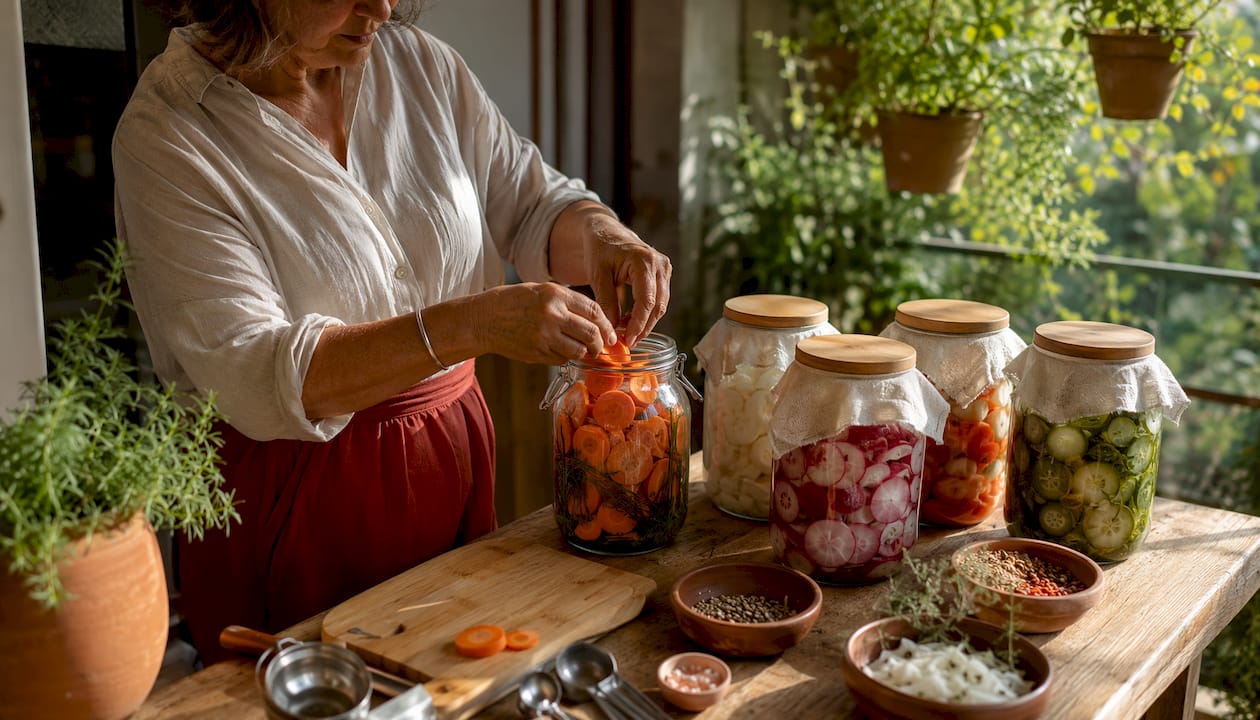
| Project | Active Work | Ready Window | Notes |
|---|---|---|---|
| Sauerkraut | 45–60 min | 3–7 days | Keep submerged; taste daily after day 3 |
| Kimchi | 2 hrs | 1–5 days | Ferments faster in warm kitchens |
| Tepache | 30 min | 2–3 days | Strain when pleasantly fizzy |
| Peach jam | 2–3 hrs | Same day | Process jars in a water bath for shelf stability |
| Quick lacto pickles | 30 min | 24–48 hrs | Refrigerator only; eat within 2 weeks |
One safety note worth taking seriously: sanitize your jars and lids in boiling water before packing. Trust your senses during fermentation. A sour, tangy, or pleasantly funky smell is normal. Anything that smells putrid or shows fuzzy mold (not the white kahm yeast film, which is harmless) means you should discard and start over. Keep ferments at room temperature, 65–75°F, for the most predictable results.
Make-ahead, batch, and freezer-friendly weekend projects
A batch project multiplies your effort. Two hours of active cooking on Saturday can produce four or five weeknight dinners with almost no extra work. The key is thinking in portions from the start.
- Big-batch ragù or Bolognese: Freezes beautifully in 2-cup portions. Reheat gently on the stove with a splash of pasta water; avoid the microwave, which dries it out.
- Frozen pot pies: Assemble fully, freeze unbaked, and bake straight from frozen at 375°F for about 60 minutes. Label with the date; best within 3 months.
- Pre-portioned meatballs: Brown, cool completely, then freeze in a single layer before bagging. Reheat in sauce over low heat for 15–20 minutes.
- Assembled casseroles (lasagna, moussaka): Refrigerate up to 3 days or freeze up to 2 months. Cover tightly with foil; add 15–20 minutes to the bake time when cooking from frozen.
- Slow-braised pot roast: Forkward’s slow cooker pot roast is a strong example: the braise improves after a 24–48 hour rest in the refrigerator, and the cooking liquid becomes a ready-made gravy for the week.
Pro Tip: Portion into single-meal containers before freezing, not after. Thawing a full batch to re-portion wastes time and degrades texture.
How to pick the right weekend project for your time and kitchen
Three questions cut through the noise fast. How many hours do you actually have? Do you want to stay engaged, or do you want something that mostly cooks itself? Are you practicing a technique, or feeding a group?
4-hour window: Batch soup, quick jam, homemade ice cream, or a simple enriched bread. One main task, minimal staging.
8-hour window: Pasta with ragù, stuffed dumplings, braised meat with sides, or a layered cake. Use the staging plan from the savory section above.
12-hour window (or a full weekend): Croissants, sfogliatelle, cassoulet, or a multi-component celebration cake. These need two days; start Saturday morning and finish Sunday.
Before you commit to a project, ask: “Do I own the critical equipment, and can I actually monitor this for the time it needs?” A braise you can’t check on for three hours is fine. A caramel you walk away from is not.
Red flags to watch for: a recipe that requires a stand mixer you don’t own (check before you buy ingredients), a laminated dough project on a 78°F kitchen day (butter will melt between folds), or a fermentation project when you’re traveling mid-week and can’t monitor it. Most projects adapt: you can hand-knead brioche, chill a laminated dough overnight to compensate for a warm kitchen, and delay a ferment’s start by a day.
The same deliberate, repeatable practice that makes coffee cupping useful as a weekend skill-builder applies directly to cooking: focused attention, small adjustments, and tasting at each stage produce better results than rushing through.
What tools and pantry staples you actually need
Most weekend projects share a short list of core equipment. Before you start, run through this checklist.
Tools worth owning:
- Stand mixer (essential for brioche, milk bread, and most laminated doughs)
- Dutch oven or heavy braiser (irreplaceable for slow cooks and no-knead breads)
- Rolling pin and bench scraper (pasta, pastry, dumplings)
- Instant-read thermometer (caramel, bread, meat)
- Fine-mesh sieve (smooth sauces, straining custards)
- Pastry brush (egg wash, lamination)
Pantry staples to keep stocked:
- Bread flour and all-purpose flour (keep both; they behave differently)
- Instant yeast or active dry yeast
- Quality canned whole tomatoes (San Marzano style)
- Good stock (homemade or low-sodium store-bought)
- Kosher salt, whole black peppercorns, and a few whole spices (bay, coriander, cumin)
- Granulated sugar and brown sugar
Buy or borrow? A pasta machine is worth borrowing for a first attempt before buying. A baking stone is worth owning if you bake bread more than twice a year. A stand mixer is a long-term investment; for a one-off brioche, a hand mixer with a dough hook attachment works.
Pro Tip: A precision brewing guide makes the same point about equipment that applies to cooking: borrow or rent specialist tools before buying, and only invest once you know you’ll repeat the project.
Why weekend cooking projects are worth the time
The case for spending a Saturday on a cooking project isn’t just about the food. Concentrated practice in a low-pressure window is how technique actually sticks. You can read about laminating dough, but you won’t understand how butter should feel between layers until you’ve done it twice. The same is true for reading a ferment’s smell, judging a braise by color, or knowing when pasta dough has been kneaded enough.
The cooks who improve fastest aren’t the ones who cook every night on autopilot. They’re the ones who occasionally slow down and pay attention to what’s actually happening in the pan.
Forkward’s advanced recipe collection is built around exactly this idea: projects that prioritize technique practice over speed, with honest difficulty ratings so you know what you’re signing up for before you start.
Pro Tip: Turn a weekend ragù into a weeknight habit. Freeze it in 2-cup portions, and on a Tuesday you have a restaurant-quality pasta sauce in the time it takes to boil water. One weekend project, five weeknight dinners.
How much do weekend cooking projects actually cost?
Budget varies more by project type than by difficulty. Here’s a realistic breakdown.
Low cost ($10–$20): Sauerkraut, kimchi, big-batch soup, lacto pickles, enriched bread. These rely on pantry staples and cheap produce. A full batch of sauerkraut costs under $5 in cabbage and salt.
Mid-range ($20–$45): Homemade pasta with ragù, stuffed dumplings, pot pies, meatballs, most cakes and pastries. Ground meat, cheese, and eggs are the main costs.
Higher investment ($45–$80+): Croissants (European-style butter adds up), slow-braised pot roast or short ribs, cassoulet (duck confit, sausage, and dried beans), or a multi-tier celebration cake. These projects produce more servings, so the per-serving cost is often lower than it looks.
A few ways to keep costs down: buy cheaper cuts for braises (chuck, short rib, pork shoulder), use dried beans instead of canned in cassoulet, and make your own stock from vegetable scraps and chicken bones saved during the week. The freezer-batch approach also helps: a $60 pot roast that produces six meals costs $10 per serving, which is competitive with takeout.
Key Takeaways
The most effective weekend cooking projects match your available time and energy first, then your ambition, and use the refrigerator as a planning tool to turn one day’s work into multiple quality meals.
| Point | Details |
|---|---|
| Match project to your time window | 4-hour, 8-hour, and 12-hour windows each suit different project types. |
| Use passive time intentionally | Chilling, proofing, and braising windows free you up; plan around them, not against them. |
| Batch and portion from the start | Freeze in single-meal portions before storing to preserve texture and save time later. |
| Proof by feel, not the clock | Use the poke test for doughs; kitchen temperature changes proof time significantly. |
| Forkwardkitchen tested recipes | Forkward’s all-recipes collection flags multi-step projects with honest difficulty ratings and staging notes. |
A note from the Forkward Kitchen team
Every recipe on Forkwardkitchen is tested from scratch, not curated from elsewhere, which means the difficulty ratings reflect what actually happens in a home kitchen, not a professional one. Weekend projects are a core part of what Forkward curates: recipes worth slowing down for, with staging notes and troubleshooting built in so you’re not left guessing at a critical moment.,
Ready to pick your project? Start here
If you’ve read this far, you already know which project is calling your name. Forkward’s recipe library is organized by technique and difficulty, so you can find exactly what fits your Saturday without scrolling through recipes that don’t match your skill level or time.
For pasta projects, the pasta collection covers everything from fresh sheets to filled shapes with step-by-step staging. For technique-focused projects like laminated doughs or slow braises, the advanced recipes collection is the right starting point. And if you want to browse everything at once, the full Forkward recipe index lets you filter by time and difficulty.
Pick one project, print or bookmark the recipe tonight, and start your mise en place Saturday morning. That’s the whole plan.