August 16, 2026
Batch Cooking: Cook Once and Eat All Week
Discover how batch cooking transforms your weekly meals with just one cooking session. Save time and enjoy varied dishes all week!
Batch Cooking: Cook Once and Eat All Week
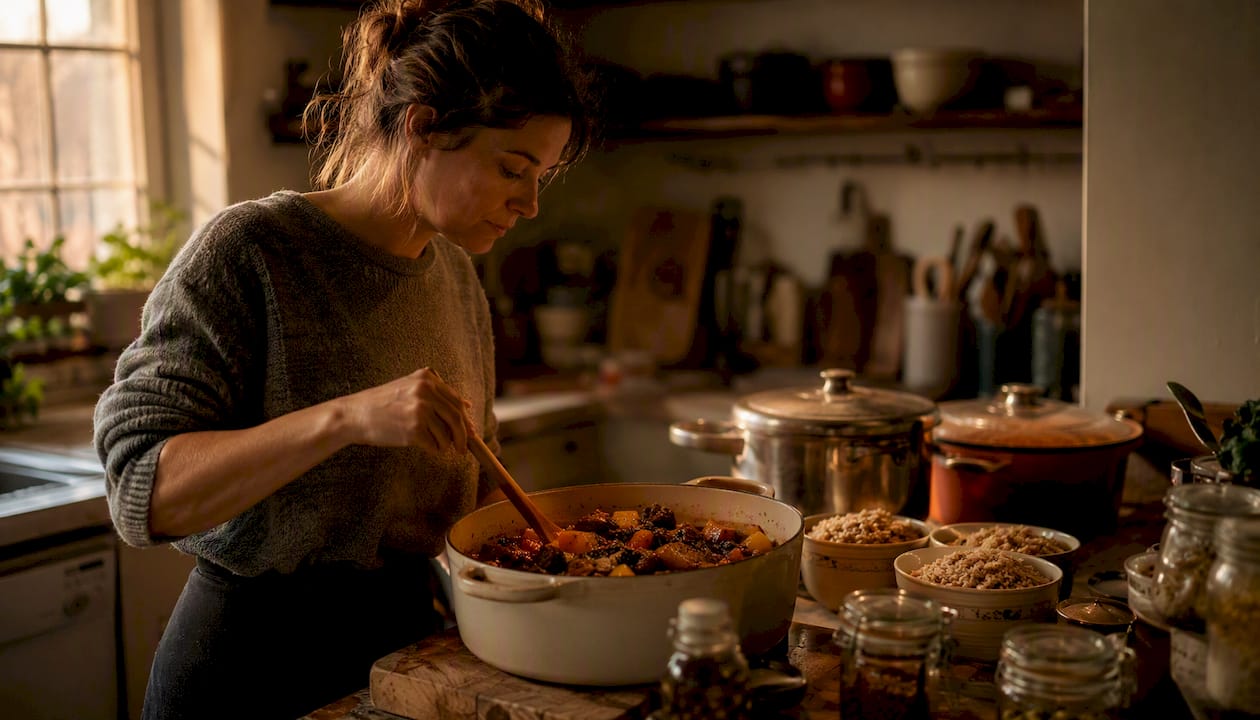
Batch cooking means preparing a handful of core components — a protein, a grain, a sauce, and a roasted vegetable — in one focused session, then mixing and matching them into meals all week. You are not boxing identical lunches. You are stocking a personal ingredient library. A batch cooking session on a Sunday afternoon can yield several cooked components that cover multiple dinners and lunches for a household of two to four people, eliminating the need to cook from scratch until the weekend.
Here is the three-step micro-plan you can run today: Plan (pick three components and write a short shopping list), Cook (run them in parallel using your oven and stovetop simultaneously), Assemble (pull components from the fridge each night and finish them with fresh sauces, herbs, or a quick sauté). That is the whole system.
Key Takeaways
Batch cooking works because it separates the labor of cooking from the act of eating, and component-first sessions produce more variety per hour of effort than any other make-ahead method.
| Point | Details |
|---|---|
| Start with three components | One protein, one grain, one vegetable covers 4–6 meals for most households. |
| Run parallel cooking | Use the oven and stovetop simultaneously to finish a 90-minute session efficiently. |
| Season components lightly | Neutral bases adapt to multiple cuisines; finish with bold condiments at serving time. |
| Label everything | Date and contents on every container prevents waste and removes guesswork. |
| Freeze flat, store vertically | Flat-frozen bags of soup and sauce double your usable freezer space. |
Table of Contents
- What is batch cooking, and how does it differ from meal prep?
- Why batch cook? The real benefits for busy households
- What to batch cook: the best foods and how long they keep
- How to run a batch-cooking session from start to finish
- Freezing, storing, thawing, and food-safety rules
- Sample batch-cooking menus and quick recipes
- Equipment and containers: what you actually need
- Keeping meals interesting: tips, variations, and troubleshooting
- Forkward Kitchen’s tested batch-cooking session
- Frequently asked questions
- Sources
What is batch cooking, and how does it differ from meal prep?
Component-first batch cooking — cooking proteins, grains, vegetables, and sauces rather than fully assembled meals — is what separates the method from classic meal prep. Meal prep typically means portioning identical complete meals into containers on Sunday and eating the same thing Tuesday through Friday. That works for some people, but the monotony is exactly why so many abandon it by week three.
Batch cooking keeps the variety. A pot of cooked farro can become a grain bowl on Monday, a warm salad on Wednesday, and a stuffed pepper filling on Friday. The same braised chicken thighs can go into tacos, a soup, or a quick stir-fry depending on what sounds good that night. The components are neutral enough to adapt; the finishing touches — a squeeze of lime, a spoonful of harissa, a handful of fresh herbs — are what make each meal feel different.
When to choose each method:
- Meal prep suits people who want zero decisions at mealtime and are comfortable eating the same dish repeatedly.
- Batch cooking suits people who want flexibility and variety but still need the time savings of cooking ahead.
Pro Tip: Season your components lightly during the cook session. A grain cooked in plain salted water or light broth stays versatile. A grain cooked in taco spices locks you into one flavor direction all week.
Why batch cook? The real benefits for busy households
The honest case for bulk cooking is not that it is fun. It is that it moves the labor to a time when you have energy and attention, so weeknight cooking becomes assembly rather than production.
Time and decision savings:
- A batch cooking session replaces multiple separate weeknight cooking sessions, recovering significant weeknight time.
- Fewer daily cooking decisions reduce what psychologists call decision fatigue, the mental drain that makes “just order pizza” feel irresistible by Thursday.
- Parallel cooking (oven + stovetop running simultaneously) cuts active hands-on time significantly compared to cooking each component separately.
Cost and waste reduction:
- Buying proteins and grains in larger quantities typically costs less per serving than buying for one meal at a time.
- Using a full bag of lentils or a whole head of cabbage in one session eliminates the half-used vegetable that rots in the back of the drawer.
- Fewer last-minute takeout meals — the most expensive per-serving food option for most households — add up to real monthly savings.
Nutrition:
Stocking your fridge with high-fiber vegetables and legumes as batch components means a balanced meal is always the path of least resistance. When a grain, a protein, and a roasted vegetable are already cooked, you eat them. When nothing is ready, you order something.
A realistic household example: A family of three can spend a modest amount on a batch cooking session covering several meals, which is substantially less expensive than ordering the same meals as takeout.
What to batch cook: the best foods and how long they keep
Not everything benefits from being cooked ahead. The best batch candidates are foods that hold their quality over several days in the fridge or freeze without turning mushy or bland.
Proteins
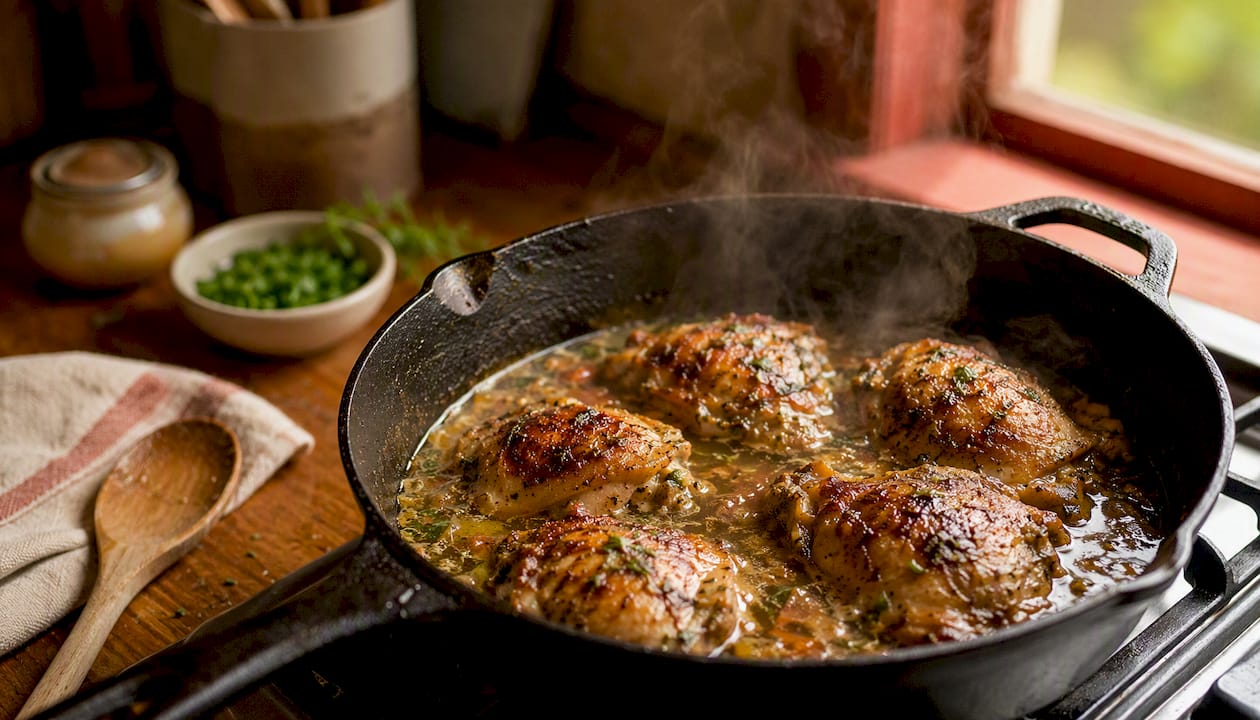
Braised meats (chicken thighs, pork shoulder, beef chuck) are the gold standard. They actually improve after a day or two as the braising liquid absorbs back into the meat. Roasted whole chickens, hard-boiled eggs, and cooked dried beans or lentils are equally reliable. Fridge life: 3–4 days. Freezer life: 2–3 months for braises and beans.
Grains
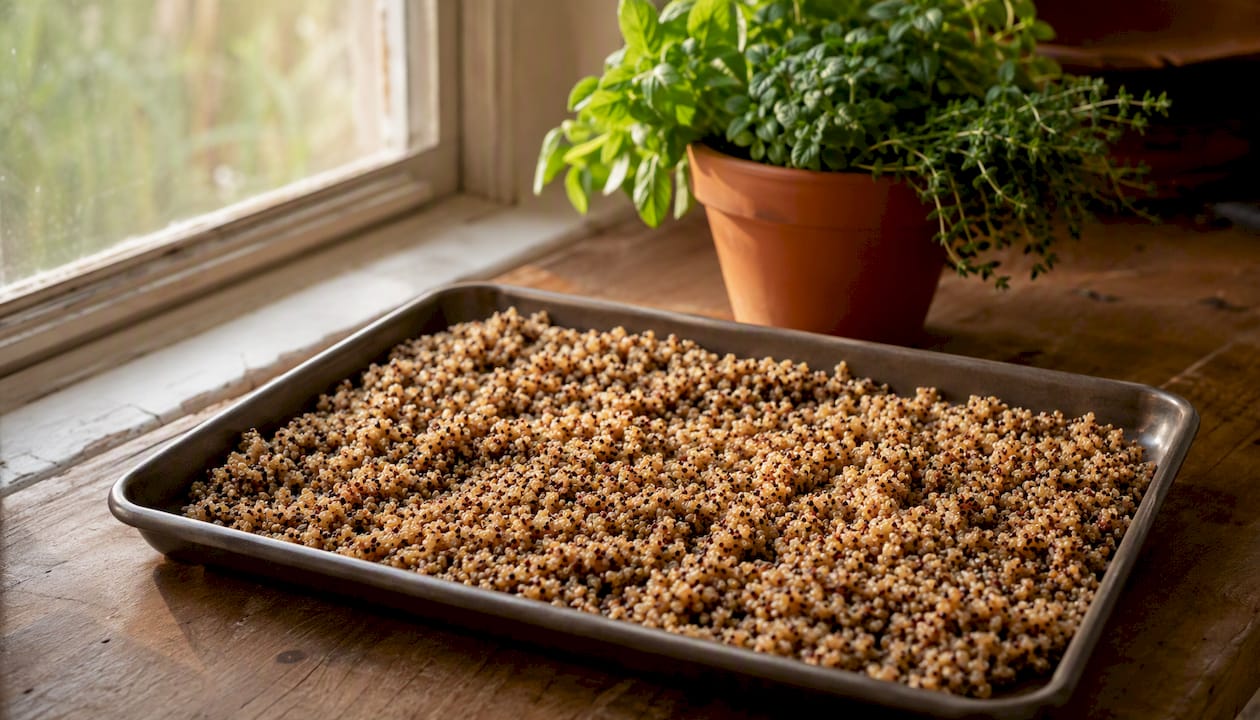
Cooked rice, farro, quinoa, barley, and lentils all refrigerate well for four to five days. For the freezer, spread cooked grains on a sheet pan to freeze in a single layer before transferring to a bag — this prevents the solid brick problem. Fridge life: 4–5 days. Freezer life: 1–2 months.
Hearty vegetables
Roasted root vegetables (carrots, sweet potatoes, beets), caramelized onions, and roasted broccoli or cauliflower hold up well. Delicate greens do not — batch-cook the vegetables that can take heat and time. Fridge life: 3–5 days. Freezer life: 2–3 months for most root vegetables.
Sauces, soups, and stews
These are the freezer’s best friends. A big pot of tomato sauce, a lentil soup, or a chicken broth-based stew freezes beautifully for two to three months. Portion them into quart-sized containers or zip-lock bags laid flat — they stack efficiently and thaw faster. Fridge life: 4–5 days. Freezer life: 2–3 months.
Freezer-friendly baked goods
Muffins, quick breads, and breakfast burritos freeze well individually wrapped. Pull one the night before and it is ready by morning.
Pro Tip: Keep your batch proteins and grains lightly seasoned. A neutral roasted chicken breast can become Greek (lemon, oregano, feta), Asian (soy, ginger, sesame), or Mexican (cumin, lime, jalapeño) depending on what you add at serving time. That single decision — season at the end, not the beginning — is what keeps the week from feeling repetitive.
How to run a batch-cooking session from start to finish
The session itself is not complicated, but the order of operations matters. Starting the wrong thing first means everything finishes at different times and you lose the efficiency of parallel cooking.
Before you shop: the planning step
Pick three or four components based on what you actually want to eat that week. A simple starting framework, popularized by Cassy Joy Garcia’s Cook Once, Eat All Week approach, is one protein, one starch, and one vegetable. Add a sauce or soup if you have time. Then build your shopping list around those components, not around specific recipes. This is the mindset shift that makes batch cooking sustainable long-term.
Quick shopping list template:
- 1 protein (whole chicken, 2 lbs ground meat, 1 lb dried beans)
- 1–2 grains (2 cups farro or rice, 1 lb lentils)
- 2–3 hearty vegetables (sweet potatoes, broccoli, carrots)
- 1 sauce base (canned tomatoes, coconut milk, broth)
- Aromatics and pantry staples (garlic, onion, olive oil, salt)
Session timelines
60-minute session: One protein (sheet-pan chicken thighs), one grain (stovetop rice or quinoa), one roasted vegetable. Enough for 3–4 meals.
90-minute session: Two proteins or one protein plus a pot of soup, one grain, two roasted vegetables. Covers 4–6 meals comfortably.
2-hour session: Full week coverage — two proteins, two grains, a sauce, roasted vegetables, and possibly a breakfast component. Betty Crocker’s thirty-day batch cooking guide notes that planning common ingredients across recipes (like prepping all your onions at once) is one of the biggest time-savers in a longer session.
Cooking day checklist
- Preheat the oven and start any long-cooking items first (braises, roasted root vegetables, dried beans).
- Set up your mise en place — chop all vegetables before anything hits the pan.
- Start the stovetop grain while the oven runs.
- Use the hands-off oven time to prep sauces or a soup on the stovetop.
- Pull items as they finish; let them cool on the counter for 20–30 minutes before refrigerating.
- Portion into labeled containers: date, contents, and whether it is fridge or freezer.
Portioning guidance:
- Fridge containers: 1–2 cup portions for grains and vegetables; full protein pieces stored whole (slice or shred at serving time to retain moisture).
- Freezer portions: meal-sized flat bags for soups and sauces; individual portions for proteins.
Freezing, storing, thawing, and food-safety rules
Safe storage is not optional — it is what makes the whole system work without making anyone sick.
Storage windows at a glance
Cooling, packing, and labeling
- Never put hot food directly into the fridge or freezer. Cool it on the counter for no more than two hours total before refrigerating, per USDA food-safety guidelines.
- Divide large batches into shallow containers to speed cooling — a deep pot of soup takes much longer to drop to a safe temperature than the same soup spread across two containers.
- Label every container with the date and contents. A piece of masking tape and a marker takes ten seconds and saves you from playing “mystery soup” roulette three weeks later.
- Freeze soups and sauces in zip-lock bags laid flat. Once frozen solid, stand them upright like files — they take up a fraction of the freezer space of rigid containers.
Thawing and reheating
- Safest thaw: Move frozen portions to the refrigerator the night before you need them.
- Faster thaw: Submerge sealed bags in cold water, changing the water every 30 minutes.
- Never thaw on the counter at room temperature — the outer layer reaches the bacterial danger zone (40–140°F) long before the center thaws.
- Reheat grains and proteins to an internal temperature of 165°F. Add a splash of water or broth before microwaving grains to restore moisture.
For any storage question outside this guide, the USDA FoodKeeper app and FoodSafety.gov are the authoritative references.
Sample batch-cooking menus and quick recipes
These three weekly builds show how a single session produces varied meals. Each uses the component-first approach, and each links to Forkward Kitchen recipes that fit the components.
Mediterranean week
Session time: 90 minutes | Yield: 5–6 meals for 2–3 people
Components: Lemon-herb roasted chicken thighs, cooked farro, roasted zucchini and cherry tomatoes, simple tomato-olive sauce.
Meal assembly examples:
- Monday: Farro bowl with chicken, roasted vegetables, and a drizzle of olive oil.
- Wednesday: Chicken and tomato-olive sauce over pasta (pair with Forkward’s pasta recipes for sauce ideas).
- Friday: Stuffed pita with shredded chicken, farro, and cucumber-yogurt sauce.
Browse Forkward Kitchen’s full recipe index for tested Mediterranean-style recipes that slot directly into this build.
Cozy soup week
Session time: 75 minutes | Yield: 4–5 meals for 2–3 people
Components: A large pot of lentil and vegetable soup, roasted sweet potatoes, cooked brown rice, hard-boiled eggs.
Meal assembly examples:
- Monday: Lentil soup with crusty bread.
- Tuesday: Rice bowl with roasted sweet potato, a hard-boiled egg, and tahini.
- Thursday: Soup reheated with a handful of fresh spinach stirred in and a squeeze of lemon.
Soups and braised dishes often taste better after a day or two of resting in the fridge — the flavors deepen as the liquid absorbs back into the ingredients.
Quick Asian-inspired week
Session time: 60 minutes | Yield: 4 meals for 2 people
Components: Soy-ginger ground pork (or tofu), cooked jasmine rice, roasted broccoli and snap peas, a simple peanut sauce.
Meal assembly examples:
- Monday: Rice bowl with pork, broccoli, and peanut sauce.
- Wednesday: Lettuce wraps using the same pork and a splash of rice vinegar.
- Friday: Fried rice using the leftover jasmine rice, a couple of eggs, and the remaining vegetables.
For global weeknight dinner ideas that recombine well from batch components, Forkward Kitchen’s international recipe collection is a practical starting point.
Equipment and containers: what you actually need
You do not need a professional kitchen. A handful of reliable tools makes the difference between a smooth session and a chaotic one.
Essential cooking tools
- Two rimmed sheet pans (half-sheet size): The workhorse of any batch session. Roast vegetables on one, proteins on the other, simultaneously.
- A large pot or Dutch oven (5–7 quarts): For soups, stews, braises, and cooking large quantities of grains.
- A 9x13 baking dish: Casseroles, baked proteins, and layered dishes.
- A sharp chef’s knife and a large cutting board: Prep speed depends almost entirely on these two items.
- A digital instant-read thermometer: Non-negotiable for checking protein doneness safely.
Container guidance
Glass containers with locking lids (Pyrex or similar) are the best all-around choice. They go from fridge to oven to table, do not stain, and do not absorb odors. The downside is weight and breakage risk. For the freezer, heavy-duty zip-lock bags or BPA-free rigid plastic containers (Rubbermaid Brilliance or similar) are lighter and stack more efficiently.
Sizes to own:
- 1-cup containers for sauces and dressings
- 2-cup containers for grain and vegetable portions
- 4-cup (quart) containers for soups and stews
- Gallon zip-lock bags for large-batch freezing
Pro Tip: For small kitchens, flat-freeze soups and sauces in zip-lock bags, then store them vertically like books on a shelf. You can fit twice as many portions in the same freezer drawer compared to stacking rigid containers.
The sheet-pan meal prep guide on Forkward Kitchen walks through a full two-hour session built almost entirely around sheet pans — useful if you want to minimize stovetop cleanup.
Keeping meals interesting: tips, variations, and troubleshooting
The most common reason people quit batch cooking is not the effort. It is boredom. The fix is almost always in the finishing, not the cooking.
Flavor variation from the same components
The same cooked chicken and rice can taste like four different cuisines depending on what you add at serving time. Keep a small collection of finishing sauces and condiments on hand: harissa, miso paste, tahini, fish sauce, sriracha, and a good hot sauce. A neutral component plus one bold condiment is a complete flavor profile in under two minutes.
Pro Tip: Make a “finishing station” in your fridge: a small shelf dedicated to condiments, fresh herbs, citrus, and quick pickles. When you open the fridge at 6 PM, the finishing station is what turns “leftover components” into “dinner.”
Scaling and dietary swaps
- Scaling up: Double the grain and sauce quantities without doubling the effort — they cook in the same pot, just longer.
- Protein swaps: Chickpeas or white beans replace chicken in almost any grain bowl or soup. Firm tofu roasts well on a sheet pan at 400°F for 25–30 minutes.
- Picky eaters: Keep one component plain (plain rice, plain roasted chicken) and season the rest. A picky child who will not touch harissa chicken will usually eat plain chicken with the same rice.
Troubleshooting texture after freezing
- Mushy vegetables: Slightly undercook vegetables before freezing — they soften further during reheating.
- Dry reheated chicken: Add a tablespoon of broth or water to the container before microwaving, and cover loosely.
- Clumped frozen grains: Freeze in a single layer first (the sheet-pan method), then bag. If they clump anyway, break them apart while still frozen and reheat with a splash of water.
Forkward Kitchen’s tested batch-cooking session
To give this guide real grounding, the Forkward Kitchen team ran a 90-minute Sunday session using the component-first framework. Here is exactly what happened.
The session plan
Target components: Lemon-herb chicken thighs, cooked farro, roasted sweet potatoes and broccoli, a simple tomato-garlic sauce.
Difficulty rating: Beginner-friendly (3 out of 5 on Forkward’s honest difficulty scale — no advanced technique required, just parallel timing).
Step-by-step with real timings
- 0:00 — Preheat oven to 425°F. Rinse farro and start it on the stovetop (25 minutes, mostly hands-off).
- 0:05 — Chop sweet potatoes and broccoli. Season and spread on two sheet pans.
- 0:15 — Season chicken thighs with lemon zest, garlic, olive oil, salt, and pepper. Add to a third oven rack or a baking dish.
- 0:20 — Slide all three oven items in. Start the tomato-garlic sauce on the stovetop (15 minutes active).
- 0:35 — Sauce done. Farro done. Pull broccoli (it finishes faster than sweet potatoes).
- 0:50 — Pull sweet potatoes and chicken. Rest chicken 10 minutes before portioning.
- 1:00 — Cool everything on the counter. Portion into labeled containers.
- 1:30 — Everything is cooled, labeled, and stored. Session complete.
Yield and storage outcomes
- 6 chicken thighs portioned into 3 fridge containers (3–4 day fridge life) and 2 freezer bags.
- 3 cups cooked farro split across 3 fridge containers.
- Roasted vegetables filled 4 containers, all fridge-only (used within 4 days).
- Tomato-garlic sauce filled 2 quart containers — one fridge, one freezer.
- Total meals covered: 5 dinners and 4 lunches for two people.
What we would change next time
The broccoli finished 15 minutes before the sweet potatoes, which meant it sat on the counter longer than ideal. Next session: start the sweet potatoes 15 minutes earlier, or roast them at a slightly higher temperature. Also, doubling the sauce batch adds almost no extra time and fills the freezer with a genuinely useful asset.
Pro Tip: Your first session will feel slightly chaotic. That is normal. By the third session, the order of operations becomes automatic and the whole thing runs faster. Treat session one as a practice run, not a performance.
For a complete weekly meal plan that pairs with this kind of session, Forkward Kitchen’s family meal planning guide maps out the full week from a single batch.
Why Forkward Kitchen recommends batch cooking
Batch cooking suits Forkward Kitchen’s readers because it rewards the same quality that makes a good recipe worth following: intention. You are not just cooking to fill containers. You are making a deliberate choice about how you want to eat for the next five days, and that choice pays off every evening when dinner takes ten minutes instead of forty-five.
The one tip worth trying immediately: before your next batch session, write down the three meals you most want to eat that week. Then work backward to the components those meals share. You will almost always find that two or three components cover all three meals. That overlap is the whole point.
Frequently asked questions
What is the difference between batch cooking and meal prep? Meal prep typically means portioning identical complete meals ahead of time. Batch cooking means cooking individual components — a protein, a grain, a sauce — and assembling varied meals from them throughout the week. The component approach delivers more variety and tends to be more sustainable long-term.
How long does batch-cooked food last in the fridge? Most cooked proteins and grains last 3–5 days refrigerated at 35–40°F. Soups and sauces hold for 4–5 days. Roasted vegetables are best within 3–5 days. When in doubt, freeze anything you will not eat within four days.
Can you batch cook for one person? Absolutely. Scale down to one protein, one grain, and one vegetable, and you will cover three to four meals in a 45–60 minute session. Freeze half of everything and you effectively have two weeks of lunches from one session.
What are the easiest things to batch cook for beginners? Start with hard-boiled eggs, cooked rice or quinoa, roasted sheet-pan vegetables, and a simple tomato or broth-based sauce. These four components require almost no technique, hold well in the fridge, and combine into dozens of quick meals.
How do you prevent batch-cooked food from getting boring? Season components lightly during cooking and vary the finishing touches at serving time. The same roasted chicken can taste Greek, Mexican, or Asian depending on the condiments and herbs you add. Keeping a small “finishing station” of sauces, citrus, and fresh herbs in the fridge is the single most effective way to keep variety.
Is batch cooking actually cheaper? Buying proteins and grains in larger quantities generally costs less per serving than buying for individual meals. The bigger saving is usually in reduced takeout spending — having ready components in the fridge makes cooking at home the easier choice on tired weeknights.
Sources
- Batch Cooking: How to Cook Less and Eat Better | MinimalistRig
- Why Batch Cooking Is Better Than Meal Prep | Eater
- 35 Batch Cooking Recipes to Save and Freeze | Food & Wine
- High-fiber foods | Mayo Clinic
For any food-safety question not covered here, FoodSafety.gov and the USDA FoodKeeper app are the authoritative references for storage times and safe handling in the United States.