September 16, 2026
1:1 Vanilla Swap: When Home Bakers Should Use Paste or Extract
Decide fast for home baking: use paste when vanilla is the star and extract for everyday mixes. Exact 1:1 swap plus Forkward Kitchen's tested tips and...
1:1 Vanilla Swap: When Home Bakers Should Use Paste or Extract
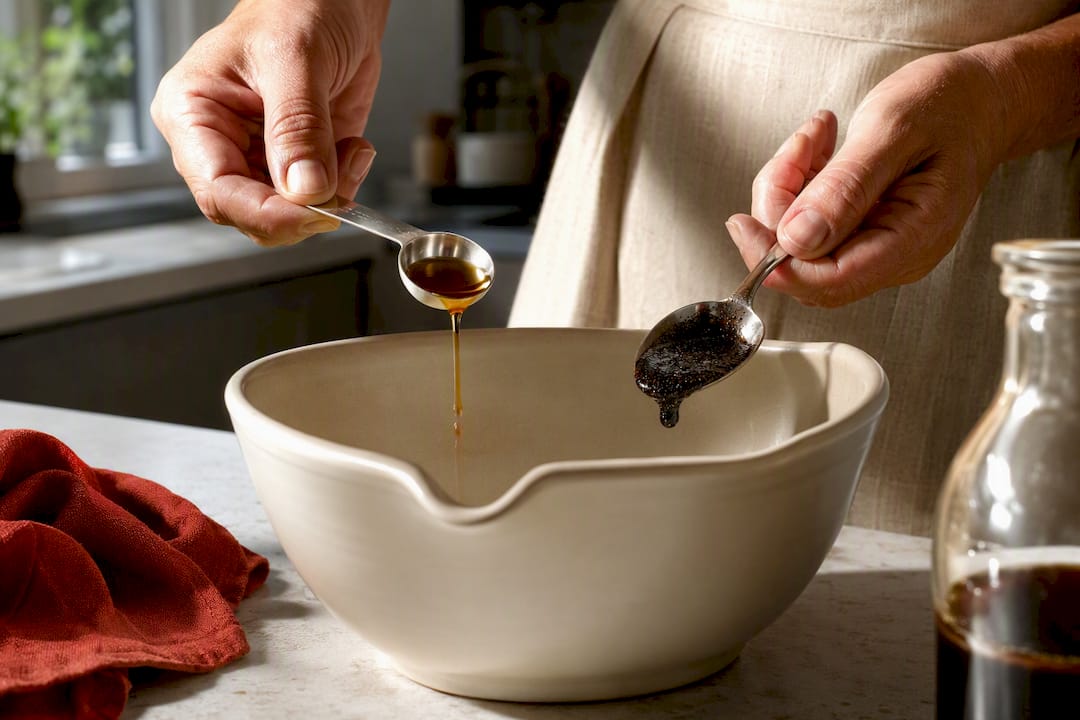
Reach for vanilla bean paste when a dessert lives or dies on vanilla flavor, like custards, ice cream, or a frosting meant to show off flecks of real bean. Reach for extract for everyday cookies, cakes, and batters where cost and smooth blending matter more than showpiece looks. The swap between them is simple: 1 teaspoon of paste equals 1 teaspoon of extract, and paste brings visible black specks plus a touch more sweetness that plain extract doesn’t.
TL;DR:
- Vanilla paste is ideal for custards, ice cream, and frostings because it provides a richer flavor, visible seeds, and a thicker, syrup-like consistency.
- Extract is better suited for baked goods like cookies and cakes where a smooth, unobtrusive vanilla flavor is preferred, and cost efficiency is important.
- One teaspoon of vanilla paste equals one teaspoon of extract, but paste costs more due to the labor-intensive extraction process and contains added sweetness and ground vanilla seeds.
- Store both vanilla extract and paste in a cool, dark place; they last several years, while quality is indicated by a thick, uniform paste and dark glass bottles.
- Use vanilla paste when appearance and layered flavor are critical, such as in custards and ice cream, and choose extract for everyday or quick baking tasks where visual flecks are unnecessary.
Table of Contents
- What Is Vanilla Extract?
- What Is Vanilla Bean Paste?
- Extract vs. Paste: What Actually Changes in the Bowl?
- When Should You Use Paste Instead of Extract?
- Vanilla Substitution Chart: Extract, Paste, and Whole Bean
- What Should You Look for When Buying Vanilla?
- How Long Do Extract and Paste Actually Last?
- What Forkwardkitchen’s Recipe Testing Shows
- Which One Do I Actually Keep on Hand?
- Try These Forkward Recipes to See the Difference Yourself
- Sources
- FAQ
What Is Vanilla Extract?
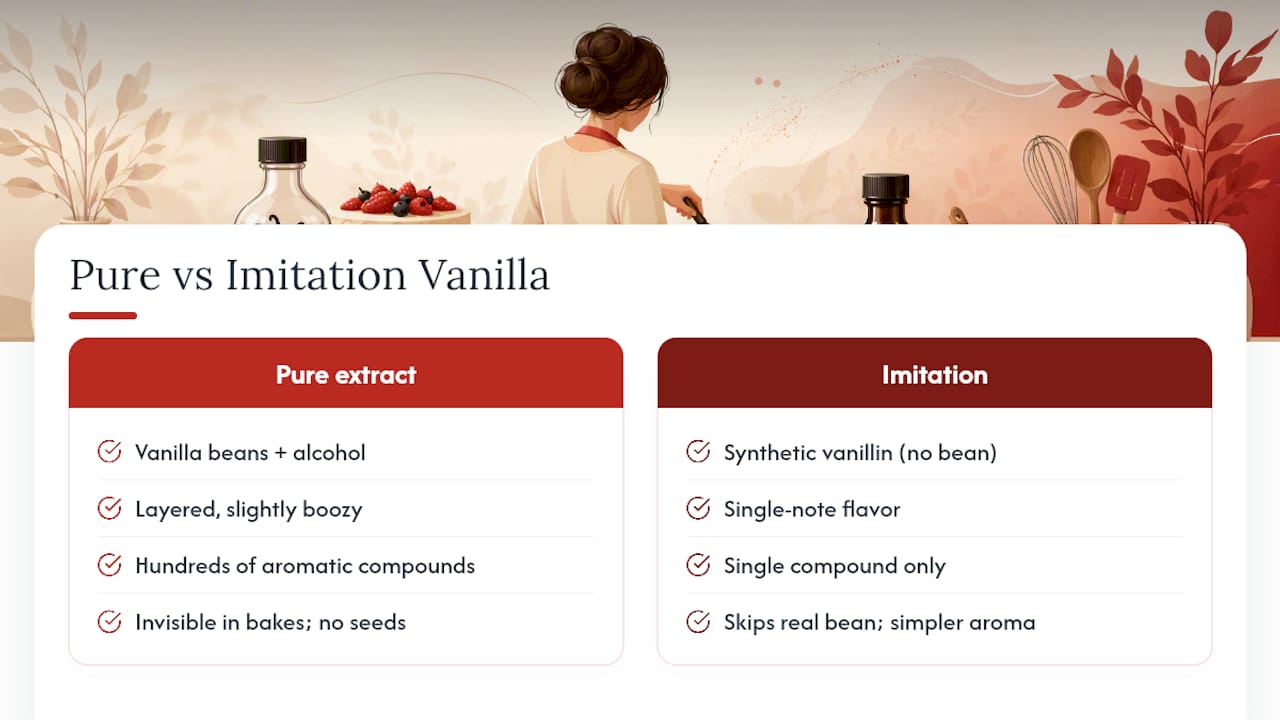
Pure vanilla extract comes from steeping vanilla beans in alcohol and water until the liquid pulls out the bean’s flavor compounds. That word “pure” matters. Imitation vanilla skips the actual bean and relies on synthetic vanillin, a single compound that gives one note instead of the layered, slightly boozy complexity of the real thing, which is why pure extract contains hundreds of aromatic compounds that imitation vanilla can’t replicate.
In practice, extract disappears into whatever you’re making. Stir it into cake batter, cookie dough, or a milkshake and you get flavor with zero visual trace, no seeds, no cloudiness. That invisibility is exactly why it’s the workhorse. It’s also usually the cheaper, more versatile option for daily baking, and since it’s shelf stable for years in a sealed bottle, it’s the bottle most home bakers keep stocked at all times.
What Is Vanilla Bean Paste?
Vanilla bean paste is essentially concentrated extract with ground vanilla seeds and a thickened base folded in, usually built on invert sugar and a stabilizer like xanthan or acacia gum. That combination is what gives paste its signature look: the tiny black flecks people call “vanilla caviar,” suspended in a texture closer to honey than to a thin liquid.
Because it carries seeds along with the extracted aromatics, paste tends to taste rounder and more layered, which is exactly why it performs so well in custards, ice cream, and frostings where vanilla isn’t a background note but the main event. The sugar base adds a whisper of sweetness you won’t notice in most recipes. Paste also solves a real annoyance: scraping a whole vanilla bean pod is fussy, and paste gives you the same visual payoff by the spoonful, no knife required.
Extract vs. Paste: What Actually Changes in the Bowl?
The differences aren’t subtle once you know what to look for, and each one affects a different part of the finished dish.
- Flavor intensity: Paste tastes richer and more layered because it carries both extracted aromatics and ground seed. Extract tastes cleaner and more balanced, which is part of why it blends into a batter without dominating it.
- Appearance: Paste leaves visible black specks throughout whatever you make. Extract is clear to amber and leaves no trace, which matters a lot in white icing or pale batters.
- Texture: Paste is thick and spoonable, closer to a syrup than a liquid, so it can slightly change how a very delicate or whipped batter behaves. Extract pours like water and mixes in without a trace.
- Heat stability: Both hold up reasonably well through baking, but paste’s seeds and thicker base tend to make the vanilla flavor read as more persistent in long-baked or slow-cooked recipes.
- Cost: Paste usually costs more per ounce because of the labor involved in extracting seeds. That premium is worth it in a recipe where vanilla is the star; it’s wasted in a batch of chocolate chip cookies where cocoa and butter do the heavy lifting anyway.
When Should You Use Paste Instead of Extract?
The recipe usually tells you which one to grab, once you know what to look for.
- Custards and pastry cream. Paste is the better call here because the flavor carries through a slow cook and the specks look intentional rather than accidental, the same way they show up in a classic Southern banana pudding recipe built on a scratch custard base.
- Ice cream and frozen desserts. Cold desserts mute flavor, so paste’s concentrated punch and visible seeds do double duty, adding both taste and a “made from scratch” look, like in a vanilla bean no bake cheesecake.
- Frostings and whipped toppings where color allows it. If the frosting is going to be off white or ivory anyway, paste adds depth without hurting the look.
- Cookie dough, cake batter, and quick breads. Extract is the smarter choice because you want the vanilla to disappear into the mix, not show up as flecks in a yellow cake.
- White icings and pale batters. Skip paste here entirely. The specks look like dirt in a snow white glaze, so extract, or vanilla powder if you want zero added liquid, is the right call.
Vanilla Substitution Chart: Extract, Paste, and Whole Bean
The math is easier than most people expect, and it’s the same ratio culinary references from McCormick and Nielsen-Massey both point to.
| Amount needed | Vanilla extract | Vanilla bean paste | Whole vanilla bean |
|---|---|---|---|
| 1 teaspoon | 1 teaspoon | 1 teaspoon | Seeds from about a 2 inch piece of bean |
| 1 tablespoon | 1 tablespoon | 1 tablespoon | 1 whole bean |
A few things to keep in mind when you’re actually making the swap:
- If you want more punch without adding liquid, vanilla powder can deliver concentrated flavor with none of the moisture extract or paste carries.
- The invert sugar in paste is negligible at the 1 to 2 teaspoon range most recipes call for, so don’t worry about it throwing off a standard cake or cookie recipe.
- In a genuinely low-sugar recipe, that small amount of sugar can matter more; if you’re already adjusting sweeteners, check our guide to sugar substitutes for how to compensate.
- Stir paste before measuring. The seeds settle at the bottom of the jar, and a quick stir keeps every spoonful evenly speckled.
What Should You Look for When Buying Vanilla?
The word “pure” on the label is doing real work. It means the flavor comes from actual vanilla beans, not synthetic vanillin standing in for the real thing.
- Check for origin notes like Madagascar, Bourbon, or Mexican vanilla. These usually signal a higher quality bean and a more complex flavor profile.
- Scan the ingredient list on paste for “invert sugar,” “corn syrup,” or heavy amounts of gum-based thickeners. A little is normal; a long list of them near the top usually means you’re paying for filler.
- Spend more on paste and pure extract when vanilla is the featured flavor. Save the budget bottle for recipes where vanilla plays a supporting role, like a batch of brownies.
- Buy extract in dark glass bottles. Light degrades the volatile compounds that give pure vanilla its depth, so clear packaging is a red flag for quality, not just aesthetics.
Pro Tip: Squeeze the paste jar gently before buying if you can. A watery, separated texture usually means it’s been sitting on a shelf too long, while a thick, uniform paste means the seeds are still well suspended.
How Long Do Extract and Paste Actually Last?
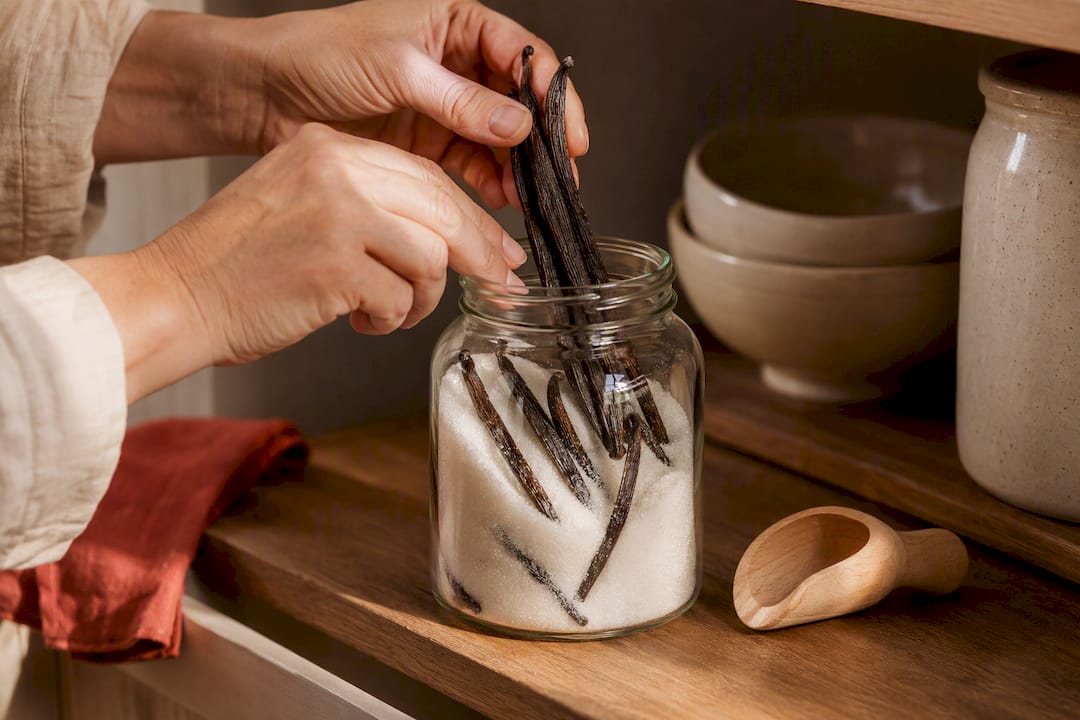
Store both in a cool, dark cabinet away from the stove’s heat and steam, with the lid on tight after every use. Pure extract and paste both hold their flavor well for a long stretch, though you’ll notice the aroma fading and the taste going flat before either one technically spoils. If you’ve got scraped pods left over, don’t toss them: bury them in a jar of sugar for a simple homemade vanilla sugar, or steep them in vodka to build your own extract from scratch.
What Forkwardkitchen’s Recipe Testing Shows
Running the same dessert both ways makes the difference obvious fast. In a no bake vanilla bean cheesecake recipe, swapping paste for extract doesn’t just add specks, it noticeably deepens the vanilla flavor once the filling chills and sets. Extract versions taste clean but flatter by comparison. That’s the pattern across custard-based recipes: paste earns its higher price tag when vanilla has nowhere to hide.
Which One Do I Actually Keep on Hand?
I keep extract in daily rotation and paste reserved for anything going into a glass dish where people can see it. My one hack: if a recipe calls for extract but you want the visual upgrade for a dinner party, swap in paste at the same amount and let the specks do the talking.
— Oloru
Try These Forkward Recipes to See the Difference Yourself
Reading about vanilla flecks in custard is one thing. Watching them show up in your own kitchen is another, and that’s the fastest way to understand this comparison for good.
Start with a Southern banana pudding recipe, where a scratch custard built with paste turns visibly richer and speckled compared to an extract version. Then try the vanilla bean no bake cheesecake to see how paste holds its flavor through a long chill. If you want to explore flavor extraction from a different angle entirely, this piece on how brewing method affects specialty coffee flavor makes a surprisingly useful parallel: the extraction method changes the result as much as the ingredient does.
Every recipe comes with an honest difficulty rating and real testing notes, so you know exactly what you’re getting into before you start. Browse the full recipe collection for more vanilla-forward projects, or head straight to the advanced recipe collection if you’re ready for a showpiece dessert where paste can really shine.
Sources
- Vanilla Bean Paste vs. Vanilla Extract: When to Use Each
- Vanilla Extract vs. Vanilla Bean Paste: What’s the Difference and Best Uses - LorAnn Oils Blog
- When to Use Vanilla Beans, Vanilla Paste & Vanilla Extract - McCormick
FAQ
Can I use vanilla extract instead of vanilla paste?
Yes, extract and paste swap in equal amounts in almost any recipe. You’ll lose the visible specks and a slight edge of sweetness, but the vanilla flavor still comes through clearly.
How much vanilla paste equals 1 teaspoon of vanilla extract?
One teaspoon of paste equals one teaspoon of extract, and the same 1:1 ratio holds at the tablespoon level too, where 1 tablespoon of either equals about one whole vanilla bean.
Is vanilla extract or paste better for baking?
Neither wins outright. Extract is better for everyday cookies, cakes, and batters where cost and smooth blending matter, while paste is better for custards, ice cream, and frostings where vanilla is the main flavor.
Why do people use vanilla paste?
Paste delivers a richer, more layered vanilla flavor along with visible black specks that make a dessert look handmade, without the hassle of scraping a whole vanilla bean pod.