August 28, 2026
The Best Brown Sugar Substitute for Every Recipe
Discover the best brown sugar substitutes for any recipe, from DIY mixes to pantry staples. Perfect your baking with simple swaps!
The Best Brown Sugar Substitute for Every Recipe
Out of brown sugar mid recipe? Mix 1 cup of white sugar with 1 tablespoon of molasses for a light brown sugar substitute, or 2 tablespoons for dark brown sugar. No molasses on hand? Muscovado and coconut sugar both swap in at a 1:1 ratio, and maple syrup or honey work too once you cut back other liquids. The right pick depends on whether your recipe needs dry, granular sweetness or can handle extra moisture, and the sections below walk through exact ratios for each.
TL;DR:
- Using two tablespoons of molasses per cup of white sugar produces a darker, more robust flavor closely resembling store-bought dark brown sugar.
- Muscovado offers a 1:1 swap with brown sugar and provides a deeper, smoky taste due to its higher molasses content.
- Liquid sweeteners like maple syrup or honey can substitute brown sugar in recipes needing extra moisture but require reducing other liquids and lowering oven temperature.
- Granular substitutes such as coconut sugar, turbinado, or date sugar should be processed or adjusted for moisture to prevent gritty or dense baked goods.
- The success of each substitute depends on the recipe type, with granular options ideal for cookies and drier baked goods, and liquids better suited for sauces and glazes.
Table of Contents
- Quick Shortlist: Best Pantry Substitutes and When to Use Them
- How to Make Your Own Brown Sugar
- Using Liquid Sweeteners Instead of Brown Sugar
- Granular Alternatives and Texture Fixes
- Which Substitute Works Best by Recipe Type
- What Forkwardkitchen’s Testing Has Taught Us About Swaps
- Ready to Put These Swaps to Work?
- Why the Ratio Matters More Than the Ingredient
- Sources
Quick Shortlist: Best Pantry Substitutes and When to Use Them
You’ve got more workable options in your pantry than you’d think. Here’s how they stack up.
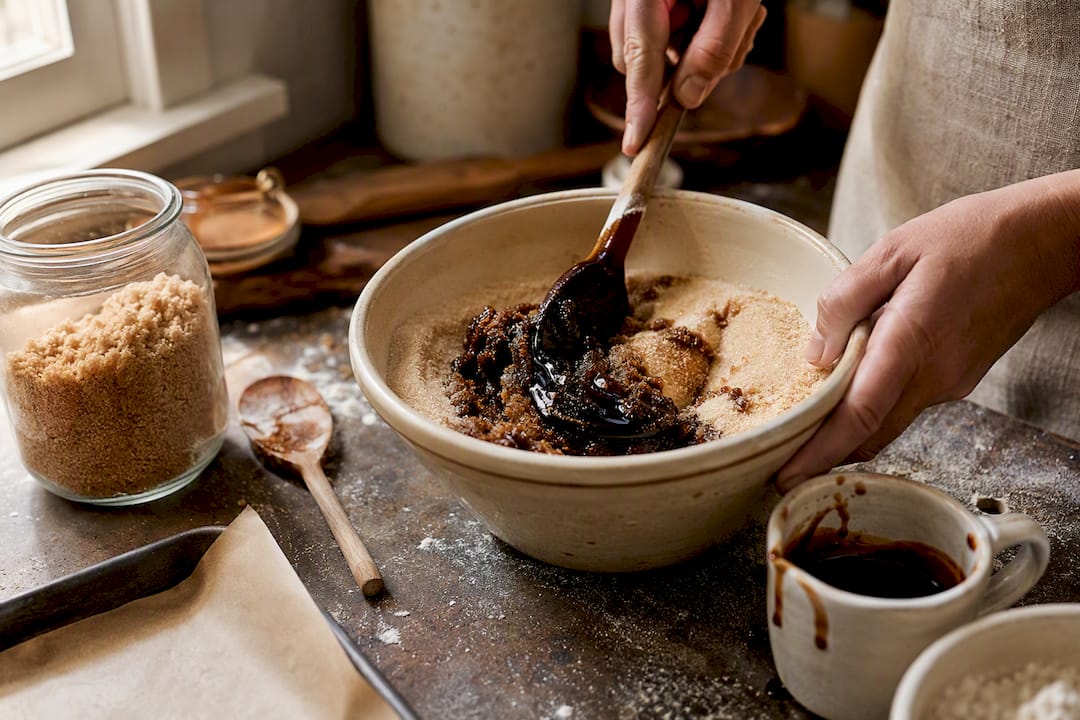
- White sugar + molasses (DIY): 1 cup sugar plus 1 tablespoon molasses gets you light brown; 2 tablespoons gets you dark. This is the closest match in both flavor and function, since brown sugar is technically just white sugar with molasses mixed back in.
- Muscovado: Swap 1:1. It’s the closest store-bought analogue to brown sugar thanks to its higher molasses content, though the flavor runs deeper and slightly smoky.
- Coconut sugar: Also a 1:1 granular swap, but it brings less moisture than brown sugar, so cookies can turn out a touch drier.
- Maple syrup, honey, or agave: Start around 2/3 to 3/4 cup liquid per cup of brown sugar, then trim other liquids in the recipe. Skip these in recipes that depend on a crisp, dry crumb.
- Plain white sugar: Works in a pinch, but expect a crisper, drier bake with less caramel depth.
For most bakers, the DIY molasses mix or muscovado will get you closest to the original without a special trip to the store.
How to Make Your Own Brown Sugar
This is the fix Forkwardkitchen reaches for most often, because it takes under a minute and uses two ingredients almost everyone already owns.
- Measure 1 cup granulated white sugar into a bowl.
- Add 1 tablespoon molasses for light brown sugar, or 2 tablespoons for dark brown. Working with a smaller batch? Use 1 teaspoon molasses per 1/3 cup sugar as your baseline.
- Mix with a fork, or work it in with your fingers until the molasses is evenly distributed and no dry streaks remain. A stand mixer on low works too if you’re scaling up.
- Store in an airtight jar. A terra-cotta brown sugar saver, soaked and dried before use, keeps it soft for weeks.
If it hardens anyway, tuck a slice of bread into the container overnight, or microwave it in 20 second bursts with a damp paper towel draped over the bowl.
Pro Tip: Add molasses gradually and taste as you go. Too much turns bitter fast, and it’s much easier to add more than to fix an over molassed batch.
Using Liquid Sweeteners Instead of Brown Sugar
Maple syrup, honey, and agave can all stand in for brown sugar, but they behave differently in the oven because they’re already dissolved sugar with water attached.
- Start with roughly 2/3 cup liquid sweetener per 1 cup brown sugar (maple syrup often needs a bit less than a full cup to match sweetness).
- Cut another liquid in the recipe, milk, water, or juice, by about 1/4 cup for every cup of syrup you add back in.
- Lower your oven temperature by 10 to 15°F, since syrups brown faster than granulated sugar and can scorch before the center finishes baking.
- Reach for liquid sweeteners in glazes, sauces, and quick breads, where extra moisture is welcome. Avoid them in crisp cookies, where they’ll leave you with a cakey, soft result instead of that classic snap.
- If your batter turns too loose after the swap, whisk in an extra tablespoon of flour, or add a tablespoon of butter to rebalance the fat-to-liquid ratio.
Granular Alternatives and Texture Fixes
Not every substitute pours from a syrup bottle. These dry alternatives swap in cup for cup, but each comes with its own quirks.
- Muscovado brings the closest flavor and moisture level to brown sugar. Swap it 1:1, but expect a stickier dough and a more pronounced molasses punch.
- Coconut sugar swaps 1:1 as well, though it carries slightly less moisture and less overall sweetness. Add an extra tablespoon of butter or milk if your bake seems dry.
- Turbinado and demerara have coarse, large crystals that can leave a gritty crumb. Pulse them in a food processor first, or dissolve them into a warm liquid before mixing in.
- Date sugar works well in spice cakes and bars, where its density and earthy sweetness fit right in. It doesn’t melt like other sugars, so trim other liquids slightly to keep the texture from getting heavy.
Which Substitute Works Best by Recipe Type
The right swap depends less on what’s in your pantry and more on what texture the recipe is chasing.
- Cookies: Prioritize moisture retention. Muscovado or the DIY white sugar and molasses mix swap 1:1 and keep that chewy center intact, especially in recipes like brown butter chocolate chip cookies that depend on molasses for depth.
- Cakes and quick breads: Coconut sugar or a liquid sweetener with adjusted liquids both work well here, since these bakes tolerate a little extra moisture without losing structure.
- Sauces and glazes: Maple syrup or a dark, molasses-forward mix adds shine and depth that plain sugar can’t match. This is where liquid sweeteners genuinely outperform granular ones.
- Savory dishes: Dark molasses mixes or muscovado bring the umami and caramel notes that barbecue sauces, marinades, and glazed vegetables rely on.
Pro Tip: If a recipe calls for creaming butter and brown sugar together, stick with a granular substitute. Liquid sweeteners won’t aerate the same way, and you’ll lose the light, fluffy texture creaming is meant to create.
What Forkwardkitchen’s Testing Has Taught Us About Swaps
Testing swaps for egg substitutes and buttermilk substitute has shown a pattern: the ingredients that look interchangeable on paper rarely behave that way in a hot oven. Brown sugar substitutes follow the same rule.
A few things show up again and again in test batches. Too much molasses skews bitter, not richer, so start with less than you think you need. Syrups speed up browning, which means a cake can look done on the outside while the center’s still raw. Coarse raw sugars, if used straight from the bag, tend to leave a gritty crumb instead of the smooth bite brown sugar gives you.
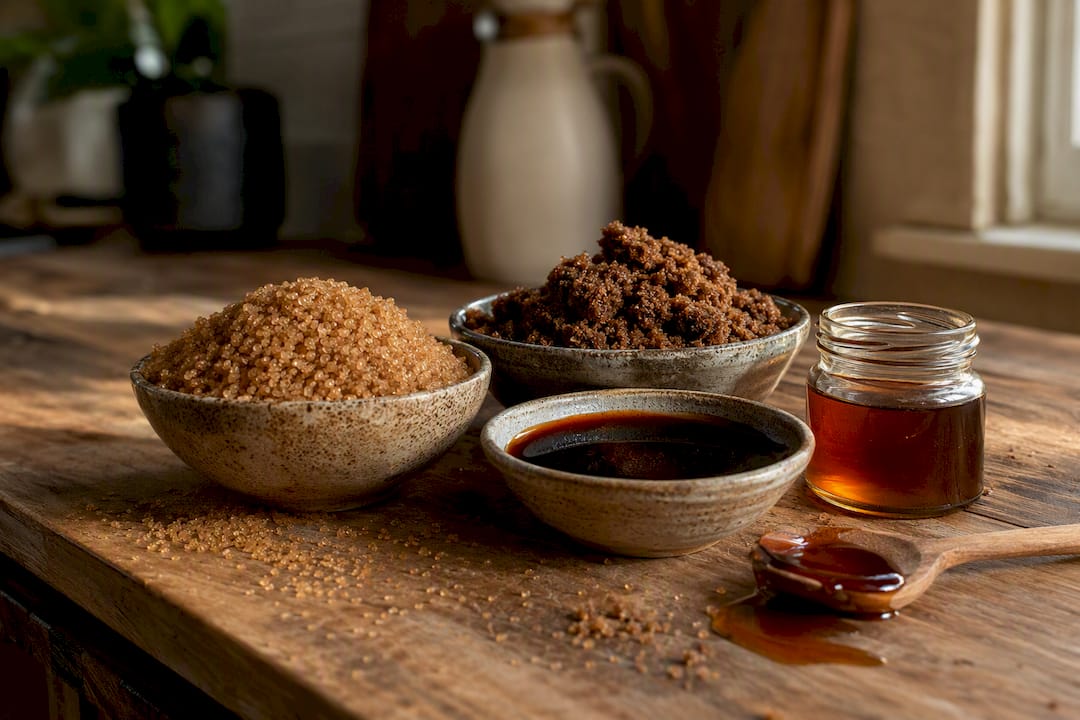
The fixes are simple once you know to look for them: add a tablespoon of fat if the batter seems dry, drop the oven temperature slightly when using syrups, and sift muscovado through a fine mesh strainer if it’s clumped. For low-carb baking, monkfruit or allulose blends with a touch of molasses can mimic brown sugar’s moisture, though the caramel notes never fully match the real thing.
Ready to Put These Swaps to Work?
Knowing the ratios is one thing. Baking with confidence is another, and that only comes from trying a swap in a recipe you already trust. Forkwardkitchen tests every recipe from scratch, including the ones where sugar choice makes or breaks the final bite, like the brown butter edible cookie dough built specifically around that deep caramel flavor. Browse the full recipe collection to find your next project, or head straight to Forkwardkitchen for recipes worth slowing down for.
Why the Ratio Matters More Than the Ingredient
Most advice on brown sugar substitutes treats every option as roughly equal, as if picking coconut sugar over honey is just a matter of preference. It isn’t. The ratio you use determines whether a swap succeeds or quietly ruins a bake, and that detail gets buried under long lists of “here are ten substitutes” that never say which one actually behaves like brown sugar under heat.
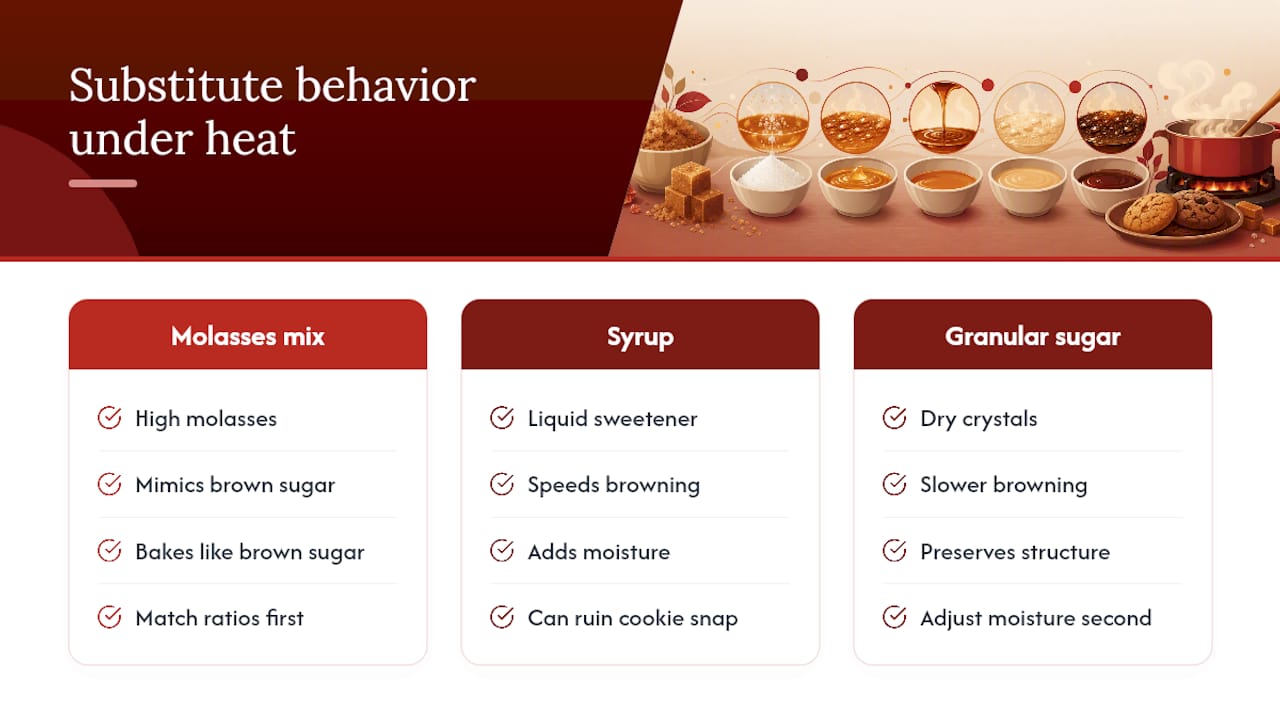
The DIY molasses mix gets undersold, probably because it feels like a workaround rather than a real substitute. It’s not a workaround. It’s chemically closer to store-bought brown sugar than almost anything else on a typical list, because that’s literally what brown sugar is. If you take one thing from this guide, let it be this: match the substitute to what the recipe needs texturally, not just what tastes similar on a spoon. A syrup that tastes like brown sugar can still wreck a cookie’s snap. A granular sugar that tastes milder can still hold a cake together perfectly.
Start with ratios, adjust for moisture second, and taste as you go. The rest is just practice.
— Oloru
Sources
For exact ratios and storage tips, sugar.org’s DIY brown sugar guide is the clearest reference available. Healthline’s roundup of common substitutes and Food & Wine’s breakdown of muscovado and raw sugars both cover culinary context in depth. For the chemistry behind why sugar swaps change texture and browning, the background research on sugar properties is worth a skim.
- In a pinch? Make brown sugar at home
- 7 Easy Substitutes for Brown Sugar
- The Best Substitutes For Brown Sugar