August 19, 2026
Egg Substitute in Baking: Tested Swaps by Role and Ratio
Discover the best egg substitutes in baking to enhance binding, moisture, and leavening. Find the perfect swap for your recipes!
Egg Substitute in Baking: Tested Swaps by Role and Ratio
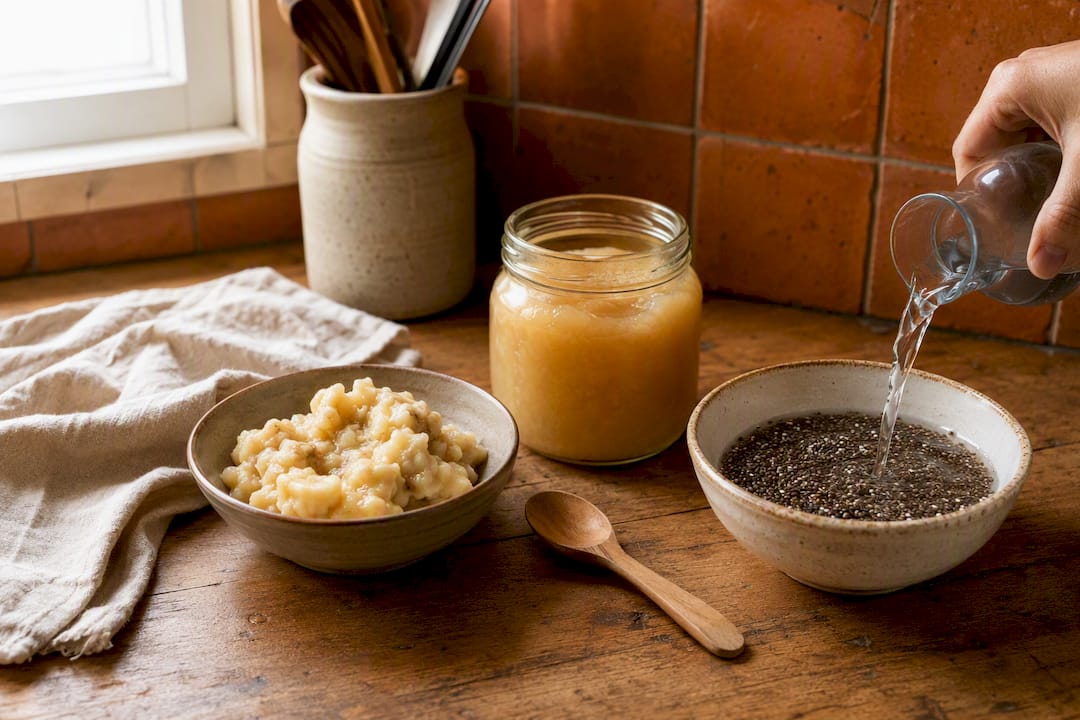
There’s no single perfect egg substitute in baking, but there is a right one for whatever job the egg is doing in your recipe. For binding, reach for a flax or chia egg (1 tablespoon ground seed plus 3 tablespoons water). For moisture, use ¼ cup unsweetened applesauce or mashed banana. For leavening in pancakes and muffins, a splash of carbonated water or a baking powder and oil mix works better than any fruit puree. For whipping, only aquafaba comes close to egg whites.
The math you need before anything else: one large egg equals about ¼ cup, or 4 tablespoons. Match that volume and you’re already halfway to a successful swap.
Here’s the fast list, ranked by what home bakers reach for most:
- Binding: 1 Tbsp ground flax or chia + 3 Tbsp water, rested 5 to 10 minutes
- Moisture: ¼ cup unsweetened applesauce or mashed ripe banana
- Leavening (pancakes, muffins): ¼ cup carbonated water, or 1 to 2 tsp baking powder + 1 to 2 Tbsp oil + 1 to 2 Tbsp water
- Whipping (meringue, mousse): 3 Tbsp aquafaba, whipped
- Convenience/shelf-stable: Ener-G Egg Replacer or Bob’s Red Mill Egg Replacer, mixed per the package
- Rich, dense bakes: 3 Tbsp nut butter or ¼ cup blended silken tofu
Pro Tip: Keep a small notebook page (or a note on your phone) logging which substitute you used and how the bake turned out. Egg-free baking rewards pattern recognition more than memorized rules.
Key Takeaways
Matching an egg substitute to the specific role it needs to play, binding, moisture, leavening, or whipping, is the single factor that determines whether a swap succeeds or fails.
| Point | Details |
|---|---|
| Match role to substitute | Identify whether your recipe needs binding, moisture, leavening, or whipping before picking a swap. |
| Use the ¼-cup rule | One large egg equals roughly a quarter cup, the target volume for nearly every substitute ratio. |
| Cookies are the most forgiving | Flax, chia, and applesauce consistently produce edible, well-structured cookies in trial bakes. |
| Skip whipped-egg recipes | Meringues, angel food, and sponge cakes rely on egg foam structure that substitutes can’t rebuild. |
| Test in small batches | Try a half-batch with any new substitute before committing a full recipe to it. |
| Explore tested recipes | Forkwardkitchen’s full recipe collection shows substitution-friendly bakes with honest difficulty notes and tested results. |
Table of Contents
- What Role Do Eggs Actually Play in Baking?
- How Much Substitute Equals One Egg?
- How Do You Make a Flax or Chia Egg?
- Can Applesauce or Banana Replace Eggs for Moisture?
- Is Aquafaba a Good Egg Substitute for Baking?
- Do Commercial Egg Replacers Work as Well as Homemade Ones?
- Can Yogurt, Tofu, or Nut Butter Replace Eggs?
- What Chemical Leavening Tricks Replace an Egg’s Rise?
- Which Egg Substitute Works Best for Cookies, Cakes, and Muffins?
- Why Do Egg-Free Bakes Sometimes Fail?
- What Does the Research Actually Say About Egg Substitutes?
- Are Egg Substitutes Healthier or Riskier for Certain Diets?
- How Long Do Egg Substitutes Last in Storage?
- Is Baking Without Eggs Better for the Environment?
- Ready to Put These Substitutes to the Test?
- Frequently Asked Questions
- Sources
What Role Do Eggs Actually Play in Baking?
Eggs do four separate jobs in a batter or dough, and most recipes lean on two or three at once: binding, moisture, leavening, and emulsifying (with a side effect of browning on the crust). Figuring out which job matters most in your recipe is the single biggest predictor of whether your substitute works.
- Binding holds dry ingredients together so cookies and quick breads don’t crumble apart.
- Moisture adds liquid fat and water content, keeping muffins and brownies from drying out.
- Leavening traps air during mixing and expands with heat, giving cakes and popovers their rise.
- Emulsifying (mostly from the yolk’s lecithin) lets fat and water blend smoothly instead of separating.
You can often guess the dominant role from the recipe itself. A cookie dough with one egg and a lot of butter is leaning on binding. A muffin batter that calls for baking powder and eggs is asking the eggs for extra lift on top of chemical leavening. A pound cake or sponge cake that lists eggs as a primary ingredient, sometimes whipped separately, is using them for structure and leavening simultaneously, and that’s where substitutes get shaky.
Pro Tip: If a recipe whips eggs (whole or just whites) to add volume before the other ingredients go in, treat that as a warning sign. Whipped-egg recipes like angel food or sponge cakes rely on protein structure that most substitutes can’t rebuild.
How Much Substitute Equals One Egg?
The conversion that matters most: one large egg is roughly ¼ cup, or 4 tablespoons. Every substitute ratio below is built around hitting that same volume, though a few (like flax and chia) work because of what they do chemically, not just how much space they take up.
| Substitute | Ratio per 1 large egg | Timing note |
|---|---|---|
| Ground flaxseed | 1 Tbsp + 3 Tbsp water | Rest 5–10 minutes to gel |
| Chia seeds | 1 Tbsp + 3 Tbsp water | Rest 5–10 minutes to gel |
| Unsweetened applesauce | ¼ cup | Use immediately |
| Mashed banana | ¼ cup | Use immediately |
| Aquafaba (liquid) | 3 Tbsp | Use immediately as liquid |
| Aquafaba (whipped) | 3 Tbsp | Whip 5–8 minutes to peaks |
| Plain yogurt or buttermilk | ¼ cup | Use immediately |
| Blended silken tofu | ¼ cup | Blend until smooth first |
| Carbonated water | ¼ cup | Add last, off the mixer |
| Baking powder + oil + water | 1–2 tsp + 1–2 Tbsp + 1–2 Tbsp | Mix in immediately |
| Vinegar + baking soda | 1 Tbsp + 1 tsp | Add right before baking |
A few things to keep in mind while measuring:
- Flax and chia need the full rest time. Skip it and you’re baking with wet seeds instead of a gel that can act as a binder.
- Whipped aquafaba deflates fast, so fold it in right before the batter goes into the pan.
- Recipes that call for more than three eggs are where every substitute starts to struggle, since the cumulative structure and aeration becomes too much to fake with one ingredient swap.
How Do You Make a Flax or Chia Egg?
The short version: 1 tablespoon of ground flaxseed or chia seeds mixed with 3 tablespoons of water, left to sit for 5 to 10 minutes until it thickens into a gel, replaces one large egg.
- Grind whole flaxseed if you’re not using pre-ground meal. Chia seeds don’t need grinding, though ground chia gives a smoother texture with less visible speckling.
- Stir 1 tablespoon of the ground seed into 3 tablespoons of water in a small bowl.
- Let it rest 5 to 10 minutes. It should turn thick and slightly stretchy, close to a raw egg white in consistency.
- Stir once more before adding it to your wet ingredients, then mix into the batter or dough as you normally would.
- If making multiple “eggs” for one recipe, scale the ratio evenly, but stop trusting the swap much past two flax eggs in a single recipe.
Flax and chia eggs shine in cookies and dense quick breads, and extension trial bakes found flax performed best among tested substitutes for small-batch cookies, producing edible, well-structured results. The trade-off is flavor and appearance: flax adds a mild nutty, slightly earthy taste and can leave small brown flecks throughout your batter. Chia is milder in flavor but leaves visible little seeds unless you use ground chia.
- Best for: cookies, muffins, quick breads, pancakes
- Texture result: denser, chewier crumb; less lift than an egg-leavened bake
- Avoid for: meringues, whipped-egg cakes, anything relying on egg foam for volume
Pro Tip: If your batter feels stiffer than usual after adding a flax egg, add an extra tablespoon of milk or water. Flax absorbs liquid as it sits in the oven, not just in the mixing bowl.
Can Applesauce or Banana Replace Eggs for Moisture?
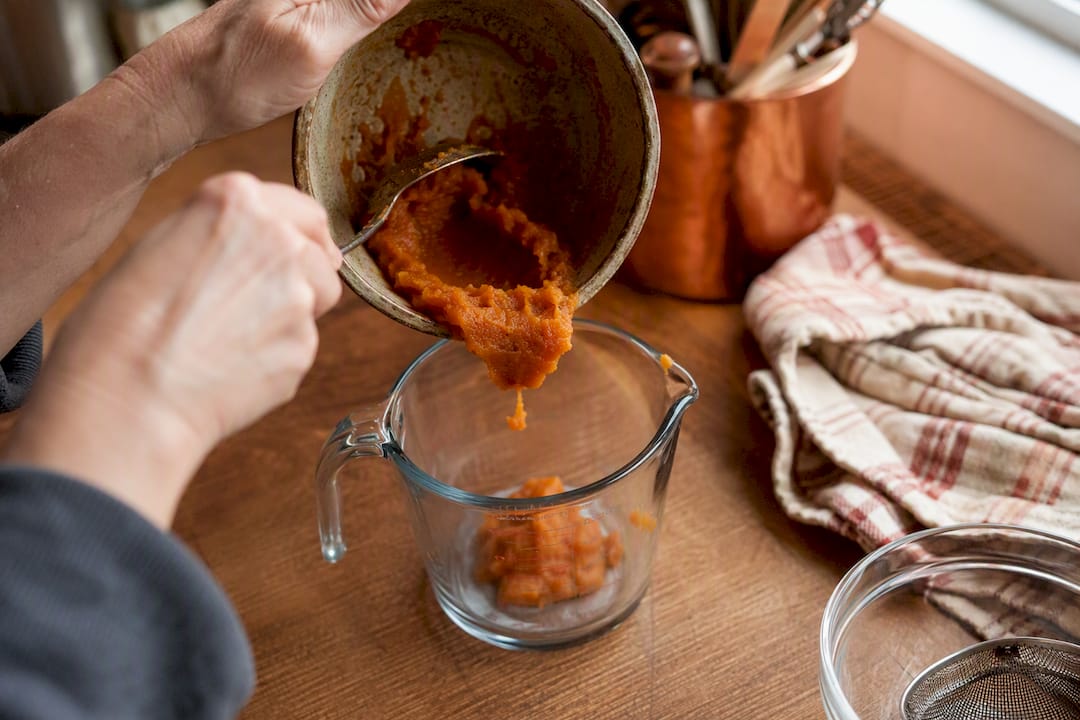
Yes, typically at a ratio of ¼ cup unsweetened applesauce or mashed ripe banana per egg, though both will change the flavor and sweetness of your final bake.
These purees replace an egg’s moisture and, to a lesser extent, its binding power. They don’t do much for leavening, so a cake or muffin recipe that depended on eggs for lift will come out denser and flatter when you swap in fruit.
- Applesauce (¼ cup per egg): best in spice cakes, quick breads, and brownies where a little extra sweetness blends in without clashing.
- Mashed banana (¼ cup per egg): best in banana bread, muffins, and pancakes, where the flavor is already expected.
- Pumpkin puree (¼ cup per egg): works well in fall quick breads and spice muffins, adding moisture without much sweetness.
- Mashed sweet potato (¼ cup per egg): a good option for dense breads where a little vegetable flavor is welcome.
Skip fruit purees in savory bakes, delicate white cakes, or anything where a fruity undertone would be out of place. If your batter feels too wet after adding puree, cut back slightly on other liquids like milk or oil to compensate. A banana-forward muffin recipe is a good place to see how banana’s natural moisture changes both crumb and bake time.
Pro Tip: If you’re avoiding added sugar, always reach for unsweetened applesauce. The sweetened version can throw off the sugar balance in recipes that are already dialed in.
Is Aquafaba a Good Egg Substitute for Baking?
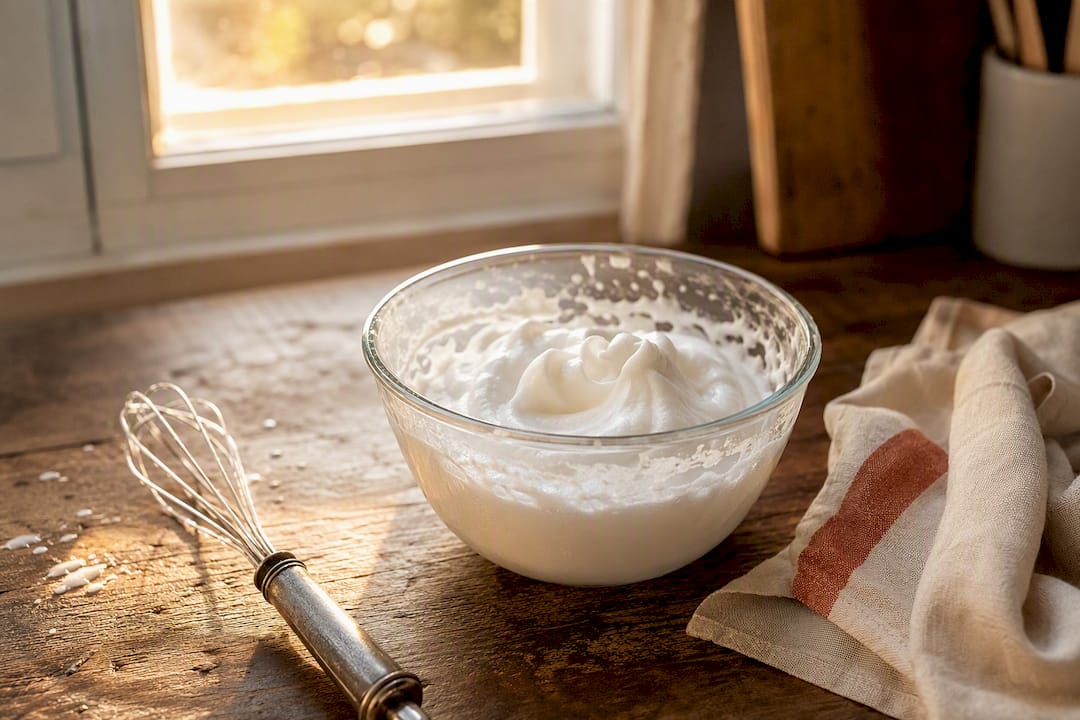
Aquafaba, the liquid drained from a can of chickpeas, replaces one large egg at about 3 tablespoons, and it’s the closest thing to a true egg-white substitute for recipes that need whipped volume.
- Drain the liquid from a can of chickpeas into a bowl, no need to rinse the beans first.
- If it seems thin, simmer it gently on the stove for a few minutes to reduce it slightly.
- Add it to a clean, grease-free mixing bowl.
- Whip with a hand or stand mixer for 5 to 8 minutes, adding a pinch of cream of tartar early on to help it stabilize.
- Add sugar gradually once soft peaks form if you’re making a meringue, just as you would with real egg whites.
Aquafaba is best treated like an egg-white replacement for foams and meringues rather than a straight liquid swap, since used incorrectly it tends to make batters gummy. It works well in:
- Meringues and pavlova-style desserts
- Mousses and no-bake fillings
- Some cake batters where it’s whipped in for lift, not just poured in
The pitfall shows up when bakers dump aquafaba straight into a batter as a one-to-one liquid swap. Extension trial notes on small-batch cookies found aquafaba cookies spread more and turned crunchier than versions made with flax or applesauce, a sign the batter’s structure shifted more than expected.
Pro Tip: A small pinch of cream of tartar (about ⅛ teaspoon per 3 tablespoons of aquafaba) makes the difference between soft, deflating peaks and a foam that actually holds through baking.
Do Commercial Egg Replacers Work as Well as Homemade Ones?
Commercial egg replacers work reliably when your recipe needs binding or a bit of leavening help, though you should expect a slightly different texture than a fresh egg would give you.
Most powdered replacers combine starches (potato starch, tapioca), a leavening agent like baking soda, and sometimes a plant protein, all designed to mimic an egg’s function without needing refrigeration. Follow the package directions closely. Most brands call for roughly 1 tablespoon of powder whisked with 2 to 3 tablespoons of water per egg, though the exact ratio varies by product.
Ener-G Egg Replacer and Bob’s Red Mill Egg Replacer are two widely available shelf-stable options home bakers can find in most grocery stores, and both work as a neutral fallback when you don’t have flax, chia, or fruit on hand.
- Pros: consistent results batch to batch, shelf-stable, no need to plan ahead like you would with a flax or chia egg
- Cons: can leave a faint starchy aftertaste in delicate bakes; texture sometimes comes out slightly gummier than fresh egg
Commercial replacers tend to slot in best for cookies, muffins, and pancakes, the same categories where flax and chia perform well, making them a reasonable substitute when you want convenience over a from-scratch mix.
Pro Tip: Whisk commercial egg replacer powder into the water first, before adding it to your batter. Adding the dry powder directly to a wet mix almost always creates lumps.
Can Yogurt, Tofu, or Nut Butter Replace Eggs?
Dairy, tofu, and nut butter substitutes work best when a recipe needs moisture and a little richness rather than lift, and the ratios are simple: ¼ cup plain yogurt or buttermilk, ¼ cup blended silken tofu, or 3 tablespoons of nut butter per egg.
- Plain yogurt or buttermilk (¼ cup per egg): adds moisture and a slight tang, works well in dense cakes and quick breads.
- Blended silken tofu (¼ cup per egg): neutral in flavor once fully blended, good for brownies and fudgy bars where a dense crumb is welcome.
- Nut butter, like peanut or almond (3 Tbsp per egg): works mainly as a binder, best in cookies and bars where a nutty flavor fits.
Silken tofu needs to be blended completely smooth before it goes anywhere near your batter. Leave it chunky and you’ll get pockets of tofu texture baked right into your cake. For yogurt and buttermilk, stick with the plain, unsweetened versions so you’re not adding unexpected sugar or fruit flavor.
Nut butter substitutes carry an obvious allergy warning: they’re off the table for anyone baking for a nut-free classroom, workplace, or gathering, and packaging on store-bought baked goods should be labeled accordingly if you plan to share.
Pro Tip: When using silken tofu, reduce any other liquid in the recipe by a tablespoon or two. Tofu carries more water content than a fresh egg, and skipping this adjustment is the most common reason tofu-based bakes turn out soggy.
What Chemical Leavening Tricks Replace an Egg’s Rise?
For pure leavening power, without needing binding or richness, three kitchen staples do the job: vinegar and baking soda, baking powder mixed with oil and water, or plain carbonated water.
- Vinegar + baking soda: 1 tablespoon of white vinegar mixed with 1 teaspoon of baking soda, added right before the batter goes into the pan, since the reaction starts fizzing immediately.
- Baking powder + oil + water: 1 to 2 teaspoons of baking powder combined with 1 to 2 tablespoons of oil and 1 to 2 tablespoons of water, whisked together and folded in last.
- Carbonated water: ¼ cup, added at the very end of mixing so you don’t knock the bubbles out before baking.
Serious Eats testing found the combination of extra baking powder, added liquid, and a bit of fat performed closest to eggs in pancakes and muffins, beating out several single-ingredient swaps for lift specifically. Separately, The Kitchn’s tests rated carbonated water among the top substitutes for muffins, producing a crumb close to the egg-based version.
These leavening tricks are close to flavor-neutral, which is their biggest advantage over fruit purees or nut butter. Their weakness is structure: none of them bind ingredients together or add richness, so they’re a poor choice in any recipe where the egg’s job is mostly to hold things together, like a dense cookie dough.
Which Egg Substitute Works Best for Cookies, Cakes, and Muffins?
Matching your substitute to the specific bake matters more than picking a “best overall” option, since cookies, cakes, muffins, and pancakes each lean on eggs for different reasons.
Cookies tolerate egg substitution better than almost anything else you’ll bake, which is why flax, chia, applesauce, and commercial replacers all show up as reliable options. A brown butter chocolate chip cookie recipe built around structure from butter and flour, rather than eggs alone, gives you more room to experiment with a flax or chia swap without the dough falling apart.
Brownies and dense quick breads are nearly as forgiving, since they’re supposed to be fudgy and moist rather than light and airy. Muffins and pancakes respond best to the carbonated water or baking-powder tricks, since they need lift more than binding. Cakes are the trickiest category by far: a simple butter cake with one or two eggs can often handle a flax or applesauce swap, but anything closer to a pound cake or sponge, where eggs provide most of the structure, is better baked from a recipe built to be egg-free from the start.
Why Do Egg-Free Bakes Sometimes Fail?
Most egg substitution failures trace back to one of four problems: too dense, collapsed in the middle, gummy texture, or an off flavor you didn’t expect.
- Too dense or heavy: usually means you needed more leavening. Add a small amount of extra baking powder next time, or switch from a fruit puree to the carbonated water method.
- Collapsed or sunken center: typically a sign the substitute couldn’t hold the structure through baking. Reduce the recipe’s egg count by swapping only one or two eggs; substituting all eggs in recipes that call for multiple eggs often leads to failure.
- Gummy or wet texture: almost always caused by too much liquid, common with aquafaba used straight or tofu that wasn’t blended smooth. Cut back other liquids by a tablespoon and blend tofu longer.
- Unexpected flavor: trace it back to the substitute itself. Swap unsweetened applesauce for sweetened, or plain yogurt for flavored, and the problem usually disappears.
Some bakes just aren’t worth substituting in. Skip egg substitutes entirely for meringues, angel food cake, and true sponge cakes, since these rely on whipped egg protein for their entire structure and no pantry swap replicates that foam. Custards and curds fall into the same category, since eggs are the thickening agent, not just a binder.
Pro Tip: Test any new substitute in a half-batch first. If it works, you’ve lost 15 minutes. If it doesn’t, you’ve saved yourself a wasted whole batch and a disappointed group at the table.
What Does the Research Actually Say About Egg Substitutes?
Published tests and extension trial notes agree on one core point: no single substitute perfectly replaces eggs, but some options consistently outperform others depending on the job.
- Serious Eats found that no substitute replicated every egg function, but flax performed best in cookies while the baking-powder-and-fat combination won out for pancakes and muffins.
- The Kitchn rated carbonated water and the water-oil-baking-powder method closest to real eggs specifically for muffins.
- N.C. Cooperative Extension’s trial bakes found flax and applesauce produced the best small-batch cookies, while aquafaba cookies spread more and turned crunchier.
- Extension Illinois emphasizes identifying the egg’s role first, warning that many substitutes make finished bakes noticeably denser.
The practical takeaway across every one of these sources: match your substitute to the role the egg is playing, and test in small batches before committing a whole recipe to a swap you haven’t tried.
One large egg is about a quarter cup, and once a recipe calls for several eggs, substitutes generally stop performing reliably.
Are Egg Substitutes Healthier or Riskier for Certain Diets?
The nutrition profile of your substitute changes quite a bit depending on which one you reach for, and that matters if you’re managing allergies, protein intake, or other dietary needs.
Flax and chia eggs add fiber and plant-based omega-3 fats that a real egg doesn’t provide, along with some protein, though less than a whole egg. Applesauce and banana add natural sugars and almost no protein, which is worth noting if you’re tracking sugar intake closely. Aquafaba is nearly protein-free and mostly starch and water, so it contributes very little nutritionally beyond its whipping ability.
Silken tofu and nut butter substitutes bring the most protein back into the equation, making them a reasonable choice if protein content matters to you. Nut butter substitutes are an obvious no-go for tree nut or peanut allergies, and commercial egg replacers should be double-checked for cross-contamination warnings if you’re baking for someone with a severe allergy.
For people avoiding eggs due to a diagnosed egg allergy rather than a dietary preference, flax, chia, aquafaba, and commercial replacers like Ener-G or Bob’s Red Mill are all egg-free by nature, but always check labels since manufacturing facilities sometimes process eggs on shared equipment. Anyone managing celiac disease should verify that a commercial egg replacer is labeled gluten-free, since some starches used in these blends can be derived from wheat.
How Long Do Egg Substitutes Last in Storage?
Homemade flax or chia eggs should be used right after mixing, though you can refrigerate the gel for up to a day if you’re prepping ahead for a recipe you’ll bake the next morning. Applesauce and mashed banana keep for a few days refrigerated once opened, but banana darkens and gets stronger in flavor the longer it sits, so use it within a day or two for the best results.
Aquafaba holds up well refrigerated for about a week in a sealed container, and it freezes nicely in an ice cube tray for future use, a handy trick if you only need a tablespoon or two at a time. Once whipped into a foam, though, use it immediately, since whipped aquafaba deflates within an hour or two just like whipped egg whites do.
Commercial powdered egg replacers like Ener-G Egg Replacer and Bob’s Red Mill Egg Replacer are shelf-stable unopened and typically last many months in a cool, dry pantry, similar to other baking powders and starches. Once mixed with water, though, treat the paste like a fresh egg substitute and use it the same day.
Silken tofu, once opened, should be used within a few days refrigerated, and plain yogurt or buttermilk follows normal dairy shelf-life rules already printed on the container. When in doubt, smell and look before you bake. A substitute that’s turned or separated oddly will affect your bake more than a slightly stale one would.
Is Baking Without Eggs Better for the Environment?
Egg production carries a meaningfully higher environmental footprint than most plant-based substitutes, largely due to the land, feed, and water required to raise laying hens compared to growing seeds, fruit, or legumes.
Flaxseed and chia are grown as field crops with a relatively light footprint per serving, and aquafaba is essentially a byproduct of canned chickpeas you’d likely be using anyway for hummus or a bean dish, meaning it carries almost no additional environmental cost. Applesauce and banana purees rely on fruit that’s already widely produced for other purposes, so baking with them doesn’t add much extra resource demand beyond the fruit’s own footprint.
Commercial egg replacers made mostly from starches also tend to have a lighter footprint than eggs, though manufacturing and packaging add some environmental cost that a simple flax egg mixed at home doesn’t carry. None of this means home bakers need to abandon eggs entirely for environmental reasons alone, especially in small-batch home baking where the volume involved is modest either way. But for bakers already choosing plant-based substitutes for allergy, dietary, or ethical reasons, the environmental math tends to work in their favor as a side benefit.
A Home Baker’s Take on Egg Substitution
The swaps worth trusting are the ones with published testing behind them, which is why flax, applesauce, and the baking-powder-and-liquid trick get recommended so often. Bakers reach for those first because they fail predictably and safely, not because they’re flashy.
What gets underestimated is how much a small-batch test saves you. Baking half a batch with a new substitute costs you fifteen minutes and a few ingredients. Skipping that step and committing a full batch to an untested swap is how most home bakers end up disappointed and swearing off substitutions altogether. Keep a running note of what worked and in which recipe. Patterns show up fast once you start tracking them.
Ready to Put These Substitutes to the Test?
Reading about ratios only gets you so far. The real test is watching a flax egg or a splash of carbonated water behave inside an actual recipe, and Forkwardkitchen builds every recipe from scratch with honest difficulty ratings so you know exactly what you’re taking on before you start.
Recipes like the banana bread with brown butter streusel or the pumpkin bread with a crackly cinnamon-sugar top give you real-world context for how a fruit or vegetable puree behaves in a finished bake, moisture, crumb, and bake time included. Every recipe on the site comes with tested notes on what to expect, not a generic ingredient list handed off without context. Browse the full recipe collection and pick one that matches the substitute you’re ready to try this weekend.
Frequently Asked Questions
What is the best egg substitute in baking overall? There isn’t one best option for every recipe. Flax or chia eggs work best for binding in cookies and quick breads, applesauce or banana handle moisture, and carbonated water or a baking-powder mix handles leavening in muffins and pancakes.
Can I substitute eggs in any recipe? No. Recipes relying on whipped eggs for structure, like meringues, angel food cake, and true sponge cakes, generally don’t convert well to substitutes since nothing replicates that whipped protein foam.
How much applesauce replaces one egg? Use ¼ cup of unsweetened applesauce per large egg, and expect a slightly denser texture with a mild flavor shift.
Does aquafaba taste like chickpeas in baked goods? Not noticeably once baked. Aquafaba has a very mild flavor, and it’s more commonly used for its whipping ability than as a direct liquid replacement.
Can I substitute eggs if a recipe calls for four or more eggs? It’s risky. Substitutes tend to struggle once a recipe calls for more than three eggs, since the cumulative structure becomes too much to fake with a single swap. Look for a recipe designed to be egg-free instead.
Are commercial egg replacers better than homemade options like flax eggs? Neither is universally better. Commercial replacers like Ener-G Egg Replacer and Bob’s Red Mill Egg Replacer offer convenience and consistency, while homemade options like flax or applesauce are often cheaper and just as effective for cookies and quick breads.
Sources
- Baking With Egg Substitutes | Brunswick County N.C. Cooperative Extension
- Out of Eggs? The Best Replacement Might Already Be in Your Pantry | Serious Eats
- 8 Best Egg Substitutes for Baking (Tested & Reviewed) | The Kitchn
- Explaining the North Carolina egg law for producers with small flocks
- Egg substitutes when baking | Extension (University of Illinois)
- How to Substitute Eggs for Baking and Cooking - NYT Cooking