September 20, 2026
5 Quick Salmon Recipes for Busy Weeknights, Ready in 30 Minutes
Five tested weeknight salmon recipes plus shortcuts to finish dinner in 15–30 minutes. Exact timings, safety guidance, and printable recipe cards.
5 Quick Salmon Recipes for Busy Weeknights, Ready in 30 Minutes
Broiling, pan-searing, air-frying, sheet-pan roasting, and one-pan skillet cooking all get salmon from raw to done in 15 to 30 minutes, no marinating overnight or babysitting the oven required. Every method below uses ingredients most kitchens already have, and each recipe comes with exact timing and a serving shortcut so you’re not guessing what to pair it with.
TL;DR:
- Broiling a 1-inch salmon fillet takes 8 to 10 minutes, making it one of the fastest reliable methods, especially when the oven is already on.
- Pan-searing is the quickest method overall, requiring only 4 to 6 minutes once the skillet is properly heated, and it produces a crispy exterior.
- Air fryer salmon bites take about 8 to 12 minutes and can be cooked from frozen, making them suitable for quick, tender, and evenly cooked pieces.
- Using a sheet pan, roasting salmon and vegetables takes approximately 10 to 20 minutes, with the advantage of minimal cleanup and built-in sauce from the vegetables.
- Cooking salmon to 145°F, as recommended by the USDA, ensures safety, but many home cooks prefer a softer, medium-rare texture at 120 to 135°F unless serving immunocompromised individuals.
Table of Contents
- The 5 Fastest Salmon Recipes for Weeknights
- Which Cooking Method Is Actually Fastest?
- What Forkward Kitchen’s Recipe Testing Actually Taught Us
- Why Rotating a Few Quick Salmon Recipes Beats Chasing New Ones
- Get the Full Recipes, Step Photos, and Printable Cards
- Where the Timing and Safety Guidance Comes From
- Sources
- FAQ
The 5 Fastest Salmon Recipes for Weeknights
Pick a method based on what’s already turned on in your kitchen. If the oven’s cold, pan-searing wins. If you’re already roasting vegetables, sheet-pan salmon shares the oven space for free. Here are five options, ranked by nothing except how fast you can eat.
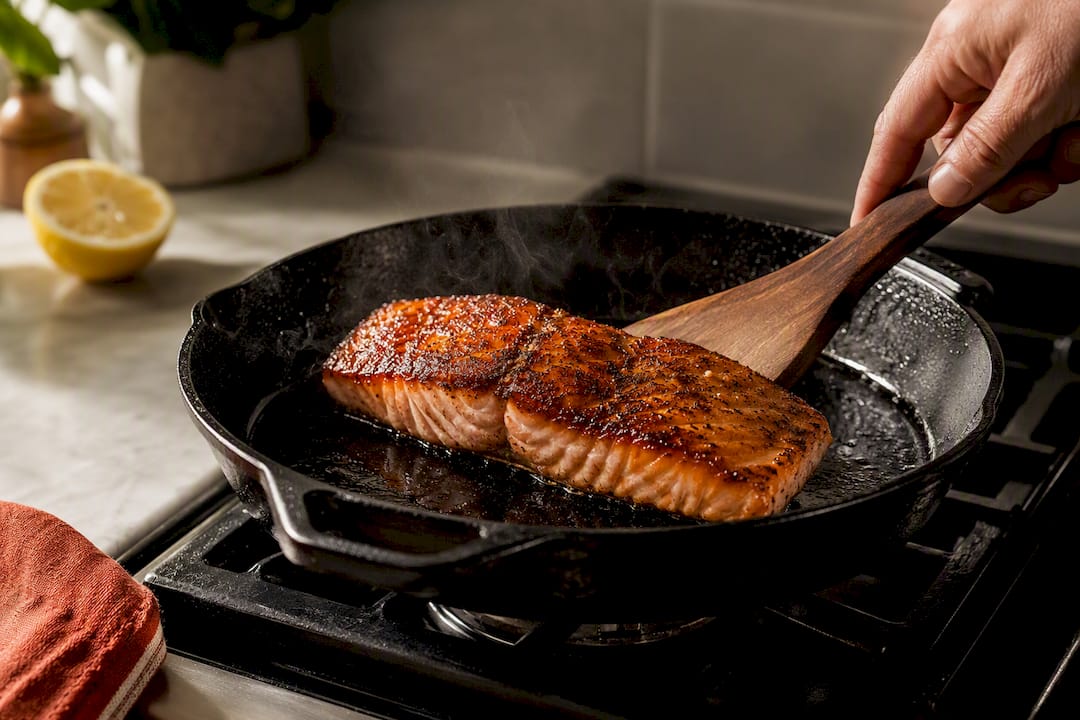
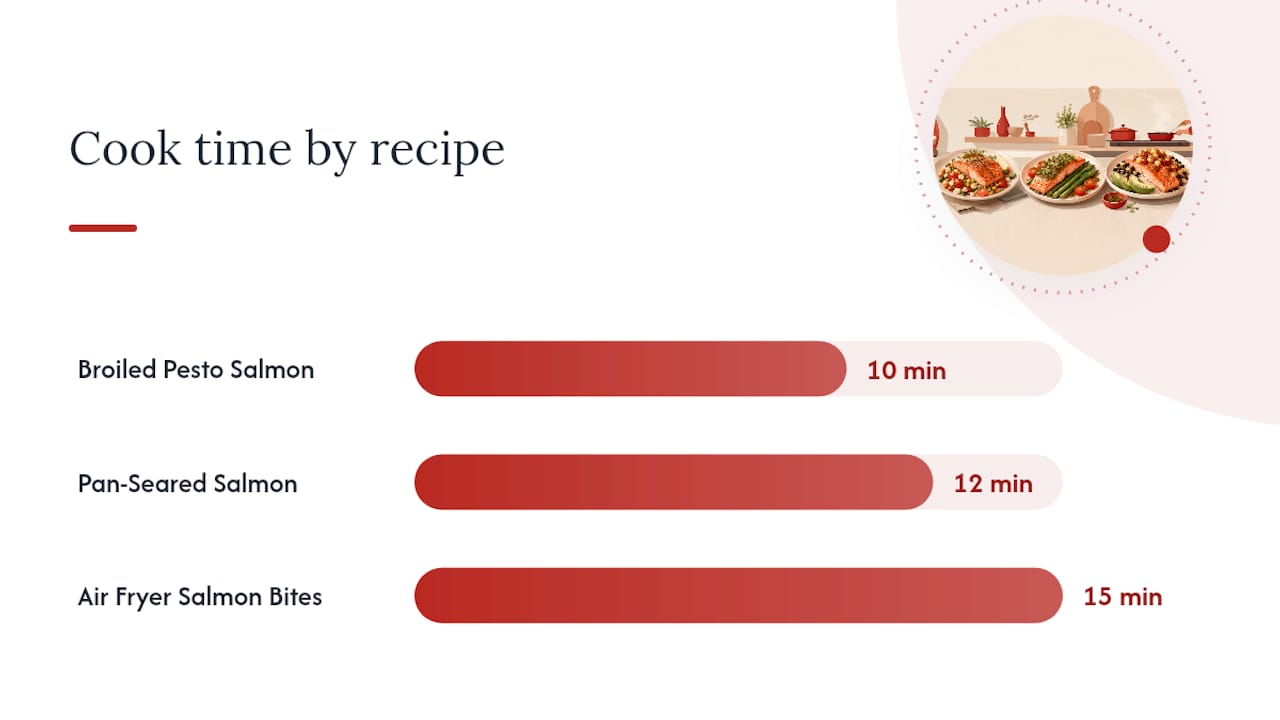
- Broiled Pesto Salmon (3 ingredients, 10 minutes). Coat salmon fillets with a tablespoon of prepared basil pesto each, season with salt and pepper, and slide them under the broiler for 8 to 10 minutes. The broiler’s direct top heat cooks faster than a standard bake because it sears the surface immediately instead of slowly warming the whole fillet. Serve over microwave rice with a squeeze of lemon.
- Pan-Seared Salmon with Lemon Butter (5 ingredients, 12 minutes). Salmon, butter, garlic, lemon, salt, and pepper. Sear skin-side down in a hot skillet for most of the cooking time, flip once, and finish with a quick lemon-butter baste. Total stovetop time runs 4 to 6 minutes, which makes this the fastest option on the list once the pan is hot. Pair with a bagged salad for a dinner that takes less time than delivery.
- Air Fryer Salmon Bites with Honey Garlic Soy Glaze (about 15 minutes). Cubed salmon tossed in a honey, garlic, and soy glaze cooks in the air fryer basket in roughly 8 to 12 minutes, crisping on the outside while staying tender inside. This Forkward-tested air fryer recipe works well over noodles or stuffed into lettuce wraps for a low-effort dinner that still feels composed.
- Sheet-Pan Salmon and Vegetables (20 minutes). One tray, one oven temperature, salmon plus thin-sliced onions or cherry tomatoes that release their own juices as they roast. The vegetables create a built-in pan sauce while everything cooks together, and cleanup is a single sheet pan instead of three dishes.
- Broiled Teriyaki Salmon with Ginger-Mirin Glaze (about 12 minutes). This Forkward-tested broiled recipe uses a glaze brushed on right before broiling, so there’s no marinating wait. The sugar in the glaze caramelizes fast under direct heat, giving you a lacquered finish in under 15 minutes total.
If you want a deeper bench of flavor options beyond these five, the salmon marinade roundup covers combinations that work with any of these methods, and the miso-glazed baked salmon recipe is worth bookmarking for a slightly slower but still weeknight-friendly option.
Two of these recipes lean on a short list of ingredients on purpose. A three-ingredient dinner isn’t a gimmick when you’re standing in the kitchen at 6:30 p.m., it’s the difference between cooking and ordering out.
Which Cooking Method Is Actually Fastest?
Every method has a sweet spot, and matching it to your fillet thickness is what separates a reliably cooked dinner from a guessing game.
Broiling takes 8 to 10 minutes for a standard 1 inch fillet, less for thinner cuts. It’s faster than baking because the heat source sits inches from the food instead of surrounding it slowly.
Pan-searing is the quickest true method at 4 to 6 minutes total, split between the first side (where most of the cooking happens) and a quick flip to finish.
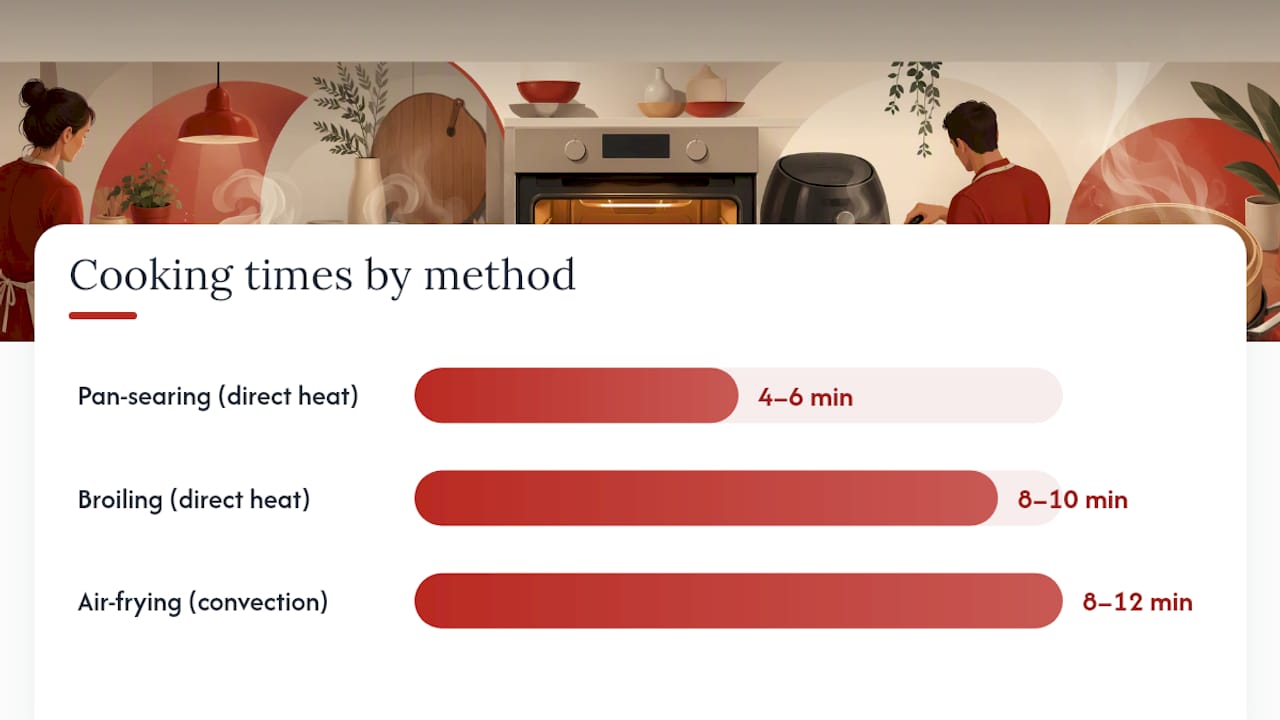
Air frying runs about 8 to 12 minutes depending on basket size and fillet thickness, with the convection-style airflow cooking evenly without much monitoring.
Sheet-pan roasting takes 10 to 20 minutes depending on oven temperature and how many vegetables share the tray, since a crowded pan slows everything down slightly.
A few habits make any of these methods more reliable:
- Pat fillets completely dry before searing. Moisture on the surface steams instead of browns, and a dry fillet is what actually gets you that golden crust.
- Let the pan get properly hot before the fish goes in, and don’t flip until the salmon releases on its own.
- Use foil if you’re lining a broiler pan. Skip parchment paper under the broiler, since it can scorch or catch under that direct heat.
- Pull fillets out of the refrigerator about 20 to 30 minutes before cooking so they reach a more even temperature and cook more consistently.
The USDA recommends cooking fish to an internal temperature of 145°F, checked with an instant-read thermometer in the thickest part of the fillet. Plenty of home cooks pull salmon closer to 120 to 135°F for a softer, medium-rare texture, but that’s a personal preference call, not a food-safety one. If you’re serving kids, guests, or anyone immunocompromised, stick to the USDA number.
Pro Tip: If you’re finishing a pan sauce with cream or butter, keep the heat low once dairy goes in. A hard simmer is the most common reason a quick pan sauce breaks and turns grainy instead of silky.
What Forkward Kitchen’s Recipe Testing Actually Taught Us
Every recipe on Forkward Kitchen carries a difficulty rating and a real cook time, not an aspirational one, because the gap between “recipe says 20 minutes” and “actually took 35 minutes” is exactly what ruins a weeknight. Testing the Broiled Teriyaki Salmon and Air Fryer Salmon Bites surfaced a few shortcuts worth stealing:
- Batch a glaze on Sunday and keep it in the fridge for three or four nights of quick weeknight salmon.
- Keep frozen, portioned fillets on hand. Most “fresh” salmon at the supermarket has been previously frozen anyway, so there’s no quality tradeoff, just fully thaw before cooking for even results.
- Pair salmon with microwave rice pouches or steam-in-bag vegetables to cut side-dish time to almost nothing.
- Watch for overheating in the air fryer. Salmon bites can go from tender to dry in about 90 seconds past done, so start checking a minute early.
Pro Tip: A “beginner” difficulty rating on a salmon recipe usually means fewer steps, not less flavor. That’s the whole point of rating recipes honestly instead of calling everything “easy.”
Why Rotating a Few Quick Salmon Recipes Beats Chasing New Ones
Most people don’t need ten salmon recipes. They need one method they can do without thinking and one glaze they can make on autopilot. Batch a glaze once, freeze portioned fillets, and weeknight salmon stops being a decision and becomes a default. Pick pan-searing or broiling, pick a go-to glaze, and repeat it until it’s boring. Boring is what gets dinner made on a Tuesday.
— Oloru
Get the Full Recipes, Step Photos, and Printable Cards
Every recipe carries a difficulty rating and real cook time, not an aspirational one, so the timing and steps above match what actually happens in your kitchen. The Forkward recipes hub has the complete versions of these salmon dishes with step-by-step photos, printable cards, and tested variations if you want to swap the glaze or the side.
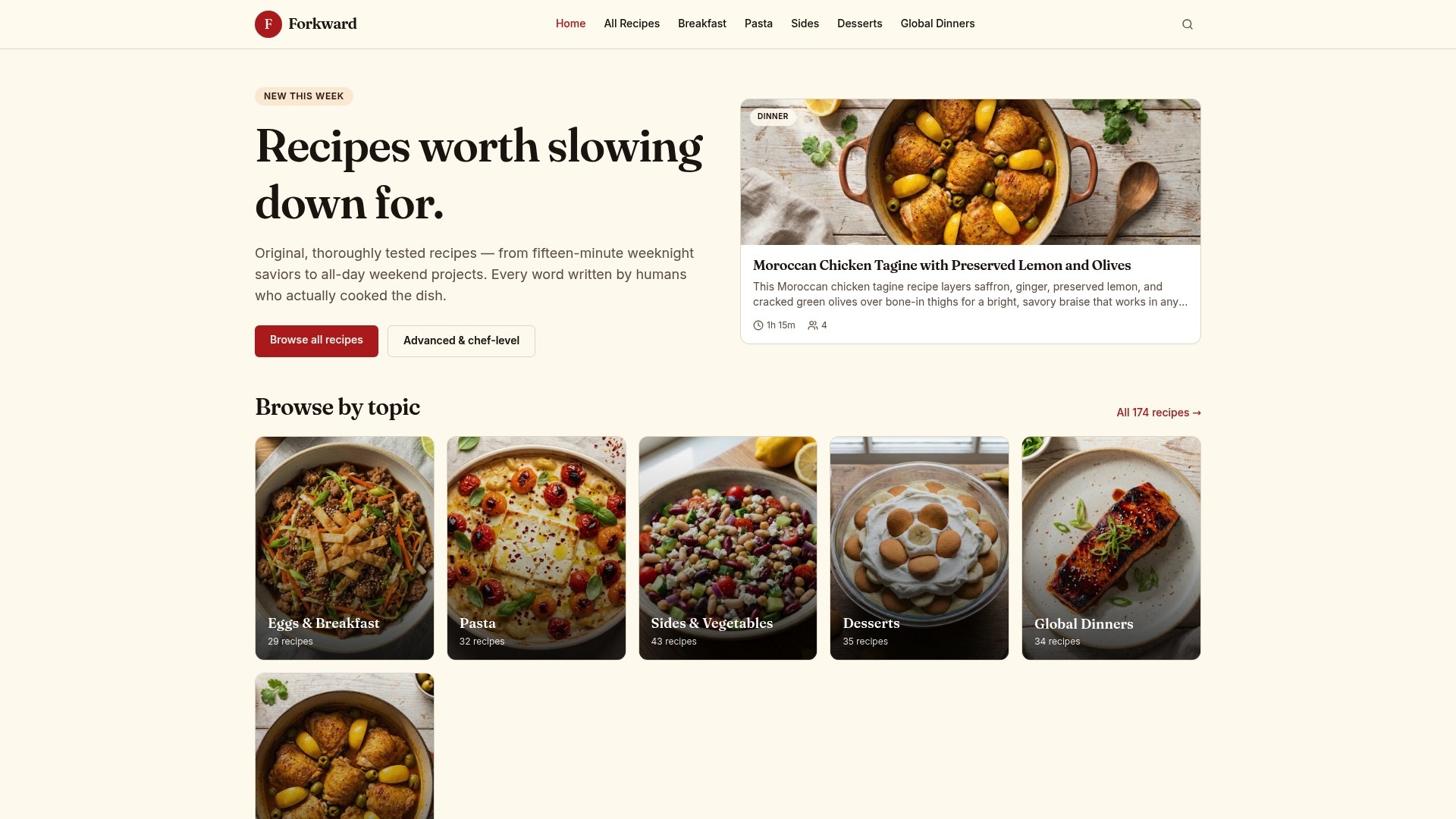
If salmon becomes a regular rotation, save the recipes somewhere you’ll actually find them again. A tool like Yumzi works well for keeping saved reels and quick-meal ideas organized for the week ahead. When you’re ready to build out beyond salmon, Forkward’s pasta recipes cover the same weeknight speed, and the advanced recipe collection is there for the weekend you actually have time to cook. Start with tonight’s salmon, though. Pick a method, open the full recipe, and get cooking.
Where the Timing and Safety Guidance Comes From
The cook times and doneness numbers in this guide are backed by official food-safety resources, not kitchen folklore:
FAQ
What Is the Quickest Way to Cook Salmon?
Pan-searing is the fastest reliable method, taking roughly 4 to 6 minutes total in a hot skillet. Broiling comes in close behind at 8 to 10 minutes and requires even less attention once the fillet is under the heat.
What Should I Make With Salmon When I’m Short on Time?
Microwave rice pouches, bagged salads, and steam-in-bag vegetables turn any of the recipes above into a complete dinner without adding cook time. Roasting thin-sliced onions or cherry tomatoes alongside the salmon on a sheet pan also builds a quick sauce with zero extra steps.
What’s a Quick and Easy Recipe for Baked or Broiled Salmon?
Broiled pesto salmon is one of the simplest options: coat fillets in prepared pesto, season, and broil for 8 to 10 minutes. For a slightly different bake-focused option, the miso-glazed baked salmon recipe walks through timing by thickness.
Can You Give Me a Three-Ingredient Salmon Recipe?
Salmon, salt and pepper, and a tablespoon of prepared basil pesto per fillet, broiled for 8 to 10 minutes, is a genuine three-ingredient dinner. It works because the broiler’s direct heat caramelizes the pesto’s oil quickly instead of requiring a long bake.
How Do I Know When Salmon Is Actually Done?
Check the thickest part of the fillet with an instant-read thermometer. The USDA’s safe minimum is 145°F, though many home cooks prefer pulling salmon at 120 to 135°F for a softer texture, a preference call rather than a safety one.