August 20, 2026
Fast, Foolproof Air Fryer Salmon in About 10 Minutes
Cook moist, flaky salmon in just 10 minutes using your air fryer. Discover the foolproof method for perfect results every time!
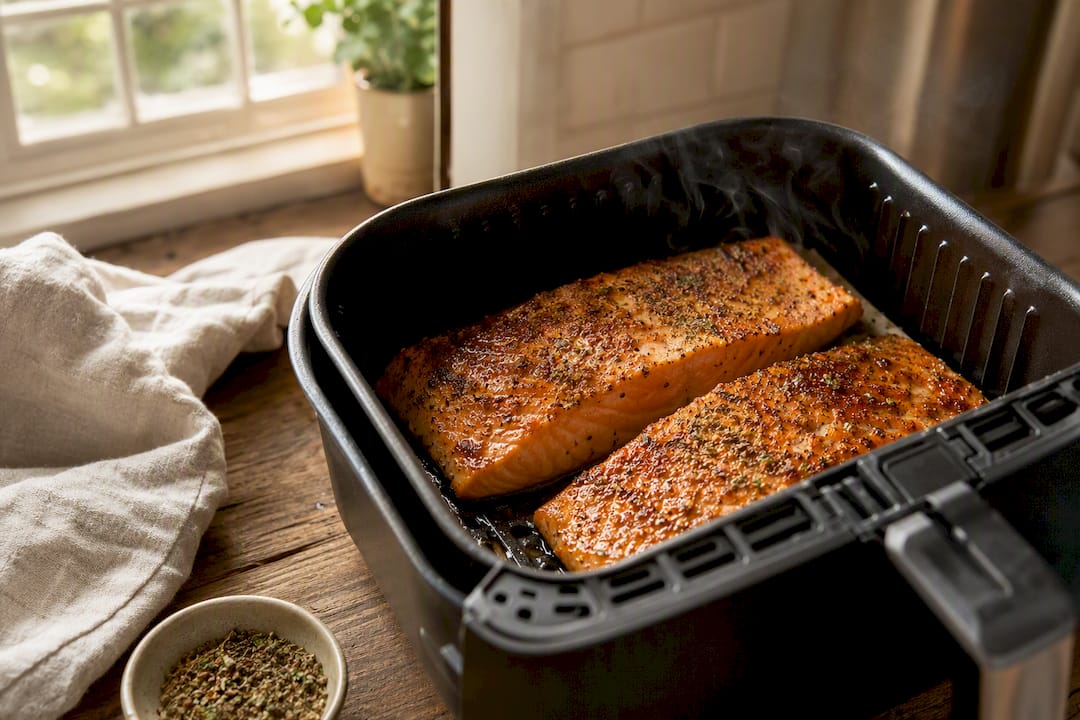
Fast, Foolproof Air Fryer Salmon in About 10 Minutes
Air-frying is the fastest, most reliable way to get moist, flaky salmon on the table, and it takes about 10 minutes start to finish. The method: preheat your air fryer to 400°F, pat the fillets dry and season them, then air-fry for 7 to 9 minutes depending on thickness. Pull the salmon a few degrees before it hits your target doneness, since it keeps cooking while it rests. Use an instant-read thermometer if you have one. It’s the single easiest way to guarantee you don’t end up with dry, chalky fish.
Key Takeaways
Air-frying salmon at 400°F for 7 to 9 minutes, checked with a thermometer and pulled a few degrees early, produces moist, flaky fish more reliably than any other quick weeknight method.
| Point | Details |
|---|---|
| Time and temperature | Cook 6-ounce fillets at 400°F for 7 to 9 minutes, adjusting for thickness. |
| Use a thermometer | Pull salmon 5 to 10 degrees below your target since carryover cooking finishes it. |
| Pat dry before seasoning | Surface moisture steams the fish instead of letting it crisp. |
| Glaze timing matters | Brush sugary glazes on in the last 1 to 2 minutes to avoid burning. |
| Don’t overcrowd the basket | Leave space around each fillet so air can circulate evenly. |
Table of Contents
- How to Make Air Fryer Salmon Fillets
- What Are the Steps for Air Fryer Salmon?
- What Temperature and Time Work Best for Salmon?
- How Do You Keep Air Fryer Salmon From Drying Out?
- Best Glazes and Seasoning Ideas for Air Fryer Salmon
- What Should You Serve With Air Fryer Salmon?
- How Long Does Cooked Salmon Last, and How Do You Reheat It?
- What Air Fryer Setup Works Best for Salmon?
- How Was This Air Fryer Salmon Timing Tested?
- The Real Skill Isn’t the Recipe, It’s the Thermometer
- Try More Weeknight-Friendly Recipes From Forkwardkitchen
- Frequently Asked Questions
- Sources
How to Make Air Fryer Salmon Fillets
You need surprisingly little to get a great result. Here’s what to buy and prep for four 6-ounce fillets:
- 4 salmon fillets (6 ounces each), skin-on or skinless
- 1 to 2 tablespoons olive oil (or avocado oil)
- 1 teaspoon kosher salt
- ½ teaspoon black pepper
- Optional: garlic powder, smoked paprika, or a squeeze of lemon
Swap olive oil for avocado oil if you want a higher smoke point, or skip the oil almost entirely and use a light cooking spray instead. Salt and pepper alone will get you a solid result, but if you want more character, garlic powder and smoked paprika add flavor without adding moisture that could cause steaming. Skin-on fillets hold together better and crisp up nicely on the bottom; skinless works fine too, just handle it a little more gently when flipping or removing from the basket.
If you’re adding a marinade or glaze, keep the sugar content in mind. Sugary sauces can go from caramelized to burnt fast in a hot air fryer, so most cooks brush them on during the last minute or two, not at the start.
Nutrition note: A plain 6-ounce salmon fillet runs roughly 350 calories and about 34 grams of protein, though the exact number shifts with the cut and any added oil or glaze.
What Are the Steps for Air Fryer Salmon?
Getting crispy salmon out of an air fryer isn’t complicated, but a few small details separate a great fillet from a rubbery one. Here’s the sequence that works, every time.
- Preheat the air fryer to 400°F for 3 to 5 minutes. Skipping this step is the number one reason salmon comes out unevenly cooked.
- Pat the fillets completely dry with paper towels. Any surface moisture turns to steam in the basket, and steam is the enemy of a crisp exterior.
- Rub each fillet lightly with oil, then season both sides with salt, pepper, and any other spices you’re using.
- Place the fillets in the basket skin-side down (or skin-side up if you prefer, more on that below), leaving space between each piece so hot air can circulate.
- Air-fry for 7 to 9 minutes for fillets around 1 inch thick, checking at the 6 minute mark if your air fryer runs hot.
- Check for doneness with an instant-read thermometer, inserted into the thickest part of the fillet.
- Rest for 2 to 3 minutes before serving. This is where carryover cooking finishes the job.
Instant Pot’s air-fryer recipe lands right in this range, calling for 7 minutes at 400°F for a single fillet, and stresses the same two prep habits: pat the fish dry and preheat the unit first. Gimme Some Oven recommends the same temperature with a slightly wider window, 7 to 9 minutes, and notes that starting skin-side down helps build a crisper bottom.
You generally don’t need to flip salmon in an air fryer. The circulating heat cooks it from all sides, and flipping a delicate fillet risks tearing it or losing the seasoning crust. If you do flip, do it gently with a thin fish spatula around the halfway mark.
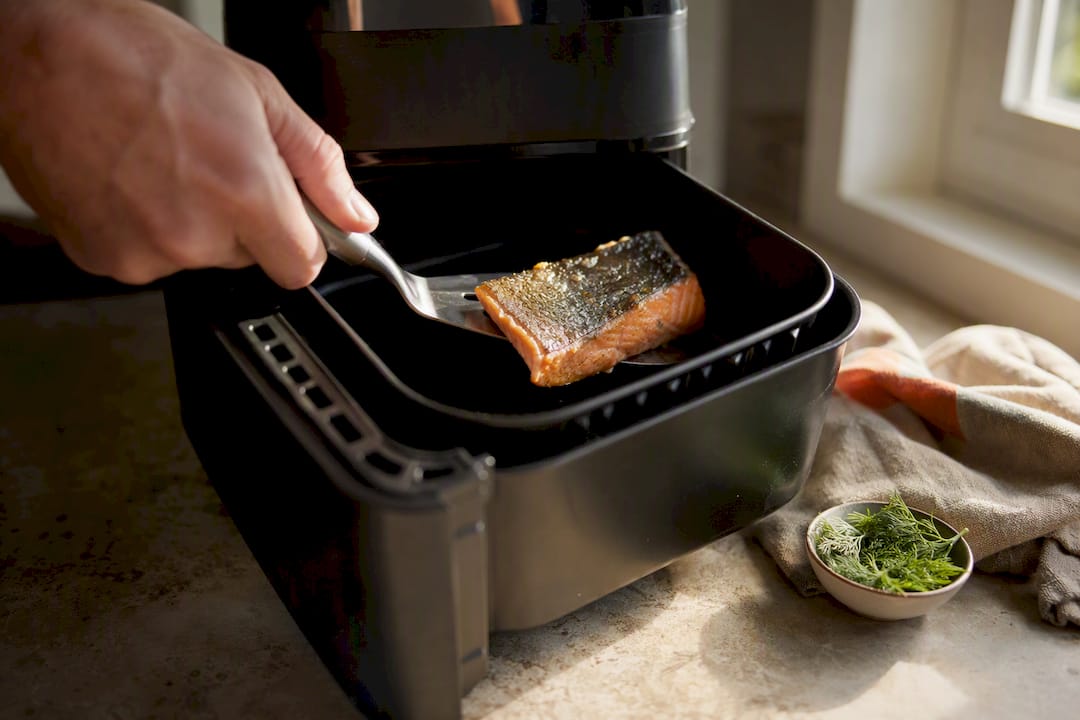
Pro Tip: An instant-read thermometer is the single best tool for consistent results here. Pull the fillet from the basket when it reads about 5 to 10 degrees below your final target, since the internal temperature keeps climbing for a minute or two while the fish rests, a phenomenon called carryover cooking.
Never overcrowd the basket. Salmon needs airflow on all sides to cook evenly and crisp up, so if you’re making more than 2 to 3 fillets in a standard-size air fryer, cook in batches rather than stacking or squeezing pieces together.
What Temperature and Time Work Best for Salmon?
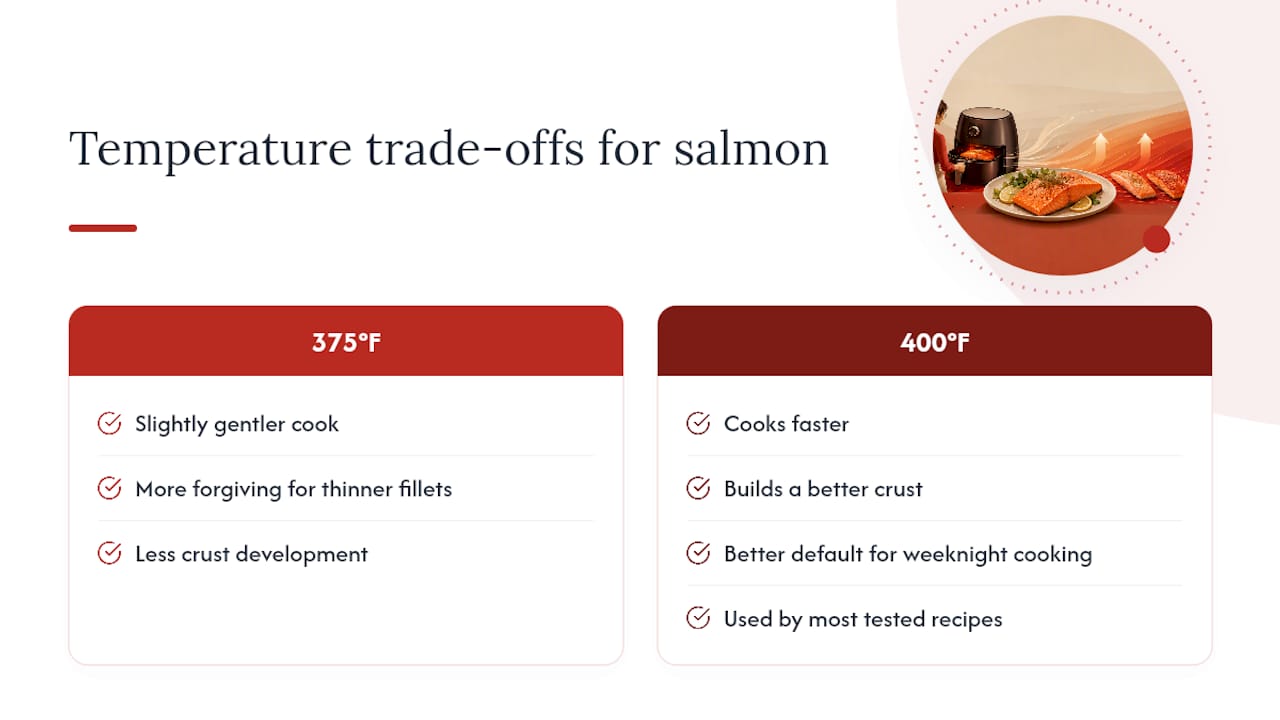
The debate between 375°F and 400°F comes down to a simple trade-off: 400°F cooks faster and builds a better crust, while 375°F gives you a slightly gentler cook that’s more forgiving if you’re worried about drying out thinner fillets. For most weeknight cooking, 400°F is the better default, and it’s what the majority of tested recipes converge on.
The USDA’s safe minimum internal temperature for fish is 145°F. Plenty of home cooks and chefs prefer salmon pulled earlier, in the 125°F to 135°F range, for a softer, more buttery texture that’s still fully cooked through by most culinary standards. Wholesome Yum recommends exactly this range for medium doneness, reserving 140°F to 145°F for those who want their salmon well done. Insert the thermometer into the thickest part of the fillet, avoiding the very center if there’s a bone pocket or seam, for the most accurate reading.
Pro Tip: Since WellPlated points out that carryover cooking can raise the internal temperature by several degrees after the fish leaves the basket, pull your salmon 5 to 10 degrees below your target and let it rest.
How Do You Keep Air Fryer Salmon From Drying Out?
Dry salmon almost always comes down to one of two mistakes: overcooking, or skipping the moisture-locking prep steps. Fix those two things and you’ve solved 90 percent of the problem.
- Pat the fillets bone-dry before seasoning. Any surface moisture steams instead of crisping.
- Oil the fish lightly, not heavily. A thin coat helps browning; a heavy coat just drips and smokes.
- For crispier skin, place fillets skin-side down for most of the cook, though starting skin-side up briefly can render extra fat before you flip.
- If your salmon comes out dry, the fix next time is simple: shave a minute off the cook time and check the internal temp sooner.
- Uneven cooking usually means overcrowding. Give every fillet space on all sides.
- A burnt glaze means it went on too early. Sugar caramelizes fast under direct heat.
Pro Tip: Hold off on brushing any sugar-based glaze until the last 1 to 2 minutes of cooking. Gimme Some Oven notes that sugary sauces can burn quickly in the small, hot confines of an air fryer basket, so finishing rather than marinating with them protects both flavor and appearance.
The most common mistakes to avoid: cramming too many fillets in at once, applying a sweet glaze too early, and skipping the thermometer altogether and guessing based on cook time alone. Thickness varies fillet to fillet, and a minute or two makes a real difference with a thin cut of fish.
Best Glazes and Seasoning Ideas for Air Fryer Salmon
Plain salt and pepper works fine, but a quick glaze turns the same base recipe into four completely different meals. Here are four combinations worth keeping in rotation:
- Honey-garlic soy: Whisk 2 tablespoons honey, 1 tablespoon soy sauce, and 1 minced garlic clove. Brush on during the last 2 minutes of cooking to avoid burning.
- Lemon-dill: Mix fresh lemon juice, chopped dill, and a little olive oil. Apply before cooking since there’s no sugar to worry about scorching.
- Maple-Dijon: Combine 1 tablespoon maple syrup with 1 tablespoon Dijon mustard. Brush on in the final minute, since maple syrup burns almost as fast as honey.
- Blackened spice rub: Mix paprika, cayenne, garlic powder, onion powder, and thyme. Apply before cooking, this one’s dry and won’t scorch the way sugar-based glazes do.
Any glaze with real sugar content, honey, maple syrup, brown sugar, needs to go on near the very end of the cook or after the fish comes out of the basket entirely. Dry rubs and citrus-based marinades are more forgiving and can go on before cooking starts. For a fully worked-out version of the honey-garlic approach, Forkwardkitchen’s air fryer salmon bites with honey garlic soy glaze walks through the timing in more detail, and the broiled teriyaki salmon with ginger mirin lacquer is a good template if you want to riff on an Asian-inspired glaze for your air fryer version.
What Should You Serve With Air Fryer Salmon?
Salmon is one of those proteins that pairs with almost anything, which makes it a genuinely easy weeknight anchor. A few reliable directions:
- Roasted vegetables (asparagus, broccoli, or Brussels sprouts)
- A simple rice bowl with steamed jasmine or brown rice
- A crisp green salad with citrus vinaigrette
- Fish tacos with slaw and lime crema
- A quick pasta with garlic and olive oil
- Grain bowls with quinoa or farro
For a fast bowl assembly: combine ¾ cup cooked rice, a flaked 6-ounce salmon fillet, ¼ cup quick-pickled cucumber, and a drizzle of spicy mayo (mix mayo with sriracha, roughly 3 parts mayo to 1 part sriracha). Top with a lemon wedge and fresh herbs. Forkwardkitchen’s crispy skin salmon rice bowl covers this exact build with full measurements, and the easy side dishes collection has more roasted vegetable options if you want variety through the week.
How Long Does Cooked Salmon Last, and How Do You Reheat It?
Cooked salmon keeps in the refrigerator for 3 to 4 days in an airtight container, and up to 3 months in the freezer if you want to stash extra portions for later. Cool the fish to room temperature before sealing it up, since trapping heat in a closed container encourages bacterial growth.
- Refrigerate within 2 hours of cooking, in a sealed container.
- Freeze in a single layer first, then transfer to a freezer bag once solid, to prevent one big frozen clump.
- Reheat in the air fryer at 350°F for 3 to 4 minutes, lower and shorter than the original cook, to warm through without drying it out further.
- Stovetop alternative: a covered nonstick pan over low heat for a few minutes works nearly as well.
- The USDA’s food safety guidance calls for reheating leftover fish to an internal temperature of 165°F if food safety is a concern, though for taste and texture many cooks reheat gently just until warmed through.
Leftover salmon also makes a great base for other dishes. Forkwardkitchen’s crispy salmon patties with caper-lemon aioli is one of the better ways to use up extra flaked fish instead of just reheating it plain.
What Air Fryer Setup Works Best for Salmon?
Most standard air fryer baskets, the 4 to 6 quart range, hold 2 to 3 six-ounce fillets comfortably with room for air to circulate. Cramming in 4 fillets at once usually means cooking in two batches instead, especially in smaller units.
- Basket-style air fryers tend to outperform tray-style ovens for salmon, since the deeper basket allows more consistent airflow around each fillet.
- Parchment liners cut specifically for air fryer baskets work well and make cleanup easier, but don’t cover the entire base of the basket or you’ll block airflow and end up with soggy spots.
- Skip foil unless it’s perforated, solid foil blocks the circulation that makes an air fryer work in the first place.
- Wattage and size matter less than people assume. A budget model with a smaller basket can produce excellent salmon, you just may need to adjust timing slightly and check doneness a minute or two earlier than a recipe states.
How Was This Air Fryer Salmon Timing Tested?
Forkwardkitchen tested this timing across standard 6-ounce fillets in several common air fryer models to account for the variation in how different units actually perform.
Fillet thickness, starting temperature, whether the skin is on or off, individual air-fryer airflow patterns, and the sugar content of any glaze all shift the ideal cook time by a minute or two in either direction. That’s why a thermometer beats a timer alone.
That range of variables is exactly why a strict clock reading can mislead you. A 400°F setting on one model isn’t identical to 400°F on another, which is part of why Nutrition to Fit and other tested recipes converge on the same 7 to 10 minute window rather than a single fixed number. Use the time range as a guide and the thermometer as the final word.
The Real Skill Isn’t the Recipe, It’s the Thermometer
Most air fryer salmon recipes fail the same way: they treat cook time as gospel instead of a starting estimate. A fillet that’s 0.75 inches thick and one that’s 1.25 inches thick are not the same cook, even at identical settings, yet plenty of recipe cards give one number and call it done.
The conventional advice leans hard on exact minutes because it’s easier to write than “check the temperature.” But the research across tested recipes is consistent: thickness, starting temperature, and individual air-fryer airflow all shift the outcome by a minute or two, sometimes more. That’s the gap between a recipe that reads well and one that actually works in your kitchen.
If you take one thing from all of this, make it the thermometer habit. Pull the fish a few degrees early, let carryover finish the job, and you’ll get a moist, flaky result almost every time, regardless of which air fryer you own or how thick your fillet happens to be. Everything else, the glaze, the seasoning, the side dish, is genuinely flexible. The temperature check is not.
Try More Weeknight-Friendly Recipes From Forkwardkitchen
Air fryer salmon is a great entry point if you’re building out a rotation of fast, reliable dinners. Forkwardkitchen’s full recipe collection includes dozens of other tested weeknight options, each with an honest difficulty rating so you know what you’re getting into before you start cooking. If pasta night is more your speed on busy evenings, the easy pasta recipes collection is worth a look too.
Frequently Asked Questions
How long do you air fry salmon fillets? Most 6-ounce fillets take 7 to 9 minutes at 400°F, or slightly longer, 9 to 11 minutes, at 375°F. Thickness is the biggest variable, so a thermometer beats guessing by the clock.
What temperature is best for air fryer salmon? 400°F is the most common choice because it builds a light crust quickly without overcooking a standard fillet. 375°F works too, and gives you a slightly wider margin for error if you’re nervous about drying out thinner cuts.
Do you need to flip salmon in an air fryer? No, flipping usually isn’t necessary. The circulating hot air cooks the fillet from all sides, and skipping the flip also protects the seasoning crust and skin.
Can you cook frozen salmon in an air fryer? Yes, though a brief thaw first gives you better seasoning adhesion and a crisper crust. Wholesome Yum notes that frozen salmon just needs a few extra minutes compared to thawed fillets.
How do you know when air fryer salmon is done? The USDA’s minimum safe internal temperature for fish is 145°F, though many cooks prefer pulling salmon at 125°F to 135°F for a softer texture. An instant-read thermometer inserted into the thickest part is the most reliable check.
Should salmon skin face up or down in the air fryer? Skin-side down for most of the cook gives you the crispiest result. Some cooks start skin-side up briefly to render fat before flipping, though this takes a bit more attention to avoid sticking.
What’s a good simple seasoning for air fryer salmon? Salt, pepper, and a light coat of oil is all you really need. If you want responsibly sourced fish for the recipe, Seafood Watch offers guidance on choosing sustainable salmon options at the store.
Sources
- Air Fryer Salmon Fillets – Instant Pot
- Air Fryer Salmon (Perfect In 10 Minutes!) - Wholesome Yum
- If You’re Not Cooking Salmon in the Air Fryer Yet, Start Here - WellPlated
- Air Fryer Salmon - Gimme Some Oven
- Seafood Watch