August 9, 2026
High-Protein Dinners Ready in 30 Minutes or Less
Discover six high-protein dinners that are quick and easy, each packed with 25–45 g of protein and ready in 30 minutes or less!
High-Protein Dinners Ready in 30 Minutes or Less
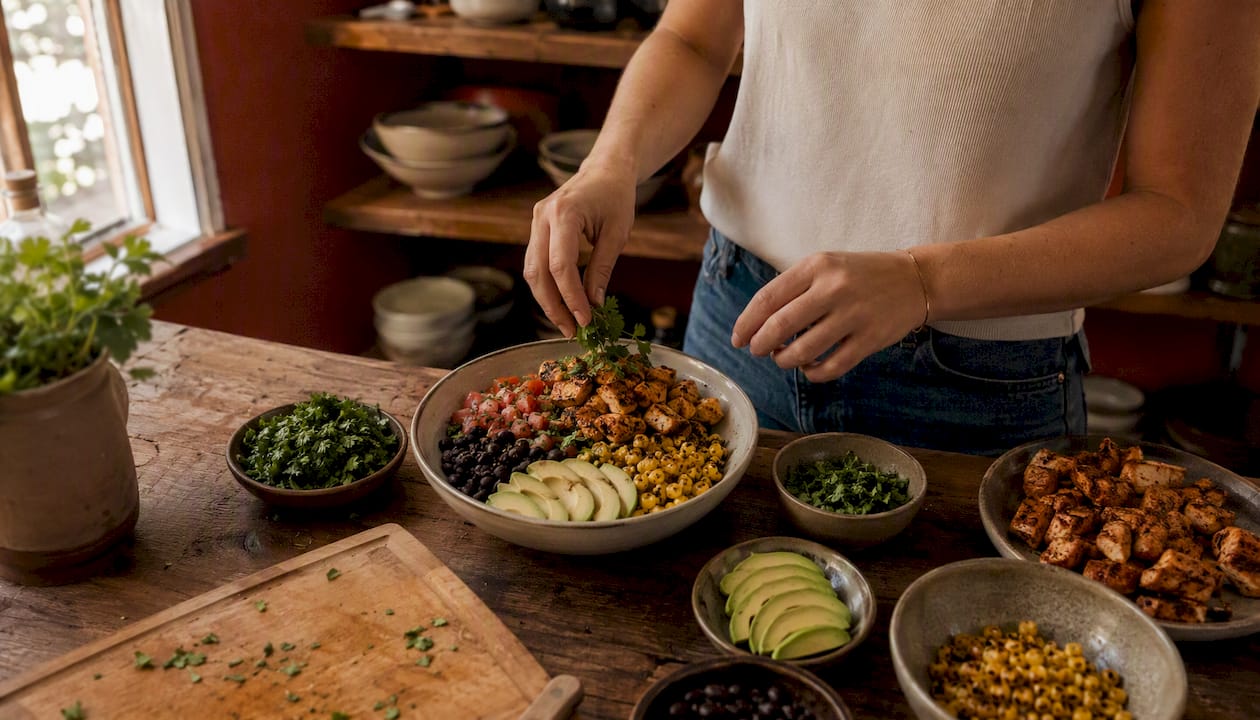
Tonight’s best options for high protein dinners land between 25–45 g of protein per serving and take 30 minutes or less to pull together. Here are six picks you can start right now:
- Sheet-pan salmon + snap peas — salmon delivers roughly 34 g protein per 6 oz fillet; total time: 25 minutes. Family-friendly, one-pan cleanup.
- Hot honey beef bowl — ground beef, egg, and sweet potato combine for about 45 g protein per bowl in roughly 25 minutes. Kid-approved.
- Chicken souvlaki with yogurt marinade — a 5 oz chicken breast plus Greek yogurt sauce provides a high protein content; total time: 30 minutes. Great for meal prep.
- Cottage cheese pasta — blended cottage cheese sauce yields about 34.5 g protein per serving in under 30 minutes. Vegetarian, family-friendly.
- Beef bulgogi bowl with jammy egg — ribeye strips plus a soft egg push protein to 35–40 g; total time: 30 minutes. One pan, bold flavor.
- Savory oatmeal bowl — cooked in bone broth with parmesan and eggs, this reaches about 35 g protein per serving in 20 minutes. Vegetarian-friendly, surprisingly filling.
Nutrition researchers and recipe editors generally treat 30 g protein per serving as a solid weeknight floor, and EatingWell recommends at least 15 g protein and 6 g fiber as a minimum for a balanced, weight-conscious dinner. All six picks above clear that bar comfortably. Every recipe in this article has been tested or reviewed by Forkwardkitchen for realistic home-cook portions.
Key Takeaways
A reliable high-protein dinner comes down to one rule: start with a 4–6 oz cooked protein, add one high-protein side or topping, and choose a fast method like sheet-pan or one-pan skillet to keep the whole meal under 30 minutes.
| Point | Details |
|---|---|
| Target 30–45 g per serving | Most weeknight dinners in this collection land between 30–45 g protein using standard home-cook portions that reflect changing protein needs in midlife. |
| Stack a main plus one add-on | A 25–30 g main protein plus one add-on (egg, cottage cheese, beans, or Greek yogurt) reliably reaches 35–45 g total. |
| One-pan methods save time | Sheet-pan and skillet methods deliver the same protein in 25–35 minutes with minimal cleanup. |
| Recalculate when you swap proteins | Replacing steak with tofu or chicken with beans changes the protein total by 15–20 g; re-run the math before serving. |
| Forkwardkitchen tested recipes | Forkwardkitchen’s collection includes tested recipes reaching ~40 g protein with clear difficulty ratings and timing. |
Table of Contents
- High-protein dinner recipes by category
- How to build a dinner that hits your protein target
- Fast cooking methods that keep protein high and cleanup low
- Storing and reheating high-protein dinners safely
- Sources
High-protein dinner recipes by category
The recipes below are organized so you can filter by what matters tonight: how fast, how family-friendly, and what protein source. Each entry includes a protein estimate, total time, and a difficulty tag. A summary table follows the category entries.
Chicken and poultry
Adobo chicken burrito bowl with charred corn and crema — smoky, meal-prep-friendly, and built around a full chicken breast per serving. Protein: ~38 g. Total time: 35 minutes. Tags: family-friendly, meal-prep, one-pan. Difficulty: easy. Full recipe here.
Authentic chicken yassa with caramelized onions and lemon — a Senegalese braise that slow-builds flavor with minimal hands-on time. Chicken thighs plus the braising liquid make it rich and filling. Protein: ~36 g. Total time: 50 minutes. Tags: family-friendly, weekend-friendly. Difficulty: medium. Full recipe here.
Greek chicken souvlaki with yogurt marinade — the yogurt marinade does double duty: it tenderizes the chicken and adds a few extra grams of protein to the plate. Protein: ~40 g. Total time: 30 minutes (plus marinating). Tags: quick, family-friendly. Difficulty: easy. Full recipe here.
Beef and pork
Easy beef pepper steak stir fry with flank steak — velveted flank steak cooks in under 10 minutes once the prep is done. Protein: ~32 g. Total time: 30 minutes. Tags: quick, one-pan. Difficulty: easy. Full recipe here.
Beef bulgogi bowl with ribeye and jammy egg — ribeye strips plus a soft-cooked egg is one of the most reliable ways to stack protein without a complicated recipe. Protein: ~38 g. Total time: 30 minutes. Tags: quick, family-friendly. Difficulty: easy. Full recipe here.
Chipotle pork and hominy stew with toasted bolillos — a hearty, bowl-style stew that reheats beautifully. Pork shoulder and hominy together make a filling, protein-forward dinner. Protein: ~34 g. Total time: 55 minutes. Tags: family-friendly, meal-prep. Difficulty: medium. Full recipe here.
Honey-chipotle steak and sweet potato bowls — flank steak over roasted sweet potato is a complete meal in one bowl. Nutrition data shows about 31.8 g protein per serving for a four-serving batch. Total time: 40 minutes. Tags: family-friendly, meal-prep. Difficulty: easy.
Seafood
Lemon garlic shrimp and zucchini orzo — shrimp cooks in under 5 minutes, making this one of the fastest high-protein options on the list. Protein: ~28 g. Total time: 25 minutes. Tags: quick, low-calorie, family-friendly. Difficulty: easy. Full recipe here.
Sheet-pan salmon with snap peas — no stirring, no babysitting. Roast at 400°F for 12–14 minutes and dinner is done. Protein: ~34 g per 6 oz fillet. Total time: 25 minutes. Tags: quick, one-pan, family-friendly. Difficulty: easy.
Vegetarian and vegan
Savory oatmeal bowl — cooked in bone broth (use vegetable broth for fully vegetarian) and finished with parmesan and eggs, this behaves more like a risotto than breakfast. About 35 g protein per serving in 20 minutes. Tags: vegetarian, quick, one-pan. Difficulty: easy.
Cottage cheese pasta — blended cottage cheese creates a cream-like sauce without heavy cream. About 34.5 g protein per serving, ready in under 30 minutes. Tags: vegetarian, quick, family-friendly. Difficulty: easy.
Chili-maple roasted sweet potato with sage and yogurt — sweet potato as a base, finished with protein-rich yogurt and seeds. Protein: ~18–22 g depending on toppings. Total time: 40 minutes. Tags: vegetarian, family-friendly. Difficulty: easy. Full recipe here.
Legumes and bowls
Authentic bibimbap with crispy rice and bulgogi — beef, egg, and a variety of vegetables over rice. The egg and beef together push this well past 30 g protein. Total time: 45 minutes. Tags: family-friendly, weekend-friendly. Difficulty: medium. Full recipe here.
Hot honey beef bowl — ground beef, egg, and sweet potato in about 25 minutes. About 45 g protein per bowl. Tags: quick, family-friendly, one-pan. Difficulty: easy.
Recipe summary
| Recipe | Category | Protein per serving | Total time | Tag |
|---|---|---|---|---|
| Hot honey beef bowl | Beef/bowl | ~45 g | 25 min | Quick, one-pan |
| Greek chicken souvlaki | Chicken | ~40 g | 30 min | Quick, family |
| Savory oatmeal bowl | Vegetarian | ~35 g | 20 min | Quick, one-pan |
| Sheet-pan salmon | Seafood | ~34 g | 25 min | Quick, one-pan |
| Cottage cheese pasta | Vegetarian | ~34.5 g | 30 min | Quick, family |
| Honey-chipotle steak bowl | Beef/bowl | ~31.8 g | 40 min | Family, meal-prep |
| Beef bulgogi bowl | Beef/bowl | ~38 g | 30 min | Quick, family |
| Lemon garlic shrimp orzo | Seafood | ~28 g | 25 min | Quick, low-cal |
| Chipotle pork stew | Pork | ~34 g | 55 min | Family, meal-prep |
Pro Tip: Use the “quick + one-pan” tag combination when you have under 30 minutes and a sink full of dishes from last night. Sheet-pan salmon and the hot honey beef bowl are the two fastest options in the table above.
How to build a dinner that hits your protein target
A predictable plate composition reliably hits 30–45 g protein: 4–6 oz of cooked lean protein as the main, a grain or vegetable base, and one high-protein add-on (egg, dairy, or beans). That’s the whole formula.
The math in practice
Here’s how the numbers stack for three common plate builds:
- Chicken breast plate: 5 oz cooked chicken breast (~43 g protein) + 1/2 cup cooked quinoa (~4 g) + side salad = ~47 g total. No add-on needed.
- Pasta with cottage cheese sauce: 3 oz dry pasta (~11 g) + 1/2 cup blended cottage cheese (~14 g) + 3 oz ground turkey (~21 g) = ~46 g. The cottage cheese sauce alone adds a meaningful protein boost.
- Vegetarian bowl: 1 cup cooked lentils (~18 g) + 2 eggs (~12 g) + 1 oz parmesan (~10 g) = ~40 g. No meat required.
The key insight: adding a single high-protein side or topping can push a 20–25 g main up to 35–45 g without changing the recipe’s core character.
Protein reference: common cooked portions
All figures are for cooked weight unless noted. Raw-to-cooked weight loss varies by protein: chicken loses roughly 25% of its weight when cooked, so a 7 oz raw breast yields about 5 oz cooked.
How Forkwardkitchen estimates protein
Forkwardkitchen calculates nutrition at the recipe level using measured cooked portions, not raw weights. When a recipe lists 40 g protein per serving, that figure reflects the cooked yield divided by the number of servings, cross-referenced against standard nutrition databases. The high-protein breakfast bowl tested at ~40 g protein using this method, and the same approach applies across the recipe collection.
Swapping a primary protein changes the total meaningfully. Replacing flank steak with tofu in a stir fry, for example, drops the protein by roughly 15–18 g per serving. Forkwardkitchen’s beef pepper steak stir fry addresses this directly: treat any recipe as a template and re-run the nutrition math when you substitute the main protein.
Pro Tip: When you swap a protein, plug the new ingredient into a free tool like Cronometer or the USDA FoodData Central database to get an accurate per-serving number before you commit to the swap.
Fast cooking methods that keep protein high and cleanup low
Sheet-pan, air fryer, Instant Pot, and one-pan skillet methods all deliver the same protein content as slower approaches. The difference is time and dishes. Delish’s 30-minute dinner roundup confirms that one-pan and sheet-pan recipes routinely hit ~30 g protein per serving within a 30-minute window.
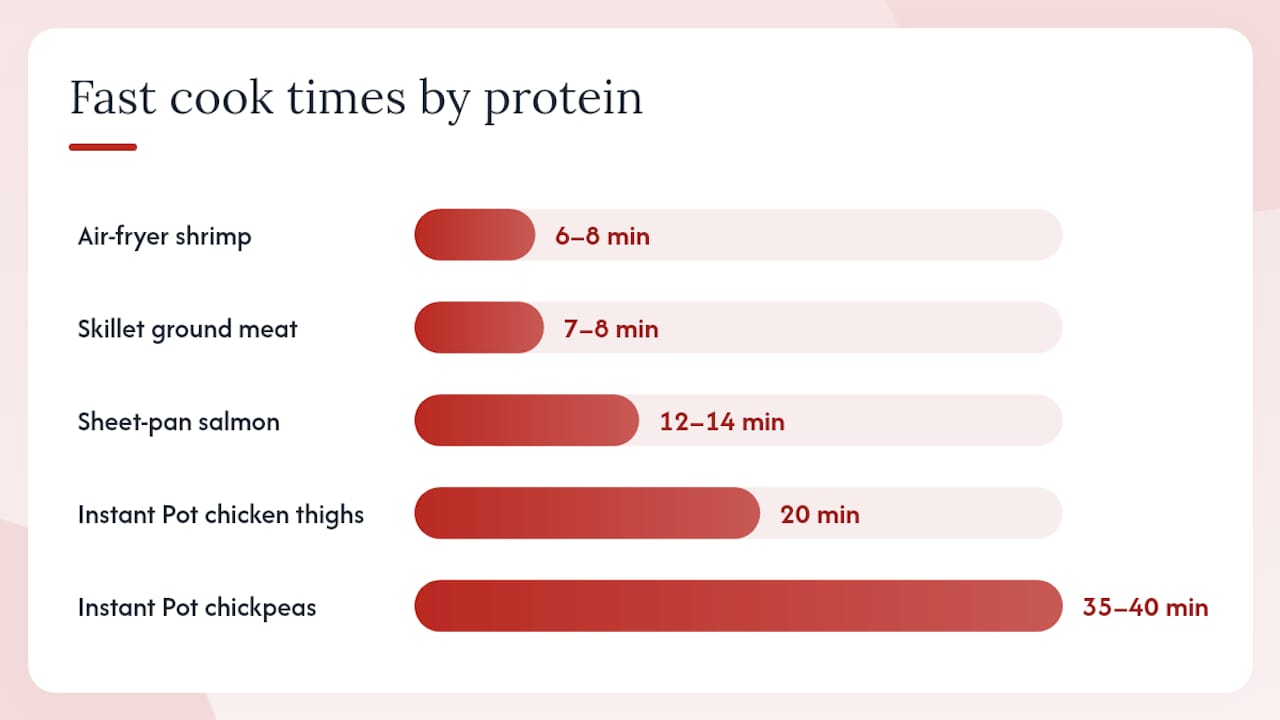
- Sheet-pan: Preheat to 400°F. Salmon + snap peas: 12–14 minutes. Chicken thighs + broccoli: 22–25 minutes. Everything roasts together, nothing sticks to a second pan. Swap chicken thighs for extra-firm tofu (pressed and cubed) and reduce time to 18–20 minutes.
- Air fryer: 375–400°F works for most proteins. Chicken breast: 18–20 minutes, flipping once. Shrimp: 6–8 minutes. The circulating heat keeps the exterior firm without drying out the interior the way a microwave would. Swap shrimp for cubed tempeh at the same temperature for 10–12 minutes.
- Instant Pot: Chicken thighs in broth: 10 minutes high pressure + 10-minute natural release. Chickpeas from dry: 35–40 minutes high pressure (no soaking needed). The pressure environment keeps moisture in, which matters for lean proteins that dry out fast on the stovetop. Swap chicken for canned white beans (stir in after pressure cooking, no extra time needed).
- One-pan skillet: The fastest method for ground proteins. Ground beef or turkey browns in 7–8 minutes. Add sauce, reduce, done. The hot honey beef bowl uses exactly this approach and lands at ~45 g protein in about 25 minutes.
Pro Tip: Pull chicken and pork from the heat 5°F before the target temperature (160°F for pork, 165°F for chicken) and let it rest 3–5 minutes. Carryover cooking finishes the job and keeps the meat noticeably juicier than pulling it at the exact target temp.
Storing and reheating high-protein dinners safely
Cooked protein keeps well when handled correctly. The USDA recommends refrigerating cooked meat, poultry, and seafood within two hours of cooking and consuming it within 3–4 days. For longer storage, most cooked proteins freeze well for 2–3 months without significant texture loss.
A few specifics worth knowing:
- Chicken and beef: Refrigerate for up to 4 days; freeze for up to 3 months. Both reheat well in a covered skillet over medium-low heat with a splash of water or broth to prevent drying.
- Seafood: More delicate. Refrigerate cooked fish and shrimp for no more than 2 days. Freezing works, but texture softens. Reheat gently in a 275°F oven, covered, for 10–12 minutes rather than microwaving.
- Legumes and bean-based dishes: Refrigerate for up to 5 days; freeze for up to 3 months. These actually improve in flavor after a day in the fridge.
- Egg-based dishes: Refrigerate for up to 3 days. Avoid freezing scrambled eggs or frittatas — the texture turns rubbery. Reheat in a skillet over low heat.
- Pasta with dairy-based sauces: Cottage cheese sauces can separate slightly when reheated. Add a tablespoon of milk or pasta water and stir over low heat to bring it back together.
Reheating by method
- Oven (best for meat and fish): 275–300°F, covered with foil, 10–15 minutes. Keeps moisture in.
- Stovetop (best for stir fries, bowls, and legumes): Medium-low heat, lid on, splash of liquid. Stir occasionally.
- Microwave (fastest for rice bowls and soups): Cover loosely, use 70% power, and stop to stir halfway through. Full power overcooks the protein on the outside before the center heats.
Leftover upgrades
Leftover protein is a head start, not a repeat meal. A few quick additions change the character entirely: fresh herbs, a spoonful of Greek yogurt or avocado, a squeeze of lemon, or a handful of arugula. The adobo chicken burrito bowl was designed with this in mind — the chicken reheats in 3 minutes and the fresh toppings go on cold.
Food safety reminder: never reheat cooked protein more than once, and always bring leftovers to an internal temperature of 165°F before eating.
Why protein-first cooking is worth building around
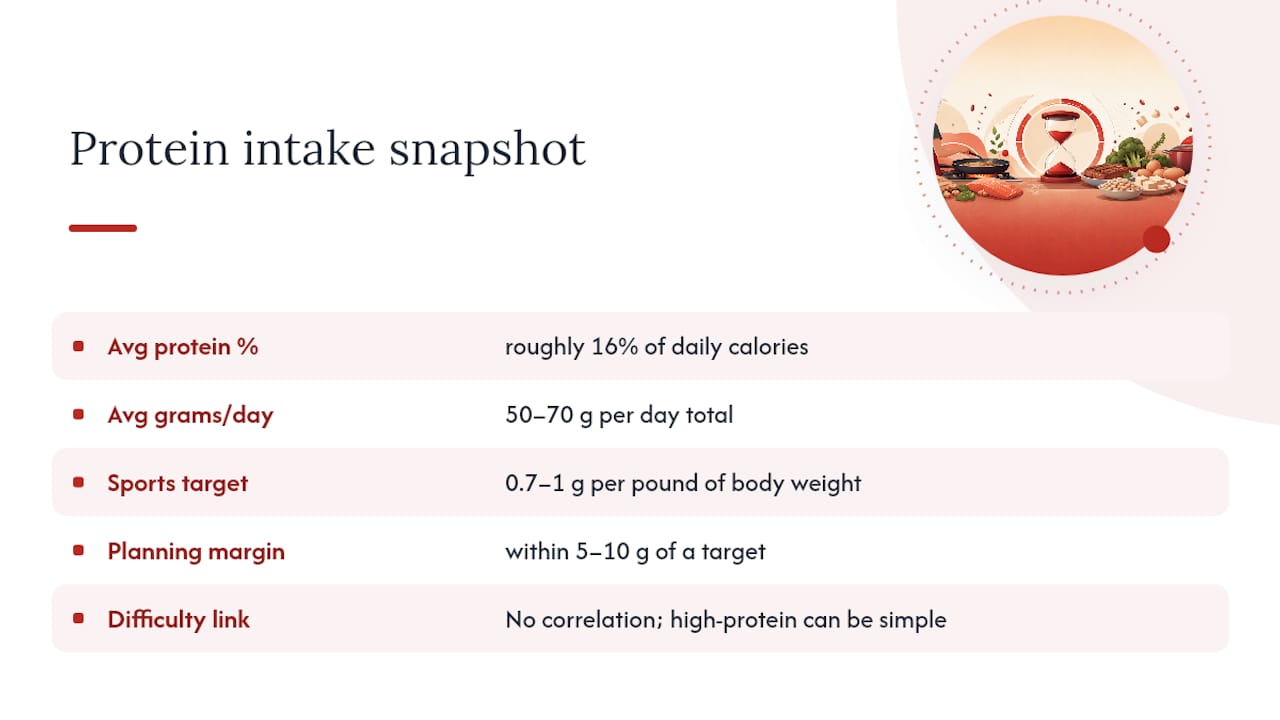
Most weeknight dinner advice focuses on speed or variety. Protein content rarely gets the same attention, even though it’s the macro most home cooks consistently under-hit. The average American adult consumes roughly 16% of daily calories from protein, which often translates to 50–70 g per day total. For active adults or anyone trying to maintain muscle, that’s a meaningful gap from the 0.7–1 g per pound of body weight that most sports nutrition guidance recommends.
The recipes in this collection were chosen because they close that gap without requiring specialty ingredients or advanced technique. A flank steak bowl, a cottage cheese pasta, a savory oatmeal — these are not diet foods. They’re real dinners that happen to be protein-dense because of how they’re built, not because they’ve been stripped of everything enjoyable.
Difficulty ratings at Forkwardkitchen reflect actual cooking complexity, not ingredient count. “Easy” means a home cook with basic knife skills and a single pan can execute it on a Tuesday night. “Medium” means there’s a technique worth learning (braising, velveting, caramelizing) that takes a little practice but pays off in flavor. “Advanced” is for weekend projects where the process is part of the point. Protein content doesn’t correlate with difficulty. Some of the highest-protein recipes here are also the simplest.
One thing worth saying plainly: the protein estimates in this article are approximations based on standard nutrition databases and measured cooked portions. They’re useful for planning, not for clinical tracking. If you’re managing a specific health condition or working with a dietitian, use a dedicated nutrition tracker to verify the exact figures for your specific brands and portions. For most home cooks, getting within 5–10 g of a target is close enough to make a real difference over time.
Build your next high-protein dinner with Forkwardkitchen
Every recipe in Forkwardkitchen’s collection is built from scratch and tested in a real home kitchen, with honest difficulty ratings and clear timing so you know exactly what you’re getting into before you start. The full recipe collection covers everything from 20-minute one-pan weeknight meals to weekend projects worth the extra hour.
For protein-packed dinners specifically, the high-protein breakfast bowl tested at ~40 g protein is a strong starting point, and the chicken yassa is the kind of recipe that earns a permanent spot in your weekly rotation. Every recipe includes prep time, cook time, a difficulty tag, and serving-size guidance. Browse the full collection and pick something for tonight.
Sources
- Honey‑Chipotle Steak and Sweet Potato Bowls
- High protein hot honey beef bowl — easy, bold, and ready in 25 minutes - Recipes By Kip
- Savory Oatmeal Bowl | VLH Health
- Creamy Cottage Cheese Pasta - Skinnytaste
- 10+ Easy High-Protein, High-Fiber Dinners for Weight Loss
- Ten 30-Minute Dinners With 30 Grams Of Protein (Or More!)