August 10, 2026
The Best Salmon Marinade Recipes for Any Night
Discover easy salmon marinade recipes that enhance flavor and elevate your meals. Perfect for any night, enjoy rich, delicious salmon!
The Best Salmon Marinade Recipes for Any Night
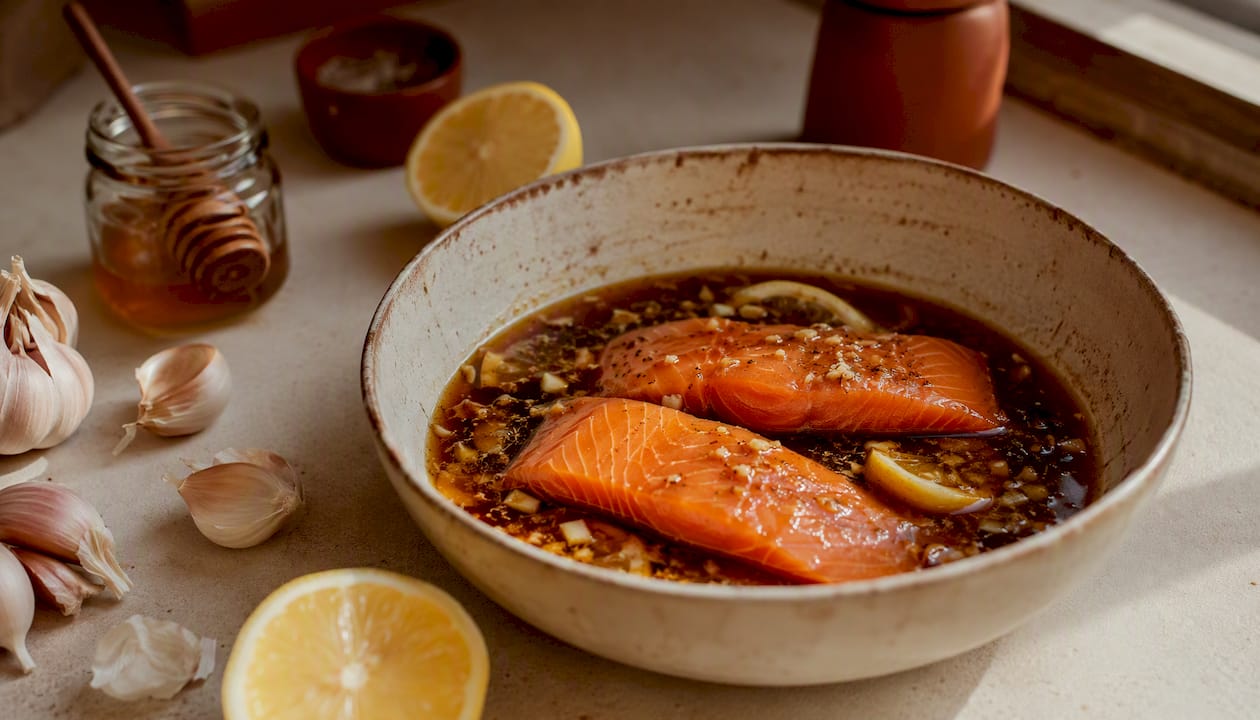
The go-to all-purpose salmon marinade is a quick mix of soy sauce, honey, fresh lemon juice, garlic, and olive oil. It works because the soy brings salt and umami, the honey balances and caramelizes, and the acid lifts the fish’s natural richness without overpowering it. For standard fillets, marinate 30 minutes to 1 hour. Steaks and a whole side can handle up to 2 hours refrigerated, but rarely need more. Per safe minimum cooking temperatures from foodsafety.gov, salmon should reach an internal temperature of 145°F before serving.
Three steps to get started:
- Pat fillets dry, add marinade in a zip-lock bag or shallow dish, and refrigerate for 30–60 minutes.
- Cook using your preferred method (grill, bake, pan-sear, or air-fry) until the fish flakes at the edges.
- Rest for 2–3 minutes off heat before plating.
Pro Tip: Reserve 2 tablespoons of marinade before the raw fish goes in. That reserved portion becomes a safe finishing drizzle with zero extra work.
Key Takeaways
A soy-honey-citrus salmon marinade made from pantry staples covers most cooking methods and delivers reliable flavor in 30–60 minutes, making it the strongest starting point for weeknight cooking.
| Point | Details |
|---|---|
| Best all-purpose marinade | Soy sauce, honey, lemon juice, garlic, and olive oil — 30–60 minutes for fillets. |
| Acid shortens marinating time | High-acid marinades (citrus, vinegar) need 20–30 minutes max to avoid a chalky texture. |
| Safe internal temperature | USDA sets 145°F as the minimum for fish; use an instant-read thermometer every time. |
| Freeze with marinade | Oil- and miso-based marinades freeze well with the fish; avoid freezing citrus-herb blends. |
| Forkwardkitchen tested recipes | Broiled teriyaki and air fryer salmon bites recipes informed the cook times and glaze guidance here. |
Table of Contents
- Five easy salmon marinades and what each one is best for
- How to marinate salmon correctly
- Marinating times, acid balance, and food-safety limits
- How to cook marinated salmon: grill, bake, pan-sear, air-fry
- Common marinating and cooking mistakes and how to fix them
- What to serve with marinated salmon
- How to make marinades ahead and freeze marinated salmon
- Why food-safety guidance matters and how it shaped these recipes
- What actually makes a salmon marinade worth keeping
- Forkwardkitchen has the tested recipes to back this up
- Sources
Five easy salmon marinades and what each one is best for
Each of these five marinades was built for a different flavor mood and cooking method. Proportions below are for two standard 6-oz fillets.
1. Soy-honey-citrus (the all-purpose)
Flavor profile: Savory-sweet with bright citrus | Best for: Grill, pan-sear, bake
- 3 tbsp soy sauce
- 1 tbsp honey
- 1 tbsp fresh lemon juice
- 2 cloves garlic, minced
- 1 tbsp olive oil
Marinating time: 30–60 minutes
Quick variations: Swap lemon for lime and add a pinch of chili flakes for a Thai lean. Use tamari for gluten-free.
2. Citrus-herb
Flavor profile: Bright, fresh, herbaceous | Best for: Bake, pan-sear
- 2 tbsp fresh orange juice
- 1 tbsp lemon juice
- 1 tbsp olive oil
- 1 tsp Dijon mustard
- 2 tbsp fresh dill or parsley, chopped
- Salt and pepper
Marinating time: 20–30 minutes (high acid — keep it short)
Quick variations: Add capers for a Mediterranean angle. Tarragon instead of dill pairs well with a white wine pan sauce.
3. Maple-garlic
Flavor profile: Sweet, caramelized, mild | Best for: Bake, air-fry
- 2 tbsp pure maple syrup
- 1 tbsp soy sauce
- 2 cloves garlic, minced
- 1 tsp apple cider vinegar
- 1 tbsp olive oil
Marinating time: 30–45 minutes
Quick variations: Add a teaspoon of whole-grain mustard for depth. A pinch of smoked paprika shifts it toward a BBQ profile.
4. Miso-umami
Flavor profile: Deep, savory, slightly sweet | Best for: Bake, broil
- 2 tbsp white miso paste
- 1 tbsp mirin
- 1 tbsp sake or dry sherry
- 1 tsp sesame oil
- 1 tsp honey
Marinating time: 1–2 hours (low acid, so longer is fine)
Quick variations: Red miso instead of white gives a bolder, saltier result. A few drops of rice vinegar brightens the finish.
5. Gochujang-spicy
Flavor profile: Spicy, fermented, bold | Best for: Air-fry, grill, bowl
- 1.5 tbsp gochujang
- 1 tbsp soy sauce
- 1 tbsp honey
- 1 tsp sesame oil
- 1 clove garlic, minced
Marinating time: 30–60 minutes
Quick variations: Cut gochujang to 1 tbsp and add a teaspoon of rice vinegar for a milder version. Serve over rice with cucumber for a quick gochujang salmon bowl.
How the five compare at a glance
How to marinate salmon correctly
Getting the method right matters as much as the recipe itself. Follow these steps and you avoid the two most common outcomes: bland fish and mushy texture.
- Pat the salmon dry. Moisture on the surface dilutes the marinade and prevents browning later. Use paper towels and press firmly on both sides.
- Choose your container. A zip-lock bag works best because it keeps the fish fully coated with minimal marinade. A shallow glass or ceramic dish is a solid backup. Avoid reactive metal bowls, especially with acidic marinades.
- Use about 3–4 tablespoons of marinade per pound of fish. More than that doesn’t add flavor; it just makes the surface wet and harder to sear.
- Skin-on or skin-off? Either works. Skin-on fillets are easier to handle on the grill and in the pan. If you’re baking or air-frying, skin-off gives you more even coating on all sides.
- Refrigerate for the recommended time. For most marinades, 30–60 minutes is the sweet spot. Pull the salmon out 10–15 minutes before cooking so it comes closer to room temperature — this helps it cook evenly.
- Handle leftover marinade carefully. Any marinade that touched raw fish is off-limits as a sauce unless you boil it first. Bring it to a full boil for at least 1 minute to make it safe, then use it as a glaze or drizzle. The cleaner move is to reserve a portion before adding the fish and set it aside for finishing.
Pro Tip: Lay fillets flat in the bag rather than stacking them. Stacking means uneven coating and uneven cooking. If you’re working with a whole side, flip the bag once halfway through marinating.
Marinating times, acid balance, and food-safety limits
Timing isn’t just about flavor — it’s about texture and safety.
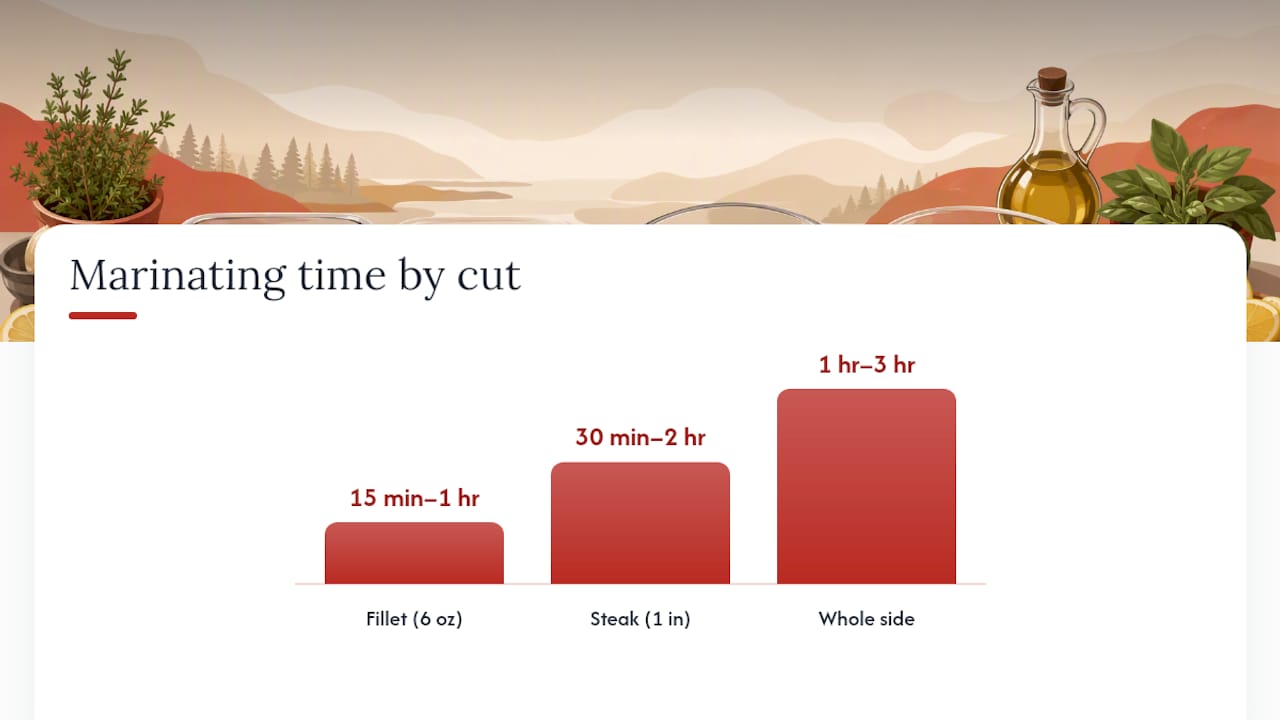
Time chart by cut
| Cut | Minimum | Maximum | Notes |
|---|---|---|---|
| Fillet (6 oz) | 15 min | 1 hr | Ideal window: 30–60 min |
| Steak (1 inch thick) | 30 min | 2 hr | Thicker cut handles longer soak |
| Whole side | 1 hr | 3 hr | Flip once; refrigerate throughout |
Why acid level changes everything
High-acid marinades, those built on citrus juice or vinegar, start denaturing the proteins in salmon almost immediately. That’s the same process as curing. Leave a citrus-heavy marinade on for more than 30–45 minutes and the fish takes on a slightly chalky, pre-cooked texture before it ever hits the pan. High-acid marinades require significantly shorter marinating times to avoid that cured effect.
Oil-based or miso-based marinades are far more forgiving. The miso-umami recipe above can sit for 2 hours without any texture damage because there’s almost no free acid in the mix.
Food-safety note: The USDA sets 145°F as the safe minimum internal temperature for fish. Some experienced cooks pull salmon at 125–140°F and rely on carryover heat, which is a culinary preference, not a regulatory standard. If you’re cooking for anyone immunocompromised, pregnant, or elderly, cook to the full 145°F.
How to cook marinated salmon: grill, bake, pan-sear, air-fry
Grill
Preheat to medium-high (around 400–425°F). Oil the grates well. Place fillets skin-side down and cook 4–5 minutes without moving them. Flip once and cook another 2–3 minutes. A 6-oz fillet is typically done in 7–8 minutes total. Sugary marinades like maple-garlic or gochujang-honey can char fast on direct heat — move to indirect heat for the last minute or two if you see the glaze darkening too quickly.
Bake
Set the oven to 400°F. Place fillets on a parchment-lined sheet or in a baking dish. Bake 12–15 minutes for a 6-oz fillet. The miso-glazed baked salmon approach from Forkwardkitchen uses a moderate oven temperature specifically to keep the sugar in the glaze from burning before the fish cooks through. For a caramelized finish, switch to broil for the last 2 minutes.
Pan-sear
Heat a cast-iron or stainless skillet over medium-high until very hot. Add a thin film of neutral oil. Place the fillet skin-side down and press gently for the first 30 seconds to prevent curling. Cook 3–4 minutes skin-side down, then flip and cook 2–3 minutes more. Pat the fish dry before it goes in the pan — any surface moisture steams the fish instead of searing it.
Air-fry
Preheat the air fryer to 400°F. Cook fillets 7–9 minutes, flipping once at the halfway point. The honey garlic air fryer salmon bites recipe from Forkwardkitchen shows that glazed pieces cook fast and benefit from a light spray of oil on the basket to prevent sticking. Avoid thick, sugar-heavy glazes in the air fryer — they can burn before the center cooks through.
Doneness cues
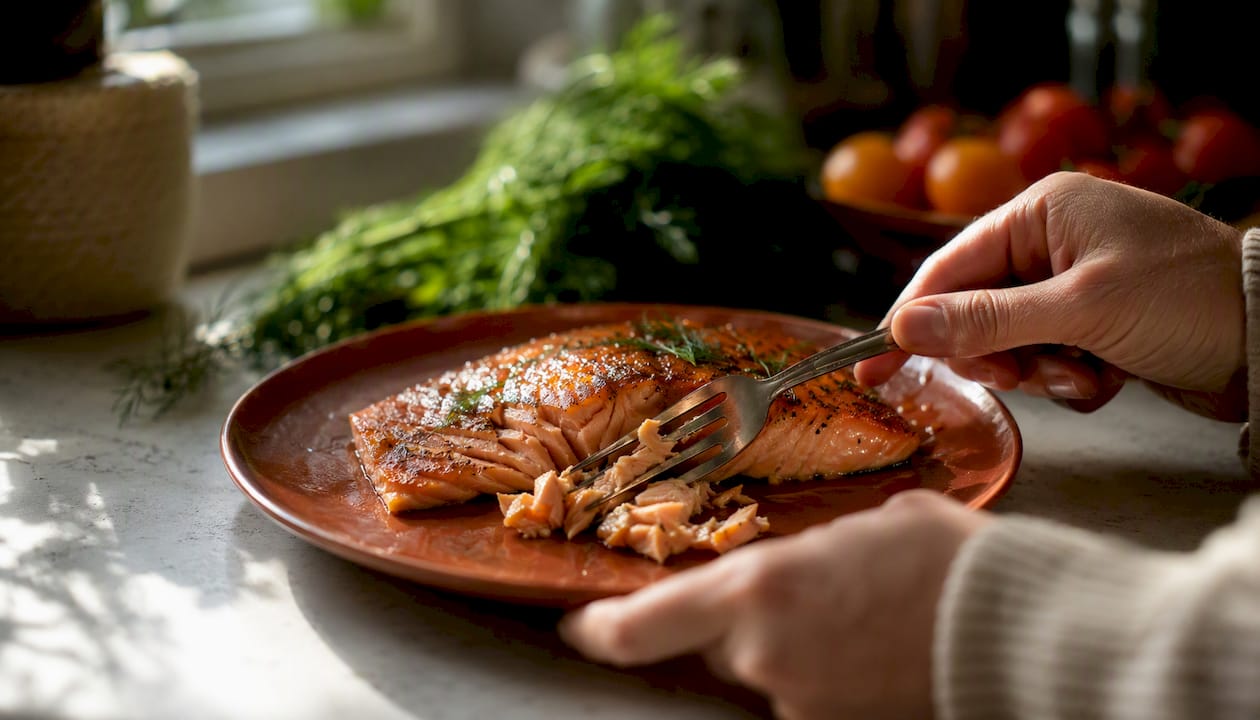
Use an instant-read thermometer inserted into the thickest part. The USDA’s safe minimum for fish is 145°F. Visually, look for edges that are fully opaque and a center that still shows a slightly translucent blush. The fish should flake when pressed with a fork but not fall apart. Rest for 2–3 minutes off heat before serving.
A silicone basting brush is the right tool for applying glaze during the last minute of grilling or broiling — it handles heat without shedding bristles into the food.
Common marinating and cooking mistakes and how to fix them
Over-marinating in acid. The fish turns chalky and almost ceviche-like. If you catch it early, rinse the fillet under cold water, pat dry, and cook immediately. The texture won’t fully recover, but the flavor is usually still good. Going forward, set a timer.
Burning the glaze. Honey, maple syrup, and brown sugar all scorch at high heat. The fix is simple: apply the glaze only in the last 1–2 minutes of cooking, or use indirect heat for the bulk of the cook time. The broiled teriyaki salmon method from Forkwardkitchen handles this by lacquering the glaze on in stages under the broiler rather than cooking it the whole way through.
Sticking to the grill. Usually caused by insufficient preheating or not oiling the grates. Preheat fully, oil the grates with a folded paper towel dipped in neutral oil, and don’t try to flip the fish before it releases naturally. If it’s sticking, it’s not ready to flip.
Bland flavor despite marinating. Often a salt issue. Soy sauce and miso are naturally salty, but if you’re using a low-sodium version, the marinade may not season the fish adequately. Add a pinch of kosher salt directly to the fish before marinating, or increase the soy sauce slightly.
Soggy skin. Caused by excess moisture. Pat the skin completely dry before cooking and make sure the pan or grill is properly hot before the fish goes on.
Pro Tip: When using leftover marinade as a glaze, boil it in a small saucepan for at least 1 minute before brushing it on. This makes it food-safe and also thickens it slightly, so it clings better to the fish.
What to serve with marinated salmon
The right side dish depends on which marinade you used. Here’s a quick grouping by flavor direction.
Mediterranean (citrus-herb marinade)
- Roasted cherry tomatoes and zucchini
- Lemon-dressed arugula with shaved Parmesan
- Warm pita and tzatziki
- Crispy roasted potatoes with herbs (see easy side dishes from Forkwardkitchen)
Asian-inspired (soy-honey, miso, gochujang)
- Steamed jasmine or short-grain rice
- Cucumber salad with rice vinegar and sesame seeds
- Edamame or stir-fried bok choy
- Miso soup
American weeknight (maple-garlic, soy-honey-citrus)
- Roasted broccoli or green beans
- Simple coleslaw
- Corn on the cob or elote-style corn
- Mashed or baked sweet potato
Two quick assembly templates:
Plate: Seared fillet on a bed of arugula, roasted vegetables alongside, lemon wedge, and a drizzle of reserved marinade.
Bowl: Rice base, sliced fillet, cucumber ribbons, pickled ginger, toasted sesame seeds, and a spoonful of the gochujang glaze.
Beverage pairings: A crisp Sauvignon Blanc or Pinot Gris works with citrus-herb and miso. For the spicy gochujang version, a cold lager or sparkling water with lime cuts the heat cleanly.
Garnishes: Fresh dill or flat-leaf parsley, lemon or lime zest, toasted sesame seeds, thinly sliced scallions.
How to make marinades ahead and freeze marinated salmon
Which marinades freeze well
Oil-based and miso-based marinades freeze without issue. The soy-honey-citrus, maple-garlic, miso-umami, and gochujang blends all hold up well in the freezer because their flavor compounds are stable at low temperatures.
Citrus-herb marinades are the exception. Fresh citrus juice and herbs degrade in the freezer, leaving a flat, slightly bitter result. Make those fresh.
Freezing marinated salmon
- Portion fillets individually before freezing — thawing a whole batch and refreezing is not safe.
- Place each fillet in a zip-lock freezer bag with 2–3 tablespoons of marinade.
- Press out as much air as possible before sealing.
- Label with the marinade type and date. Use within 2–3 months for best quality.
- The fish marinates as it thaws, which is a genuine time-saver on busy nights.
Thawing and cooking
Thaw overnight in the refrigerator. Never thaw at room temperature. If you’re short on time, submerge the sealed bag in cold water and change the water every 30 minutes. Cooking from frozen is possible — add 5–7 minutes to the bake or air-fry time and check the internal temperature carefully. Leftover cooked salmon keeps well refrigerated for up to 3 days and repurposes easily into crispy salmon patties.
Why food-safety guidance matters and how it shaped these recipes
The USDA’s safe minimum internal temperature for fish is 145°F. That’s the regulatory standard, and it’s the right target for anyone cooking for a mixed household. Some cooks prefer pulling salmon at 125–140°F and letting carryover finish the job, which produces a silkier center, but that’s a culinary choice, not a safety clearance.
The cooking times and temperatures in this article were informed by tested Forkwardkitchen recipes: the broiled teriyaki salmon, which documents high-heat glazing and broiling technique, and the honey garlic air fryer salmon bites, which established reliable air-fryer times and glaze behavior. Both carry honest difficulty ratings and were developed from scratch, not adapted from other sources.
Safety reminder: Always use a calibrated instant-read thermometer inserted into the thickest part of the fillet. Visual cues alone are not reliable enough to confirm doneness, especially with thick cuts or when cooking from frozen. The USDA minimum for fish is 145°F (63°C).
What actually makes a salmon marinade worth keeping
The conventional wisdom says a good marinade is about balance: acid, fat, salt, sweet. That’s true, but it misses the more useful point. The marinades that actually become weeknight staples aren’t the most balanced ones. They’re the ones built from ingredients you already have, that work across more than one cooking method, and that don’t require a separate sauce to finish the plate.
The soy-honey-citrus blend wins on all three counts. It’s pantry-stable, it caramelizes on the grill and in the pan, and the reserved portion doubles as a finishing drizzle. The miso-umami version is the one worth keeping for slower evenings — it needs more time but rewards patience with a depth that a 30-minute marinade can’t match.
What people underestimate is how much the pat-dry step matters. A wet fillet with a beautiful marinade will steam in the pan, not sear. The marinade flavor is there, but the texture is wrong. Two seconds with a paper towel changes the result entirely.
Forkwardkitchen has the tested recipes to back this up
Every marinade and technique in this article connects to a real, scratch-developed recipe at Forkwardkitchen, not a curated roundup or an adapted version of someone else’s work. That’s the difference between knowing a marinade sounds good and knowing it actually works at 400°F in a home oven.
If the soy-honey-citrus blend is your starting point tonight, the full Forkwardkitchen recipe library has the next step: baked miso salmon for a slower weekend cook, gochujang bowls for a spicy weeknight, and broiled teriyaki for when you want a lacquered finish without much effort. Honest difficulty ratings on every recipe mean you know exactly what you’re walking into before you start. Browse the full collection and find the one that fits your evening.
Sources
- Safe minimum cooking temperatures