September 17, 2026
12 Pantry Staples That Let You Cook Tonight
Printable 12 item starter checklist with a five recipe method, budgeted buying waves, and storage tips so you can stock your pantry and cook tonight.
12 Pantry Staples That Let You Cook Tonight
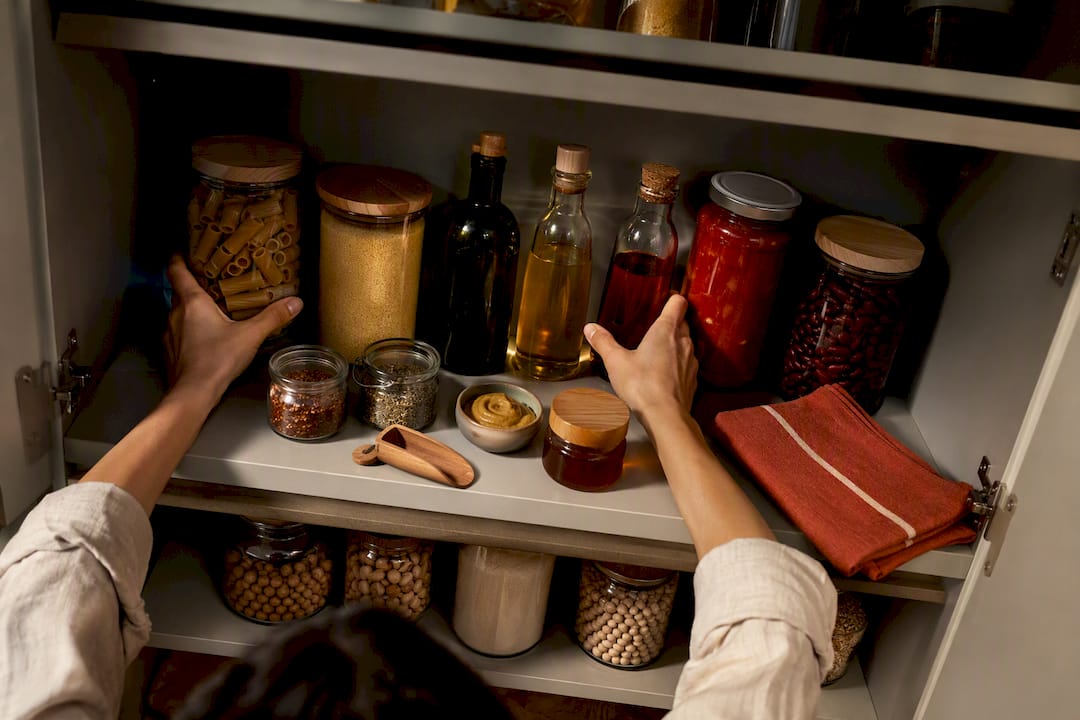
Twelve items get you cooking almost any weeknight meal: olive oil, salt, black pepper, pasta, rice, canned tomatoes, canned beans, broth, all-purpose flour, sugar, oats, and a bottle of soy sauce or hot sauce. That’s the entire starter pantry staples list. Stock those twelve and you can build dozens of meals without a mid-week grocery run. Print the checklist below, stick it on the fridge, and check items off as you shop.
TL;DR:
- Stock only the essential twelve items, including olive oil, canned tomatoes, beans, and rice, to create dozens of versatile, budget-friendly meals.
- Rotate spices, oils, and canned goods regularly, with ground spices lasting about a year and olive oil best used within 12 to 18 months of bottling.
- Build your pantry based on your five most frequently cooked recipes to minimize waste and maximize ingredient overlap.
- Supplement the starter list with a small selection of spices, vinegars, grains, and canned goods organized in airtight containers for freshness and easy access.
- Incorporate a small fridge and freezer stock of ingredients like eggs, frozen vegetables, and proteins to enable quick, complete meals from pantry staples.
Table of Contents
- Your Printable Pantry Staples Checklist: 12 Items To Buy First
- What To Stock in Each Pantry Category
- Fridge and Freezer Items That Make Your Pantry Work Harder
- Build Your Pantry Around Five Recipes You Actually Cook
- Storing Staples So They Actually Last
- A Budget-Friendly Plan for Building a Full Pantry
- Why We Built This List From What Actually Gets Cooked
- Find Recipes That Use What’s Already in Your Cabinet
- Sources
- FAQ
Your Printable Pantry Staples Checklist: 12 Items To Buy First
This is the shopping-ready version, in the order that gets you the most meals for the least money. Each one earns its place because it stretches across cuisines instead of sitting in one recipe.
- Extra-virgin olive oil — the base for dressings, sautés, and finishing drizzles.
- Kosher salt — seasons everything and is easier to control than fine table salt.
- Black peppercorns (whole, with a grinder) — fresher and stronger than pre-ground.
- Dried pasta — cooks in under 15 minutes and scales from one bowl to a family dinner.
- Long-grain rice — the backbone of stir-fries, bowls, and side dishes.
- Canned crushed tomatoes — becomes sauce, soup, or braise base in minutes.
- Canned beans (black, chickpea, or cannellini) — instant protein for salads, soups, and dips.
- Broth or stock (chicken or vegetable) — the difference between plain rice and risotto.
- All-purpose flour — for thickening, baking, and breading.
- Granulated sugar — balances acidity in sauces and covers basic baking needs.
- Rolled oats — breakfast in five minutes, plus a binder for meatballs and baked goods.
- Soy sauce or hot sauce — an instant flavor fix when a dish tastes flat.
A single box of pasta alone cooks quickly and scales easily from a solo dinner to a table of six, which is exactly the kind of return you want from a starter item. Save this list to your phone or print it before your next shopping trip so you’re not guessing in the aisle with these holiday meal prep tips for busy home cooks.
What To Stock in Each Pantry Category
Once the starter twelve are in place, building out by category keeps the pantry useful instead of cluttered.
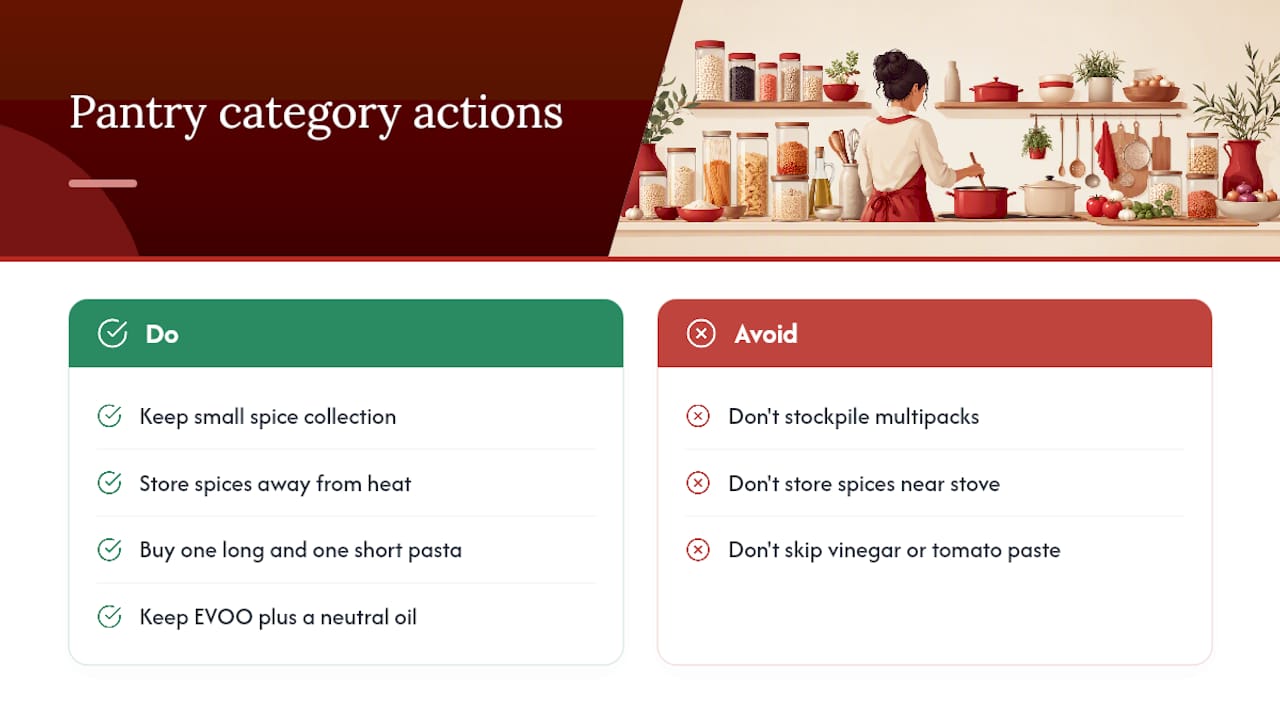
Oils and vinegars. Keep one extra-virgin olive oil for dressings and low-heat cooking, plus one neutral oil (canola or avocado) for high-heat searing and frying. A bottle of rice vinegar or apple cider vinegar rounds out quick pickles and pan sauces.
Spices and seasonings. You don’t need forty jars. Garlic powder, onion powder, paprika, cumin, dried oregano, chili flakes, and a good curry powder cover most cuisines. Ground spices lose potency faster than most cooks expect. The Kitchn recommends storing them away from heat and keeping the collection small rather than stockpiling multipacks you’ll never finish.
Grains and pasta. Keep one long pasta shape (spaghetti) and one short shape (penne or shells) since they behave differently with sauces. Add a quick-cooking grain like couscous or quinoa for nights when rice takes too long.
Canned and jarred goods. Tomato paste, tinned fish (tuna or sardines), olives, and pickled vegetables turn a bare pantry into a full pantry fast.
Baking and sweeteners. Baking powder, baking soda, vanilla extract, and honey or maple syrup are enough for most home baking without a specialty ingredient list.
Sauces, condiments, and snacks. Mayonnaise, mustard, and one umami booster like miso or better-than-bouillon paste quickly expand what you can cook from the same base ingredients. Nuts, seeds, and dried fruit round out snacking and salad toppings.
Pro Tip: Buy whole spices like peppercorns and cumin seeds when you can. They stay fresher far longer than pre-ground versions and taste sharper once toasted or ground fresh.
Fridge and Freezer Items That Make Your Pantry Work Harder
A pantry staples list is only half the picture. Pair it with a small, rotating fridge and freezer stock:
- Fridge: eggs, butter, a hard cheese like Parmesan, plain yogurt, lemons, and fresh garlic or ginger.
- Freezer: frozen vegetables, frozen fruit, a loaf of bread, and a couple of proteins like chicken thighs or dumplings.
Canned beans plus frozen vegetables plus rice becomes dinner in 20 minutes. Eggs plus pasta plus Parmesan becomes carbonara. That’s the whole point of stocking both sides of the kitchen at once.
Build Your Pantry Around Five Recipes You Actually Cook
The fastest way to personalize a pantry staples list is to stop guessing and start with your own cooking habits. Pull up your five most-cooked recipes, list every ingredient across all five, and circle whatever repeats. Bon Appétit’s approach is to build the pantry around those recipes directly, since overlapping ingredients mean less waste and fewer specialty purchases.
If your five favorites lean Italian, you’ll land on olive oil, canned tomatoes, garlic, pasta, and Parmesan. Lean Mexican, and cumin, canned chiles, dried oregano, and lime show up again and again. Lean East Asian, and soy sauce, rice vinegar, and a chili crisp cover most of what you cook. Forkward Kitchen’s tested sheet pan dinners are a good place to reverse-engineer this list from real recipes rather than theory.
Storing Staples So They Actually Last
Airtight containers matter more than most people realize. Grains, flours, and dried beans stay fresh longest in sealed glass or plastic containers kept in a cool, dark cabinet, away from the stove’s heat and steam.
Rough shelf-life ranges worth knowing:
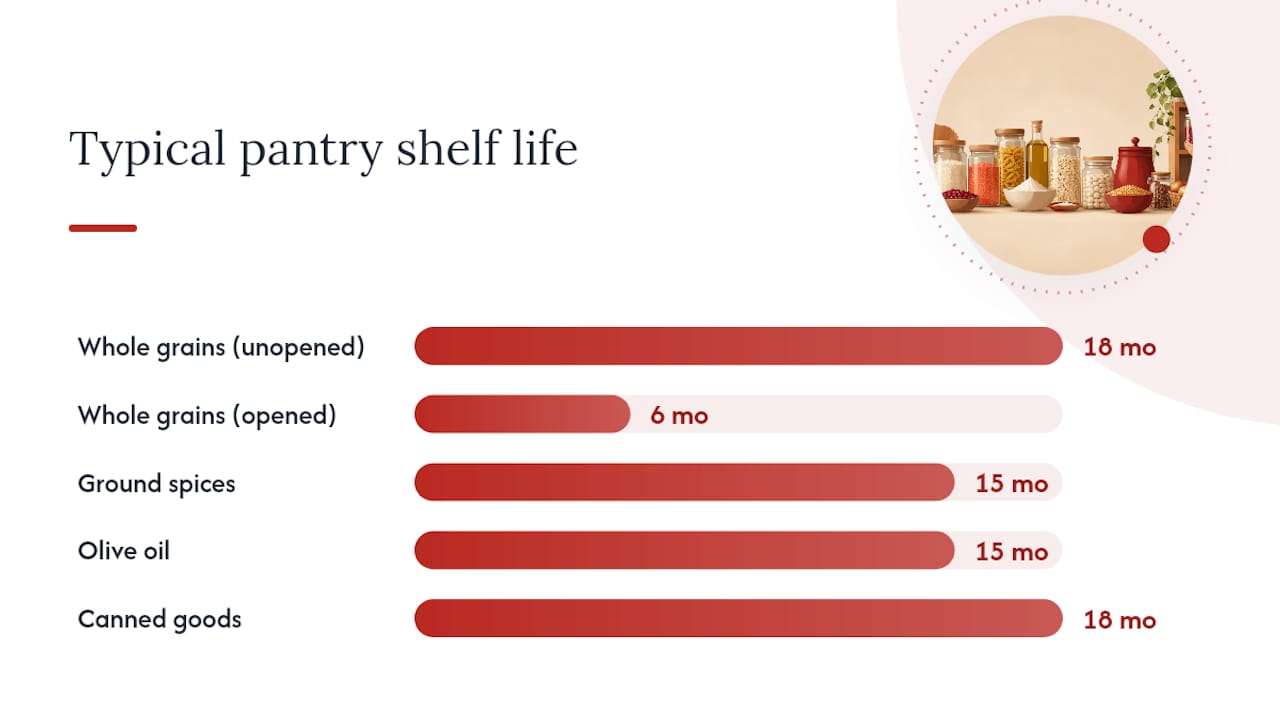
- Whole grains and rice: 1 to 2 years unopened, 6 months once opened and stored airtight.
- Ground spices: about a year to a year and a half before flavor fades noticeably.
- Olive oil: about a year to a year and a half from bottling when stored in a cool, dark spot rather than next to the stove.
- Canned goods: 1 to 2 years, though quality (not safety) starts to drop sooner.
A 10-minute monthly pantry check catches items nearing their date before they go to waste. Pull everything forward, move the oldest cans to the front, and jot down what needs replacing. That’s the entire FIFO system: first in, first out, no app required. If you want a labeling system that sticks, Forkward’s pantry organization guide walks through one that works for small kitchens.
A Budget-Friendly Plan for Building a Full Pantry
You don’t need to buy everything at once, and you shouldn’t try. Spend your first grocery trip on the highest-impact items, then add in waves.
- Month one: olive oil, salt, pepper, garlic powder, canned tomatoes, canned beans, pasta, rice, broth, flour.
- Month two: cumin, paprika, oregano, vinegar, tomato paste, sugar, oats.
- Month three: soy sauce, honey or maple syrup, nuts, tinned fish, mustard, a second cooking oil.
- Month four: specialty items tied to your favorite recipes, whatever those turn out to be.
A top-10 essentials list front-loaded like this gets you the most meals per dollar before you spend anything on specialty items.
Pro Tip: Buy rice, oats, and dried beans from bulk bins when your store has them. You’ll pay less per pound and can portion exactly what you need instead of committing to a whole box.
Store brands work just as well as name brands for canned tomatoes, beans, and broth. Save the brand loyalty for things where flavor actually differs, like olive oil or chocolate.
Why We Built This List From What Actually Gets Cooked
This checklist is built backward from tested recipes, not from a generic “50 things every kitchen needs” list. A tight starter pantry means fewer half-used bags going stale in the back of a cabinet, and it means the recipes we test actually work with what’s already in your kitchen. Adjust it to your own five favorites and it gets sharper every month.
— Oloru
Find Recipes That Use What’s Already in Your Cabinet
This site is built for exactly this moment: pantry stocked, no idea what to make with it. The recipes are developed and tested in-house rather than curated from elsewhere, so the ingredient lists match real pantry staples instead of specialty items you’d have to hunt down.
Search by ingredient and you’ll find dishes built around canned tomatoes, rice, and pantry spices you probably already bought this week. If you’re ready to stretch beyond weeknight basics, the advanced recipe collection uses many of the same staples in more involved techniques, with honest difficulty ratings so you know what you’re signing up for before you start. Browse the full recipe library and search by what’s already in your cart.
Sources
- Pantry staples and what to cook
- If My Pantry Were to Disappear, Here’s What I’d Restock Immediately | Bon Appétit
- Pantry staples guide | The Kitchn
- Pantry Staples Checklist: 50 Items You Should Always Have
FAQ
What are the staples for a pantry?
The core staples are olive oil, salt, pepper, pasta, rice, canned tomatoes, canned beans, broth, flour, sugar, oats, and a soy sauce or hot sauce. Those twelve cover the widest range of quick meals for the smallest shopping list.
What should you have in a well-stocked pantry?
A well-stocked pantry expands the starter twelve with a second cooking oil, a small core spice set, tomato paste, tinned fish, baking basics like baking powder and vanilla, and at least one umami booster like miso or bouillon paste.
What are three staples that any Italian home cook would have in their pantry?
Extra-virgin olive oil, canned or crushed tomatoes, and dried pasta appear in nearly every Italian kitchen, since they form the base of most sauces and weeknight dishes.
How do you stock a pantry on a budget?
Start with the top-10 highest-impact items, buy grains and beans from bulk bins when possible, choose store brands for canned goods, and add five to seven new items each month rather than shopping for everything at once.
How often should I replace pantry spices and oils?
Ground spices lose noticeable flavor after 12 to 18 months, and olive oil is best used within about the same window once opened, so a quick sniff-and-taste check during your monthly pantry review catches anything past its prime.