October 14, 2026
Easy Weeknight Dinners for Tired Cooks, With Pasta Ready in 15 Minutes
Find tested weeknight dinners for low energy nights, from pasta in 15 minutes to flexible one pan meals, with easy swaps and family friendly ideas.

Easy Weeknight Dinners for Tired Cooks, With Pasta Ready in 15 Minutes
The fastest weeknight dinners fall into four reliable formats: pasta, one-pan or sheet-pan meals, stir-fries, and simple skillet bowls, all of which can land on the table in 30 to 40 minutes. Below, we walk through a quick shortlist, category picks for every taste, and the pantry and timing tricks that make these dinners repeatable, plus how to store and reheat whatever you don’t finish tonight.
TL;DR:
- For pasta, reserve a cup of cooking water and finish noodles in the sauce for the final minute so starch helps it cling.
- For crisp sheet pan meals, leave space between ingredients, start potatoes early, and add asparagus only during the final 8 to 10 minutes.
- For stir fries, cut ingredients before heating the pan, sear protein in a single layer, and cook harder vegetables first.
- Set aside two hours weekly to chop vegetables, cook grains, and portion proteins, then store components separately for flexible meals.
- Discard cooked food left out over two hours, or over one hour above 90°F; refrigerate leftovers promptly and eat within 3 to 4 days.
Table of Contents
- 1. Our fastest, most versatile weeknight picks
- 2. Speedy pasta dinners that still feel special
- 3. One-pan and sheet-pan dinners with crisp results
- 4. Stir-fries, bowls, and skillet dinners for busy nights
- 5. Vegetarian and meatless options that still feel like dinner
- 6. Kid-friendly dinners that don’t require a second meal
- 7. Make these recipes weeknight-ready: prep, swaps, and timing
- 8. Food safety, leftovers, and reheating done right
- 9. Why Forkward Kitchen’s tested recipes make weeknights easier
- 10. Testing notes from the kitchen
- Try Forkward’s tested weeknight recipes
- FAQ
- Sources
1. Our fastest, most versatile weeknight picks
When you need to decide quickly, start here. These picks cover different proteins, skill levels, and moods, so you can match one to how much energy you actually have left after work.
- One-pan lemon garlic chicken thighs (35 minutes): Crisps up in a skillet, then finishes in the oven; swap chicken breasts in if that’s what’s thawed.
- Sheet-pan sausage and peppers (30 minutes): Minimal chopping, one pan, and leftovers reheat well for lunch.
- Garlic butter shrimp pasta (20 minutes): Shrimp cooks in minutes, so this is the move when you’re truly out of steam.
- Beef and broccoli stir-fry (25 minutes): A pantry sauce formula carries this one, and it works with almost any vegetable you have on hand.
- Chickpea and spinach curry (30 minutes): Fully vegetarian, built from canned and frozen staples.
- Sheet-pan fajitas (30 minutes): Kid-friendly because everyone builds their own, and peppers can swap for whatever’s in the crisper.
- Loaded baked potato bar (35 minutes, mostly hands-off): Great for a night when you want the oven to do the work.
- Turkey and black bean tacos (25 minutes): A semi-homemade shortcut using pre-shredded cheese and jarred salsa cuts prep to almost nothing.
Pick by time first, then by what protein or produce needs using up. None of these require specialty equipment beyond a sheet pan and a decent skillet.
2. Speedy pasta dinners that still feel special
Pasta earns its place as a weeknight staple because the active cooking window is short and the ingredient list is forgiving. These four ideas lean on pantry staples and a couple of techniques that make a real difference in flavor without adding time.
- Garlic butter shrimp pasta: Shrimp sears in under 5 minutes, so this dish is built around the pasta pot, not the stove.
- One-pot lemon ricotta pasta: Pasta cooks directly in broth, which thickens into a light sauce as the starch releases.
- Sausage and white bean pasta: Crumbled sausage and canned beans turn a simple tomato sauce into a full meal in one pan.
- Fifteen-minute cacio e pepe: Just pasta, butter, pepper, and two cheeses, finished with starchy pasta water for a glossy sauce.
A few techniques make these taste like you spent more time on them. Fresh pasta cooks in 2 to 4 minutes, which is worth keeping in the freezer for nights when even 12 minutes of boiling feels like too long. Always reserve a cup of pasta water before draining: the starch in it helps sauces cling to noodles instead of pooling at the bottom of the bowl. And rather than tossing pasta and sauce separately, finish the noodles directly in the sauce pan for the last minute of cooking so everything melds together.
Pro Tip: Start prepping your garlic, herbs, and protein while the pasta water comes to a boil. That dead time is usually enough to get everything else ready to go.
Our pasta collection has more tested weeknight and weekend options if you want to build out a rotation beyond these four.
3. One-pan and sheet-pan dinners with crisp results
Sheet-pan dinners are popular for a reason: one pan goes in the oven, and cleanup takes minutes. Getting genuinely crisp, well-browned results instead of a soggy pile takes a little staging, but nothing complicated.
- Sheet-pan sausage and peppers: High heat and a single layer are what get you real caramelization here.
- Lemon herb chicken thighs with potatoes: Potatoes go in first since they take longer to cook through than the chicken.
- Honey mustard salmon and asparagus: Fast-cooking items like asparagus go on the pan during the last 8 to 10 minutes only.
- Sheet-pan fajita vegetables with steak strips: A hot oven (425°F or higher) is what gives you char instead of steamed vegetables.
The biggest mistake on a crowded sheet pan is, well, crowding it. Vegetables and proteins packed too close together steam instead of roast, so give everything room to breathe, even if that means using two pans. Staggering roast times matters too: root vegetables like potatoes and carrots need a head start, while delicate items like asparagus or cherry tomatoes go in only for the final stretch.
Lining the pan with parchment or foil saves real cleanup time, especially with anything involving a sticky glaze or marinade. A squeeze of lemon, a scatter of fresh herbs, or a spoonful of yogurt sauce right before serving adds brightness without adding a cooking step.
Pro Tip: Preheat the sheet pan itself along with the oven. Food hits a hot surface right away, which helps browning instead of a slow, gradual heat-up.
For more tested combinations and staging notes, our sheet-pan dinner guide walks through several more options, and our roasted vegetable and potato ideas pair well as sides when you want to round out a lighter main.
4. Stir-fries, bowls, and skillet dinners for busy nights
High-heat, short-cook methods like stir-fries and skillet bowls are some of the most adaptable tools in a weeknight rotation because the format barely changes even when the ingredients do.
- Beef and broccoli stir-fry: Thin-sliced beef sears in under 2 minutes per side in a very hot pan.
- Shrimp and vegetable fried rice: Day-old rice works better than fresh since it’s drier and fries up instead of turning mushy.
- Chicken and vegetable teriyaki bowls: A quick pan sauce ties diced chicken and whatever vegetables you have into one skillet meal.
A simple sauce formula covers nearly all of these: soy sauce for salt, an acid like rice vinegar or lime juice, something sweet like honey or brown sugar, and aromatics such as garlic and ginger. Our stir-fry sauce recipe is built around that exact ratio, and once you have it memorized, you can build a full meal from whatever’s in the fridge.
The method matters as much as the ingredients. Cut everything before you turn on the heat, since stir-frying moves too fast to chop mid-cook. Get the pan genuinely hot before anything goes in, and sear protein in a single layer rather than crowding it, which causes steaming instead of browning. Vegetables go in order of cook time, the hardest first.
Swap freely based on what’s on hand: chicken, shrimp, tofu, or beef all work with the same sauce, and broccoli, snap peas, bell peppers, or frozen stir-fry mix are interchangeable.
5. Vegetarian and meatless options that still feel like dinner
Meatless doesn’t have to mean a side salad standing in for a main course. These three recipes are built to be filling on their own, using the kind of staples most kitchens already stock.
- Chickpea and spinach curry: Canned chickpeas and coconut milk make this a pantry-first dinner with almost no prep.
- Black bean and sweet potato tacos: Roasted sweet potato adds heft, while black beans supply protein and fiber.
- One-pot lemon ricotta pasta with white beans: Stirring in white beans turns a light pasta dish into something substantial.
Beans, lentils, and cheese are the easiest ways to make a vegetarian dinner feel complete rather than like something is missing. A handful of toasted nuts or seeds adds crunch and a bit more protein to grain bowls or tacos without any extra cooking. For a look at vegetables that pull more weight nutritionally, this rundown of high-protein, high-fiber vegetables is worth a glance when you’re planning what to add.
These recipes also flex easily: swap chickpeas for lentils, canned beans for frozen edamame, or coconut milk for a splash of cream, depending on what’s already open in your fridge.
6. Kid-friendly dinners that don’t require a second meal
Cooking one dinner that works for both adults and picky eaters is the goal, and these three recipes are built to flex without extra effort.
- Sheet-pan fajitas: Kids build their own with just the parts they like, so pickiness solves itself at the table.
- Turkey and black bean tacos: Familiar shape and flavor, with vegetables easy to tuck inside rather than pile on top.
- Loaded baked potato bar: One base ingredient, endless toppings, so everyone customizes their own plate.
For picky eaters, finely dicing or grating vegetables into a sauce (think shredded zucchini in taco meat, or pureed carrot stirred into pasta sauce) gets them in without a fight. Serving vegetables on the side, raw with a dip, also tends to go over better than mixed in, since kids often object to texture more than flavor.
A few semi-homemade shortcuts save real time on these nights: pre-shredded cheese, jarred salsa, canned beans instead of dried, and bagged slaw mix instead of hand-cutting cabbage. None of these compromise the meal, and they cut active prep time meaningfully.
7. Make these recipes weeknight-ready: prep, swaps, and timing
A little upfront organization turns any of these recipes from a one-time dinner into a repeatable weeknight system.
- Block out a 2-hour prep window once a week. Use it to chop vegetables, cook a batch of rice or grains, and marinate or portion proteins into freezer bags.
- Store prepped components separately in airtight containers. Keeping sauces, proteins, and vegetables apart until cook time keeps everything fresher and more flexible to mix and match.
- Build a pantry swap list. Canned beans for fresh, frozen vegetables for fresh, Greek yogurt for sour cream: knowing your go-to substitutions means a missing ingredient never derails dinner.
- Coordinate oven and stovetop timing. Start anything that goes in the oven first, since it needs the least attention, then handle stovetop steps while it roasts.
Our sheet-pan meal prep plan breaks down exactly what to prep in that weekly window and how long each component holds up in the fridge. For nights when even that feels like too much, our pantry meal collection is built entirely around dinners from shelf-stable ingredients, ready in under 40 minutes.
Pro Tip: Cook double portions of rice, roasted vegetables, or shredded chicken during your prep window. One task now becomes the base for two or three different dinners later.
8. Food safety, leftovers, and reheating done right
Quick dinners are only worth it if what you save gets eaten safely later. Cooked meat and poultry leftovers kept at 40°F or below should be eaten within 3 to 4 days, and anything left out at room temperature for more than 2 hours (or just 1 hour above 90°F) should be thrown out rather than refrigerated.
Bacteria multiply fastest between 40°F and 140°F, often called the danger zone, which is why getting food into the fridge quickly matters as much as cooking it properly in the first place.
Cool leftovers faster by transferring them to shallow containers before sealing and refrigerating, rather than letting a deep pot cool slowly on the counter. When reheating, reheat leftovers to a safe internal temperature and confirm it with a food thermometer rather than guessing by sight or smell. USDA guidance also recommends bringing sauces, soups, and gravies to a full boil when reheating, and skipping the slow cooker for reheating leftovers since food can sit for an unsafe amount of time in the danger zone before it gets hot enough.

9. Why Forkward Kitchen’s tested recipes make weeknights easier
Every recipe we publish is developed and tested in-house, ensuring that the timing and steps reflect real cooking experience. We pair each recipe with a difficulty rating based on testing, so labels like “quick and easy” aim to reflect practical cooking experience.
That matters most on a weeknight, when the gap between “this should take 20 minutes” and the reality of it taking 45 is the difference between a good night and a frustrating one.
- Choose recipes labeled for lower difficulty when you’re short on time or energy, and save the more involved ones for a weekend.
- Use the stated cook time as a real guide, not a best-case scenario, since it reflects how the recipe actually performed in testing.
- Browse by category, like our sheet-pan dinners or pantry-based meals, to filter for the kind of night you’re having.
10. Testing notes from the kitchen
What makes a weeknight recipe genuinely repeatable isn’t a clever trick, it’s whether it still works when you’re tired, the kitchen’s a mess from the morning, and you’re down to whatever’s left in the crisper drawer. That’s the standard we test against, not just whether a dish works perfectly under ideal conditions.
Busy nights don’t leave room for recipes that overpromise on time or underdeliver on flavor. The ones that earn a permanent spot in a rotation are the ones that forgive a missing ingredient or a few extra minutes without falling apart.
If you want to see how a recipe actually performed before you commit to it, our tested recipe pages note exactly that.
— Oloru
Try Forkward’s tested weeknight recipes
Every recipe we publish starts from scratch in our own kitchen rather than being adapted from somewhere else, so the difficulty rating and timing you see are based on how it actually cooked for us, not a guess. That matters most on a weeknight, when you need to trust that “30 minutes” really means 30 minutes.
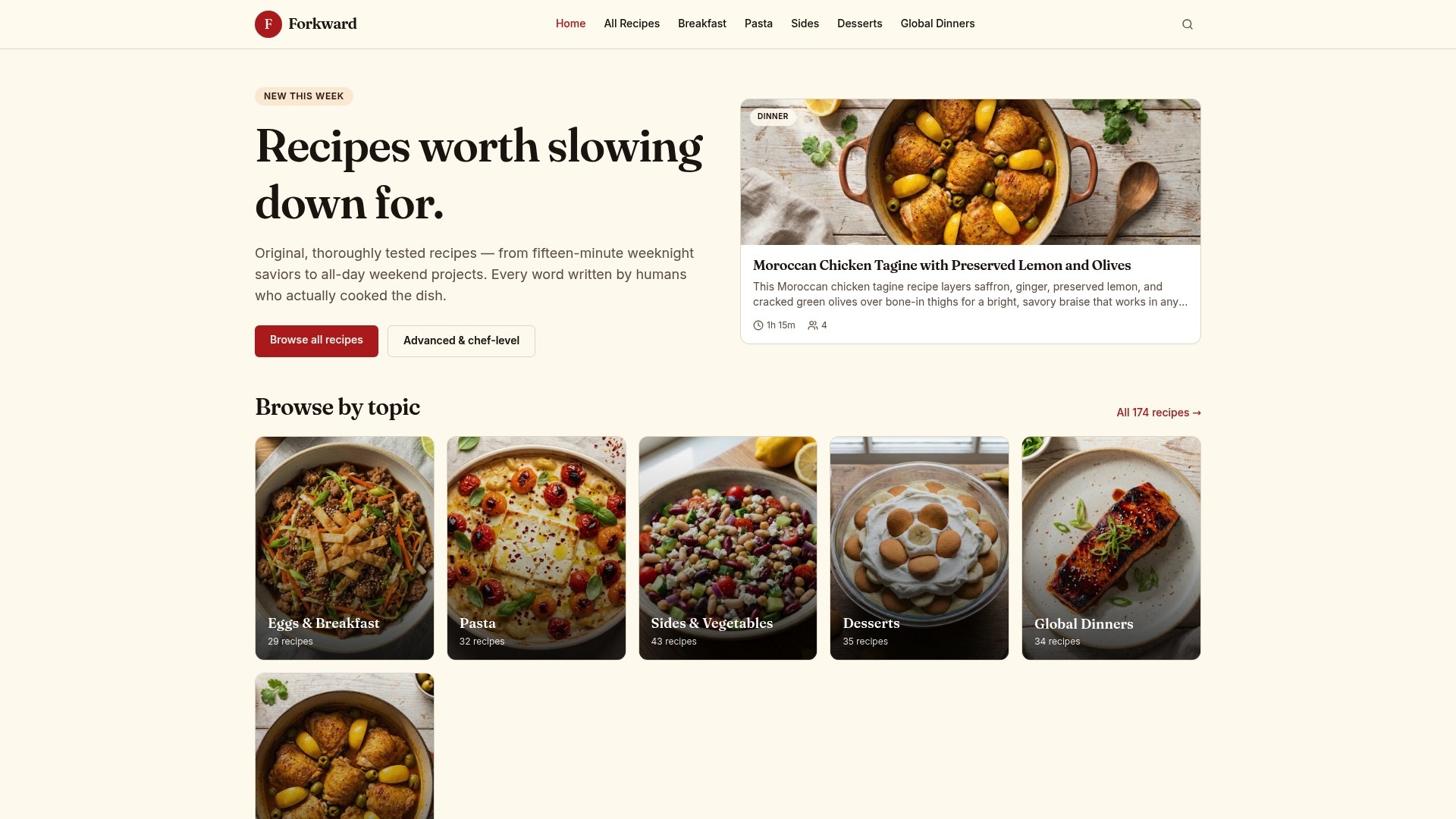
If tonight calls for something simple, or you’re ready to try a few more adventurous options once the weeknight basics feel easy, our recipes cover both ends of that range.
- Browse our full recipe collection to filter by time, difficulty, and ingredient.
- Check our global weeknight dinners if you want to add new flavors to your rotation.
- Explore chicken thigh recipes or quick salmon dinners for protein-forward options ready in 30 minutes or less.
Start with All Recipes and pick whatever matches tonight’s energy level.
FAQ
What’s a good lazy dinner?
A loaded baked potato bar or a one-pot pasta are both good lazy dinners since they need minimal chopping and mostly cook themselves. Sheet-pan meals also qualify, since once everything’s on the pan, the oven does the rest of the work.
What to eat for dinner that is quick?
Garlic butter shrimp pasta and beef and broccoli stir-fry are both ready in about 20 to 25 minutes since the proteins cook in just a few minutes over high heat. One-pot pasta dishes are another fast option, since the pasta cooks directly in the sauce or broth rather than needing a separate pot.
What to make for dinner when you’re exhausted?
Reach for a recipe with the fewest active steps, like sheet-pan sausage and peppers or a one-pot pasta, since both involve minimal chopping and mostly hands-off cooking. Choosing a recipe labeled as lower difficulty is a reliable way to avoid taking on more than you have energy for.
What to have for dinner kid friendly?
Sheet-pan fajitas or turkey and black bean tacos both work well for kids since they can be customized at the table, letting picky eaters build their own plate. Loaded baked potatoes are another flexible option, since toppings can be kept separate for kids who prefer things plain.