October 6, 2026
Tested Pantry Meals: Family Dinners Ready in Under 40 Minutes
Tested family friendly pantry meals with honest difficulty tags, make ahead notes, and quick cook times. Most recipes finish in under 40 minutes.

Tested Pantry Meals: Family Dinners Ready in Under 40 Minutes
Pantry meals are quick, family-friendly dinners built from canned, dried, and shelf-stable staples you already have on hand. Below, we share ready-to-make ideas plus the planning, substitution, and safety habits that keep them reliable on a busy night. We pull from recipes we created and tested, each with an honest difficulty rating so you know what you’re signing up for before you start cooking.
TL;DR:
- Pantry staples like canned tomatoes, beans, and rice can be combined into quick, reliable dinners that often take 15 to 30 minutes to prepare.
- Using a few anchor ingredients to plan multiple meals reduces grocery costs and minimizes food waste through efficient reuse of leftovers.
- Most pantry meal leftovers are safe when refrigerated within two hours and eaten within three to four days, with reheating to 165°F for safety.
- Freezing soups, stews, chili, and casseroles allows for batch cooking and convenient reheat, while salads and cream dishes generally do not freeze well.
- Having tested recipes with honest difficulty ratings ensures quick, predictable results, making weeknight pantry cooking more approachable for all skill levels.
Table of Contents
- 1. Ten pantry meals you can make tonight
- How do you plan a week of meals around pantry staples?
- Swaps and building blocks when you’re missing an ingredient
- How long can you safely store and reheat pantry meal leftovers?
- Which small appliances make pantry cooking faster?
- Why tested recipes and honest difficulty labels matter
- Find tested pantry recipes and meal plans on Forkward Kitchen
- FAQ
- Sources
1. Ten pantry meals you can make tonight
These ideas work with what’s already in your cabinet, and most come together in under 40 minutes. Each one notes a difficulty tag, a core ingredient list, and a swap for when you’re missing something.
- One-pot tomato pasta (easy, 20 minutes): canned crushed tomatoes, pasta, garlic, and dried oregano simmered together in one pot. No pasta on hand? Rice works as a base too. For versions with exact timing, our easy pasta recipes collection has several variations.
- Tuna and white bean skillet (easy, 15 minutes): canned tuna, canned white beans, olive oil, lemon, and whatever dried herbs you have. Swap tuna for canned salmon if that’s what’s in the cabinet.
- Chickpea curry (moderate, 25 minutes): canned chickpeas, canned coconut milk, curry powder, and canned diced tomatoes. No coconut milk? Use milk plus a tablespoon of butter for a similar richness.
- Pantry fried rice (easy, 15 minutes): cooked rice, canned mixed vegetables, soy sauce, and a scrambled egg if you have one. Frozen vegetables substitute fine if canned aren’t available.
- Lentil soup (easy, 30 minutes): dried or canned lentils, canned diced tomatoes, onion, and cumin. A lentil soup recipe walks through both versions and freezes well for batch cooking.
- Taco bowls (easy, 20 minutes): rice, canned black beans, tomato paste thinned with water, and taco seasoning. Shredded cheese or hot sauce rounds it out if you have either.
- Tuna melt open sandwiches (novice, 10 minutes): canned tuna mixed with mayonnaise, spread on shelf-stable bread, topped with cheese, and broiled until melted. Any canned fish works in place of tuna.
- Pantry shakshuka (moderate, 25 minutes): canned crushed tomatoes simmered with garlic and paprika, then eggs cracked directly into the sauce to poach. Serve with crackers if bread isn’t available.
- Bean quesadillas (novice, 10 minutes): canned refried or mashed beans spread on tortillas with cheese, folded, and pan-fried until crisp. Canned corn stirred in adds texture.
- Quick pesto pasta (easy, 20 minutes): jarred pesto tossed with pasta and a splash of the starchy pasta water to loosen the sauce. One pesto pasta recipe uses fresh basil and burrata when you want to dress it up, but the jarred version gets dinner on the table faster.
- Skillet tomato rice (easy, 25 minutes): rice cooked directly in canned tomatoes and broth with onion and smoked paprika for a one-pan side or main. Add canned sausage slices to make it a full dinner.
- Sheet-pan potatoes and canned sausage (easy, 35 minutes): diced potatoes roasted with canned sausage, olive oil, and whatever dried herbs are in the cabinet. A sheet pan dinners collection covers timing and temperature for similar one-tray meals.
How do you plan a week of meals around pantry staples?
Start by picking two or three anchor staples, say canned tomatoes, rice, and canned beans, then build four to six meals that each reuse at least one of them in a different way. That overlap is what keeps a grocery list short and a pantry from feeling random. Planning meals this way consistently reduces grocery spending and food waste compared with shopping meal by meal.
A small, high-value top-up list might include; for more ideas on sustainable buying, check out these zero-waste urban living swaps that help make a difference in your pantry and shopping habits.
- Canned diced tomatoes, which anchor pasta, shakshuka, and rice dishes alike.
- Canned beans (black, white, chickpea) for protein that needs no cooking time.
- A bag of rice or a box of pasta, both of which stretch across multiple meals.
- Canned fish (tuna or salmon) for a protein that keeps for years without refrigeration.
- One fresh item, like onions or a bag of carrots, to add texture and a little produce.
Batch cook once and repurpose the results: a pot of rice and lentils made on Sunday can become a bowl with tomato sauce and cheese on Monday, a cumin-lime salad with canned corn on Tuesday, and a pesto-and-nuts version by Wednesday. This is the same approach behind flexible one-pot beans, greens, and grains templates: cook the base once, change the finish each time.
Pro Tip: Keep tomato paste, a neutral oil, and one bag of rice stocked at all times. Those three alone can rescue almost any thin or bland pantry meal.
For a printable plan that walks through a full week, a weekly meal plan post lays out a sample schedule you can adapt.

Swaps and building blocks when you’re missing an ingredient
Most pantry recipes survive a missing ingredient if you know the right substitute. A few reliable swaps:
- No crushed tomatoes? Use tomato paste thinned with water at roughly a 1:3 ratio.
- No canned beans? Dried beans cooked ahead work the same in any recipe, just add a bit more liquid since canned beans come packed in brine.
- No cream? Canned coconut milk, or milk whisked with a tablespoon of butter, gives a similar richness in curries and soups.
- No fresh herbs? Dried herbs work at about a third of the volume called for fresh.
Three building blocks are worth keeping in your back pocket. A quick tomato sauce is canned tomatoes, garlic, and oil simmered 10 minutes. An oil-herb emulsion (dried herbs, oil, and a splash of vinegar or lemon) stands in for pesto when basil isn’t available. A basic curry paste comes together from curry powder, tomato paste, and oil fried briefly to bloom the spices.
Changing the spice profile turns one pantry meal into another without changing the base. The same rice-and-beans bowl becomes Mediterranean with oregano and lemon, Mexican with cumin and chili powder, or Indian with curry powder and ginger. Once a jar is opened, most condiments and sauces keep in the refrigerator for a few weeks; check the label, since shelf life varies by product.

How long can you safely store and reheat pantry meal leftovers?
Cook once, eat multiple times: that’s the core of batch cooking, and it only works if storage and reheating are done safely. Soups, stews, chili, and casseroles made from pantry staples are the easiest candidates for a double batch since they portion and reheat cleanly.
Refrigerate perishable cooked food within 2 hours of cooking (1 hour if the room is above 90°F), and plan to eat most cooked leftovers within 3 to 4 days when stored at 40°F or below. That window applies to nearly every pantry meal built around canned beans, rice, pasta, or eggs.
A few more rules worth keeping on the fridge door:
- Reheat leftovers to an internal temperature of 165°F before eating, checked with a food thermometer rather than a guess.
- Store leftovers in shallow containers so they cool quickly instead of sitting warm in a deep pot.
- Freeze stews, soups, chili, and casseroles well; they often improve after a day in the freezer as flavors settle.
- Skip the freezer for fresh-vegetable salads and some cream-based dishes, since both separate or turn watery on thawing.
- During a power outage or similar emergency, many shelf-stable staples like hard cheeses and baked goods without cream fillings stay safe to eat unless they show mold or an off smell, while most refrigerated perishables need to be discarded after 4 hours without power.
Reheat on the stove or in the microwave for most dishes; a toaster oven works well for anything that benefits from a crisp top, like a casserole. Whichever method you use, the food thermometer is the only way to know you’ve actually hit a safe temperature rather than just a warm one.
Which small appliances make pantry cooking faster?
A slow cooker, a pressure cooker, an air fryer, and a toaster oven each solve a different pantry-cooking problem, and none of them are required, but any one of them saves real time on a weeknight. Batch-cooking with small appliances also tends to use less energy than running a full-size oven for a small portion.
- A slow cooker turns dried beans and inexpensive cuts into a hands-off dinner, ideal for a batch you’ll eat across several nights; our crockpot dinners collection has several pantry-friendly options.
- A pressure cooker or Instant Pot cooks dried beans and grains together in under 30 minutes, skipping the overnight soak entirely.
- An air fryer crisps sheet-pan staples like diced potatoes or canned sausage in half the time of a conventional oven.
- A blender turns canned tomatoes and roasted vegetables into a smooth soup base in minutes.
Before loading a slow cooker, thaw any frozen meat first and keep perishable ingredients refrigerated until the moment you start cooking, not sitting on the counter while you prep everything else.
Pro Tip: Don’t reheat a full pot of leftovers directly in the slow cooker. Warm it to 165°F on the stove or in the microwave first, then transfer it to the slow cooker just to hold it warm for serving.
Why tested recipes and honest difficulty labels matter
A recipe is only as useful as its timing and difficulty rating are honest. We develop and test every recipe in our own kitchen rather than curating or paraphrasing what’s already published elsewhere, which means the cook times and ingredient lists in our pantry-friendly collections reflect what actually happened when we cooked them, not an estimate.
That matters most for weeknight pantry cooking, where a recipe that claims “20 minutes” but actually takes 40 wrecks a family’s dinner schedule. Our difficulty tags (novice, easy, moderate, advanced) are built to be a quick, reliable filter rather than a marketing flourish, so a cook scanning a list of pantry meals can trust that an “easy” tag really means easy on a Tuesday night, not easy for a professional cook.
Find tested pantry recipes and meal plans on Forkward Kitchen
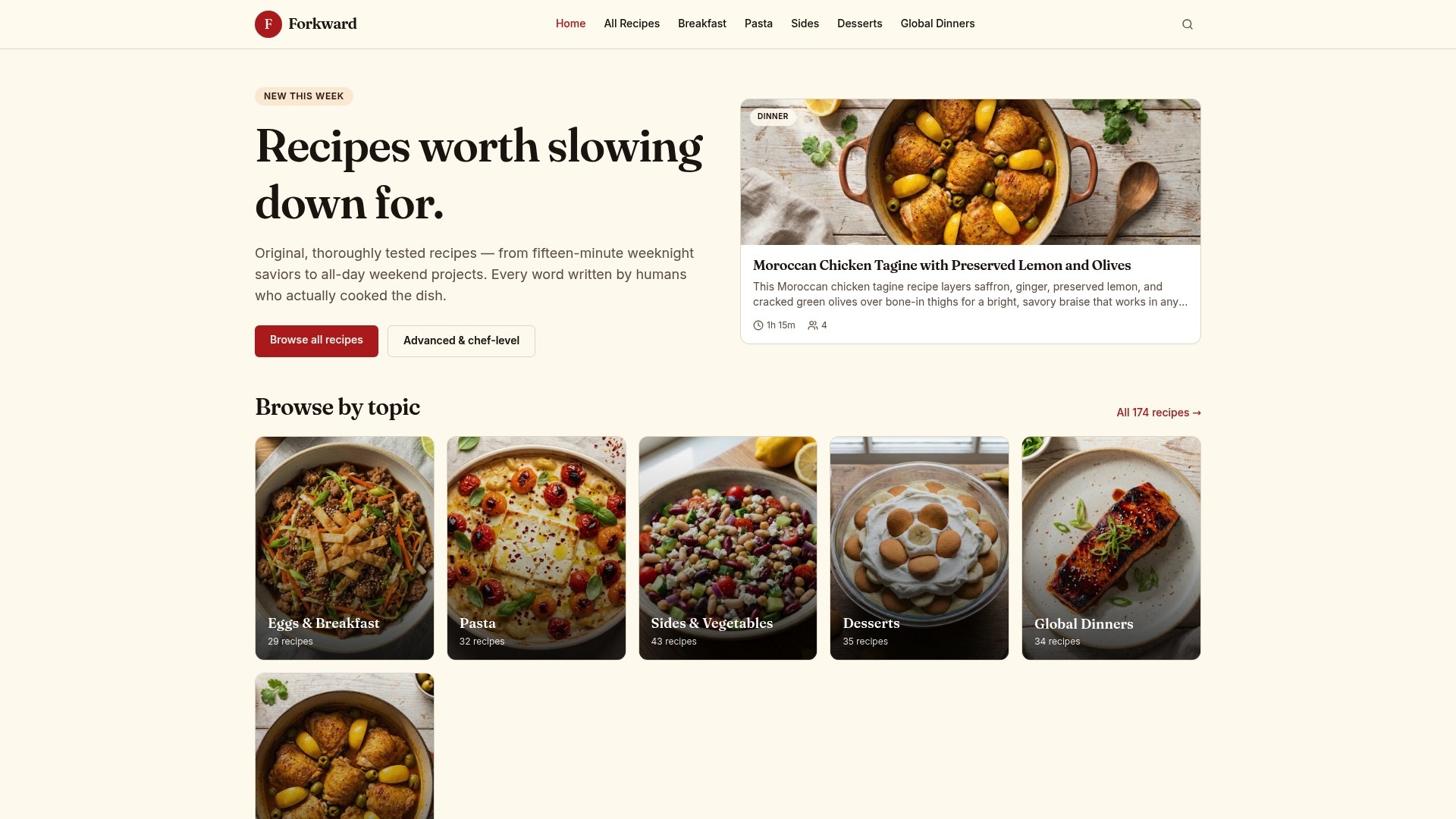
If the ideas above got dinner on the table tonight, a full recipe library has the complete versions, with exact timing, ingredient lists, and the same honest difficulty ratings used throughout this article. Recipes are developed and tested by the site rather than pulled from somewhere else, so what you read reflects actual tested cooking.
- Browse the complete recipe collection and filter by difficulty to find pantry-friendly options fast.
- Check easy pasta recipes for tested, weeknight-timed versions of the tomato and pesto pasta ideas above.
- Once pantry cooking feels comfortable, our advanced recipes collection is there for the weekend you want a bigger project.
Start at Forkward Kitchen for the full catalog of tested, original recipes built for every skill level.
FAQ
What can I make for dinner from my pantry?
Canned tomatoes, beans, rice, and pasta cover most quick dinners: think one-pot tomato pasta, a tuna and white bean skillet, or a chickpea curry made with canned coconut milk. Any of these come together in 15 to 30 minutes with ingredients that keep for months in the cabinet.
How can I eat on a tight weekly food budget?
Build meals around two or three staples you already have, like rice, canned beans, and canned tomatoes, and design several dinners that reuse them in different forms. For reference, the USDA Thrifty Food Plan estimates roughly $229 a week covers groceries for a family of four, which gives a useful benchmark for planning a tighter budget around pantry staples.
How long do pantry meal leftovers stay safe to eat?
Refrigerate leftovers within 2 hours of cooking and plan to eat them within 3 to 4 days when stored at 40°F or below. Reheat to an internal temperature of 165°F before eating, checked with a food thermometer rather than guessing.
Which pantry meals freeze well for batch cooking?
Soups, stews, chili, and casseroles freeze and reheat reliably, which makes them the best candidates for doubling a batch. Fresh-vegetable salads and some cream-based dishes don’t hold up as well, since both tend to separate or turn watery once thawed.
Can pantry meals work for dietary restrictions?
Most pantry staples are naturally flexible: swap pasta for rice or canned lentils for a gluten-free base, or use canned coconut milk instead of dairy for a dairy-free curry. The building-block approach, a base of rice or beans with a changeable sauce, makes it easy to adjust one meal for several different diets at once.
Sources
- Keep Food Safe! Food Safety Basics | Food Safety and Inspection Service
- Meal prep and planning saves money and boosts nutrition