Indonesian Beef Rendang: Authentic Slow-Braised Dry Curry
Master this authentic Indonesian beef rendang recipe. Slow-simmered in coconut milk and spices until dark, dry, and incredibly tender. A true labor of love.
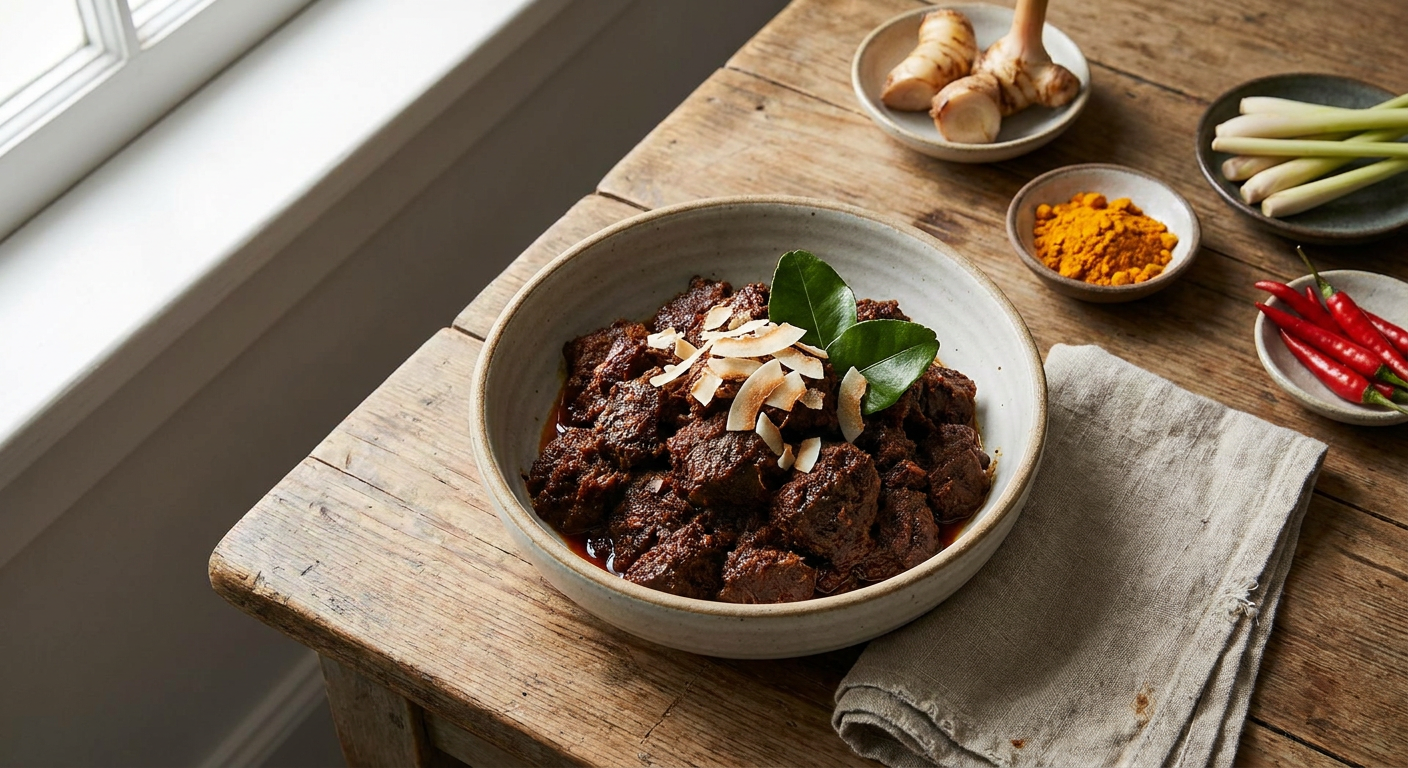

Indonesian beef rendang is not a curry in the way most Westerners define the word; it is a meticulous reduction that results in a dry, intensely concentrated masterpiece. Originating from the Minangkabau people of West Sumatra, this authentic rendang padang is prized for its complex spice profile and its ability to stay fresh for days without refrigeration.
The secret to a perfect beef rendang recipe lies in patience. You must simmer the beef in a rich base of coconut milk, lemongrass, galangal, and chilies for several hours. As the liquid evaporates, the coconut milk breaks down into oil, and the meat begins to fry in its own seasoned fats, turning a deep, dark mahogany brown.
Don't be tempted to pull the pot off the stove while there is still liquid left. The goal is a 'dry' rendang where the spices cling to every fiber of the meat. It is a slow-motion transformation that turns humble aromatics into a buttery, spicy, and savory experience unlike anything else in Southeast Asian cuisine.
Ingredients
Spice Paste (Bumbu)
- 15 dried red chilies (Fresno or Thai), soaked in hot water
- 10 large shallots, peeled
- 6 cloves garlic, peeled
- 3 inches (7.5 cm) fresh galangal, sliced against the grain
- 2 inches (5 cm) fresh ginger, peeled
- 2 inches (5 cm) fresh turmeric (or 1 tsp ground)
- 3 stalks lemongrass, white parts only, thinly sliced
The Beef and Aromatics
- 2 lbs (900g) beef chuck or brisket, cut into 1.5-inch cubes
- 4 cups (1 liter) full-fat coconut milk
- 2 stalks lemongrass, bruised and knotted
- 6 kaffir lime leaves, torn slightly to release oils
- 2 turmeric leaves, knotted (optional, use extra lime leaves if unavailable)
- 1 piece asam keping (dried tamarind slice) or 1 tbsp tamarind paste
- 1/2 cup (45g) kerisik (toasted coconut paste - see tips)
- 1 tbsp palm sugar (gula melaka), grated
- 2 tsp salt (adjust to taste)
Instructions
- 1
Process the spice paste ingredients in a high-speed blender or food processor until a smooth, thick paste forms, adding a splash of coconut milk if necessary to move the blades.
- 2
Combine the spice paste, cubed beef, coconut milk, bruised lemongrass, lime leaves, turmeric leaves, and tamarind in a heavy-bottomed pot or Dutch oven over medium-high heat.
- 3
Bring the mixture to a boil, then immediately reduce the heat to low, maintaining a gentle simmer.
- 4
Cook uncovered for 2 to 2.5 hours, stirring every 15-20 minutes to ensure the bottom does not scorch as the liquid reduces.
- 5
Incorporate the kerisik (toasted coconut paste), palm sugar, and salt once the coconut milk has thickened and the oil begins to separate from the sauce.
- 6
Continue cooking for another 45-60 minutes, stirring more frequently now as the moisture evaporates; the beef will transition from braising to frying in the rendered coconut oil.
- 7
Monitor the color closely until the beef turns a dark, chocolatey brown and the oil is mostly absorbed by the spice solids.
- 8
Remove the large aromatics (lemongrass stalks and leaves) and serve the rendang warm with steamed jasmine rice or lontong.
Nutrition (per serving)
Estimates only — not medical or dietary advice.
- Calories
- 685 kcal
- Protein
- 34 g
- Carbs
- 16 g
- Fat
- 56 g
- Fiber
- 4 g
- Sugar
- 6 g
- Sodium
- 840 mg
Tips
- → Make your own kerisik: Toast unsweetened shredded coconut in a dry pan over medium-low heat until dark golden brown, then pound it in a mortar and pestle until it releases its oil and becomes a paste.
- → Choose the right cut: Use beef chuck or shin. Lean cuts like sirloin will dry out and become tough during the long reduction process; you need the connective tissue to melt.
- → Don't rush the color: The signature dark brown hue comes from the slow caramelization of the coconut milk and spices. If you stop while it's still orange/yellow, you have 'kalio', not rendang.
- → Better the next day: Like many stews, rendang flavors deepen significantly after 24 hours in the fridge. Reheat gently in a pan with a tiny splash of water.
FAQ
Why is my beef rendang still oily?
The oil is a natural byproduct of the coconut milk breaking down. In an authentic rendang padang, the oil acts as a preservative. You can spoon off the excess before serving, but that oil is packed with flavor.
Can I make Indonesian beef rendang in a slow cooker?
You can start the braise in a slow cooker, but you must finish it in a wide pan on the stovetop. A slow cooker won't allow the liquid to evaporate sufficiently to achieve the essential 'dry fry' stage.
How do I store leftovers?
Rendang is incredibly shelf-stable due to the spices and low moisture. It lasts up to 5 days in the fridge or 3 months in the freezer.
What can I substitute for galangal?
Galangal has a sharp, pine-like flavor that is distinct from ginger. If you cannot find it fresh or frozen, look for galangal powder, or as a last resort, use extra ginger with a squeeze of lime juice, though the flavor profile will shift.
You might also like
 Dinner
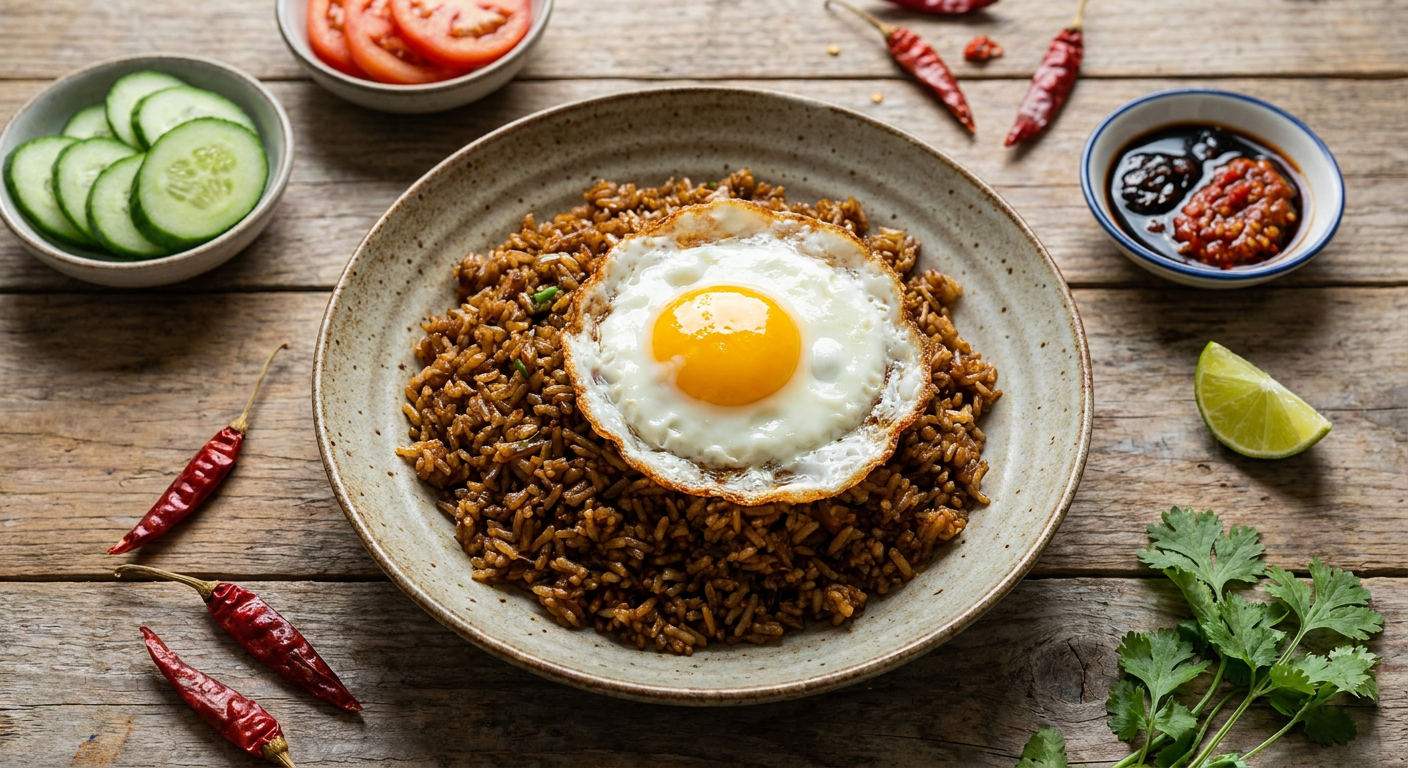
Authentic Indonesian Nasi Goreng with Fried Egg
Master this authentic Indonesian nasi goreng featuring day-old rice, savory shrimp paste, and sweet kecap manis, topped with a signature crispy fried egg.
 Dinner
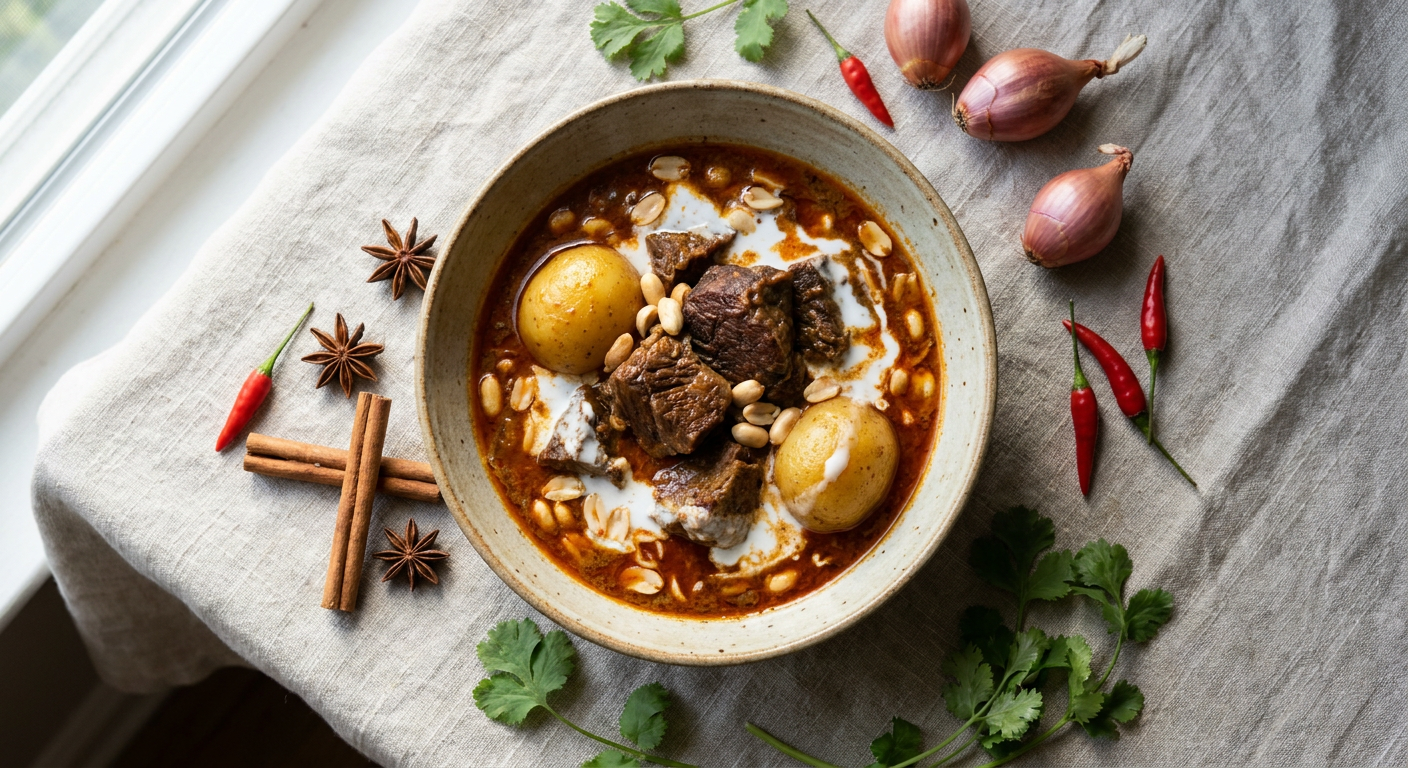
Authentic Beef Massaman Curry with Slow-Braised Chuck
This beef massaman curry features tender chuck roast, cracked coconut cream, and a rich tamarind sauce. A sweet and savory Thai massaman curry recipe for home cooks.
 Dinner
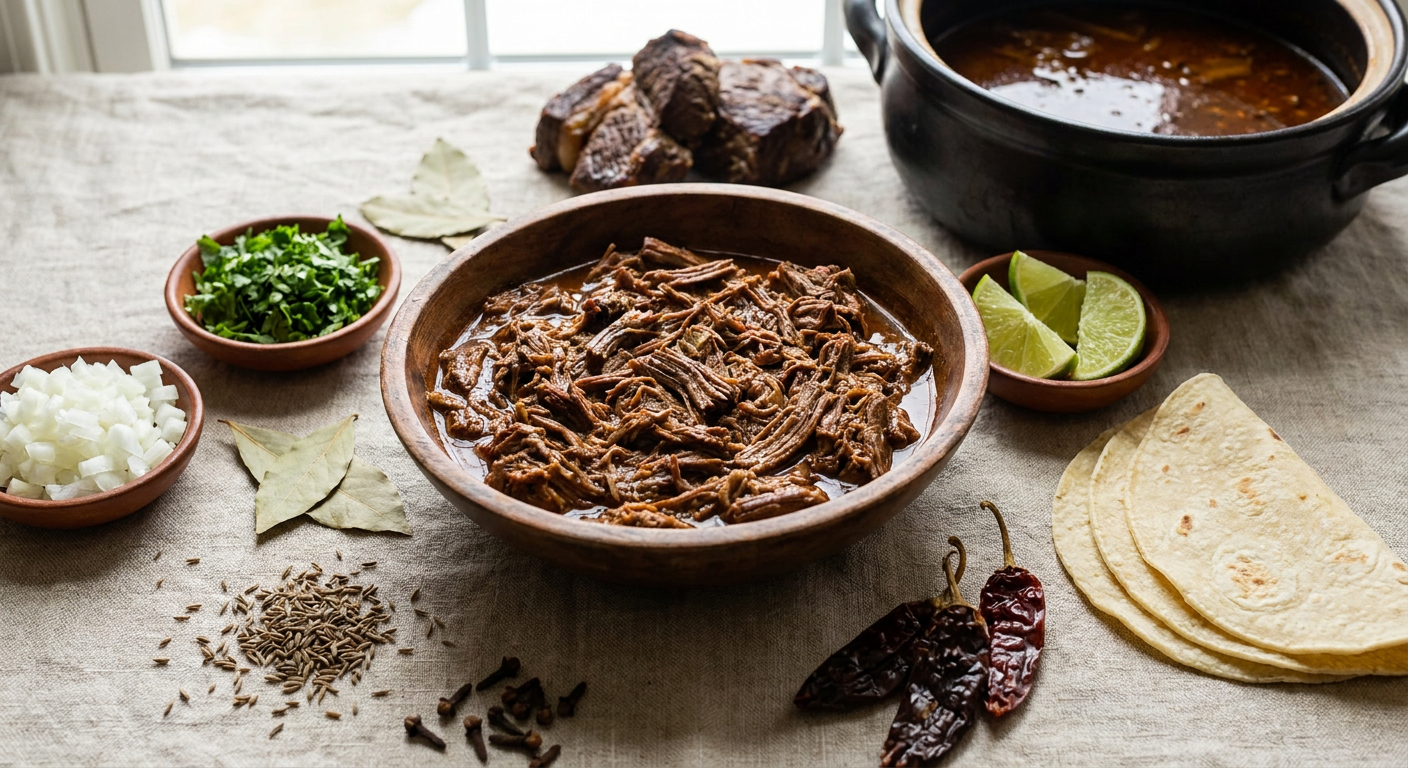
Easy Beef Barbacoa Recipe: Better Than the Burrito Chain
This juicy beef barbacoa recipe braises chuck roast with chipotles, cumin, and cloves until perfectly shreddable. Better than any burrito chain and easy to make at home.
 Dinner
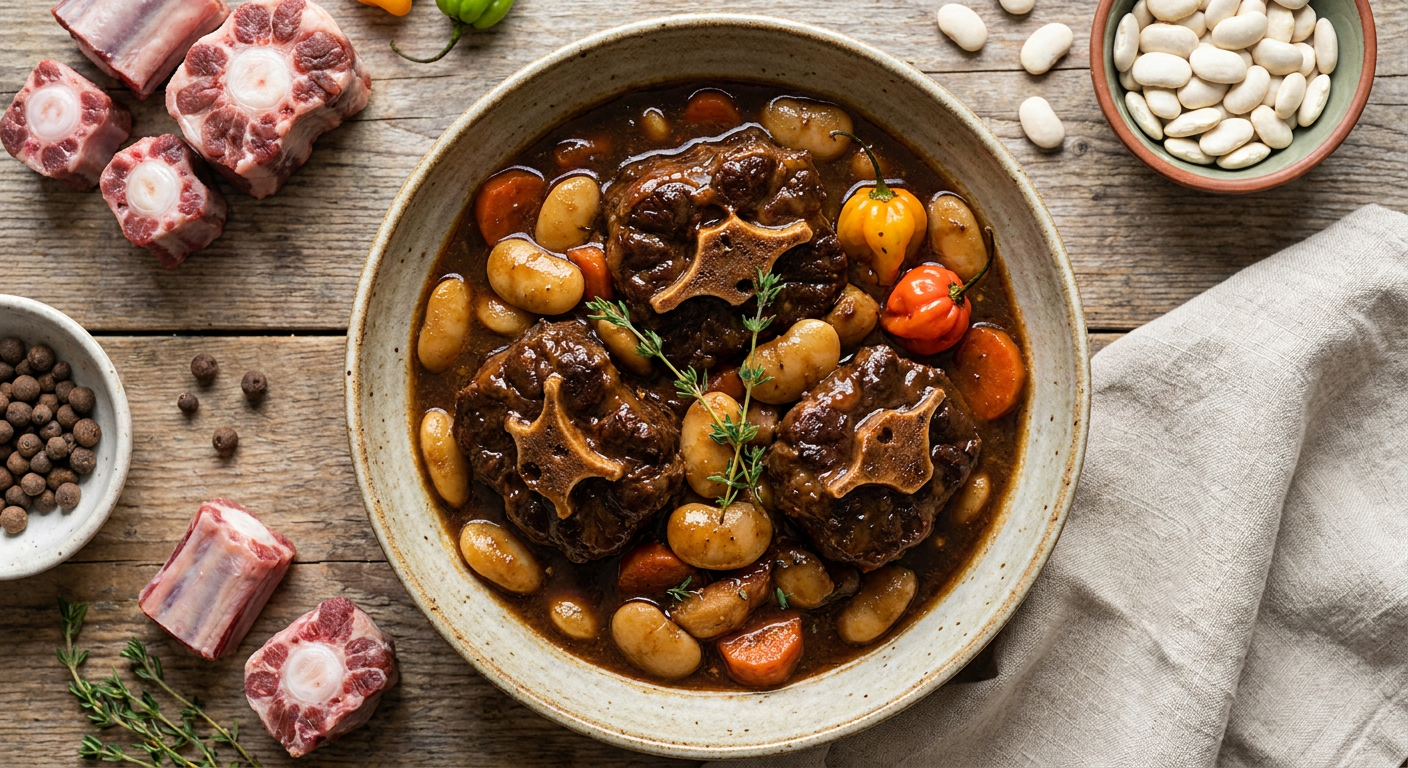
Sticky Jamaican Oxtail Stew Recipe with Butter Beans
This traditional oxtail stew recipe delivers tender beef in a sticky, collagen-rich gravy. Learn to make authentic Jamaican oxtail stew with spinners and butter beans.