Traditional Duck Confit Recipe with Pommes Sarladaises
Master the ultimate duck confit recipe. Learn how to dry-cure duck legs overnight and slow-poach them in rendered fat for the most tender, classic French result.
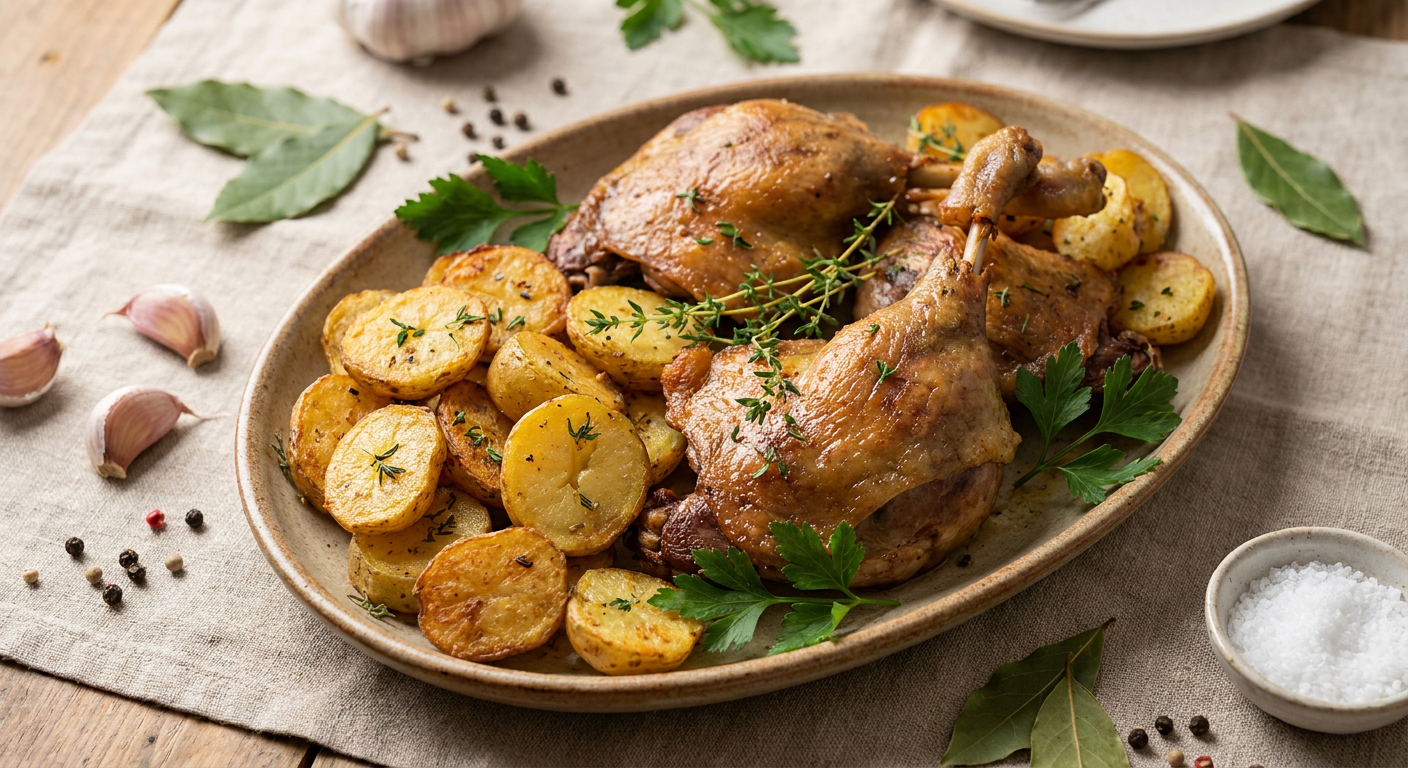

A proper duck confit recipe is the cornerstone of the French bistro repertoire, relying on the ancient technique of salt-curing and slow-poaching to transform tough legs into silk. While many modern shortcuts exist, true depth of flavor comes from an overnight cure in salt, thyme, garlic, and cracked juniper berries.
Understanding how to make duck confit at home is surprisingly simple if you have patience. The magic happens in a low oven where the meat tenderizes while submerged in liquid gold—rendered duck fat—leaving you with a versatile protein that can be stored for weeks or crisped up immediately for a luxurious dinner.
This classic French duck confit is served alongside pommes sarladaises, potatoes fried in the very fat used to cook the duck. It is unapologetically rich, deeply savory, and a testament to why traditional methods still reign supreme in the kitchen.
Ingredients
The Cure
- 4 large duck legs (about 1.2kg / 2.6 lbs total)
- 3 tablespoons (45g) kosher salt
- 4 garlic cloves, smashed
- 6 sprigs fresh thyme
- 1 tablespoon black peppercorns, cracked
- 8 juniper berries, lightly crushed
- 2 bay leaves, torn
The Confit
- 3 cups (700ml) rendered duck fat (store-bought or homemade)
- 1 star anise (optional)
Pommes Sarladaises
- 1.5 lbs (700g) Yukon Gold potatoes, peeled and sliced into 1/8-inch rounds
- 2 tablespoons reserved duck fat
- 2 garlic cloves, minced
- 1/4 cup fresh parsley, chopped
- Flaky sea salt and black pepper to taste
Instructions
- 1
Rub the duck legs evenly with kosher salt, cracked peppercorns, juniper, thyme, garlic, and bay leaves. Place them in a single layer in a non-reactive dish, cover tightly, and refrigerate for 12 to 24 hours.
- 2
Preheat your oven to 200°F (95°C). Rinse the salt and aromatics off the duck legs under cold water and pat them completely dry with paper towels.
- 3
Melt the duck fat in a heavy-bottomed ovenproof pot or Dutch oven over low heat. Submerge the duck legs in the fat, ensuring they are completely covered; add the star anise if using.
- 4
Place the pot in the oven and cook, uncovered or partially covered, for 3 to 3.5 hours. The meat is ready when it is very tender and starting to pull away from the bone, but not yet falling off in shreds.
- 5
Remove the pot from the oven and let the duck cool in the fat. For best flavor, transfer everything to a clean container, ensuring the fat completely seals the meat, and age in the fridge for at least 3 days (up to 2 weeks).
- 6
To serve, carefully remove the legs from the solidified fat (you may need to warm the container slightly). Wipe off excess fat.
- 7
Place the legs skin-side down in a cold cast-iron skillet. Turn the heat to medium-low and cook for 8-12 minutes, allowing the fat to render out and the skin to become deeply golden and shatteringly crisp.
- 8
While the duck crisps, prepare the potatoes: Sauté the potato rounds in 2 tablespoons of duck fat in a separate skillet over medium heat until tender and golden, about 15 minutes. Toss with minced garlic and parsley in the final minute.
- 9
Flip the duck legs briefly to warm the flesh side for 1 minute, then serve immediately atop the potatoes.
Nutrition (per serving)
Estimates only — not medical or dietary advice.
- Calories
- 980 kcal
- Protein
- 42 g
- Carbs
- 34 g
- Fat
- 78 g
- Fiber
- 4 g
- Sugar
- 2 g
- Sodium
- 1850 mg
Tips
- → Do not skip the rinsing step after curing; if you don't wash away the salt and aromatics, the final dish will be aggressively salty.
- → Save the fat! After cooking, strain the duck fat through a fine-mesh sieve and store it in the freezer. It can be reused for confit or roasting vegetables multiple times.
- → For the crispiest skin, start the duck in a cold pan. This allows the fat under the skin to melt away gradually before the skin burns.
- → If the duck legs aren't fully submerged, you can add a little neutral oil (like grapeseed) to top off the fat, though pure duck fat yields the best flavor.
FAQ
Can I make duck confit in a slow cooker?
Yes, you can place the cured and rinsed legs in a slow cooker, cover with fat, and cook on 'Low' for 6-8 hours until tender.
How long does duck confit last in the fridge?
If the duck is completely submerged and sealed under a layer of solidified duck fat, it can last for up to 1 month in the refrigerator. The flavor actually improves after the first week.
Why is my duck confit tough?
Toughness usually means the duck hasn't cooked long enough or the temperature was too high, causing the proteins to seize. Ensure your oven is truly at 200°F and give it the full 3 hours.
You might also like
 DinnerAdvanced
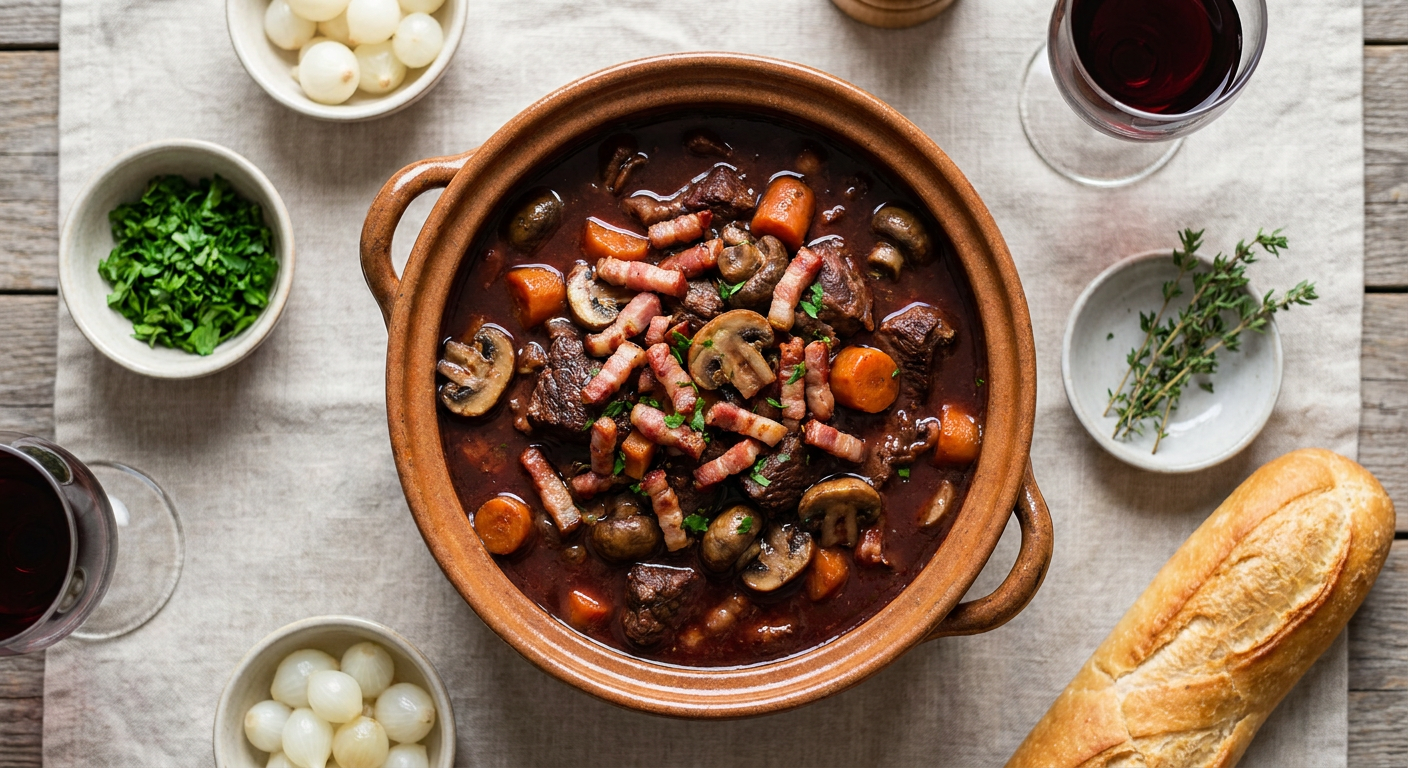
Authentic Beef Bourguignon Recipe: The Ultimate Red Wine Braise
Master this beef bourguignon recipe with overnight-marinated chuck, crispy lardons, and a silky red wine reduction. A classic French braise for the patient home cook.
 DinnerChef-level
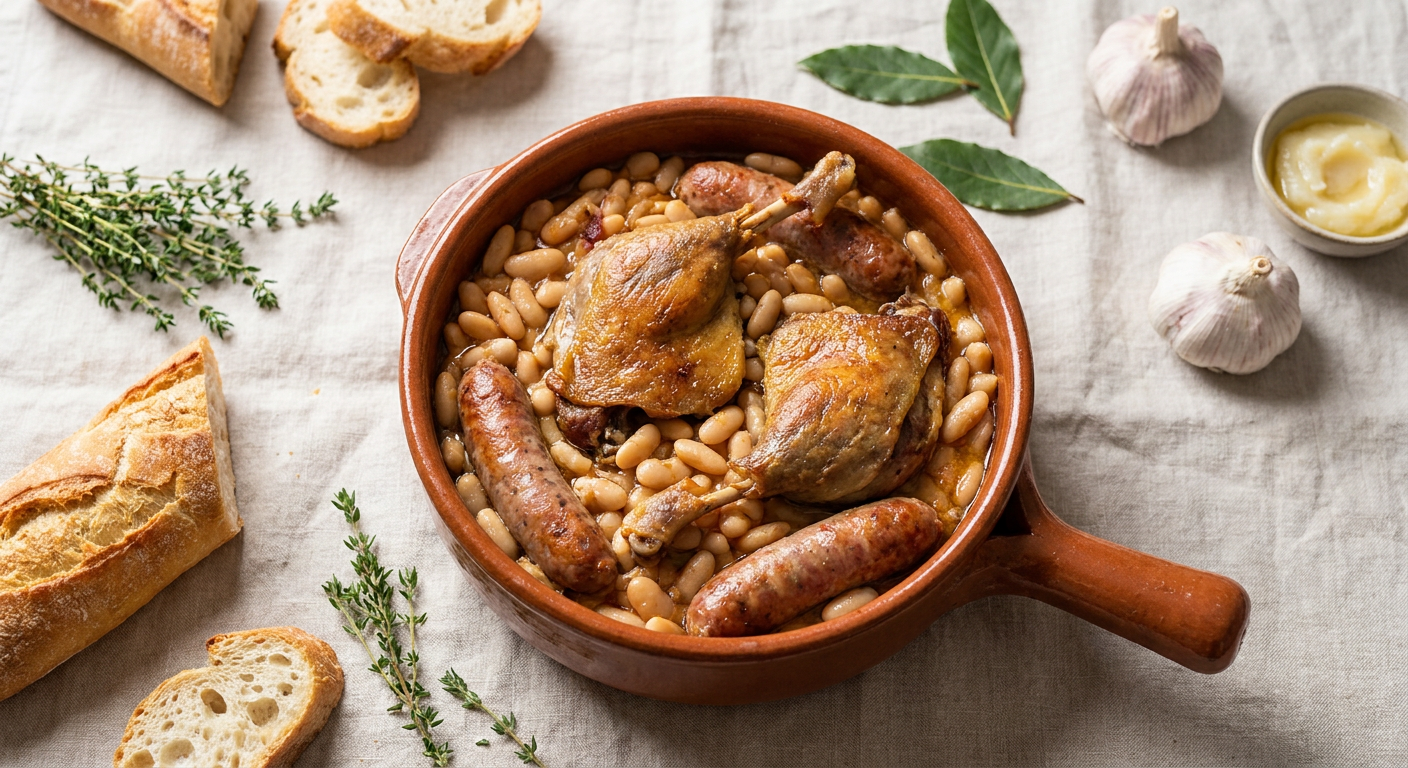
Traditional Toulouse Cassoulet Recipe with Confit Duck
Learn how to master this authentic cassoulet recipe. A slow-cooked Toulouse cassoulet featuring tarbais beans, duck confit, and garlic sausage with a perfect crust.
 Dinner
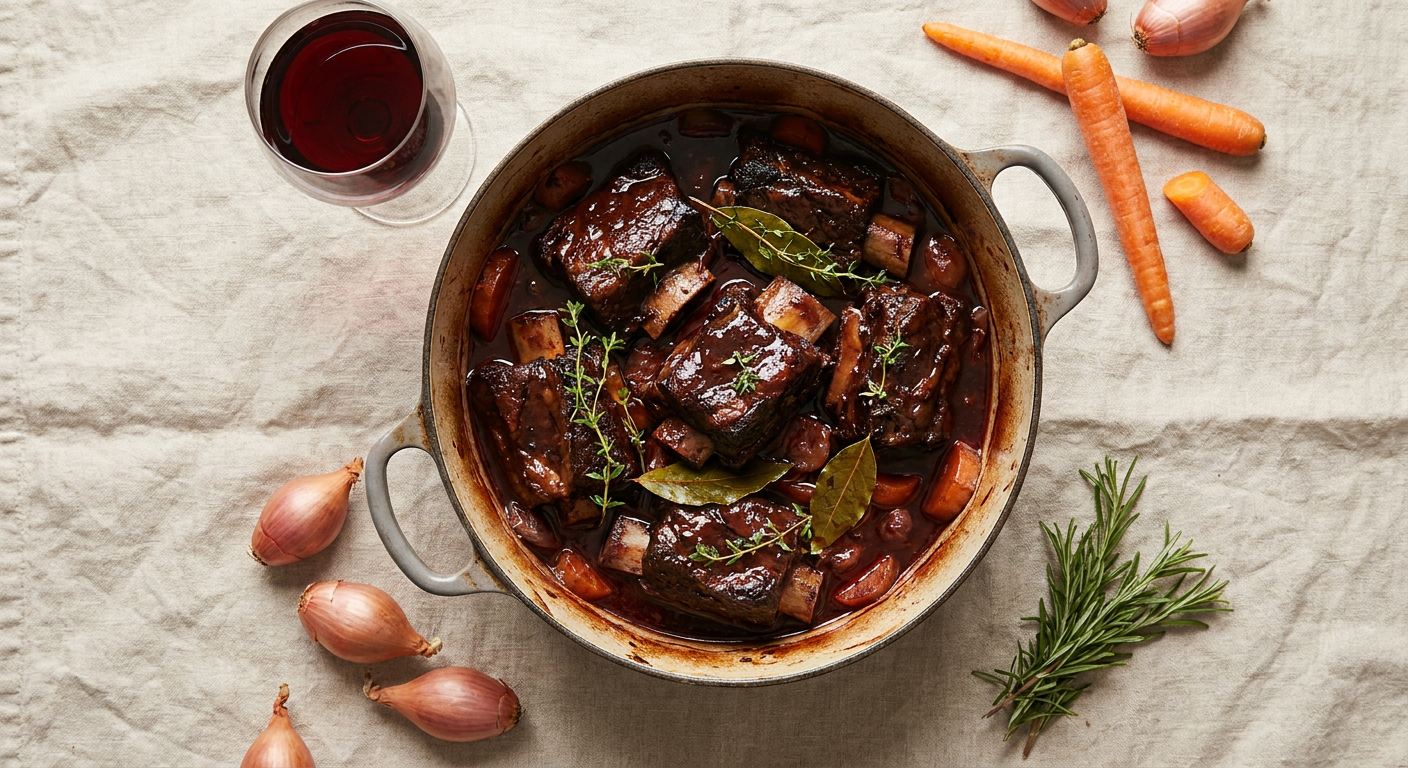
Red Wine Braised Dutch Oven Short Ribs
Master these dutch oven short ribs braised in red wine and beef stock. A foolproof recipe for fall-off-the-bone tenderness and a silky, rich reduction sauce.
 Dinner
Chef-Style Chicken Cordon Bleu Recipe with Mustard Cream
Master this chicken cordon bleu recipe using a pro technique to prevent cheese leaks. Crispy panko, ham and swiss stuffed chicken, and a silky mustard cream sauce.