Authentic Doro Wat: Ethiopian Spicy Chicken Stew Recipe
Master doro wat with this authentic recipe. Slow-simmered chicken legs in a rich berbere and niter kibbeh sauce, served with hard-boiled eggs and injera.
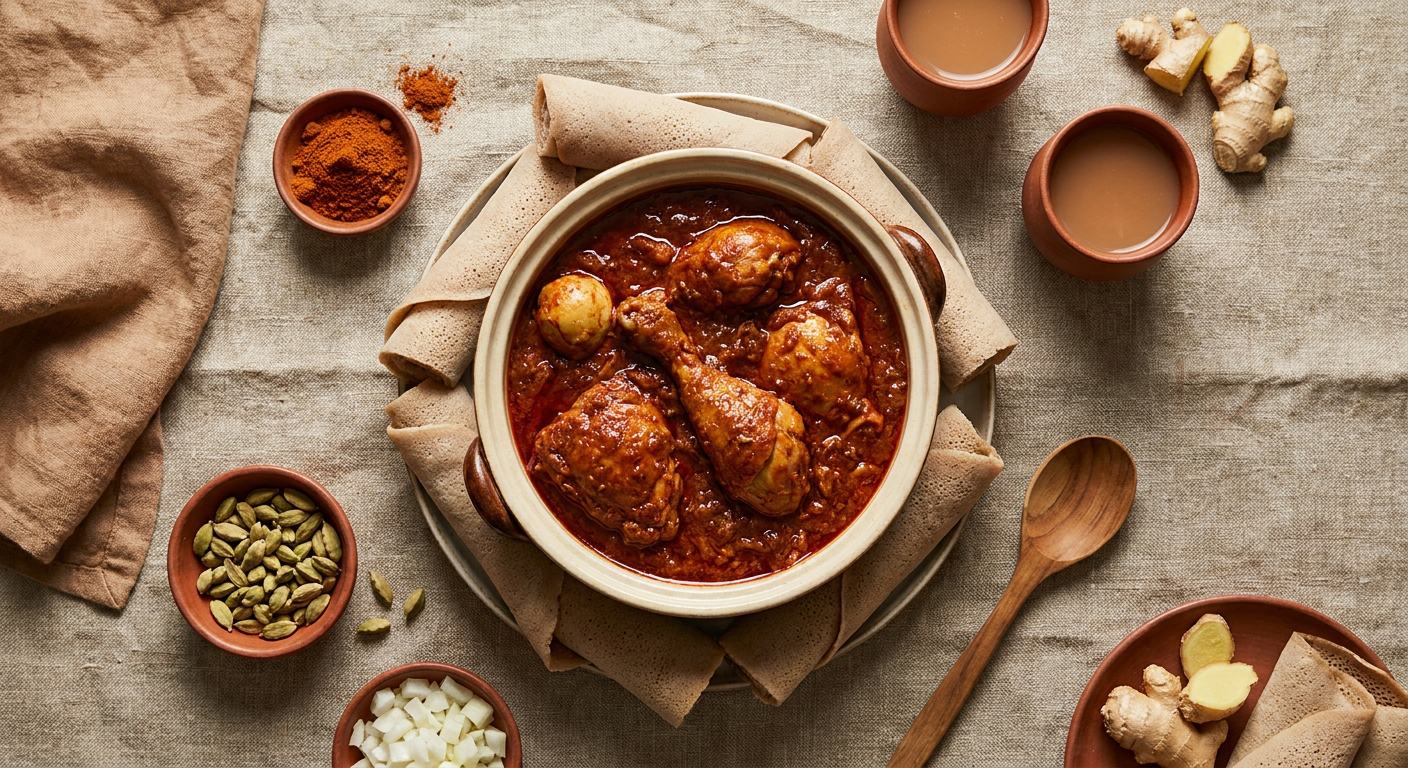

Doro wat is the undisputed king of Ethiopian cuisine, a celebratory stew that demands patience and rewards you with incredible depth. This isn't a quick weeknight curry; it is a slow-burn masterpiece where red onions are dry-cooked for nearly an hour until they melt into a sweet, jammy base for the spicy berbere.
Making an authentic doro wat recipe requires two non-negotiable ingredients: niter kibbeh (spiced clarified butter) and a high-quality berbere spice blend. The chicken is traditionally bone-in and skinless, allowing the intense, dark red sauce to penetrate deep into the meat during the long simmer.
While every Ethiopian household has their own nuances, the hallmarks of this Ethiopian doro wat remain the same—a thick, mahogany-colored sauce, tender chicken legs, and the iconic addition of whole hard-boiled eggs scored to soak up the heat.
Ingredients
The Base
- 1.3 kg (3 lbs) red onions, finely minced (use a food processor)
- 120 ml (1/2 cup) niter kibbeh (Ethiopian spiced clarified butter)
- 60 g (1/2 cup) berbere spice blend
- 2 tablespoons garlic paste
- 1 tablespoon ginger paste
The Protein
- 1.5 kg (3.3 lbs) chicken drumsticks and thighs, skin removed
- 2 tablespoons fresh lemon juice
- 1 tablespoon salt
- 6 large hard-boiled eggs, peeled
- 500 ml (2 cups) water or chicken stock
Instructions
- 1
Clean the skinless chicken pieces by rubbing them with lemon juice and salt; let sit for 15 minutes, then rinse and pat dry.
- 2
Place the minced onions in a large, heavy-bottomed Dutch oven over medium heat without any oil or butter.
- 3
Cook the onions for 40 to 50 minutes, stirring frequently; they should reduce significantly, turn translucent, and then a deep golden brown without burning.
- 4
Add the niter kibbeh to the onions and stir until melted and fragrant.
- 5
Stir in the berbere spice blend and cook for another 10 minutes on low heat, adding a splash of water if the mixture becomes too dry or starts to stick.
- 6
Incorporate the garlic and ginger pastes, stirring for 2 minutes until the raw aroma dissipates.
- 7
Add the chicken pieces to the pot, tossing to coat thoroughly in the onion-spice base.
- 8
Pour in the water or stock until the chicken is mostly submerged, bring to a gentle simmer, and cover.
- 9
Simmer for 45 to 60 minutes until the chicken is fall-off-the-bone tender and the sauce has thickened into a deep, dark red gravy.
- 10
Use a knife to make 3-4 shallow vertical slits in each hard-boiled egg and nestle them into the stew.
- 11
Simmer for a final 10 minutes to warm the eggs through and allow them to absorb the sauce's color.
- 12
Serve hot on a large platter lined with injera, using extra pieces of injera to scoop up the chicken and sauce.
Nutrition (per serving)
Estimates only — not medical or dietary advice.
- Calories
- 585 kcal
- Protein
- 46 g
- Carbs
- 18 g
- Fat
- 36 g
- Fiber
- 5 g
- Sugar
- 8 g
- Sodium
- 1420 mg
Tips
- → Don't rush the onions. The dry-cooking phase is what creates the characteristic body and sweetness of doro wat; if you add fat too early, they will fry instead of melting.
- → Adjust the heat by varying your berbere. If you are sensitive to spice, look for a 'mild' blend, but remember that the long simmer and the onions will naturally mellow the heat.
- → Score your eggs. Cutting those small slits allows the spicy fat from the sauce to penetrate the yolk, which is the best part of the dish.
- → If you can't find niter kibbeh, you can substitute with ghee mixed with a pinch of fenugreek, cardamom, and nigella seeds.
FAQ
Why does my doro wat taste bitter?
Bitterness usually comes from burning the berbere spice or the onions. Ensure you are cooking on low to medium-low heat once the spices are added and keep a splash of water nearby to deglaze the pot.
Can I use chicken breast for this recipe?
It is not recommended. Chicken breast dries out during the long simmering process required to develop the sauce's flavor. Bone-in thighs and legs provide the necessary gelatin and fat.
How do I make doro wat less spicy?
The heat comes entirely from the berbere. You can reduce the amount of berbere used, but you may lose some of the deep red color. Adding more sautéed onions can also help balance the heat with sweetness.
You might also like
 African
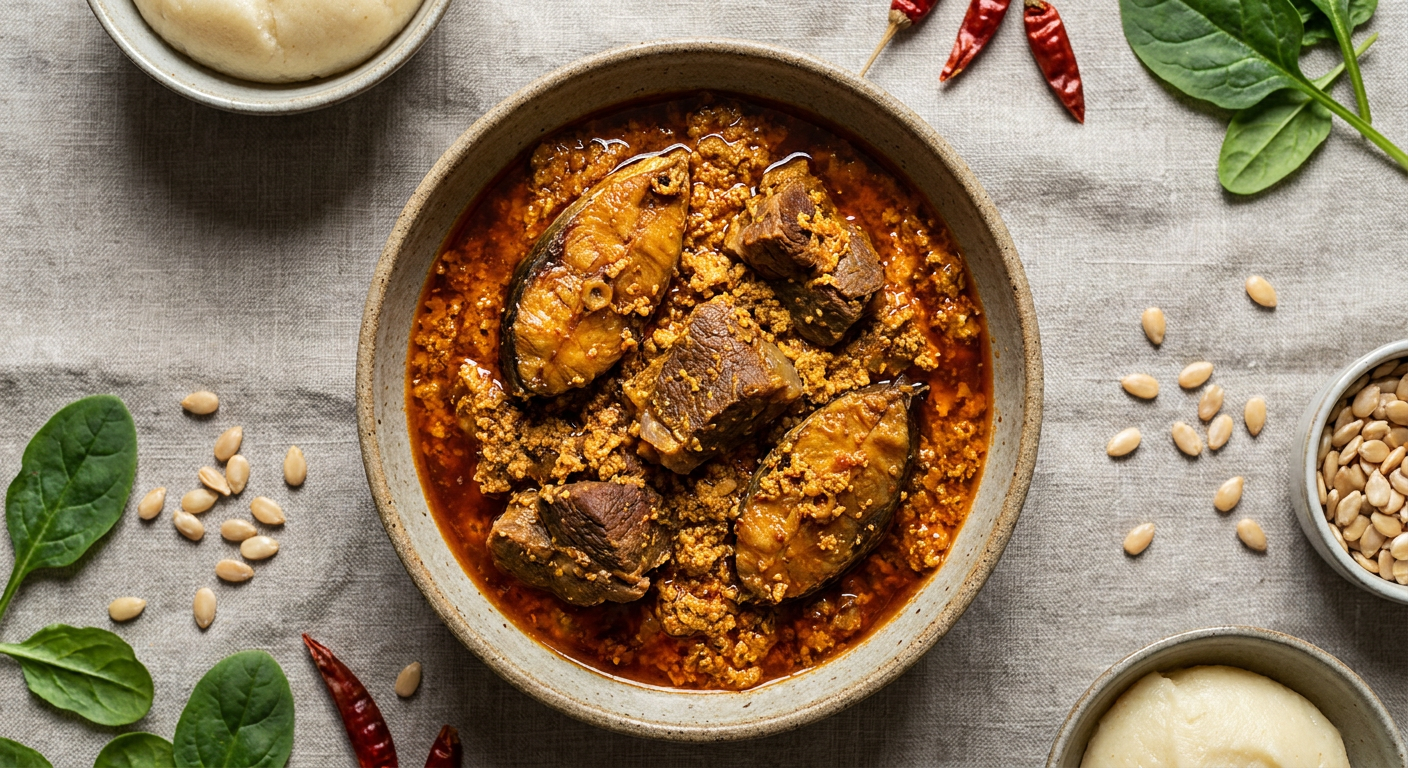
Authentic Nigerian Egusi Soup with Smoked Fish and Beef
Learn how to make authentic egusi soup at home. This Nigerian melon seed stew features toasted ground egusi, red palm oil, assorted meats, and vibrant greens.
 Dinner
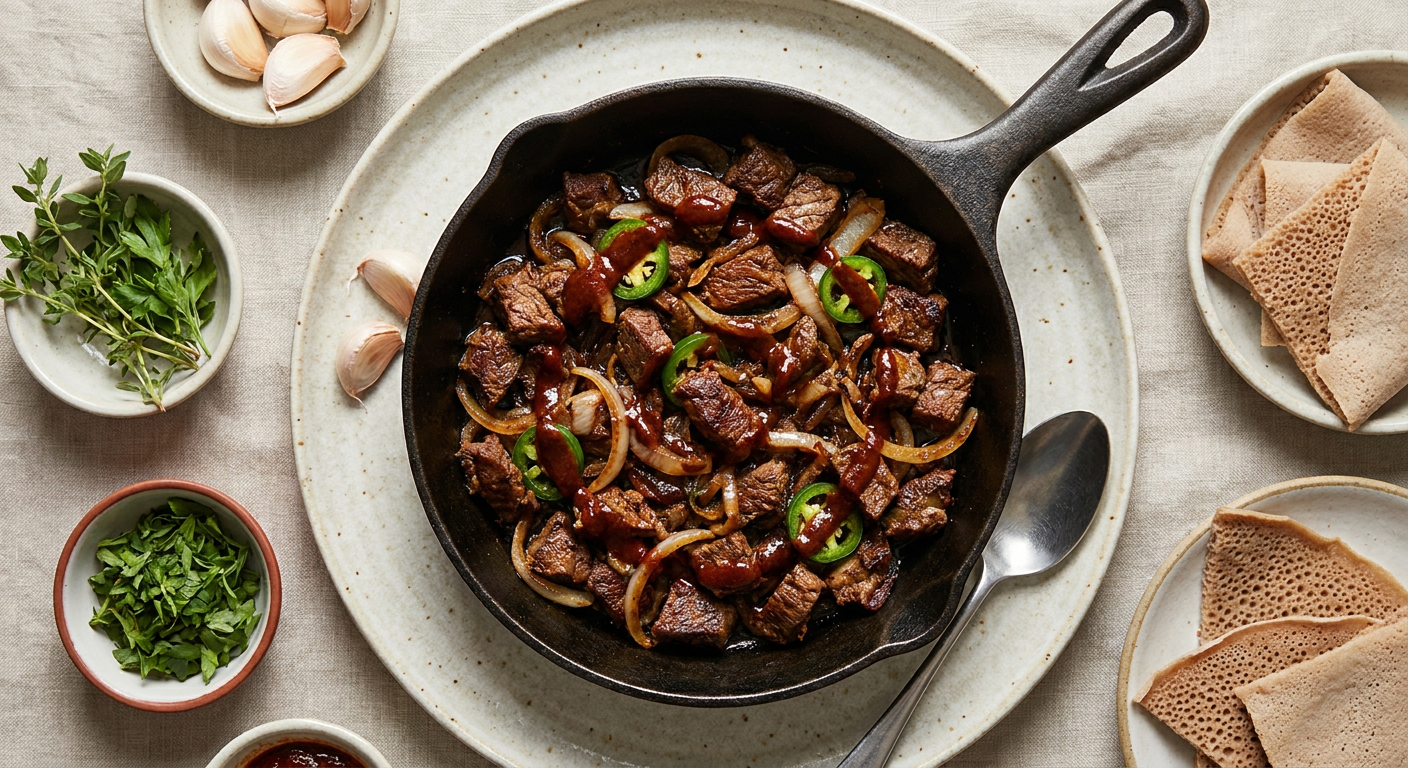
Sizzling Ethiopian Beef Tibs Recipe with Awaze
Master this authentic Ethiopian beef tibs recipe at home. Sear tender beef in spiced niter kibbeh with rosemary and jalapeños for a smoky, charred, restaurant-style finish.
 Dinner
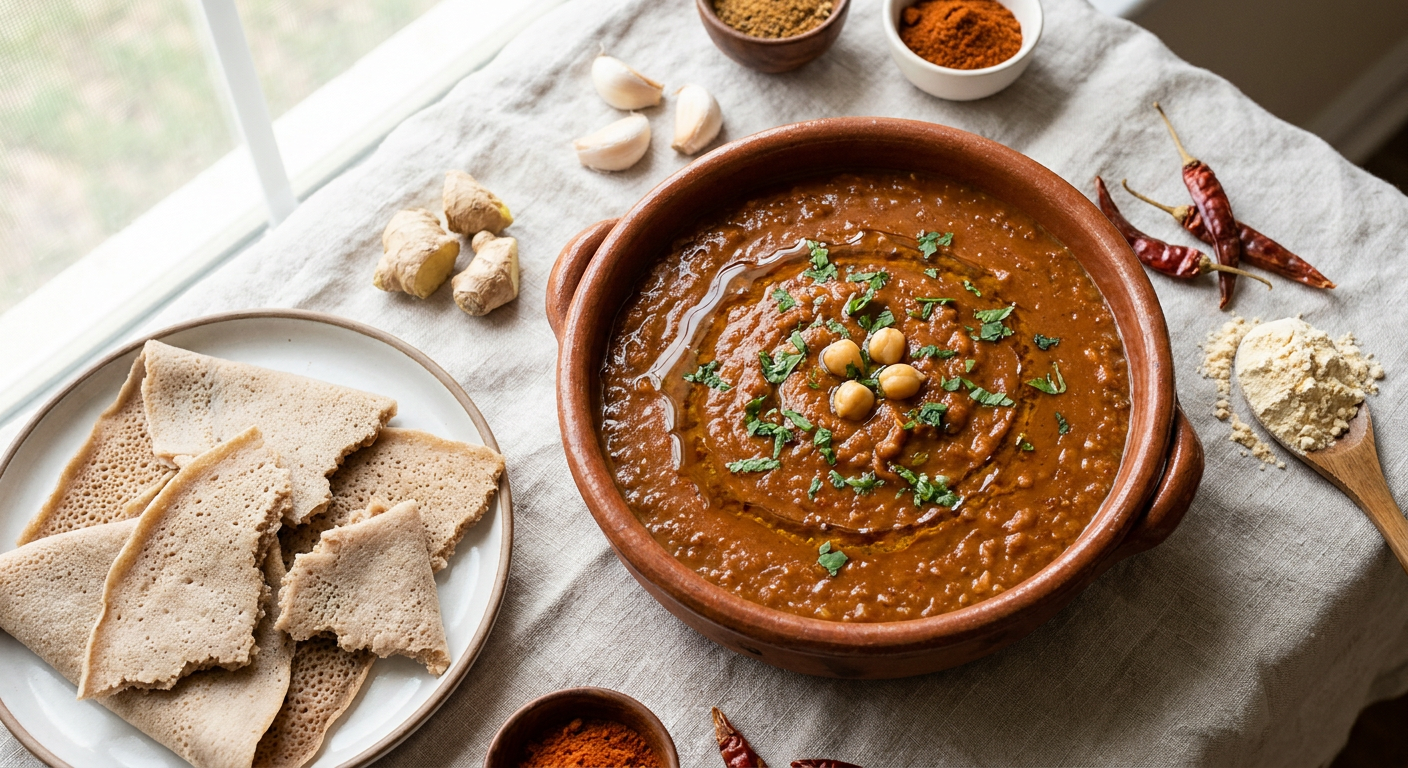
Authentic Shiro Wat Recipe: Silky Ethiopian Chickpea Stew
Learn the best shiro wat recipe for a silky, savory Ethiopian chickpea flour stew. Master the whisking technique for a smooth, glossy finish served with injera.
 BreadAdvanced
Authentic Injera Recipe: Fermented Teff Flatbread
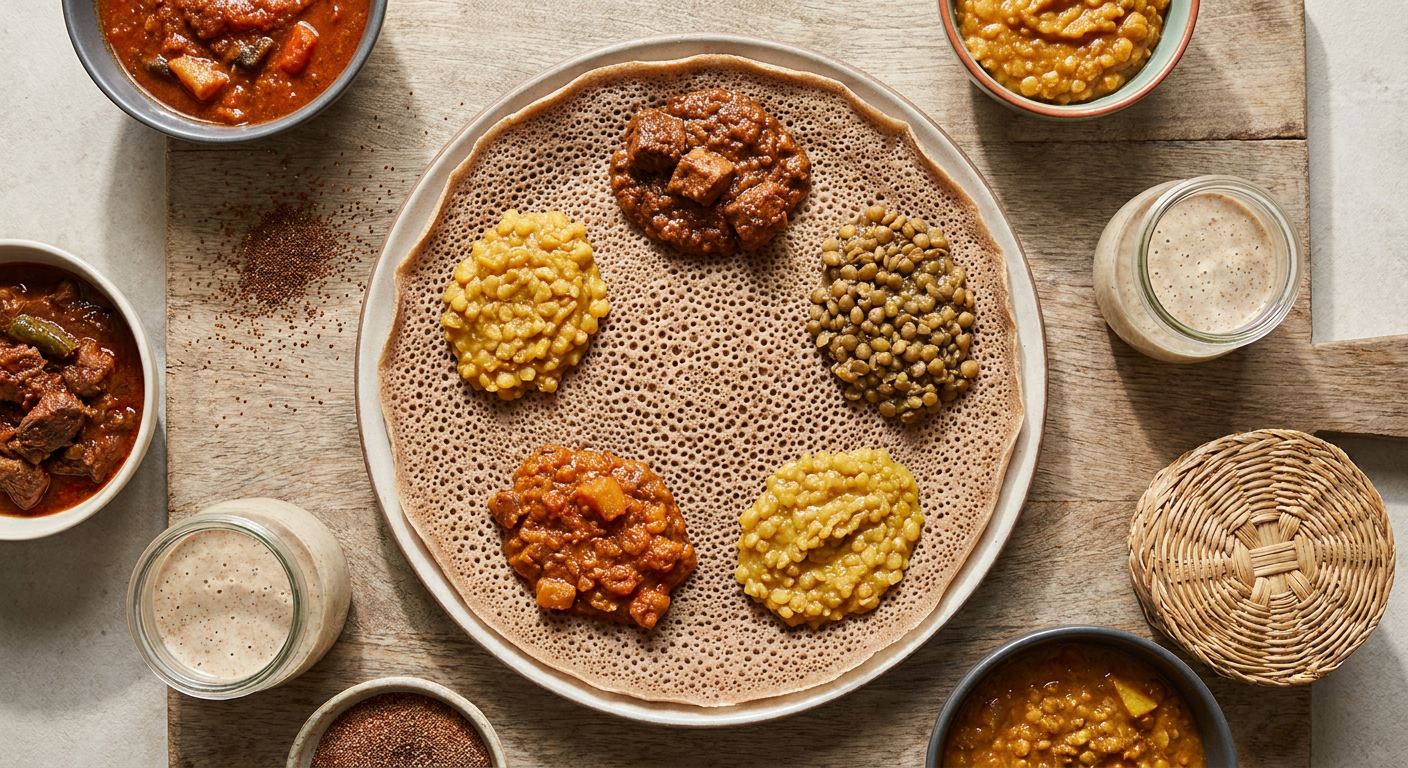
Master this authentic injera recipe to create the perfect tangy, bubbly Ethiopian injera at home using a 24-hour teff fermentation and the traditional absit method.