Authentic Nigerian Egusi Soup with Smoked Fish and Beef
Learn how to make authentic egusi soup at home. This Nigerian melon seed stew features toasted ground egusi, red palm oil, assorted meats, and vibrant greens.
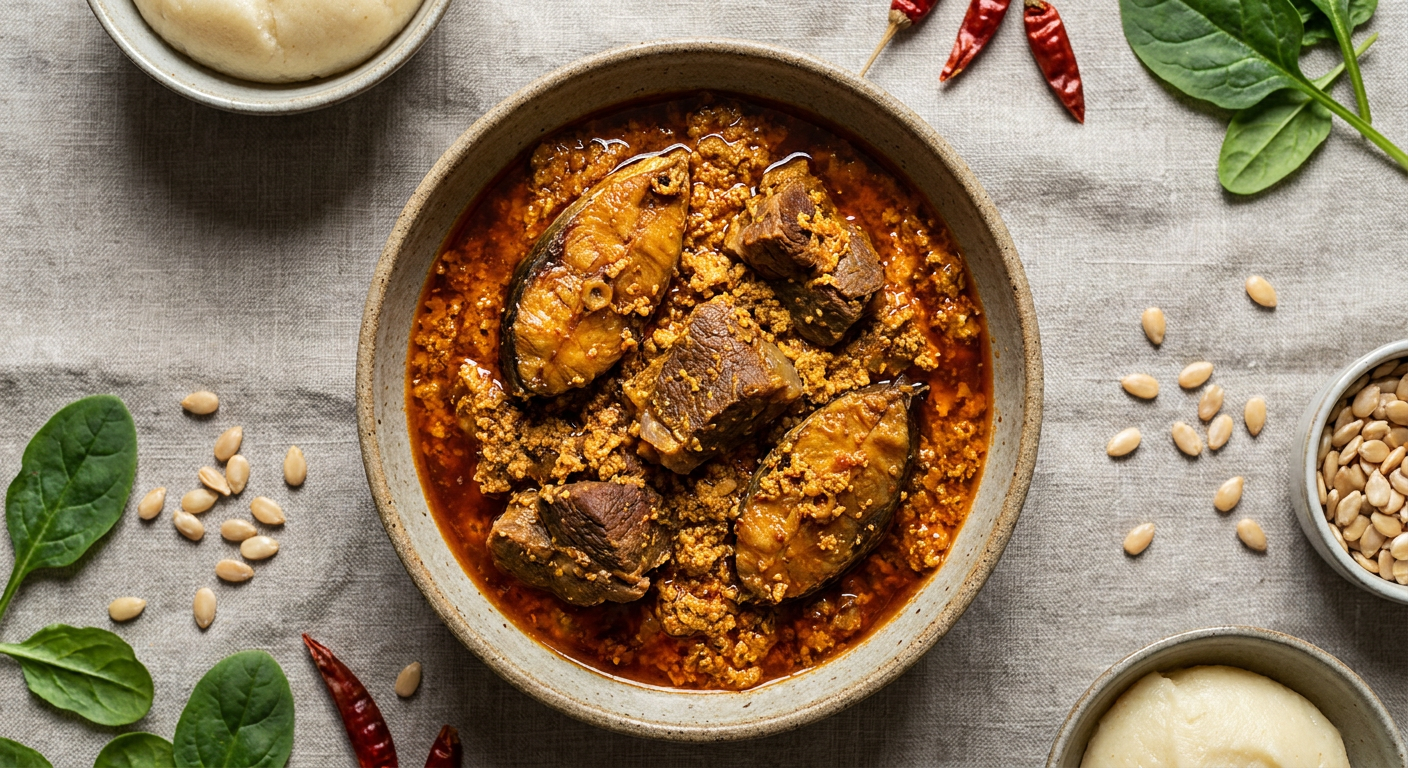

This authentic egusi soup is a cornerstone of Nigerian cuisine, cherished for its rich texture and deeply savory profile. At its heart are ground melon seeds, which transform into a nutty, curd-like base that clings perfectly to assorted meats and leafy greens.
Mastering this easy egusi soup recipe relies on the 'frying method,' where the melon seeds are toasted in red palm oil to develop a robust depth of flavor. Whether you prefer yours with bitter leaf or fresh spinach, the balance of crayfish, scotch bonnets, and smoked fish creates a complex broth that defines comfort food.
While many variations of Nigerian egusi soup exist across different regions, this version focuses on the classic toasted texture. It is traditionally served alongside a swallow like pounded yam or fufu to soak up every drop of the thick, spicy sauce.
Ingredients
The Base
- 2 cups (250g) egusi seeds, ground into a fine powder
- 1/2 cup (120ml) red palm oil
- 1 medium red onion, finely diced
- 2 tablespoons ground crayfish
- 2-3 scotch bonnet peppers (ata rodo), blended or finely minced
Proteins and Stock
- 1.5 lbs (700g) assorted beef (chuck roast, tripe, or cow skin), cut into bite-sized pieces
- 1 large dry smoked fish (such as catfish), cleaned and deboned
- 2 cups (475ml) beef stock or water
- 2 bouillon cubes (Maggi or Knorr)
- Salt to taste
Vegetables
- 3 cups fresh spinach, chopped (or 1 cup washed bitter leaf)
- 1/2 cup sliced scallions (optional)
Instructions
- 1
Place the beef and tripe in a large pot with half the diced onions, one bouillon cube, and enough water to cover; simmer for 40-50 minutes until tender.
- 2
Mix the ground egusi seeds with a small amount of warm water in a bowl to form a thick, gritty paste.
- 3
Heat the red palm oil in a separate large pot over medium heat for 2 minutes, ensuring it does not smoke.
- 4
Sauté the remaining onions in the palm oil until translucent, then add the egusi paste in small clumps.
- 5
Fry the egusi clumps in the oil for 8-10 minutes, stirring gently but frequently to prevent burning, until the seeds are toasted and start to look like scrambled eggs.
- 6
Pour in the beef stock and cooked meats, then add the blended scotch bonnets, ground crayfish, and the remaining bouillon cube.
- 7
Stir in the cleaned smoked fish pieces, reduce the heat to low, and simmer for 15 minutes to allow the flavors to meld.
- 8
Add the chopped spinach or bitter leaf and stir well; cook for an additional 3-5 minutes until the greens are wilted but still vibrant.
- 9
Taste and adjust for salt, then remove from heat and serve hot with pounded yam or fufu.
Nutrition (per serving)
Estimates only — not medical or dietary advice.
- Calories
- 585 kcal
- Protein
- 34 g
- Carbs
- 11 g
- Fat
- 46 g
- Fiber
- 3 g
- Sugar
- 2 g
- Sodium
- 840 mg
Tips
- → Do not skip the frying step; toasting the melon seeds in the palm oil is what gives the soup its characteristic nutty flavor and prevents a raw seed taste.
- → If using bitter leaf, ensure it is thoroughly washed and squeezed multiple times to remove excess bitterness before adding it to the pot.
- → For a thicker soup, use less stock; if you prefer a looser consistency, add an extra half-cup of water during the simmering stage.
FAQ
What can I use as a substitute for egusi seeds?
While the flavor is unique, pumpkin seeds (pepitas) are the closest substitute. Grind them finely and follow the recipe as written.
Why does my egusi soup taste bitter?
Bitterness usually comes from improperly washed bitter leaf or using palm oil that has gone rancid. If you aren't using bitter leaf, check the freshness of your melon seeds.
How do I get the egusi to form large lumps?
To achieve large curds or lumps, do not stir the soup immediately after adding the egusi paste to the stock. Let it simmer undisturbed for 5-7 minutes so the seeds can set.
Can I make this vegan?
Yes, omit the beef and fish, use vegetable stock, and substitute the protein with mushrooms, fried tofu, or chunks of boiled yam.
You might also like
 African
Authentic Nigerian Puff Puff Recipe: Chewy, Golden Dough Balls
Master this authentic Nigerian puff puff recipe to create golden, chewy, and lightly sweet dough balls. Learn how to make puff puff with a perfect hollow center every time.
 African
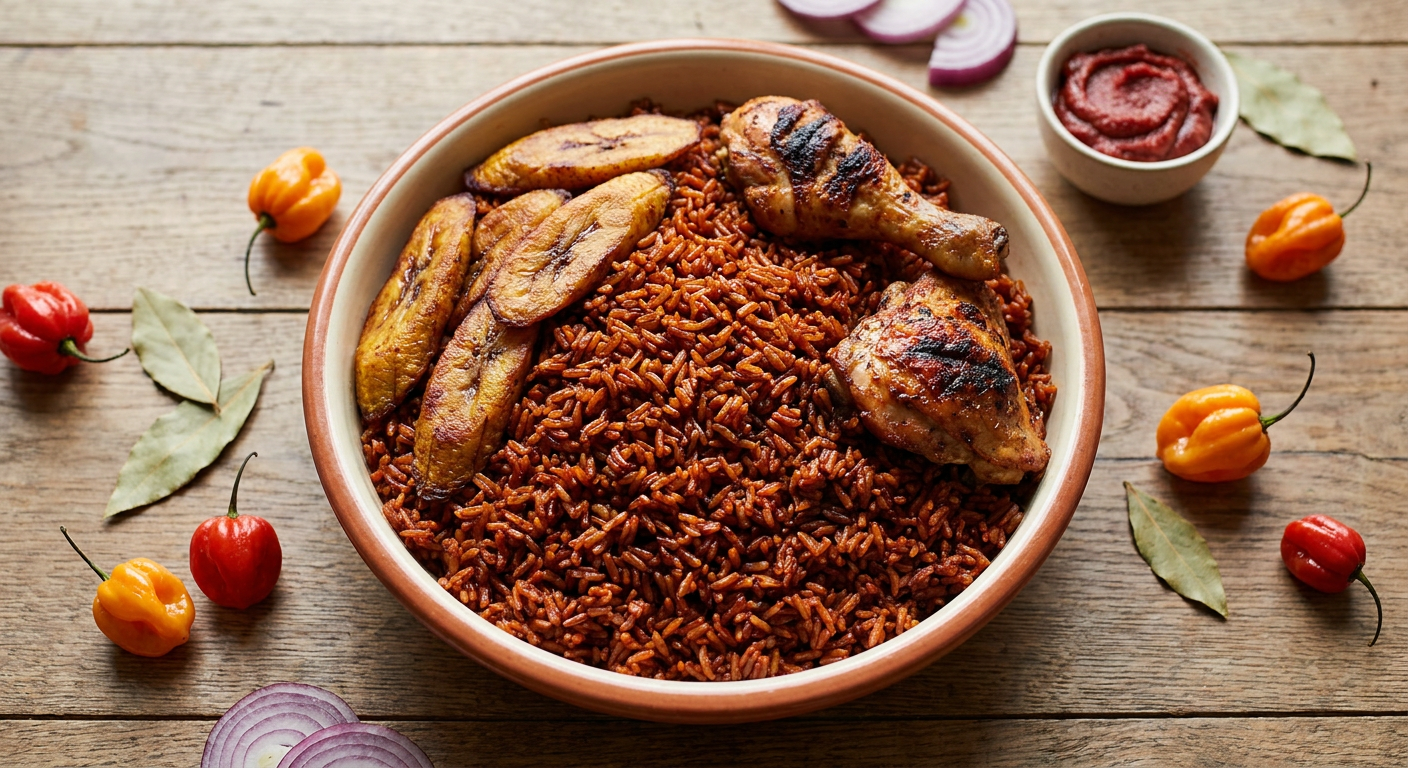
Smoky Party-Style Jollof Rice Recipe
Master the ultimate jollof rice recipe with this guide to achieving deep red color, bold West African spices, and that signature smoky bottom-pot flavor.
 Soups
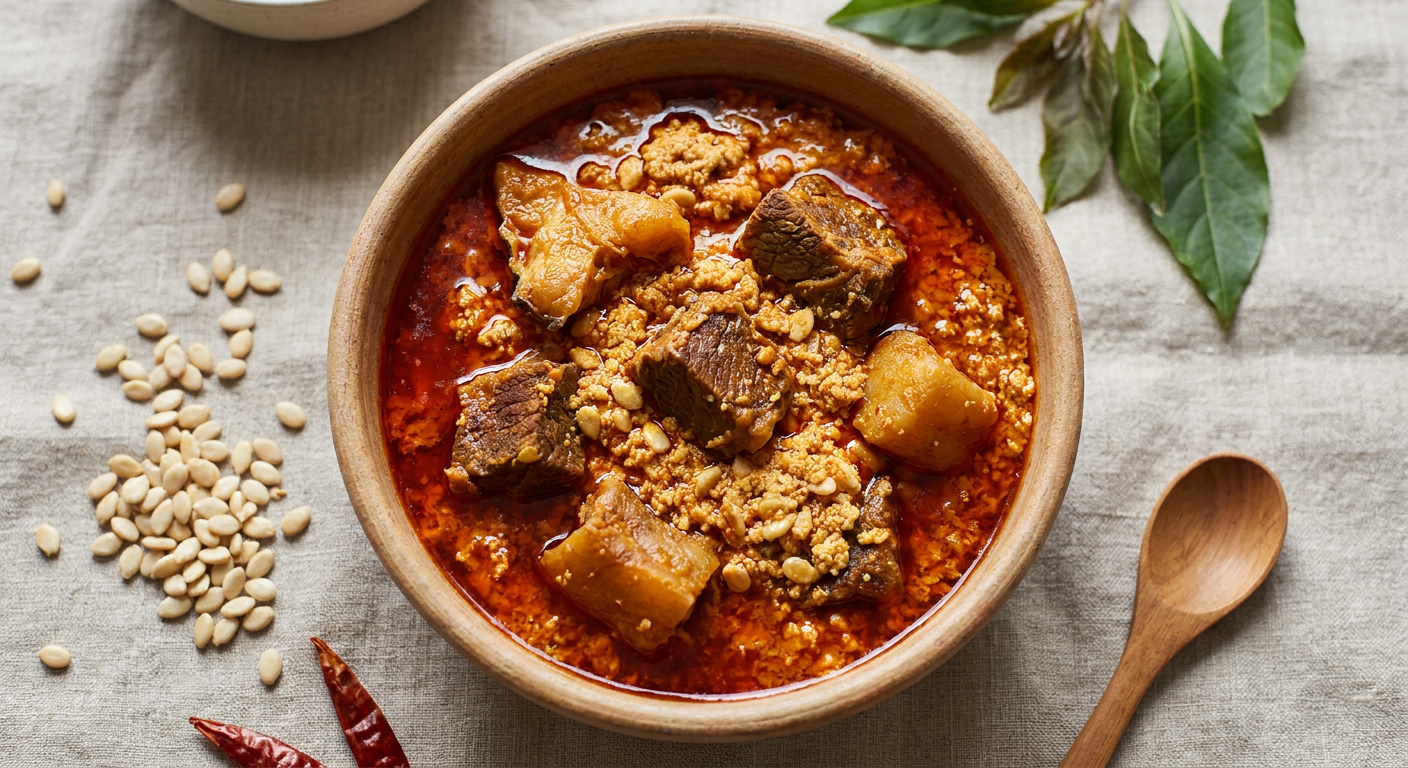
SoupsAuthentic Nigerian Egusi Soup with Lumpy Melon Seeds
Learn to make authentic Nigerian egusi soup with rich palm oil, beef, and stockfish. This melon seed soup features fluffy curdled lumps and is served with pounded yam.
 African
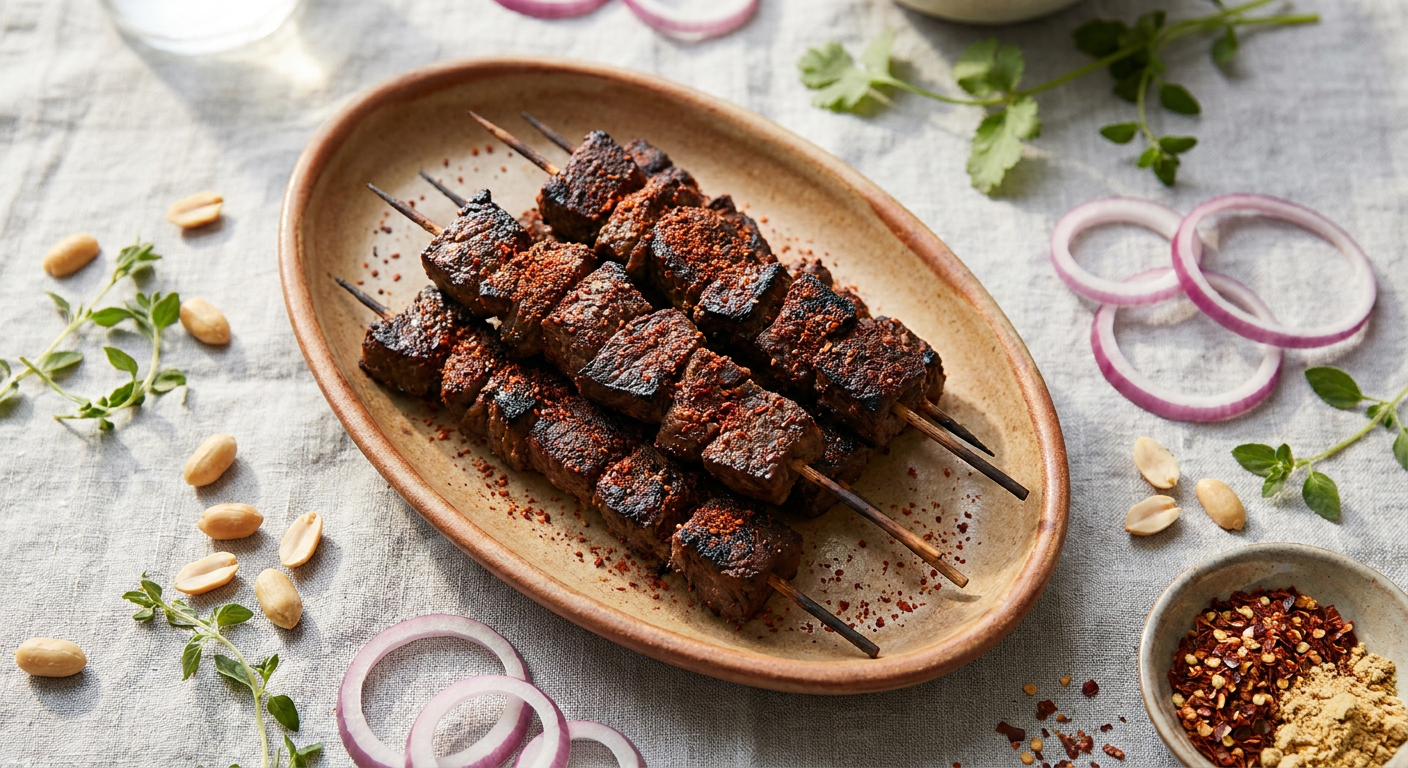
Authentic Nigerian Suya (Spicy Grilled Beef Skewers)
Master the art of Nigerian suya with this recipe. Thin sirloin ribbons coated in a smoky, nutty yaji spice rub and grilled to perfection for an iconic street food flavor.