Authentic Bibimbap Recipe with Crispy Rice and Bulgogi
This bibimbap recipe features marinated bulgogi beef, seasoned vegetables, and a fried egg over crispy-bottom rice. Master this Korean bibimbap classic at home.
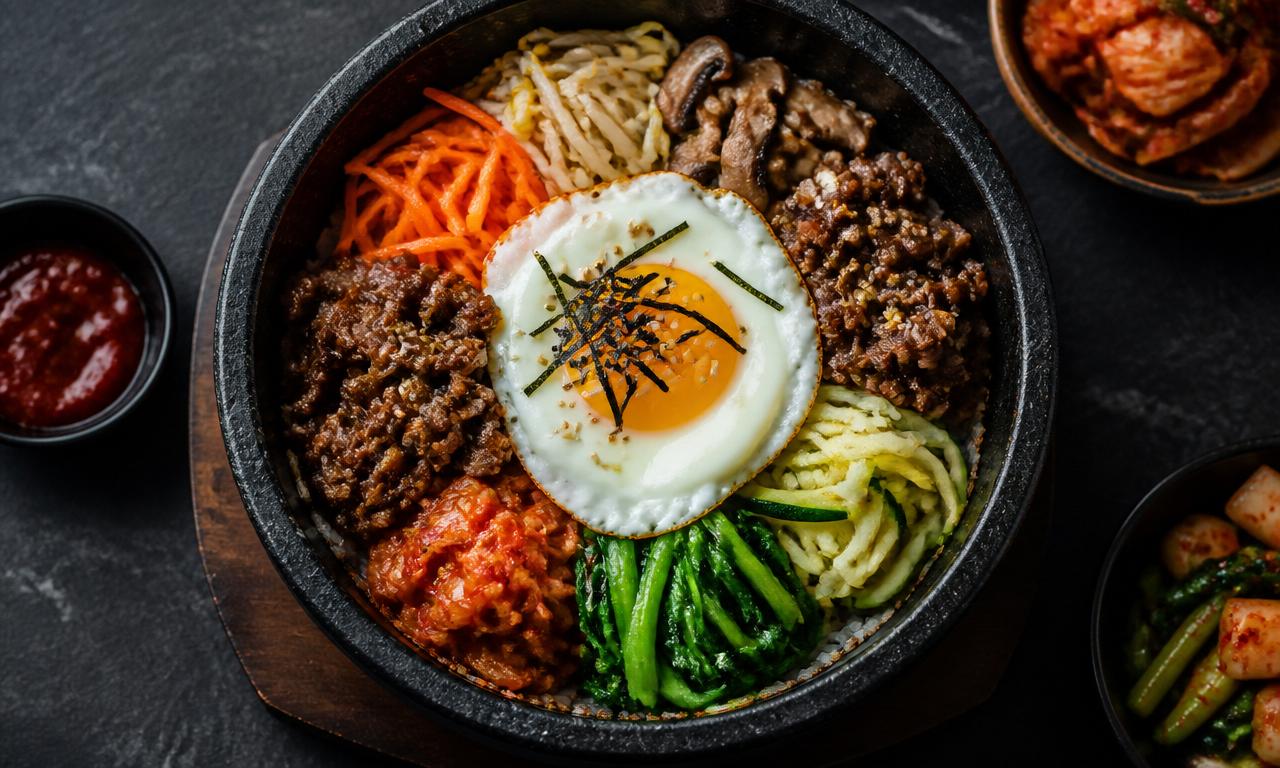

Mastering a traditional bibimbap recipe is less about a single cooking technique and more about the art of assembly. At its core, this iconic Korean dish is a study in balance: warm rice, chilled seasoned vegetables (namul), savory marinated beef, and the pungent heat of gochujang sauce.
While many versions serve the ingredients over steamed rice, this easy bibimbap utilizes a hot cast-iron skillet to achieve the coveted 'nurungji'—the golden, crispy crust at the bottom of the bowl. We aren't cutting corners on the namul either; each vegetable is sautéed and seasoned individually to ensure every bite of your Korean bibimbap has distinct character.
The secret to a great bowl lies in the final stir. Once that runny-yolked egg breaks and the gochujang hits the hot rice, the textures emulsify into a rich, spicy, and deeply satisfying meal that justifies every minute of prep work.
Ingredients
The Bulgogi Beef
- 450g (1 lb) ribeye or flank steak, thinly sliced against the grain
- 2 tablespoons soy sauce
- 1 tablespoon toasted sesame oil
- 1 tablespoon brown sugar
- 2 cloves garlic, minced
- 1 teaspoon grated fresh ginger
The Namul (Vegetables)
- 200g (7 oz) soybean sprouts, blanched
- 1 large bunch spinach, blanched and squeezed dry
- 2 medium carrots, julienned
- 1 large zucchini, halved and sliced into half-moons
- 4 large dried shiitake mushrooms, rehydrated and sliced
- Toasted sesame oil and salt for seasoning each vegetable
Bibimbap Sauce & Assembly
- 3 tablespoons gochujang (Korean red chili paste)
- 1 tablespoon toasted sesame oil
- 1 tablespoon sugar or honey
- 1 tablespoon water or rice vinegar
- 4 cups cooked short-grain white rice (preferably day-old)
- 4 large eggs
- Toasted sesame seeds and roasted seaweed strips (gim) for garnish
Instructions
- 1
Whisk the beef marinade ingredients in a bowl, add the sliced steak, and let it sit for at least 30 minutes.
- 2
Prepare the bibimbap sauce by mixing gochujang, sesame oil, sugar, and vinegar until smooth; set aside.
- 3
Blanch the soybean sprouts in boiling salted water for 2 minutes, drain, and toss with a splash of sesame oil and a pinch of salt. Repeat the process with the spinach, squeezing out all excess water before seasoning.
- 4
Sauté the carrots, zucchini, and mushrooms individually in a lightly oiled pan over medium-high heat until tender-crisp. Lightly season each with salt as you go.
- 5
Cook the marinated beef in a very hot skillet until browned and slightly charred at the edges. Remove and set aside.
- 6
Heat a large cast-iron skillet or individual stone bowls (dolsot) over medium heat with a tablespoon of sesame oil. Spread the cooked rice in an even layer across the bottom and let it sizzle undisturbed for 5-8 minutes until a golden crust forms.
- 7
Fry the eggs in a separate non-stick pan, keeping the yolks runny.
- 8
Arrange the beef and vegetables in distinct piles over the rice. Place the fried egg in the center.
- 9
Serve immediately with a generous dollop of the gochujang sauce, garnishing with sesame seeds and seaweed.
Nutrition (per serving)
Estimates only — not medical or dietary advice.
- Calories
- 685 kcal
- Protein
- 34 g
- Carbs
- 82 g
- Fat
- 25 g
- Fiber
- 5 g
- Sugar
- 14 g
- Sodium
- 1120 mg
Tips
- → To slice the beef thinly, freeze the meat for about 30-45 minutes until firm but not rock-hard.
- → Don't crowd the pan when sautéing vegetables; cooking them separately preserves their individual colors and flavors, which is the hallmark of a professional bibimbap.
- → If you don't have a stone bowl, a well-seasoned cast-iron skillet is the best way to get that crispy rice bottom at home.
FAQ
Can I make a vegetarian version of this bibimbap recipe?
Absolutely. Simply replace the beef with extra shiitake mushrooms, firm tofu, or tempeh marinated in the same soy-ginger sauce.
Why does my rice not get crispy?
The rice needs enough fat (sesame oil) and consistent medium heat. Avoid stirring the rice once you press it into the pan; it needs 5 to 8 minutes of direct contact to form a crust.
How do I store leftovers?
Store the components separately in airtight containers in the fridge for up to 3 days. Reheat the rice and beef, but keep the vegetables cold or at room temperature for the best texture.
You might also like
 Dinner
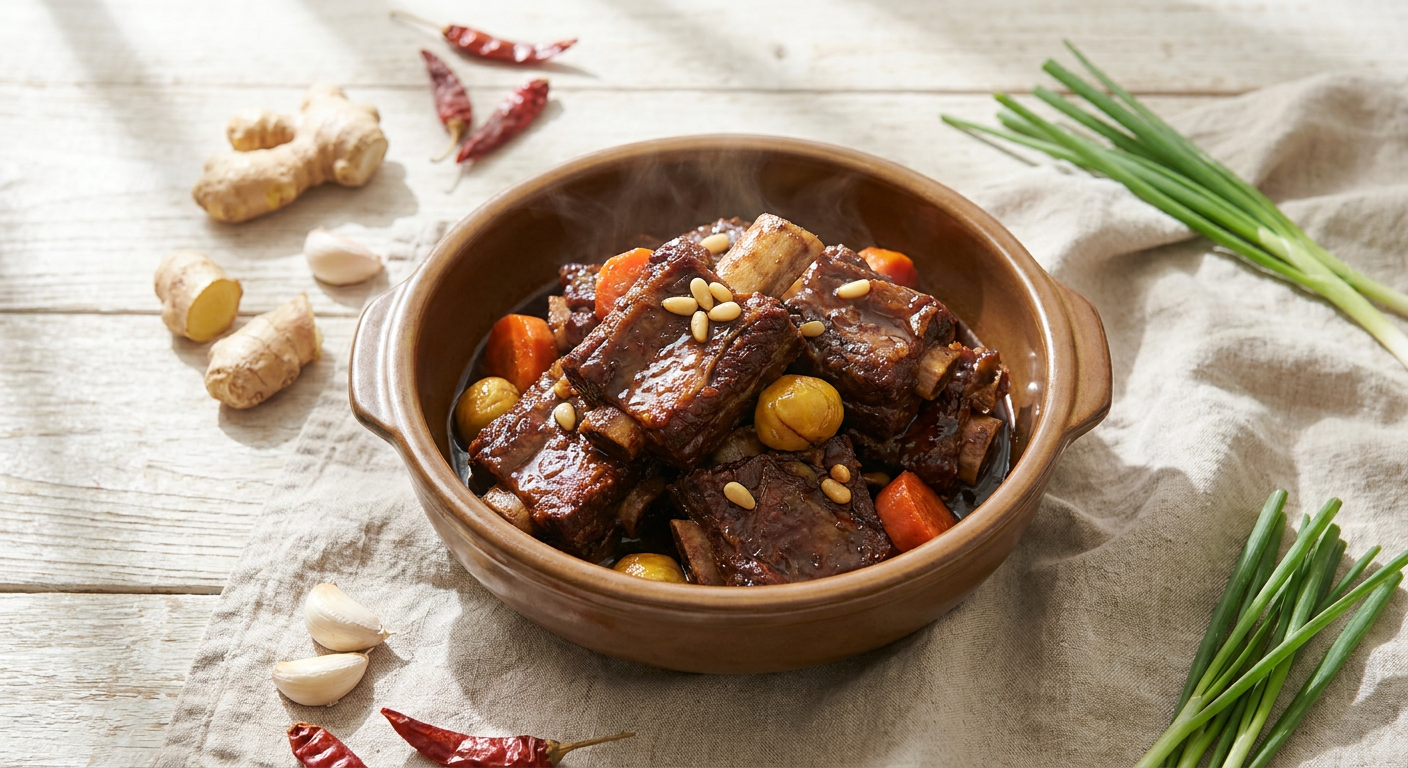
Authentic Galbijjim Recipe: Glossy Korean Braised Short Ribs
Master this galbijjim recipe for fall-off-the-bone Korean braised short ribs. Features a glossy sauce made with grated Korean pear, rice syrup, and chestnuts.
 Dinner
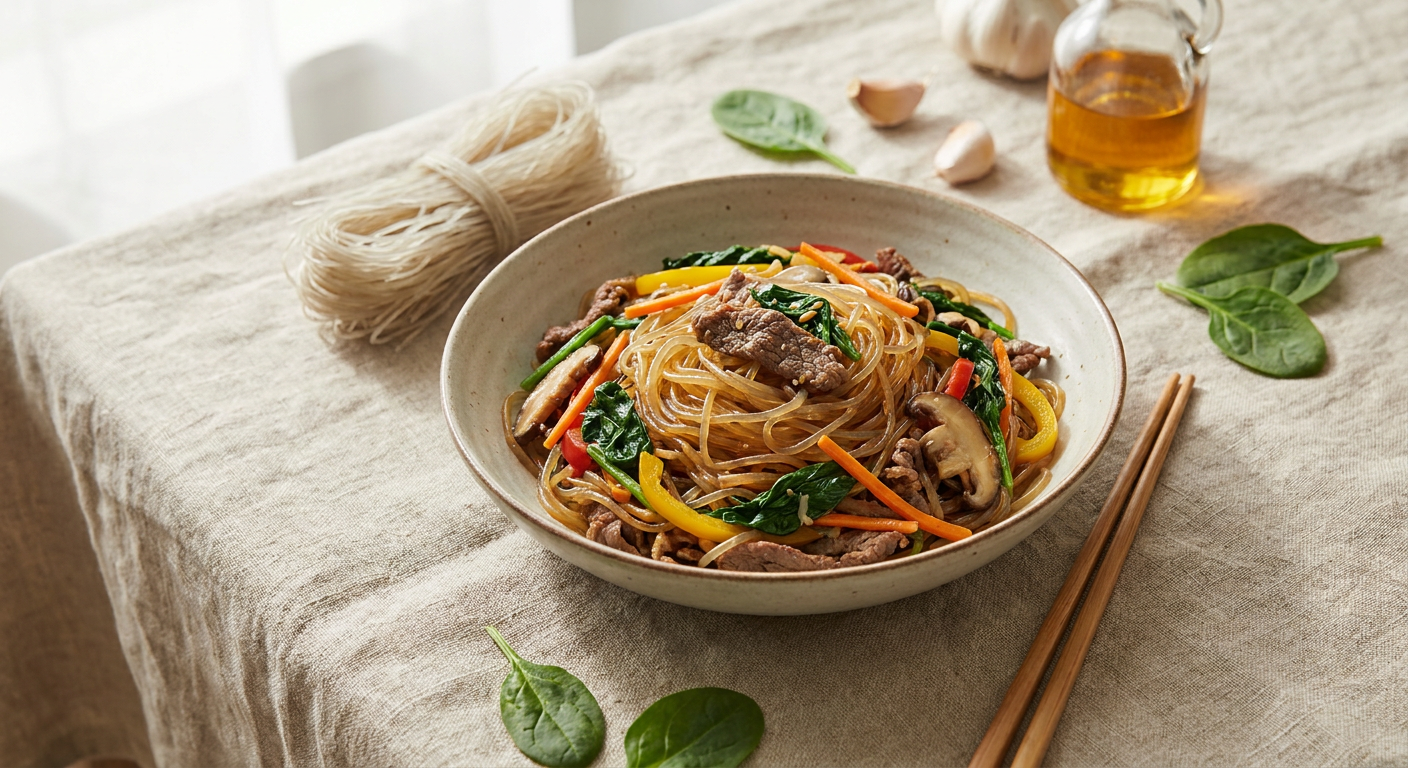
Authentic Korean Japchae (Glass Noodle Stir Fry)
Learn to make authentic Korean japchae with bouncy sweet potato starch noodles, marinated beef, and vibrant vegetables. A balanced, savory-sweet Korean glass noodle stir fry.
 Dinner
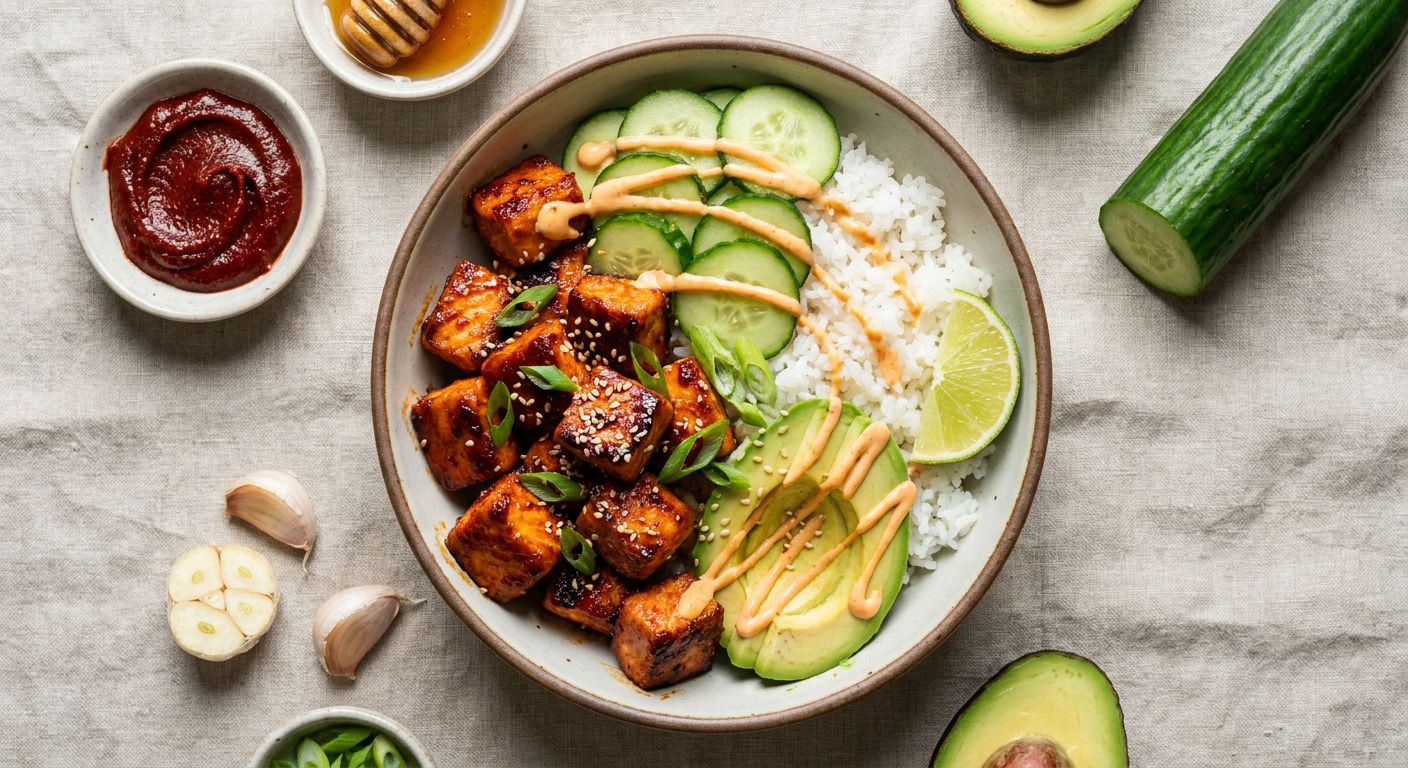
Easy Gochujang Salmon Bowl with Honey and Garlic
This 20-minute gochujang salmon bowl features caramelized air-fried salmon bites over rice with cucumber, avocado, and spicy mayo for a perfect weeknight dinner.
 Dinner
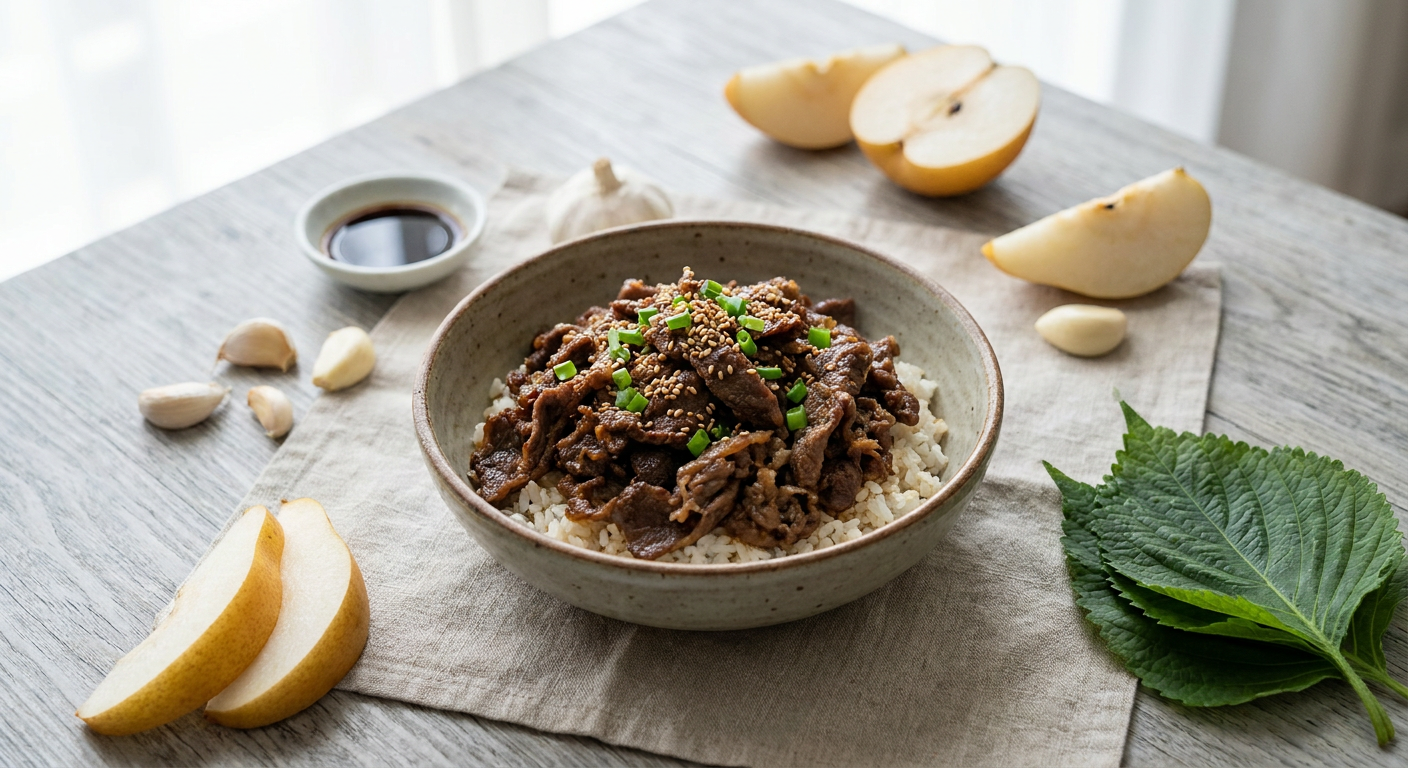
Easy Beef Bulgogi Recipe with Pear Marinade
This easy beef bulgogi recipe uses thinly sliced ribeye and a grated pear marinade to create tender, caramelized Korean BBQ at home in just 30 minutes.