September 26, 2026
36% Milkfat Makes the Call: Heavy vs. Whipping Cream for U.S. Cooks
Learn the U.S. 36% milkfat rule and how it affects buying, whipping, and recipe swaps. Grocery cues, tested substitutes, and stabilizing tips for home cooks.

36% Milkfat Makes the Call: Heavy vs. Whipping Cream for U.S. Cooks
Heavy cream and heavy whipping cream are the same product under U.S. law, both at least 36% milkfat, while plain “whipping cream” (light whipping cream) sits lower at 30–35% and whips softer. Reach for heavy or heavy whipping cream when a recipe needs stability, like piped frosting or a custard that has to set; light whipping cream works fine for a quick dollop on pie. The Code of Federal Regulations sets the exact line, and Recipe testing confirms it holds up in real kitchens.
TL;DR:
- Heavy cream and heavy whipping cream are legally identical products with at least 36% milkfat, making them suitable for stable dishes like frosting and custards.
- Light whipping cream, labeled simply as “whipping cream,” contains 30–35% milkfat, which results in softer whipping capabilities and less heat resistance.
- Substituting whipping cream for heavy cream works in many recipes, but for structured applications like ganache or piped decorations, adding butter or cheese can help compensate for lower fat content.
- Ultra-pasteurized cream often whips slightly slower but reduces scorching risk during long reductions, making it preferable for simmered sauces.
- One cup of heavy cream whips into 1.5 to 2 cups of whipped cream, with the higher fat content providing better stability and longer-lasting peaks.
Table of Contents
- What the Carton Label Actually Means (Fat Percentage Rules)
- Does Fat Content Change How Cream Cooks and Whips?
- Can I Use Whipping Cream Instead of Heavy Cream?
- How Much Whipped Cream Does One Cup of Cream Make?
- Heavy Cream vs. Whipping Cream: Calories and Fat Compared
- How Long Does Cream Last in the Fridge or Freezer?
- What to Check on the Carton Before You Buy
- What Forkward Kitchen Learned Testing Cream Swaps in Real Recipes
- When I Reach for Heavy vs. Whipping Cream
- Try These Cream-Based Recipes and See the Difference Yourself
- Sources
- FAQ
What the Carton Label Actually Means (Fat Percentage Rules)
The fat percentage isn’t marketing language. It’s federal law. Under 21 CFR 131.150, cream can only be called “heavy cream” or “heavy whipping cream” if it contains at least 36% milkfat. Those two names describe one identical product. There’s no version of “heavy whipping cream” that’s secretly lighter than “heavy cream” sitting next to it in the dairy case.

Drop below that threshold and you’re in different territory. Light whipping cream, usually just labeled “whipping cream,” runs 30% to 35% milkfat. That five-to-six-point gap sounds small on paper. In a saucepan or a mixing bowl, it changes everything about how the cream behaves.
Brands lean on “heavy whipping cream” phrasing partly because it sounds richer on a shelf full of similar cartons, and the eCFR’s dairy labeling rules require disclosure of anything added, including sweeteners or flavoring. A few things worth checking before you toss a carton in your cart:
- Ultra-pasteurized: heated to a higher temperature for longer shelf life; it whips fine but takes slightly longer to reach stiff peaks.
- Sweetened or flavored: common in “whipped cream” style cartons meant for topping desserts straight out of the fridge, not for cooking into a savory sauce.
- Homogenized: standard for grocery-store cream and irrelevant to whipping performance, but worth knowing if you’re comparing to farm-fresh cream.
Does Fat Content Change How Cream Cooks and Whips?
Fat is what gives cream its body. The more of it there is, the richer the mouthfeel and the more resistant the cream is breaking when it hits heat. That’s why a pan sauce built on heavy cream can simmer and reduce without curdling, while a sauce made with lighter cream is more likely to separate if you push the heat too far or let it boil hard.
Heavy cream also whips into a sturdier structure because more fat means more fat globules clumping around air bubbles as you beat it. Those clumps are what hold the foam up. Light whipping cream whips into a softer, airier foam that tastes great but doesn’t hold its shape as long, especially somewhere warm.
Here’s how that plays out in real cooking:
- A cream-based pasta sauce or pan reduction: heavy cream is the safer choice, since it tolerates higher heat and longer simmer times without splitting.
- A custard or pastry cream that needs to set firm: heavy cream’s fat content helps it hold structure after chilling.
- A quick whipped topping for coffee or hot cocoa: light whipping cream is perfectly fine since it just needs to sit softly on top for a few minutes.
- Piped frosting for a layer cake: heavy cream, whipped to stiff peaks, holds its shape through slicing and serving far better than a lighter version.
Pro Tip: If a recipe calls for reducing cream over high heat, check the carton for “ultra-pasteurized.” It’s less prone to scorching or breaking during long reductions than regular pasteurized cream, which makes it a smart pick for sauces you plan to simmer down by half or more.
Can I Use Whipping Cream Instead of Heavy Cream?
Sometimes, yes. Sometimes, no. The fat gap between the two decides which.
For most everyday cooking, a straight 1:1 swap works. Soups, casseroles, coffee, pan sauces you’re not reducing hard, all forgiving enough to handle either cream without a noticeable difference. Where it gets risky is anywhere the fat is doing structural work: custards that need to set, ganache, emulsified sauces like a beurre blanc, or a whipped topping you need to hold shape for hours on a cake stand. Swap in a lower-fat cream there and you risk a softer set, a looser sauce, or whipped cream that deflates before dessert is served.
If heavy cream isn’t available and you only have whipping cream on hand, two easy fixes:
- Add fat back in. Melt 1 to 2 tablespoons of unsalted butter and whisk it into each cup of whipping cream before using it in a cooked application. This nudges the overall fat content closer to heavy cream’s range, though it won’t whip the same way raw.
- Boost body with a soft cheese. Blend 2 to 3 tablespoons of mascarpone or cream cheese into a cup of whipping cream for custards or fillings that need more structure without extra liquid.
- Skip the swap for whipped peaks you need to hold. If the recipe is piped frosting or a mousse that has to stand up for hours, buy heavy cream instead of patching whipping cream. The workaround thickens texture but won’t fully replicate the whipping strength.
Pro Tip: Do add the butter fix for baked goods and sauces. Don’t try it for whipped toppings, since melted butter clumps instead of blending smoothly into whipped foam.
How Much Whipped Cream Does One Cup of Cream Make?
One cup of liquid cream typically whips up to somewhere between 1.5 and 2 cups of whipped cream, according to The Kitchn’s testing. Where you land in that range depends on your tool, how cold the cream and bowl are, and how firm you whip it.
Fat percentage drives peak strength directly. Heavy cream’s extra fat traps air more efficiently, so it reaches stiff peaks faster and holds them longer at room temperature. Light whipping cream whips up lighter and airier, closer to the top of that yield range, but softens faster once it’s out of the fridge.
If you need whipped cream to survive a party table for more than an hour, stabilize it. A few tested approaches:
- Gelatin method: bloom a small amount of unflavored gelatin in water, warm it just until liquid, then stream it into cream as you whip. Forkward Kitchen’s gelatin-stabilized whipped cream guide walks through the exact timing.
- Mascarpone or cream cheese blend: folds in body and holding power without gelatin, good for a softer, no-cook option.
- Powdered sugar instead of granulated: the added cornstarch in powdered sugar gives whipped cream a small stability boost on its own.
- Cold everything: chill your bowl and beaters beforehand. Cream whips faster and holds firmer peaks when it starts cold.
Heavy Cream vs. Whipping Cream: Calories and Fat Compared
The nutrition gap between the two mirrors the fat percentage gap, just in smaller numbers per spoonful.
| Heavy Cream (1 tbsp) | Whipping Cream (1 tbsp) | |
|---|---|---|
| Calories | about 50 | about 45 |
| Fat | about 5 g | about 4.5 g |
Figures vary slightly by brand, but EatingWell’s comparison puts both creams in the same ballpark. Neither is a low-fat product, and neither is trying to be.
Both creams are effectively carb-free and high-fat, which makes either one a reasonable fit for keto or low-carb eating. If you’re counting carbs rather than calories, the choice between heavy and whipping cream barely registers.
How Long Does Cream Last in the Fridge or Freezer?
Unopened cream generally keeps until the date on the carton, and once opened, plan on using it within about a week to ten days for best quality. Sour smell, thickened or lumpy texture, or a yellowish tint are your cues to toss it, regardless of what the date on the carton says.
Freezing works, but it changes the cream. Ice crystals disrupt the fat structure, so thawed cream often looks grainy or slightly separated. It’s still fine for cooking into a sauce or soup, but it won’t whip well once thawed. If you know a carton is headed for the freezer, use it for cooked dishes rather than dessert toppings later.
A few habits worth keeping:
- Store cream toward the back of the fridge, not the door, where temperature swings more.
- Reheat cream-based sauces gently over low heat; boiling can cause separation, especially with lighter creams.
- Give leftover cream a sniff and a look before using it in anything, cooked or raw.
What to Check on the Carton Before You Buy
Standing in the dairy aisle with two nearly identical cartons is where most of this confusion actually happens. A quick mental checklist saves a second trip:
- Does the label say “heavy” or “heavy whipping”? That’s your 36%-plus option for anything that needs to hold shape.
- Does it just say “whipping cream” with no “heavy”? That’s the lighter, 30–35% version, best for casual toppings.
- Any added sugar or flavoring listed? Skip those for savory cooking or recipes where you’re controlling sweetness yourself.
- Is it ultra-pasteurized? Fine for most uses, and often the better pick for long, hot reductions.
- Check the use-by date and make sure the carton feels cold, not warm, from sitting out on a shelf.
What Forkward Kitchen Learned Testing Cream Swaps in Real Recipes
Recipes are tested from scratch, with cream substitutions checked in an actual mixing bowl, not just written up as theory. Swapping lighter whipping cream into recipes built around heavy cream showed up most noticeably in two places: whipped toppings that need to hold their shape and desserts with a set custard base.
In the Creamy Pistachio Tiramisu, heavy cream whipped into stiffer peaks that held their structure through chilling and slicing, while a lighter cream version softened faster once layered against the mascarpone. The Foolproof Tall Chocolate Souffle leans on the same principle: fat content affects how well the base holds air.

For anyone piping frosting or building a layered dessert, the stabilized whipped cream method tested by Forkward Kitchen is worth reading before you start.
When I Reach for Heavy vs. Whipping Cream
On a weeknight, I don’t think twice, whatever cream is in the fridge goes into the pan. For a carbonara or a quick pan sauce, the fat gap barely registers by the time it hits the plate.
Party baking is a different story. A layered celebration cake needs whipped cream that survives hours on a counter, so heavy cream, whipped stiff, is the only real option. That’s the line I actually use: cooking tonight, grab whatever’s there; frosting something that has to last, buy heavy.
— Oloru
Try These Cream-Based Recipes and See the Difference Yourself
Reading about fat percentages only gets you so far. The fastest way to actually feel the difference between heavy cream and whipping cream is to whip both side by side in your own kitchen, and Forkward Kitchen’s full recipe collection gives you plenty of places to start.
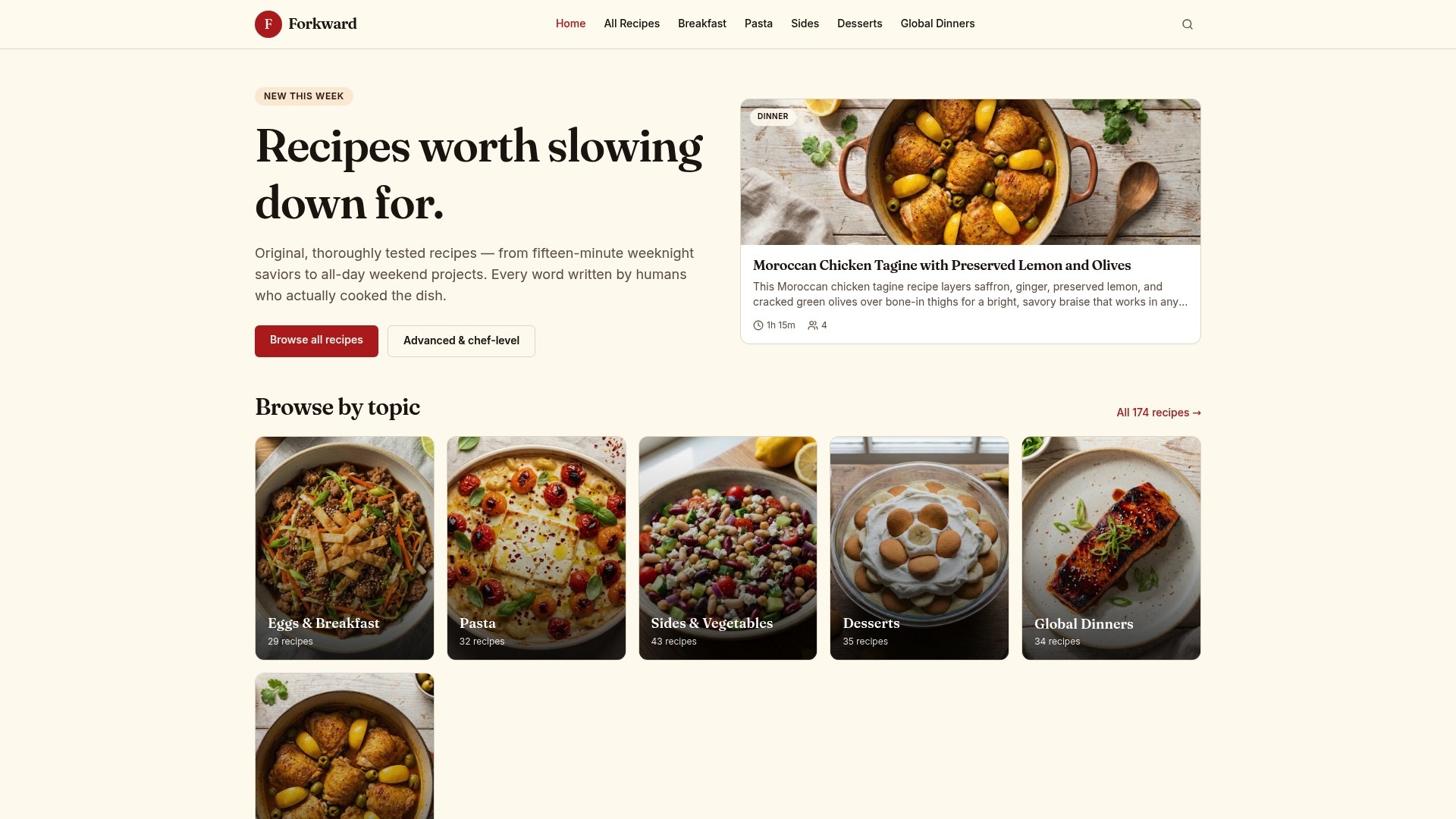
Every recipe on the site comes from original, from-scratch testing, with honest difficulty ratings so you know upfront whether you’re looking at a fifteen-minute weeknight fix or a weekend project. If you want to see cream stability in action, start with the gelatin-stabilized whipped cream method, rated for home bakers who want piped frosting that actually holds. Ready for something more ambitious? Browse the advanced recipe collection for dishes where getting the cream right makes or breaks the final result.
Sources
- eCFR :: 21 CFR 131.150 – Heavy cream.
- Difference between heavy cream, whipping cream, and heavy whipping cream explained
- The Kitchn: the best way to make whipped cream
FAQ
Can I Substitute Whipping Cream for Heavy Cream?
Yes, for most cooked dishes like soups and sauces you’re not reducing hard. For custards, ganache, or whipped toppings that need to hold their shape, the lower fat in whipping cream can leave the result softer or less stable.
Are Heavy Cream and Whipping Cream the Same Thing?
Not exactly. Heavy cream and heavy whipping cream are the same product, both at least 36% milkfat under federal regulation, while plain “whipping cream” is a separate, lower-fat product at 30–35%.
Is Half and Half the Same as Heavy Whipping Cream?
No. Half and half is a mix of milk and cream running around 10 to 18% milkfat, far below the 36% minimum required for heavy whipping cream. It won’t whip into stiff peaks and isn’t a direct substitute in recipes that need cream’s structure.
How Much Whipped Cream Would I Get From 1 Cup of Heavy Cream?
One cup of heavy cream typically whips up to about 1.5 to 2 cups of whipped cream, depending on your tool, temperature, and how firm you whip it. Heavy cream’s higher fat content generally pushes yield toward the higher end while holding peaks longer than lighter cream.