August 4, 2026
How to Make Béchamel Sauce: Easy White Sauce Recipe
Learn how to make béchamel sauce in just 20 minutes! This easy recipe uses three ingredients for a versatile, creamy white sauce.

How to Make Béchamel Sauce: Easy White Sauce Recipe
Béchamel is a roux-thickened milk sauce you can make in about 20 minutes with three ingredients. Melt unsalted butter in a saucepan, whisk in an equal amount of all-purpose flour, cook briefly for a couple of minutes, then slowly whisk in whole milk. Simmer until the sauce coats the back of a spoon, season with salt, white pepper, and a pinch of nutmeg, and you’re done. Maintain a balanced ratio of butter and flour to milk for a pourable, versatile sauce. Scale it up by keeping that ratio constant, and adjust the roux amount up or down when you need a thicker or thinner result.
Table of Contents
- What do you need to make béchamel?
- How do you make béchamel step by step?
- How do you choose the right roux-to-milk ratio?
- How do you infuse milk for a deeper-flavored béchamel?
- How do you fix common béchamel problems?
- Can you make béchamel ahead of time?
- What can you make with béchamel sauce?
- Key Takeaways
- The part most guides skip about béchamel
- Forkwardkitchen has the tested recipes to put this sauce to work
- Useful sources
What do you need to make béchamel?
The ingredient list is short, but the choices inside it matter.
Ingredients:
- Unsalted butter (1½ tbsp per cup of milk): gives you control over salt. Salted butter works in a pinch but makes seasoning harder to dial in.
- All-purpose flour (1½ tbsp per cup of milk): the standard thickener. Bread flour works but produces a slightly heavier texture.
- Whole milk (1 cup): the fat content in whole milk gives the sauce its characteristic richness. 2% milk produces a slightly thinner, less creamy result. Half-and-half makes it richer.
- Salt, white pepper, and nutmeg: the classic seasoning trio. White pepper keeps the sauce visually clean; black pepper is fine if you don’t mind the specks.
Equipment that actually affects results:
- Heavy-bottom saucepan: distributes heat evenly and dramatically reduces scorching risk. Thin pans create hot spots.
- Whisk: a balloon whisk breaks up lumps faster than a wooden spoon ever will.
- Measuring spoons and a liquid measuring cup: eyeballing the roux ratio is where most lumpy sauces start.
- Fine-mesh sieve (optional): your safety net if lumps form. A quick strain fixes almost any texture problem.
Common swaps and what to expect:
- Dairy-free: Replace butter with vegan butter or refined coconut oil; swap milk for unsweetened oat milk or full-fat canned coconut milk. The sauce will be slightly less rich but still workable.
- Gluten-free: Substitute rice flour or a 1:1 gluten-free flour blend. The sauce may need an extra 30 seconds of cooking to lose the raw starch taste.
- Cheese addition (Mornay): Stir in ½ cup grated Gruyère or sharp cheddar off the heat after the sauce is finished.
Pro Tip: Cold milk from the fridge works just as well as warmed milk if you whisk continuously. Warm milk is not required and skipping that step saves time.
How do you make béchamel step by step?
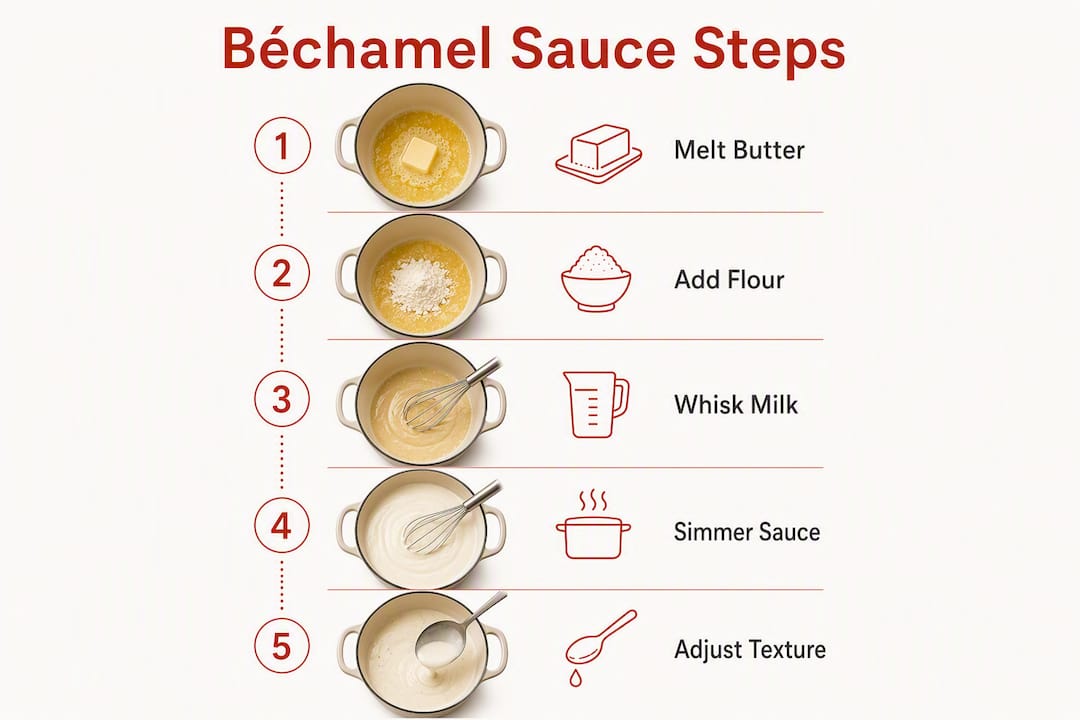
The method is straightforward: build a white roux, add milk steadily while whisking, then simmer to your target thickness. Here’s how each step actually plays out.
Step 1: Melt the butter. Set a heavy-bottom saucepan over medium-low heat. Add the butter and let it melt completely. It should foam gently but not brown. If it starts to turn golden, the heat is too high.
Step 2: Add the flour and cook the roux. Dump in all the flour at once and whisk immediately. Keep whisking for a short period over medium-low heat. The mixture will look like wet sand and smell faintly nutty. That’s exactly right. Cooking the roux for this window removes the raw flour taste without browning it; any color means you’ve crossed from white roux into blond roux, which changes the flavor profile.
Step 3: Add the milk. Pour in the milk in a thin, steady stream while whisking constantly. Don’t rush this. Adding all the milk at once before the roux has dispersed is the most common cause of lumps. Once about half the milk is in and the mixture is smooth, you can add the rest more quickly.
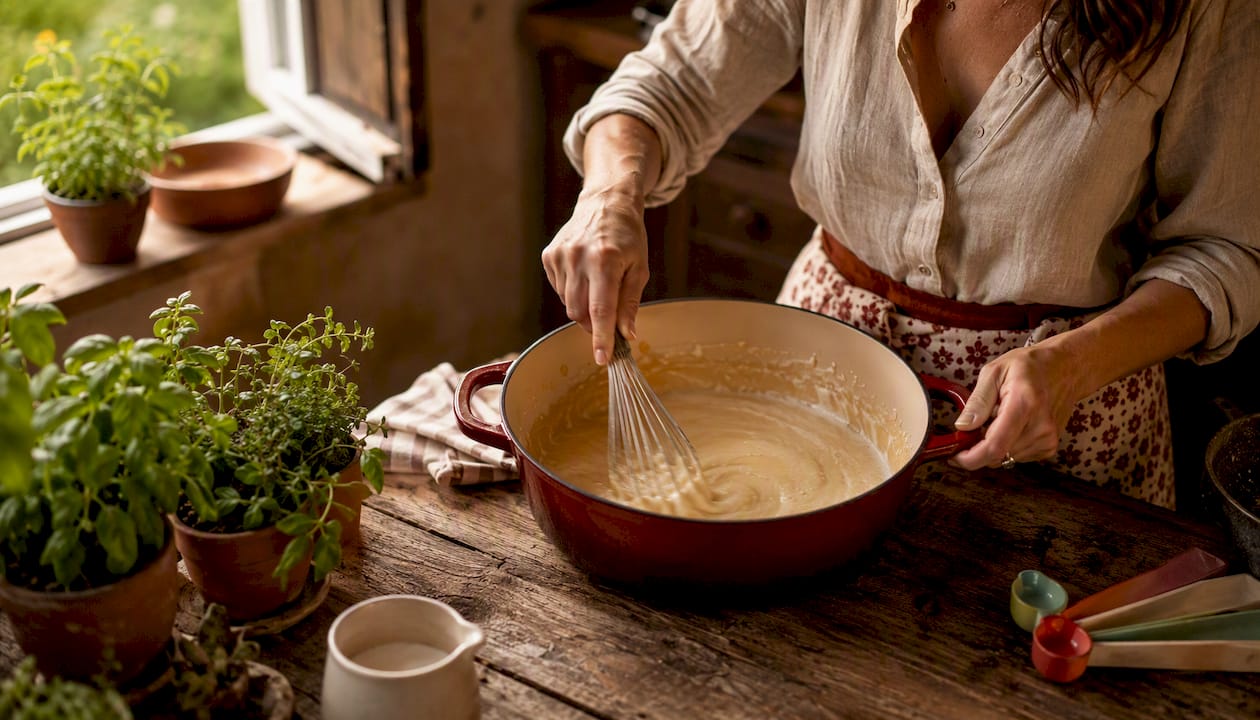
Step 4: Bring to a simmer and thicken. Raise the heat to medium. Keep whisking as the sauce heats. It will look thin for a minute, then thicken noticeably as it approaches a simmer. Total time from adding milk to a finished sauce is several minutes.
Step 5: Check consistency and season. Dip a spoon into the sauce and draw your finger across the back. If the line holds clean, the sauce is ready. Season with salt, white pepper, and nutmeg. Taste and adjust.
“The roux-to-milk ratio is the chef’s primary tool for tailoring béchamel to its use — whether that’s a pourable sauce for pasta, a coating sauce for gratins, or a thick structural layer for baked dishes like moussaka.” — Serious Eats
If lumps appear: Don’t panic. Whisk hard and fast while adding a splash more milk. If that doesn’t smooth it out, run the sauce through a fine-mesh sieve or hit it briefly with an immersion blender, then return it to low heat.
If the sauce starts to stick to the bottom: Pull it off the heat immediately, whisk vigorously, and drop the heat before returning it. Scorching happens fast on thin pans or high heat.
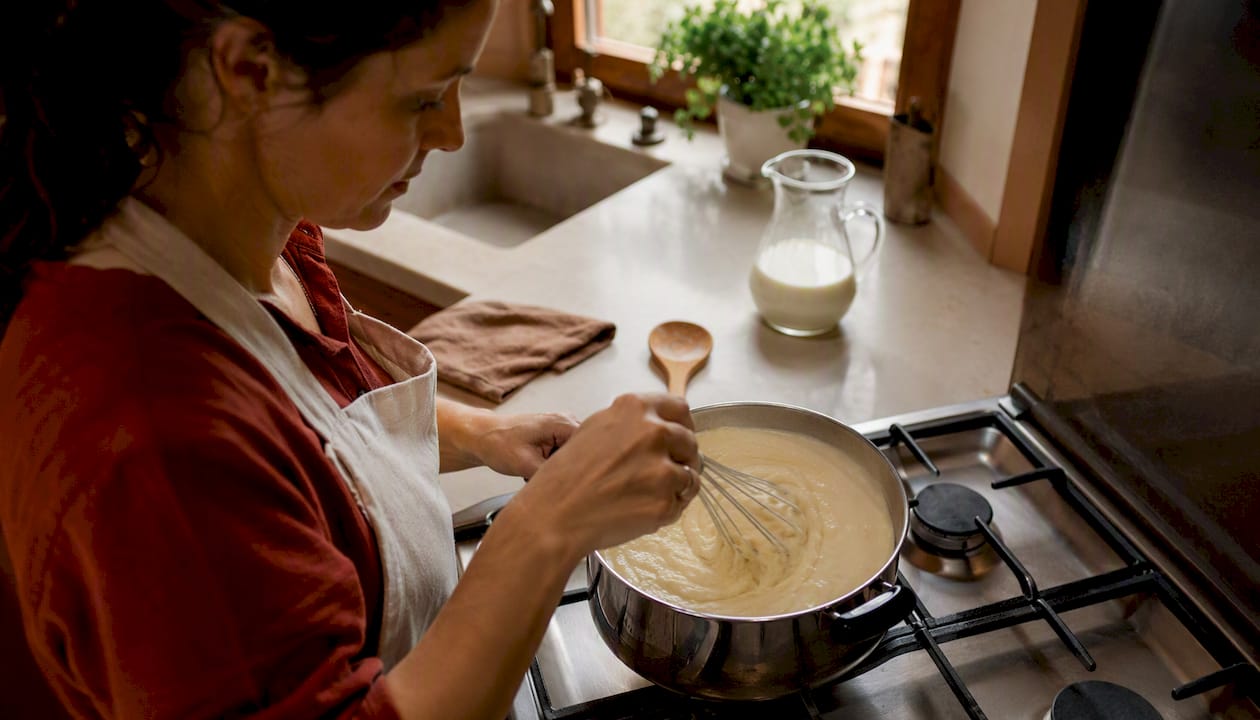
Pro Tip: Use a saucepan that’s slightly larger than you think you need. A wider base gives you more surface area for whisking and reduces the chance of the sauce climbing the sides and burning.
How do you choose the right roux-to-milk ratio?
The ratio of roux to milk is the single variable that controls everything about the final texture. Reducing to 1½ tablespoons (butter + flour) per cup milk gives the classic pourable yet creamy sauce preferred for general use; dropping to 1 tablespoon produces a thinner sauce for soups, while 2–3 tablespoons makes a thick to very thick béchamel for baked or structural dishes.
| Butter + Flour (per 1 cup milk) | Consistency | Best Uses |
|---|---|---|
| 1 tbsp + 1 tbsp | Thin, pourable | Cream soups, light pasta sauces |
| 1½ tbsp + 1½ tbsp | Pourable, creamy | Lasagna, croque monsieur, gratins |
| 2 tbsp + 2 tbsp | Thick | Mac & cheese, pot pies |
| 3 tbsp + 3 tbsp | Very thick, structural | Moussaka, soufflé base, croquettes |
Fixing a sauce that’s off:
- Too thin: Simmer uncovered for a few extra minutes to reduce, or make a small separate roux (1 tsp butter + 1 tsp flour, cooked 1 minute) and whisk it into the sauce.
- Too thick: Whisk in warm milk, a tablespoon at a time, until you reach the texture you want. Cold milk works too but can cause brief lumping, so whisk hard.
- Grainy or broken: Usually a sign of overheating. Pull off the heat, add a splash of cold milk, and whisk. If the texture doesn’t recover, strain it.
How do you infuse milk for a deeper-flavored béchamel?
Infusing the milk is optional, but it’s the difference between a functional white sauce and one that tastes like it came from a restaurant kitchen. Classic aromatics include a bay leaf, a slice of onion, a few peppercorns, and parsley stalks, simmered gently in the milk before straining. The whole process adds about 5 minutes and is worth it for lasagna, gratins, or any dish where the sauce is a featured component.
Quick infusion method:
- Combine cold milk with aromatics in a small saucepan.
- Heat over low until the milk just steams (do not boil).
- Remove from heat, cover, and steep for 5–10 minutes.
- Strain out the solids and proceed with your roux.
For a weeknight pasta sauce, skip the infusion and season well at the end. The difference is subtle enough that it won’t matter when the sauce is buried under cheese and pasta.
Mornay sauce is simply béchamel with cheese stirred in off the heat. Gruyère and Parmesan are the classic choices. Sharp cheddar works well for mac & cheese but can turn grainy if added over high heat, so always remove the pan from the burner first.
Béchamel vs. Alfredo: These are not the same sauce. Béchamel is starch-thickened milk. Traditional Alfredo is an emulsion of butter, cheese, and pasta water with no roux at all. They can taste similar in a finished dish, but the technique and structure are completely different.
How do you fix common béchamel problems?
Most béchamel failures come down to heat that’s too high, a roux that’s undercooked, or milk added too fast. Here’s how to fix each one quickly.
- Lumpy sauce: Whisk hard while adding more milk in a thin stream. If lumps persist, strain through a fine-mesh sieve or blend briefly with an immersion blender, then return to low heat.
- Raw flour taste: The roux wasn’t cooked long enough. You can’t fix this after the milk is in, but you can minimize it by simmering the finished sauce for an extra 5 minutes over low heat.
- Scorched bottom: Remove from heat immediately. Pour the unscorched top portion into a clean pan without scraping the bottom. Never scrape a scorched pan into the sauce.
- Sauce too thin: Simmer to reduce, or whisk in a small pre-cooked roux as described in the ratio section above.
- Sauce separated or greasy: Usually from overheating after cheese was added. Whisk in a tablespoon of cold milk off the heat to bring it back together.
- Skin forming on the surface: Press plastic wrap directly onto the surface of the sauce, or float a thin layer of milk on top. Both prevent the protein film from forming.
Pro Tip: When you’re done cooking, press a sheet of plastic wrap directly onto the surface of the sauce before setting it aside. This one habit prevents skin every single time.
Can you make béchamel ahead of time?
Yes, and it holds up well. Refrigerate for a few days or freeze for some weeks. Thaw in the fridge and reheat gently, adding a splash of milk as needed.
| Storage Method | Duration | Reheating Notes |
|---|---|---|
| Refrigerator | 3–4 days | Low heat on stovetop; whisk in milk 1 tbsp at a time |
| Freezer | Up to 2 months | Thaw in fridge overnight; reheat on low, whisk well |
| Room temperature | 2 hours max | Not recommended for longer holds |
Best practices for storing and reheating:
- Store in an airtight container with plastic wrap pressed directly to the surface.
- When reheating from the fridge, start on low heat and add a splash of whole milk before whisking. The sauce will look broken at first; keep whisking and it comes back together.
- Frozen béchamel can separate slightly on thawing. Reheat slowly over low heat while whisking constantly, adding milk a tablespoon at a time until smooth.
- Make a slightly thicker sauce than you need if you’re planning to freeze it. It loosens on reheating, so starting thick gives you room to adjust.
What can you make with béchamel sauce?
Béchamel is one of the five French mother sauces, and it shows up in more dishes than most home cooks realize.
- Lasagna: The medium-consistency sauce (1½ tbsp roux per cup milk) layers between pasta sheets and keeps the dish from drying out during baking. It’s the reason a good lasagna stays creamy rather than stiff.
- Mac & cheese: A thicker béchamel (2 tbsp roux per cup milk) is the base for a stovetop mac & cheese that stays creamy. Stir in Gruyère or cheddar off the heat for a Mornay-style result. Forkwardkitchen’s Instant Pot mac and cheese uses this exact approach.
- Gratins and vegetable bakes: Pour a medium sauce over par-cooked potatoes, cauliflower, or leeks, top with cheese, and bake until golden.
- Croque monsieur: Spread a thick béchamel on the bread before grilling. It’s what separates a croque monsieur from a plain ham and cheese.
- Soufflé base: A very thick sauce (3 tbsp roux per cup milk) provides the structural base that holds egg whites in a savory soufflé.
- Moussaka: Same thick ratio as soufflé, poured over the meat layer and baked until set.
For dishes where the sauce is a background player (pot pies, stuffed pasta), a medium-thick consistency works. When the sauce is front and center, infuse the milk first.
Key Takeaways
A smooth béchamel comes down to one ratio, one timing cue, and one rescue move: the right roux-to-milk proportion, cooking the roux for 1–2 minutes until the raw flour smell is gone, and whisking hard the moment lumps appear.
| Point | Details |
|---|---|
| Default ratio | Use 1½ tbsp butter plus 1½ tbsp flour per cup of milk for a pourable, versatile sauce. |
| Roux timing | Cook the roux 1–2 minutes until it smells nutty; undercooked roux leaves a raw flour taste. |
| Lump rescue | Whisk hard with more milk, strain through a fine-mesh sieve, or blend briefly with an immersion blender. |
| Storage window | Refrigerate up to 3–4 days or freeze up to 2 months; press plastic wrap to the surface to prevent skin. |
| Forkwardkitchen recipes | Forkwardkitchen’s tested mac and cheese and lasagna recipes show this technique applied to real weeknight dishes. |
The part most guides skip about béchamel
Every béchamel tutorial tells you to whisk constantly and add milk slowly. That’s correct. What they rarely say is that the roux stage is where most home cooks quietly undercut themselves, and it’s not because they rush it. It’s because they don’t trust it.
A properly cooked white roux looks a little dry, smells faintly like popcorn, and sits in the pan for what feels like an uncomfortably long time before anything interesting happens. Most people add the milk too early because the roux looks done when it isn’t. That 90-second window between “flour is absorbed” and “roux is actually cooked” is the difference between a sauce that tastes clean and one that carries a faint paste flavor no amount of nutmeg will cover.
The other thing worth saying: béchamel is more forgiving than its reputation suggests. A lumpy sauce can be strained. A thin sauce can be reduced. A thick sauce takes more milk. The only genuine failure is a scorched pan, and even that can be salvaged if you move fast. Treat it like a technique to practice, not a recipe to execute perfectly on the first try, and it stops being intimidating after the second or third time.
Forkwardkitchen has the tested recipes to put this sauce to work
Knowing how to make a white sauce is one thing. Knowing exactly where to use it is where the cooking gets interesting. Forkwardkitchen’s full recipe library includes tested, from-scratch dishes that put béchamel and its cheese-sauce variations to work in real weeknight and weekend meals, with honest difficulty ratings so you know what you’re getting into before you start.
If pasta is where you’re headed, the pasta recipe collection covers everything from quick stovetop mac and cheese to layered baked dishes where a well-made béchamel is the difference between good and great. Every recipe is built from scratch, tested in a real kitchen, and written so the technique makes sense the first time you read it. Pick one and cook it tonight.
Useful sources
These are the sources used in researching this guide. Each one is worth bookmarking for deeper technique notes or alternate recipe approaches.
- The Kitchn: Creamy Béchamel Sauce Recipe — Practical home-cook recipe with testing notes on cold vs. warm milk and skin prevention.
- BBC Food: Béchamel Sauce Recipe — Classic method with infused milk instructions and make-ahead and freezing guidance.