September 2, 2026
Home Cooks: Make a Roux, Tested Steps and 1 tbsp (Thin) to 2–3 tbsp Per Cup
Stovetop-tested roux for home cooks, plus oven and dry-toast alternatives. Learn color stages, why darker roux thickens less, and the 1 tbsp (thin) to 2–3...
Home Cooks: Make a Roux, Tested Steps and 1 tbsp (Thin) to 2–3 tbsp Per Cup
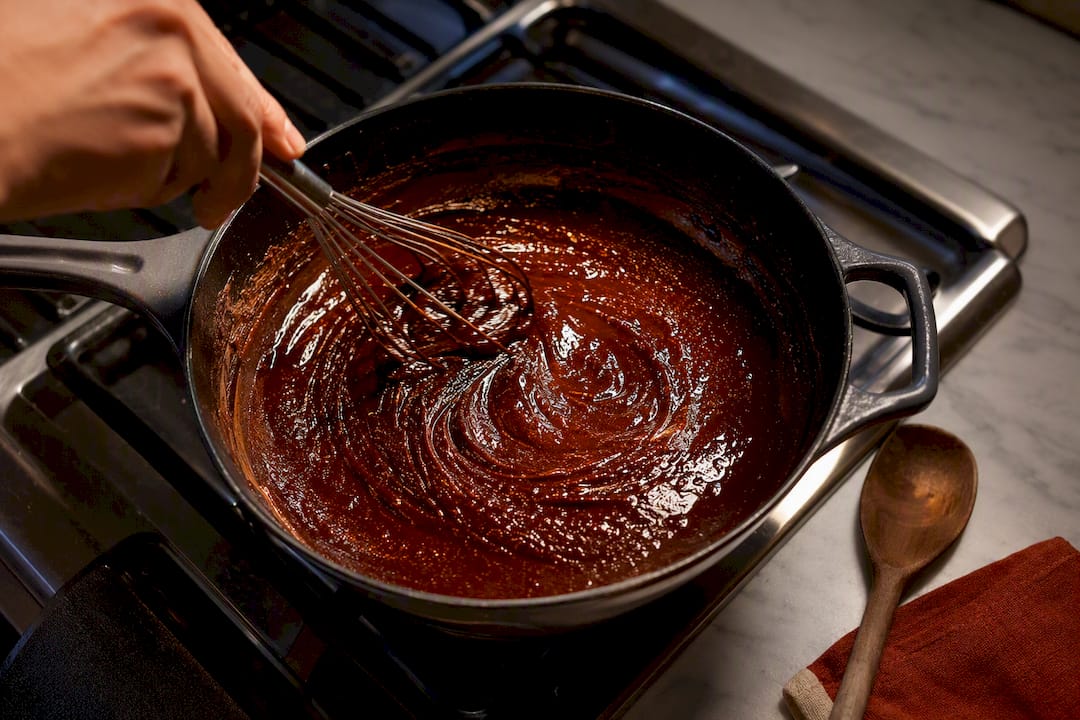
A roux is a cooked mixture of equal parts fat and flour that thickens sauces and forms the flavor backbone of dishes like gumbo and béchamel. The classic method is simple: melt your fat, whisk in the same volume of flour, and cook until it hits the color your recipe needs. That color, from pale white to nearly black, determines both flavor and thickening power, which the rest of this guide breaks down step by step.
TL;DR:
- Darker roux requires significantly more volume, often double, to achieve the same thickening effect as lighter roux due to reduced starch power.
- Using all-purpose flour and neutral oils like canola or vegetable oil ensures predictable cooking without burning, especially for dark roux that takes 30 minutes or more.
- Constant stirring and a heavy-bottomed pan are crucial for preventing burnt patches, with switching from a whisk to a spatula after blond stage to avoid scorching.
- Roux can be made in the oven or with toasted flour to save time, with freezing in ice cubes a convenient way to store for future recipes.
- Overcooking or adding cold liquids can cause lumps or burning; gradual addition of warm liquid while whisking helps keep the mixture smooth.
Table of Contents
- What Ingredients Do You Need to Make Roux?
- What Are the Different Types of Roux?
- How Do You Make Roux on the Stovetop?
- Can You Make Roux in the Oven or Without Constant Stirring?
- Why Did My Roux Burn or Get Lumpy?
- How Much Roux Do You Need to Thicken a Sauce?
- How Forkward Kitchen Tests Roux-Based Recipes
- What Actually Matters When You Make Roux
- Sources
What Ingredients Do You Need to Make Roux?
Stick with all-purpose flour. Its moderate protein content and neutral starch structure cook down evenly without turning gummy or bitter, unlike bread flour or specialty blends that behave unpredictably under sustained heat.
Your fat choice depends on how dark you’re going; for a creative variation, explore techniques like how to make wine butter to add nuanced flavoring to your roux. Unsalted butter works well for white and blond roux because you’re not cooking it long enough to hit its smoke point. For a dark roux that simmers for 30 minutes or more, switch to a neutral oil like canola or vegetable oil, since butter’s milk solids will scorch long before the flour turns mahogany. Rendered fats such as bacon grease or duck fat add savory depth if your dish can handle it.
For a basic sauce serving four, start with:
- 2 tablespoons fat and 2 tablespoons flour for a small amount of finished sauce
- About equal parts fat and flour by volume for larger batches, like a pot of gumbo feeding several people
- A heavy-bottomed pan (cast iron or thick-gauge stainless) to prevent scorched hot spots
- A whisk for lighter roux and a flat spatula for darker, pastier stages
- Reliable heat control, ideally a burner you can hold at a steady medium-low
What Are the Different Types of Roux?
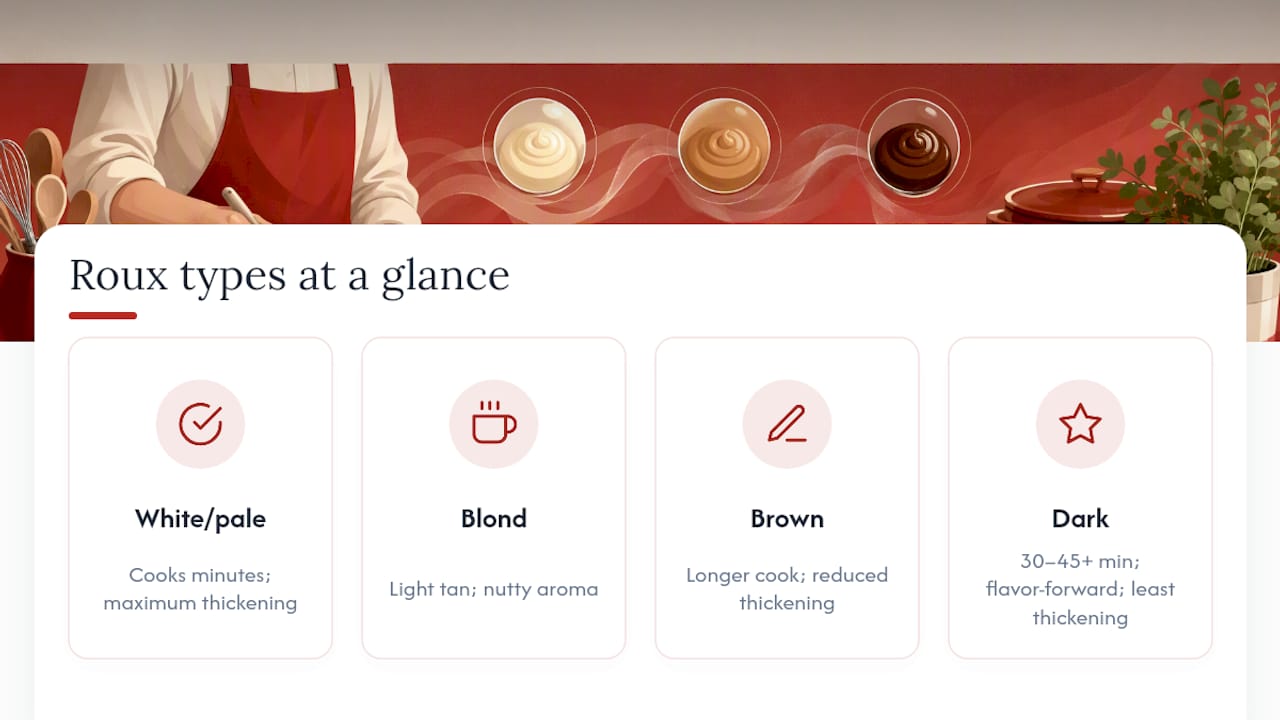
Color is the whole game. As flour cooks, its starches break down and its thickening power drops, while its flavor turns progressively nuttier and more toasted.
White or pale roux cooks for just a couple of minutes, barely long enough to lose its raw flour smell. This is your workhorse for béchamel and any sauce that needs maximum thickening from minimum roux.
Blond roux, sometimes called peanut butter roux for its color and smell, cooks a few minutes longer until it turns light tan. It’s the base for velouté and lighter gravies where you want some nutty character without losing much body.
Brown and dark roux are a different animal entirely. White and blond roux finish in minutes, while dark gumbo roux can take 30 to 45 minutes or longer of near-constant stirring to reach a deep brick-red or chocolate color.
Here’s the tradeoff nobody mentions enough: the darker the roux, the less it thickens, so you need more of it to hit the same viscosity. Serious Eats points out that dark roux is flavor-forward, not thickening-forward, which is why gumbo recipes often call for double or more the roux volume you’d use in a béchamel of the same yield.
How Do You Make Roux on the Stovetop?
This is the method every home cook should master first, because it teaches you to read the roux by sight, smell, and sound rather than a timer.
- Preheat your pan over medium-low heat for butter or medium heat for oil. Rushing this step is the number one cause of scorched roux.
- Melt the fat completely so it coats the bottom of the pan in a thin, even layer.
- Add the flour all at once or in a steady stream, whisking immediately to form a smooth, thick paste with no dry pockets.
- Keep whisking (or stirring with a spatula once it thickens past the whisk stage) and scrape the corners of the pan where flour likes to hide and burn.
- Watch the color shift from pale to golden to tan to brown, adjusting heat down if it’s coloring faster than your target stage requires.
- Pull it off the heat the moment it hits your desired color, since residual heat in a heavy pan keeps cooking it for another 30 to 60 seconds.
A heavy-bottomed pan and near-constant stirring are the two controls that matter most once your roux passes the blond stage, because uneven heat creates scorched flecks that ruin the whole batch. For anything past blond, switch from a whisk to a heat-safe spatula. A whisk traps hot flour particles in its wires once the mixture turns pasty, and those trapped bits burn even as the rest of the roux looks fine.
Pro Tip: Rest your stirring arm on the counter edge or pull up a stool for a dark roux. You’ll be at that pan for 30 to 45 minutes straight, and a tired arm is how lumps and scorched patches happen in the final ten minutes.
Can You Make Roux in the Oven or Without Constant Stirring?
Standing over a pot for 45 minutes isn’t for everyone, and it’s not always necessary.
- Oven method: bake flour whisked with oil in a Dutch oven at around 350°F, stirring every 15 to 20 minutes instead of constantly. This trades hands-on time for oven time and works especially well for batch-making dark roux ahead of a big gumbo weekend.
- Dry toasted flour: toast flour alone in a skillet until deeply browned, then whisk in warm fat afterward to form a paste. It skips the scorching risk entirely since there’s no fat to burn.
- Microwave shortcuts exist but are rarely worth it for dark roux. The heat is too uneven to track color reliably, and you lose the tactile feedback that tells you when to stop.
- Storage: roux keeps in the fridge for about a week and freezes well in ice cube trays for months, so making a double batch on a slow Sunday sets you up for weeknight gumbo later.
Why Did My Roux Burn or Get Lumpy?
Burnt roux shows up as black or dark brown flecks with a bitter, acrid smell, and there’s no saving it. If you see specks like that, start over rather than trying to cook around them, since a single burnt patch can throw off the whole pot.
A roux that’s simply darker than planned but smells nutty rather than scorched is still usable. It just won’t thicken as much, so plan to add a bit more.
- Lumps almost always come from adding cold liquid to hot roux, which seizes the starch. Add liquid gradually while whisking, ideally warm or hot, to keep everything smooth.
- If lumps form anyway, keep whisking vigorously or pass the sauce through a fine mesh strainer before serving.
- Separation, where fat pools on top, usually means the roux got too hot fast. Whisking in a splash of hot liquid often re-emulsifies it; if the fat has visibly broken and turned oily rather than glossy, start fresh.
Pro Tip: Keep a second spatula nearby so you’re not scraping flour bits off a fork or spoon mid-stir. Recipe developers swap tools constantly during a long dark roux to avoid dropping their rhythm.
How Much Roux Do You Need to Thicken a Sauce?
Getting the ratio right when you add roux to liquid saves you from a thin, disappointing sauce or a gluey one.
- Add hot stock or milk to the roux in small splashes at first, whisking constantly until it loosens into a smooth slurry before adding the rest.
- For a light white sauce, about 1 tablespoon of white roux per cup of milk gives you a thin, pourable consistency; 2 to 3 tablespoons per cup gets you to full béchamel thickness.
- Because darker roux loses thickening power as it cooks, a dark roux for gumbo often needs noticeably more volume, sometimes double the light-roux amount, to reach the same body.
- When you’re building a soup or braise, it’s usually easier to add roux to the simmering pot rather than pouring liquid into the roux pan, since a big volume of stock cools the roux fast and helps prevent lumps.
Roux does double duty as both thickener and flavor base. If you’re sautéing onions, celery, or bell pepper (the Cajun “holy trinity”), you can cook them right in the roux once it hits your target color, or add them after for a cleaner, more distinct flavor. Our shrimp étouffée recipe uses a blonde roux this way, sautéing the trinity directly in it before adding stock.
How Forkward Kitchen Tests Roux-Based Recipes
Forkward Kitchen builds every roux-dependent recipe from repeated stovetop runs, timing each color stage against real burner heat rather than assumed averages. Our béchamel sauce recipe and blonde-roux shrimp étouffée both grew out of that testing, which is where the timing ranges above come from. If you want to see roux in action beyond the pan, our Instant Pot mac and cheese shows how a quick béchamel base transforms into a full weeknight dinner. Recipe cards on the site include the honest difficulty ratings this author, Oloru, insists on for every technique-driven dish.
What Actually Matters When You Make Roux
Most guides treat roux like a single skill with one right answer, but that’s backwards. The real skill is matching your method to your patience level and your dish, not chasing the darkest possible roux as some mark of culinary seriousness.
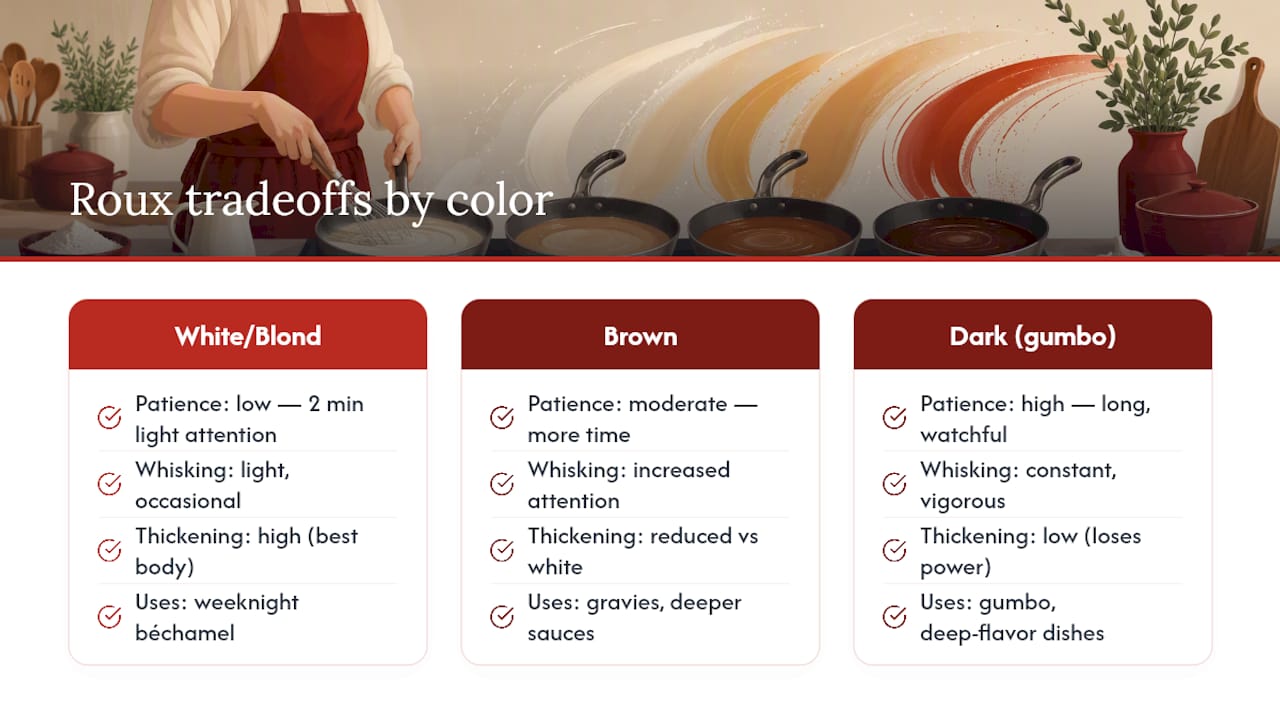
Conventional advice overemphasizes constant whisking for every stage, when really that intensity only matters once you pass blond. A white roux for weeknight béchamel needs two minutes of light attention, not white-knuckle vigilance. Save the arm-endurance mindset for the dishes that actually demand it, like a proper dark gumbo roux.
The bigger blind spot is thickening math. Beginners assume roux is roux, then wonder why their gumbo turns out thin despite following the color instructions exactly. Darker roux loses thickening power as it gains flavor, and recipes that don’t call this out set people up to under-thicken. If you’re adapting a recipe or working from memory, prioritize learning that tradeoff before you worry about nailing the perfect chocolate-brown color. A slightly lighter roux with the right ratio beats a picture-perfect dark one that leaves your gumbo watery.
— Oloru
Sources
- How to make roux — America’s Test Kitchen
- A brief guide to roux | Serious Eats
- How To Make a Roux (With Recipe) | Simply Recipes