Sichuan-Style Kung Pao Chicken with Peanuts
Master this Kung Pao Chicken recipe featuring velveted chicken thighs, toasted Sichuan peppercorns, and a bold black vinegar sauce. Better than takeout and ready in 30 minutes.
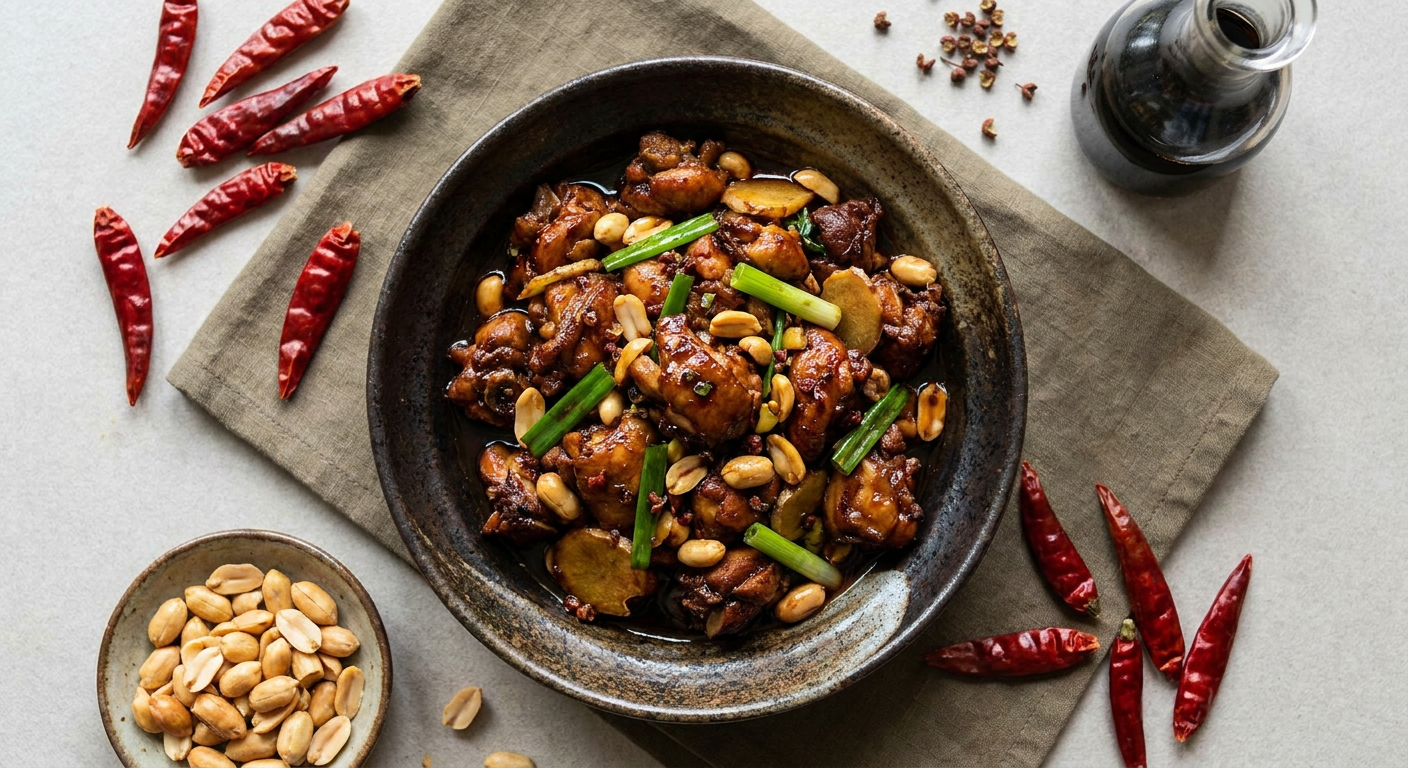

Kung Pao Chicken is the ultimate study in balance, hitting every corner of the palate with its signature mix of spicy, savory, sweet, and sour notes. This version stays true to the classic profile, using diced chicken thighs for moisture and a traditional velveting technique to ensure the meat stays tender against the high heat of the wok.
While many westernized versions rely on heavy cornstarch slurries, an authentic kung pao chicken relies on the 'blooming' of dried chiles and Sichuan peppercorns in hot oil. This process infuses the entire dish with a numbing, fragrant heat that sets it apart from a standard stir-fry.
Making easy kung pao chicken at home is all about the prep. Once your sauce is whisked and your aromatics are chopped, the actual cooking happens in a flash. The final addition of roasted peanuts provides that essential crunch that makes this dish a perennial favorite.
Ingredients
The Chicken & Marinade
- 1 lb (450g) boneless skinless chicken thighs, cut into 3/4-inch cubes
- 1 tablespoon soy sauce
- 1 tablespoon Shaoxing wine (or dry sherry)
- 2 teaspoons cornstarch
- 1 teaspoon toasted sesame oil
The Sauce
- 2 tablespoons Chinkiang black vinegar (or balsamic in a pinch)
- 1 tablespoon light soy sauce
- 1 tablespoon granulated sugar
- 1 teaspoon dark soy sauce (for color)
- 1 teaspoon cornstarch
- 2 tablespoons water or chicken stock
Stir-Fry Aromatics
- 3 tablespoons neutral oil (grapeseed or peanut)
- 10-15 dried red chiles (Sichuan or Arbol), halved and seeds removed
- 1 teaspoon whole Sichuan peppercorns
- 3 cloves garlic, thinly sliced
- 1 inch fresh ginger, minced
- 4 green onions, whites and greens separated, cut into 1-inch lengths
- 1/2 cup roasted unsalted peanuts
Instructions
- 1
Marinate the chicken by whisking the soy sauce, Shaoxing wine, cornstarch, and sesame oil in a bowl; add the chicken, toss to coat, and let sit for 15 minutes.
- 2
Combine all sauce ingredients in a small jar or bowl, whisking until the sugar and cornstarch are fully dissolved.
- 3
Heat a wok or large heavy skillet over high heat until wisps of smoke appear, then add the neutral oil.
- 4
Add the dried chiles and Sichuan peppercorns to the oil, stirring constantly for about 30 seconds until the chiles turn a deep garnet red and become fragrant (do not let them turn black).
- 5
Add the marinated chicken to the wok in a single layer and let it sear undisturbed for 1-2 minutes to develop a golden crust.
- 6
Stir-fry the chicken for another 2 minutes until it is about 80% cooked through.
- 7
Toss in the garlic, ginger, and the white parts of the green onions, stir-frying for 30 seconds until aromatic.
- 8
Give the sauce mixture a quick whisk to incorporate the settled starch, then pour it into the wok.
- 9
Toss everything rapidly for 1 minute as the sauce thickens and glazes the chicken evenly.
- 10
Fold in the roasted peanuts and the green parts of the green onions, then remove from heat immediately.
- 11
Serve hot over steamed jasmine rice.
Nutrition (per serving)
Estimates only — not medical or dietary advice.
- Calories
- 412 kcal
- Protein
- 26 g
- Carbs
- 13 g
- Fat
- 28 g
- Fiber
- 2 g
- Sugar
- 5 g
- Sodium
- 840 mg
Tips
- → Don't eat the whole peppercorns or dried chiles unless you want a massive hit of heat; they are primarily there to flavor the oil and the sauce.
- → Chinkiang black vinegar is the 'secret' ingredient. It has a malty, complex acidity that white vinegar cannot replicate.
- → Ensure your wok is screaming hot before adding the oil to prevent the velveted chicken from sticking to the metal.
FAQ
Can I use chicken breast instead of thighs?
Yes, but be extra careful not to overcook it. The velveting marinade helps, but breasts dry out much faster than thighs under high heat.
How do I make Kung Pao Chicken less spicy?
Keep the dried chiles whole rather than snipping them open. Most of the heat lives in the seeds; by keeping them intact, you get the smoky flavor without the intense burn.
Why is my Kung Pao Chicken sauce too thick?
This usually happens if the sauce boils for too long. If it becomes gloopy, simply stir in a tablespoon of water or broth to thin it back out to a glossy glaze.
You might also like
 Dinner
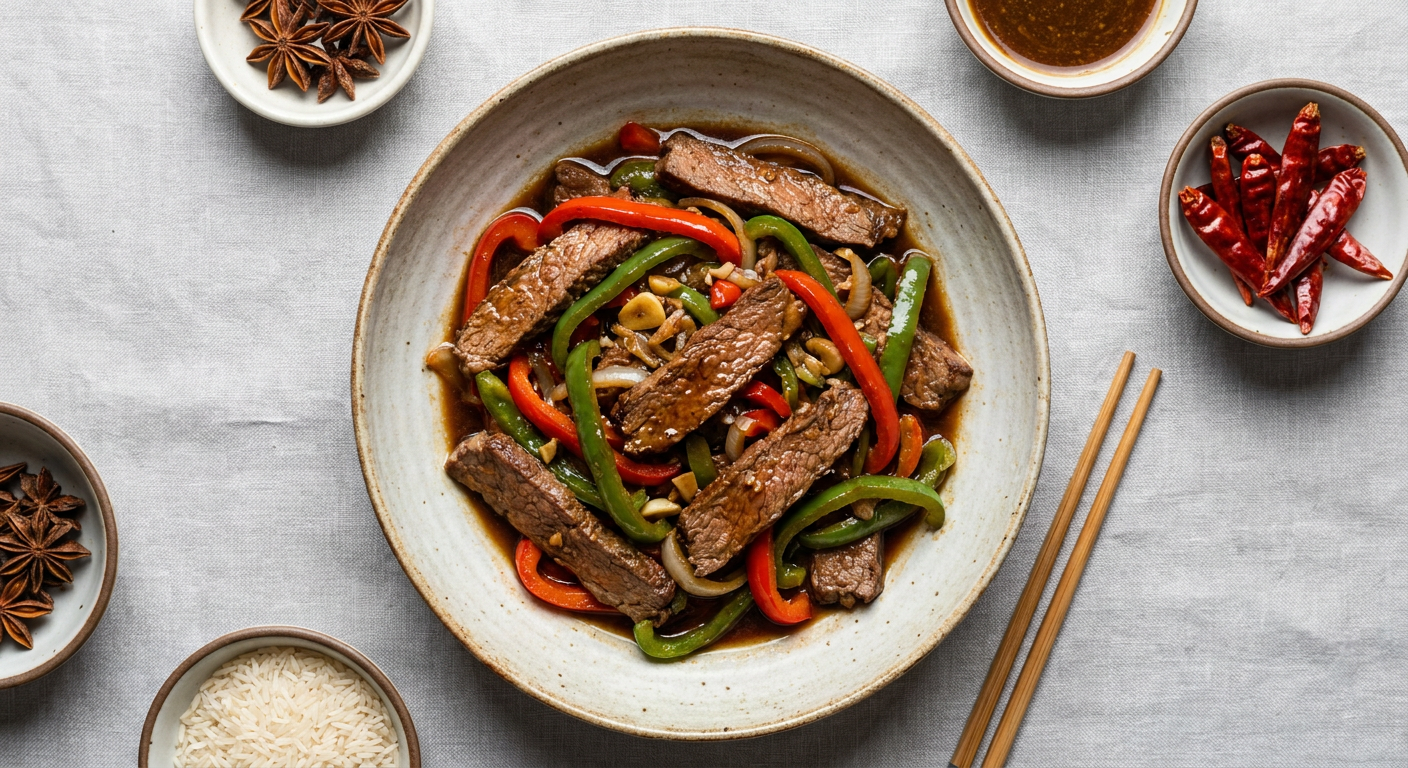
Easy Beef Pepper Steak Stir Fry with Flank Steak
This beef pepper steak stir fry features tender velveted beef and crisp bell peppers in a savory ginger-soy sauce. A 25-minute meal that rivals any takeout favorite.
 Dinner
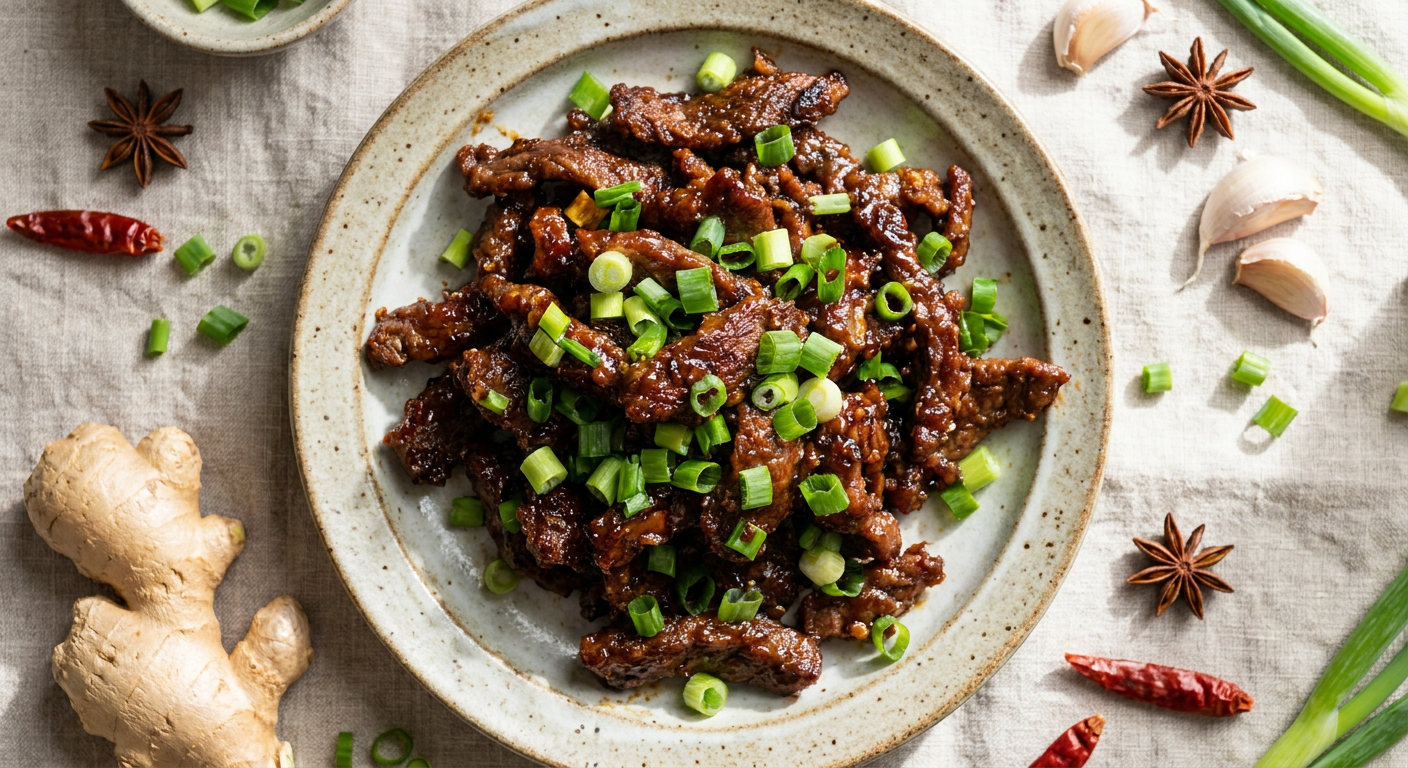
Mongolian Beef with Crispy Flank Steak and Scallions
This better-than-takeout Mongolian beef features cornstarch-crisped flank steak tossed in a glossy, savory-sweet ginger soy glaze with a heavy scatter of fresh scallions.
 Dinner
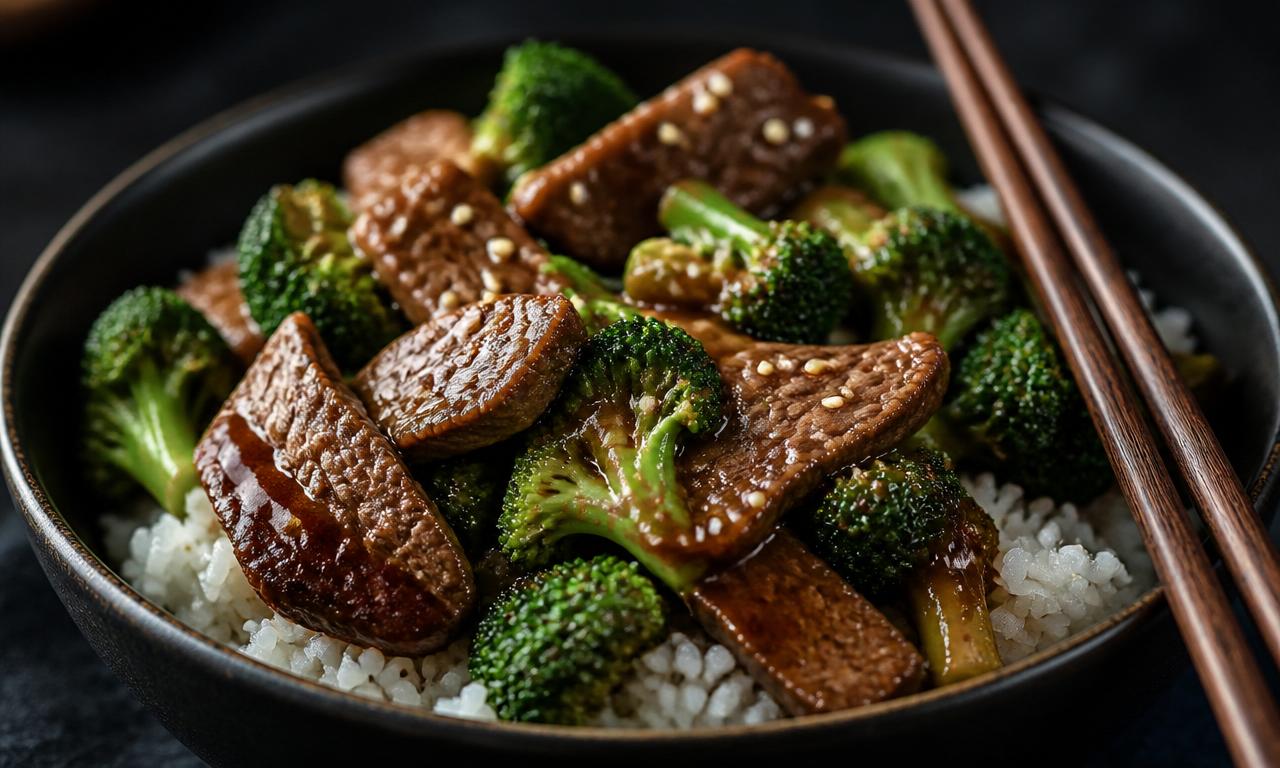
Tender Beef and Broccoli with Glossy Garlic-Ginger Sauce
Master this classic beef and broccoli featuring velvet-tender flank steak, crisp florets, and a savory garlic-ginger-oyster sauce that tastes better than your local takeout.
 Dinner
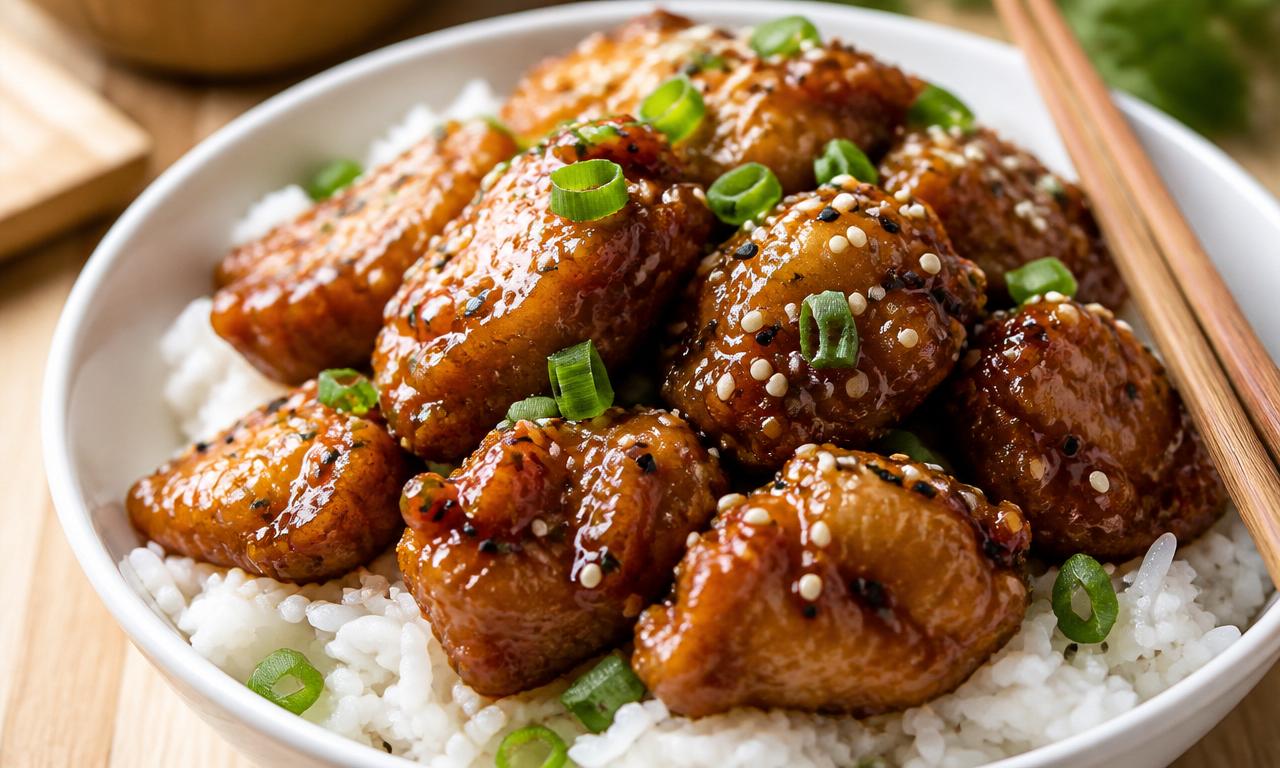
Shatter-Crisp Sesame Chicken with Honey-Soy Glaze
Make better-than-takeout sesame chicken in 35 minutes. This recipe features a shatter-crisp coating and a sticky honey-soy glaze for the ultimate crispy sesame chicken.