Authentic Efik Afang Soup Recipe with Beef and Periwinkles
This authentic afang soup recipe features pounded okazi leaves and waterleaf for a rich, thick texture. Learn the Efik method with periwinkles and smoked fish.
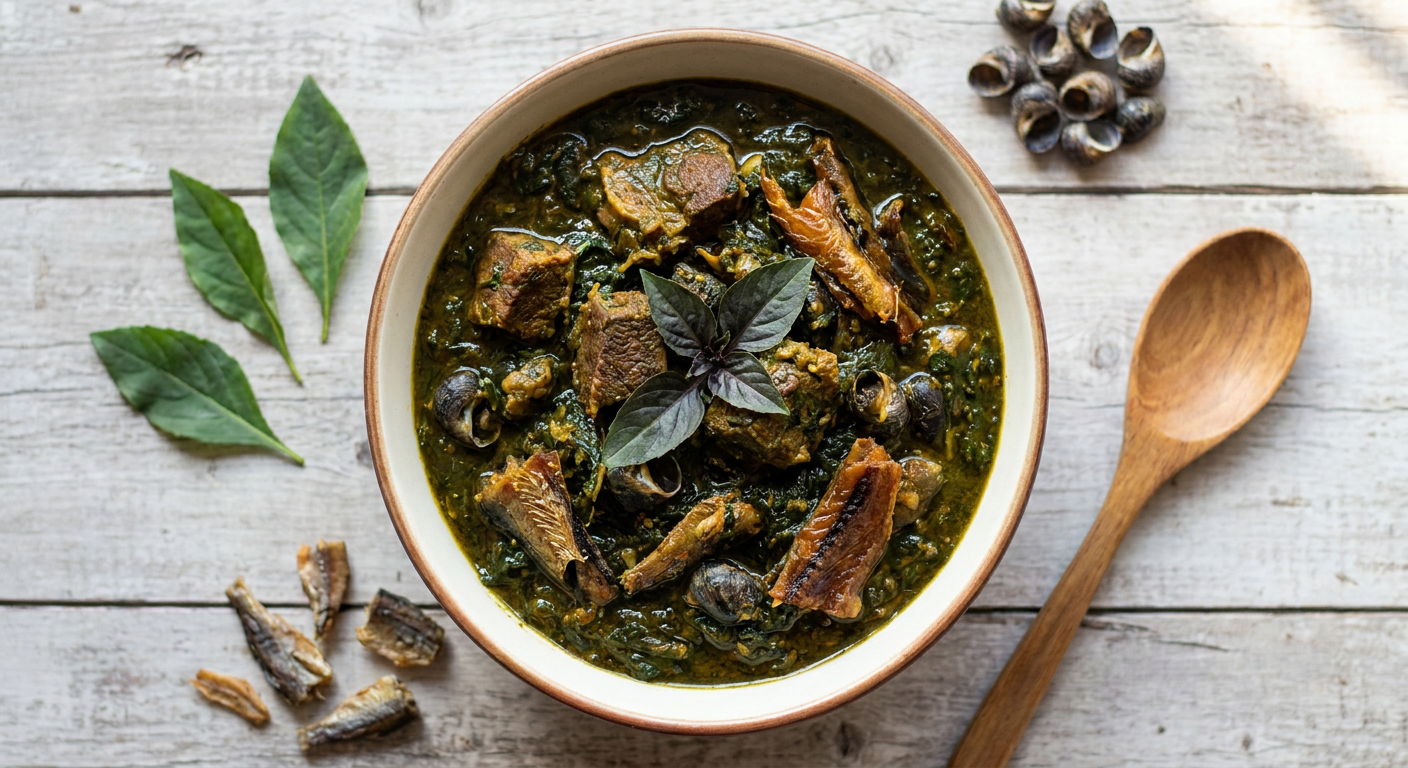

This authentic afang soup recipe is a masterclass in Efik culinary tradition, focusing on the perfect balance between two distinct greens. Unlike many other Nigerian stews, a true Efik waterleaf soup relies on the natural moisture of the vegetables rather than added water to create its signature rich, thick consistency.
The secret to the depth of flavor in this nigerian afang soup lies in the preparation of the okazi leaves. By pounding the tough, dry-sliced leaves with ground crayfish, you release aromatic oils that transform the broth. Layered with succulent beef, stockfish, and sea-salty periwinkles, this dish is a textural powerhouse that demands a side of pounded yam or eba.
Ingredients
Proteins and Aromatics
- 500g (1.1 lbs) Beef chuck or assorted offal (shaki, honeycomb tripe), cut into bite-sized pieces
- 1 large Smoked catfish, cleaned and deboned
- 200g (7 oz) Stockfish ear or pieces, soaked and softened
- 250g (9 oz) Shelled periwinkles, thoroughly cleaned
- 2 tablespoons Ground scotch bonnet peppers (cameroon pepper or fresh)
- 3 Seasoning cubes (maggi or knorr)
- Salt to taste
The Greens and Fats
- 4 cups Fresh waterleaf, finely chopped (approx. 800g)
- 2 cups Dried okazi (Afang) leaves, finely ground or pounded (approx. 200g)
- 1 cup Ground crayfish
- 300ml (1.25 cups) Palm oil
Instructions
- 1
Place the beef, stockfish, and offal in a large pot with chopped onions, seasoning cubes, and a small amount of water; boil until the meats are tender and the liquid has reduced to a thick, concentrated stock.
- 2
Pound the dried okazi leaves together with half of the ground crayfish using a mortar and pestle or a high-speed dry blender until the leaves are broken down into a fine, slightly oily grit.
- 3
Add the cleaned smoked fish and periwinkles to the pot of tenderized meat, allowing them to simmer for 5 minutes to integrate their flavors.
- 4
Add the finely chopped waterleaf to the pot. Do not add any extra water; simply cover the pot and let the waterleaf wilt for 3 to 5 minutes until it releases its natural juices.
- 5
Stir the pot to combine the wilted waterleaf with the meat and stock, creating the liquid base for the soup.
- 6
Pour in the palm oil and the remaining ground crayfish, then add the ground scotch bonnet peppers. Stir well and let it simmer on medium heat for 3 minutes.
- 7
Add the pounded okazi and crayfish mixture into the pot, stirring vigorously to ensure the leaves are evenly distributed and the soup thickens.
- 8
Taste for salt and seasoning, adjusting only if necessary, then simmer for a final 2 minutes before removing from heat to keep the greens vibrant.
Nutrition (per serving)
Estimates only — not medical or dietary advice.
- Calories
- 685 kcal
- Protein
- 34 g
- Carbs
- 9 g
- Fat
- 58 g
- Fiber
- 4 g
- Sugar
- 2 g
- Sodium
- 890 mg
Tips
- → Never add water after adding the vegetables; the waterleaf provides all the moisture needed for a thick, traditional consistency.
- → If using dried okazi, soak them in warm water for 5 minutes before pounding to help soften the tough fibers.
- → For the most authentic flavor, use 'native' palm oil which has a stronger aroma compared to highly processed versions.
- → Clean periwinkles by soaking them in salted water and rinsing multiple times to remove any residual sand or grit.
FAQ
Why is my Afang soup watery?
Afang soup becomes watery if you add too much water to the meat stock or if you don't allow the waterleaf to reduce properly. The Efik method relies solely on the moisture from the waterleaf and the palm oil.
Can I use spinach instead of waterleaf?
Yes, if waterleaf is unavailable, you can substitute with baby spinach. However, spinach has a higher water content, so you must squeeze out excess liquid after blanching to maintain the correct thickness.
How do I soften tough okazi leaves?
Pounding the leaves with crayfish is the best method to break down the tough cellulose. If you don't have a mortar, pulse them in a dry blender until they reach a sandy texture.
What is the difference between Afang and Edikang Ikong?
While both use waterleaf, Afang soup specifically uses okazi (Gnetum africanum) leaves which are tougher and pounded, whereas Edikang Ikong uses Ugu (fluted pumpkin) leaves.
You might also like
 Soups
SoupsAuthentic Catfish Pepper Soup Recipe: Fiery and Fragrant
This authentic catfish pepper soup recipe delivers a clear, fiery broth infused with scent leaf and uziza. Learn the secret to cleaning fresh catfish for a perfect result.
 Soups
SoupsAuthentic Nigerian Egusi Soup with Lumpy Melon Seeds
Learn to make authentic Nigerian egusi soup with rich palm oil, beef, and stockfish. This melon seed soup features fluffy curdled lumps and is served with pounded yam.
 Soups
SoupsClassic Chicken Sinigang Recipe with Fresh Tamarind
A clean, vibrant chicken sinigang recipe featuring a tart broth made from fresh tamarind pulp, layered vegetables, and savory fish sauce for an authentic Filipino meal.
 Soups
SoupsAuthentic Greek Lemon Chicken Soup (Avgolemono)
This silky Greek lemon chicken soup, or avgolemono, uses a classic egg-lemon temper for a creamy finish without dairy. A bright, comforting meal with orzo and shredded chicken.