August 17, 2026
What Is Harissa? A Home Cook's Guide to This Spicy Paste
Discover what harissa is and how to use this versatile North African chili paste to elevate your cooking with exciting flavors.
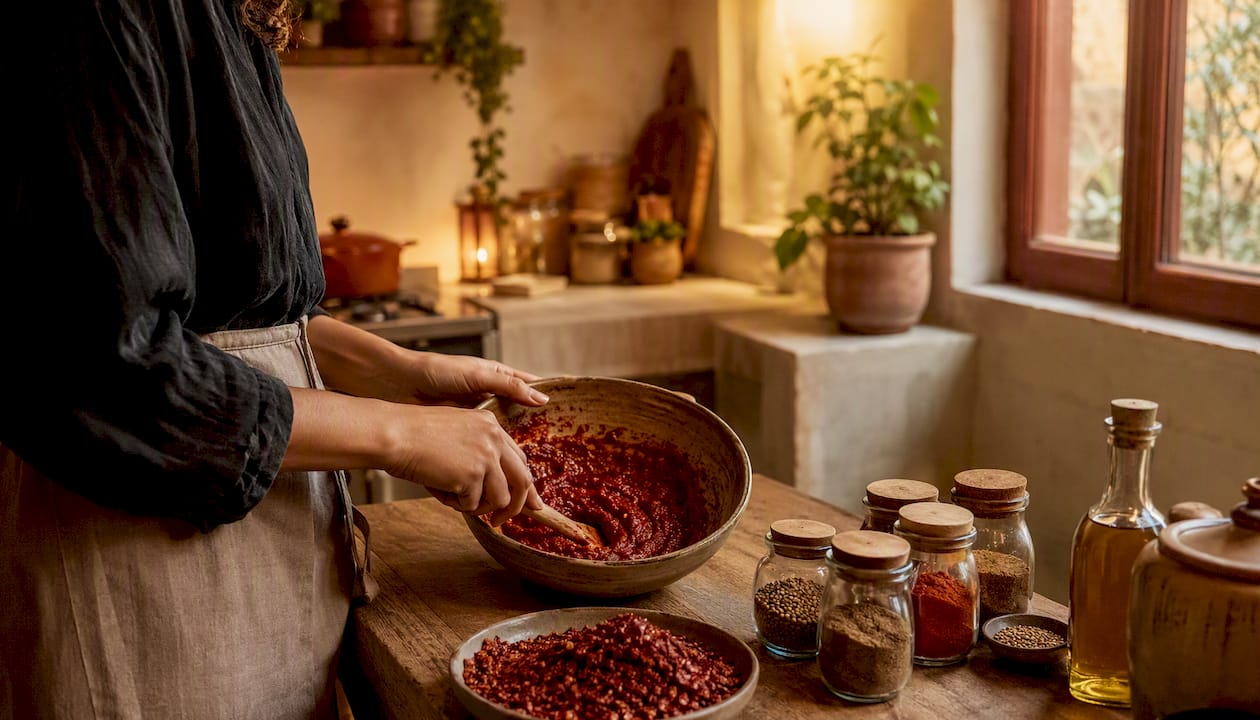
What Is Harissa? A Home Cook’s Guide to This Spicy Paste
Harissa is a North African chili paste made from dried or roasted red peppers, garlic, olive oil, and warm spices like cumin, coriander, and caraway. It’s smoky, garlicky, and carries real heat, though the intensity swings from mild to face-flushing depending on the peppers used. Once you have a jar in the fridge, you’ll find reasons to reach for it constantly:
- As a marinade for chicken, lamb, or fish before grilling or roasting
- Stirred into soups and stews to add depth and a slow-building kick
- Mixed into yogurt or compound butter for an instant sauce or spread
Britannica traces harissa to Tunisia, where it’s treated less like a condiment and more like a kitchen staple. UNESCO added it to its list of intangible cultural heritage, a recognition usually reserved for traditions worth protecting, not just recipes worth repeating. Forkwardkitchen tests recipes that lean on harissa for exactly this reason: it does more flavor work per spoonful than almost anything else in the pantry.
Key Takeaways
Harissa is a Tunisian chili paste built from dried or roasted peppers, garlic, olive oil, and toasted spices, and it rewards home cooks who use it deliberately rather than by the spoonful.
| Point | Details |
|---|---|
| Core definition | Harissa is a North African chili paste made from peppers, garlic, olive oil, and spices like cumin and caraway. |
| Start with less | Add a teaspoon at a time since harissa is concentrated and easy to oversalt or overheat a dish with. |
| Substitute smartly | Aleppo pepper, guajillo, or New Mexico chiles all approximate traditional baklouti heat and flavor. |
| Store with an oil layer | Top the jar with olive oil after each use to slow oxidation and extend refrigerator shelf life. |
| Try it today | Explore Forkwardkitchen’s full recipe collection for tested dishes that put harissa to work. |
Table of Contents
- What Is Harissa’s Origin and Cultural History?
- What Ingredients Go Into Harissa?
- What Does Harissa Taste Like?
- Which Chiles Work Best, and What Can You Substitute?
- How Do You Make Basic Harissa at Home?
- How Long Does Harissa Last, and How Should You Store It?
- How Do You Use Harissa in Everyday Cooking?
- How Does Harissa Vary Across the Maghreb?
- What Are Forkwardkitchen’s Tested Tips for Better Harissa?
- Why I Keep Harissa in Every Fridge I Cook In
- Where to Read More About Harissa
- Frequently Asked Questions
- Sources
What Is Harissa’s Origin and Cultural History?
Harissa comes from Tunisia, specifically the Cape Bon peninsula and the coastal town of Nabeul, long known as centers of pepper production and paste making, according to Wikipedia’s entry on harissa. From there, it spread across the Maghreb, with Algeria, Libya, and Morocco all developing their own versions, some hotter, some milder, some built around entirely different pepper varieties.
The name itself likely traces back to Arabic roots tied to the idea of crushing or pounding, a fitting origin for a paste traditionally made by grinding chiles by hand with a mortar and pestle. In Tunisia, harissa isn’t a specialty item pulled out for special occasions. It shows up at nearly every meal, often served alongside fish and meat dishes or swirled into a bowl of olive oil for bread dipping.
A few points worth knowing about harissa’s place in North African food culture:
- It functions as a table condiment as often as a cooking ingredient, similar to how ketchup or hot sauce sits on an American table.
- Britannica notes it’s considered a hallmark of Tunisian cuisine specifically, even though neighboring countries claim their own versions.
- UNESCO’s 2022 heritage listing recognized the traditional knowledge and skills tied to harissa production, not just the finished paste.
- Recipes vary meaningfully from household to household, which means there’s no single “correct” harissa, only regional and family traditions.
What Ingredients Go Into Harissa?
Traditional harissa built on dried Tunisian baklouti peppers, blended with olive oil and seasoned with coriander, garlic, cumin, and caraway, according to Britannica. Each ingredient earns its place. Nothing here is filler.
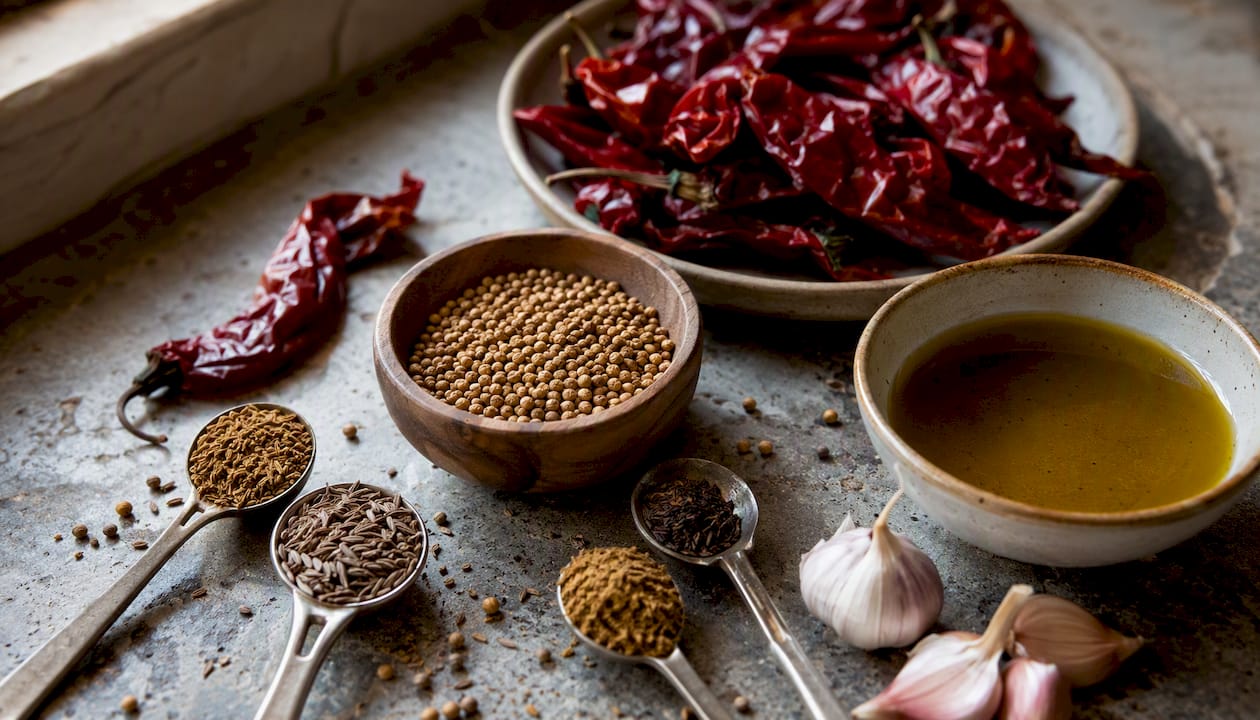
The chile peppers supply both heat and color, and their specific variety determines whether the final paste leans mild and fruity or sharp and biting. Garlic adds a raw, pungent bite that balances the toasted spice notes. Olive oil does double duty: it carries flavor through the paste and controls texture, since more oil means a looser, pourable sauce while less oil produces a spreadable paste.
The spice trio deserves individual attention:
- Cumin brings an earthy, slightly bitter warmth that anchors the whole blend.
- Coriander adds a citrusy, floral lift that keeps the paste from tasting one-dimensional.
- Caraway contributes a subtle anise sweetness that’s easy to miss until it’s absent.
- Salt isn’t optional seasoning here. It’s a preservative that extends shelf life alongside the oil.
Plenty of home cooks build on the base recipe. Some add preserved lemon for tang, roasted fresh red peppers instead of dried ones for a sweeter, less concentrated flavor, or a spoonful of tomato paste for body and color. None of these additions make it “not real” harissa. They just shift the profile toward a specific regional or family style.
What Does Harissa Taste Like?
Good harissa hits several flavor notes at once: heat up front, smokiness underneath from charred or dried peppers, warm spice in the middle from the cumin and caraway, and a bright acidic finish from lemon juice or vinegar. It’s a complex condiment that manages to taste both rustic and refined.
Heat levels vary enormously based on which peppers go into the paste. Tunisian versions made with baklouti chiles run hotter than most, while a batch made with milder dried peppers stays approachable enough to spoon straight onto toast. Texture matters just as much as heat. Some jars are thick enough to spread on bread like a chunky pesto; others are looser, almost pourable, closer to a spiced chili oil than a paste, as BBC Good Food points out.
That looser style is often served in a shallow pool for dipping bread, where a thick paste would just sit in a clump.
Pro Tip: Taste harissa on a small piece of bread or a plain cracker before adding it to a full recipe. Straight from a spoon, the heat and acidity hit differently than they will once blended into a stew or marinade, and you’ll get a much more accurate read on how much to use.
Which Chiles Work Best, and What Can You Substitute?
Traditional Tunisian harissa relies on baklouti peppers, which are hard to find fresh in most American grocery stores. That’s fine. You have workable substitutes that get you close, sometimes closer than expected.
Dried New Mexico or Hatch chiles bring a mild, slightly sweet flavor that works well for a milder homemade harissa. Guajillo peppers add a deeper, almost raisin-like sweetness with moderate heat. Ancho chiles skew even sweeter and softer, good for cooks who want the smoky depth without much bite. Aleppo pepper, when you can find it, delivers a fruity, medium-heat flavor that many cooks consider one of the closest matches to a mellow baklouti.
Fresh roasted red peppers versus dried, rehydrated chiles isn’t just a matter of availability. Fresh roasted peppers give you a sweeter, juicier base, while dried peppers concentrate flavor and give the paste more depth once rehydrated in hot water for about 20 minutes.
| Original Ingredient | U.S. Substitute | Expected Flavor/Heat Change |
|---|---|---|
| Baklouti chile | Aleppo pepper | Similar fruitiness, slightly less heat |
| Dried Tunisian red chiles | Guajillo | Deeper, sweeter, mild-to-moderate heat |
| Dried Tunisian red chiles | New Mexico/Hatch | Milder, slightly grassy sweetness |
| Hotter regional chiles | Ancho | Much milder, smokier, less bite |
| Fresh baklouti | Roasted red bell pepper | Sweeter, minimal heat, needs added chile flakes |
How Do You Make Basic Harissa at Home?
You need a blender or food processor, a sheet pan for roasting, a small dry pan for toasting spices, and, if you want an ultra-smooth finish, a fine-mesh sieve. That’s it. No special equipment required.
The process breaks into four stages: rehydrating or roasting the peppers, toasting the spices, blending everything with garlic and oil, and adjusting the final texture and seasoning. Toast whole cumin, coriander, and caraway seeds in a dry pan over medium heat for about 90 seconds, just until they turn fragrant, then grind them and bloom the ground spices briefly in warm olive oil before adding the chiles, a technique that home-cooking guides like Sinful Kitchen point to as key for maximizing aroma. Blooming spices in warm oil, rather than adding them raw, unlocks aromatic compounds that stay locked up in a dry spice on its own.
Here’s the short version, once your peppers are ready:
- Blend rehydrated or roasted peppers with garlic, toasted and ground spices, a splash of lemon juice or vinegar, and olive oil until mostly smooth.
- Adjust the texture with more oil for a looser sauce or a splash of the reserved soaking liquid for a thicker, more concentrated paste.
Pro Tip: If your harissa turns out too intense, don’t add water. Blend in a small roasted red pepper or an extra tablespoon of olive oil instead. Water thins the texture without softening the heat, while fat and additional pepper flesh actually mellow it.
How Long Does Harissa Last, and How Should You Store It?
Homemade harissa keeps in the refrigerator for several weeks when you top the jar with a thin layer of olive oil after each use. That oil layer isn’t decorative. It blocks air from reaching the paste’s surface, which slows oxidation and discourages mold growth.
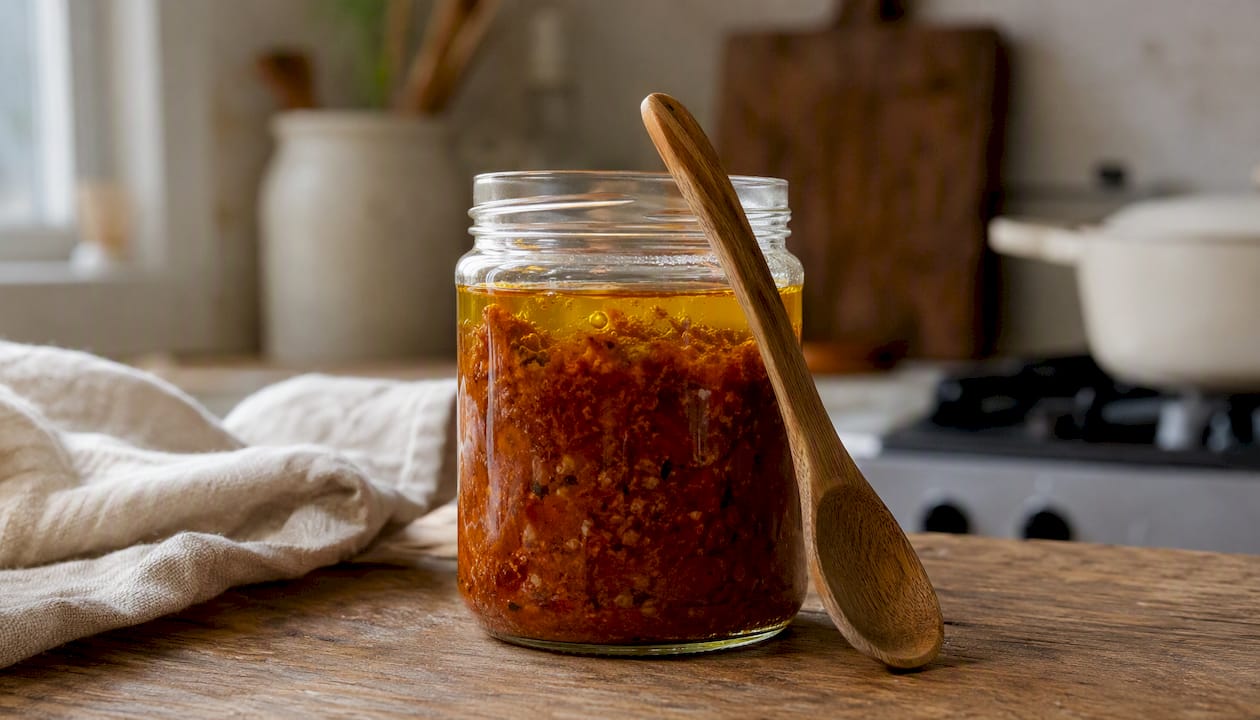
Sealed, store-bought jars typically last much longer unopened, but check the label on your specific brand rather than assuming a universal shelf life, since preservation methods vary between manufacturers. Once opened, treat commercial harissa the same way you treat homemade: refrigerate it, keep it topped with oil, and use a clean spoon every time to avoid introducing bacteria.
Freezing works well if you’ve made a big batch. Portion harissa into ice cube trays, freeze, then transfer the cubes to a freezer bag for grab-and-go portions. The texture loosens slightly after thawing, so give it a quick stir before use. If you ever see mold on the surface or notice an off, fermented smell that wasn’t there before, discard the batch. Those are signs the paste has gone bad regardless of how long it’s technically been stored.
How Do You Use Harissa in Everyday Cooking?
Start small. Harissa is concentrated enough that Bon Appétit and BBC Good Food both recommend easing into it, usually somewhere between a teaspoon and a tablespoon per recipe, then tasting and adjusting from there.
As a marinade, harissa works beautifully rubbed onto chicken, lamb, or fish before grilling. Forkwardkitchen’s peri peri chicken with roasted red pepper marinade shows the same principle at work with a different chili paste, and the technique transfers directly.
Stirred into tomato-based dishes, harissa turns a basic sauce into something with real backbone. Try it in a pot of shakshuka, where eggs poach in a spiced tomato base, or in a lentil soup that needs a flavor boost halfway through cooking. It also works beautifully folded into brothy stews like Forkwardkitchen’s Moroccan harira soup, which already leans on warm spice.
Mixed with yogurt or mayonnaise, harissa becomes an instant dip or sandwich spread. It’s also excellent whisked into a vinaigrette or folded into softened butter for a compound butter that melts over grilled vegetables or roasted carrots, the way Forkwardkitchen’s honey-harissa roasted carrots with whipped feta uses it as a glaze. If a recipe calls for hot sauce or Sriracha, harissa often makes a more complex substitute, though you’ll want to account for its thicker texture.
How Does Harissa Vary Across the Maghreb?
Tunisian harissa tends to run hotter than its neighbors, largely because of the baklouti chile’s prominence in the traditional recipe. Moroccan versions often dial back the heat and sometimes fold in rose petals or preserved lemon, giving the paste a floral, tangier edge that reads as more refined than fiery. Libyan harissa occasionally includes tomato, which softens the heat and adds sweetness and body.
Format varies just as much as flavor. A thick paste spreads easily onto bread or works as a marinade base, while a looser, oil-forward sauce is better suited to drizzling over grilled meat or dipping bread directly. Powdered harissa also exists as a shelf-stable pantry option, but it needs to be rehydrated with oil, garlic, and an acid like lemon juice so the spices bloom properly, according to Al Arabiya’s coverage of harissa’s UNESCO recognition. Skip that step and the powder tastes flat and gritty instead of vibrant.
What Are Forkwardkitchen’s Tested Tips for Better Harissa?
Balance is the whole game. Heat needs acid to cut through it and fat to round it out, so a squeeze of lemon and a drizzle of olive oil can rescue a batch that tastes harsh or one-note.
Texture problems have specific fixes. If your harissa comes out too thin, blend in more roasted pepper flesh rather than reaching for a thickener that doesn’t belong in the recipe. If it tastes bitter, the spices were likely toasted too long or over heat that was too high. Ninety seconds in a dry pan over medium heat is usually enough; anything longer risks scorching. If it’s simply too hot to use as planned, mellow it with extra olive oil, a spoonful of yogurt if the dish allows it, or a touch of honey the way Forkwardkitchen does in its carrot dish.
A few tested notes worth keeping in mind:
- Bloom ground spices in warm oil before adding chiles. Skipping this step leaves the paste tasting dusty rather than aromatic.
- Rehydrate dried chiles in hot water for 15 to 20 minutes before blending. Rushed rehydration leaves tough, fibrous bits in the final paste.
- Taste in stages. Add harissa incrementally to a dish rather than dumping in the full amount at once.
- Adjust consistency with reserved soaking liquid instead of plain water, which preserves flavor instead of diluting it.
Why I Keep Harissa in Every Fridge I Cook In
Harissa earns its shelf space by doing something few condiments manage: adding heat, smoke, and brightness in a single spoonful. I reach for it on scrambled eggs on lazy mornings, whisk it into mayonnaise for sandwiches that would otherwise be forgettable, and use it to jolt a pot of soup that’s tasting a little flat halfway through simmering.
If you’re new to it, start with less than the recipe calls for. You can always add more heat. You can’t take it back out. Build your comfort with it over a few meals, and within a month you’ll find yourself reaching for the jar the way you reach for salt.
Where to Read More About Harissa
For readers who want to dig into harissa’s history, regional recipes, or technique details beyond what’s covered here, these sources are worth bookmarking.
- Britannica’s harissa entry covers the paste’s Tunisian origin, traditional ingredients, and its role as a national culinary hallmark.
- Wikipedia’s harissa page documents regional production centers like Nabeul and the paste’s spread across the Maghreb.
- Bon Appétit’s harissa explainer focuses on practical kitchen uses, from scrambled eggs to marinades.
- BBC Good Food’s harissa glossary entry breaks down serving styles, including the oil-pool dipping tradition.
- Al Arabiya’s coverage of harissa’s UNESCO status explains the cultural heritage recognition and touches on powdered harissa’s reconstitution needs.
Frequently Asked Questions
What is harissa made of? Harissa is typically made from dried or roasted red chiles, garlic, extra-virgin olive oil, and toasted spices including cumin, coriander, and caraway, plus salt and often a splash of lemon juice or vinegar for brightness.
Is harissa very spicy? It ranges from mild to quite hot depending on which peppers go into it. Tunisian versions made with baklouti chiles tend to run hotter, while versions built on milder dried peppers like ancho stay approachable.
What can I use instead of harissa? A blend of smoked paprika, cayenne, cumin, and a bit of garlic and oil approximates the flavor in a pinch, though it won’t have harissa’s full depth. For a closer match, look for Aleppo pepper or guajillo based recipes.
Can I make harissa without fresh chiles? Yes. Dried chiles rehydrated in hot water for 15 to 20 minutes work just as well and are often easier to find in U.S. grocery stores than fresh baklouti or similar peppers.
How long does homemade harissa last in the fridge? Several weeks when stored properly with a layer of olive oil on top of the jar. Watch for mold or off odors, which mean it’s time to toss the batch.
Is harissa the same as hot sauce? Not quite. Harissa is thicker and more complex, built on toasted spices and garlic rather than just vinegar and chiles, though it can substitute for hot sauce in many recipes if you account for the texture difference.
Sources
- Harissa | Paste, Spice, Tunisia, Chili Peppers, & Facts | Britannica
- Harissa
- What Is Harissa, the Spicy, Peppery Condiment We Will Never Quit? | Bon Appétit
- Harissa | BBC Good Food
- Tunisia’s spicy harissa gets UNESCO heritage status | Al Arabiya English