September 18, 2026
3:1 Vinaigrette Ratio and 3 Test Kitchen Formulas for Home Cooks
Start with the 3:1 vinaigrette ratio, learn when to shift to 2:1 or 4:1, and use three test kitchen formulas with mixing and storage tips.
3:1 Vinaigrette Ratio and 3 Test Kitchen Formulas for Home Cooks
Start with three parts oil to one part vinegar. That 3:1 ratio is the baseline every cook should know before touching a whisk, but it bends depending on how strong your acid is, what oil you’re using, and how you build the dressing. Once you understand why 3:1 works, the section below shows you exactly when to break from it.
TL;DR:
- Using a 2:1 ratio can create a brighter, punchier dressing that better highlights assertive greens and fruit-based salads.
- Adjust the ratio when working with strong oils like extra-virgin olive or bold vinegars such as balsamic and sherry to maintain balance.
- Building the dressing starting with dissolving salt and mustard in the acid before adding oil significantly improves flavor consistency.
- Scaling vinaigrettes is straightforward: double primary ingredients for larger servings, and keep in mind refrigeration impacts brightness and separation.
- Testing and technique, such as letting shallots sit in acid and choosing the right tool, are key to achieving a smooth, well-balanced vinaigrette.
Table of Contents
- What the vinaigrette ratio actually controls
- When to break from 3:1: brighter, bolder, and richer variations
- How your oil and acid choice changes the math
- Building the dressing: technique that makes or breaks the ratio
- Tasting, scaling, and storing your vinaigrette
- Three vinaigrette formulas you can make right now
- What testing in Forkward Kitchen’s test kitchen taught us
- Why more cooks are reaching for brighter dressings
- Try These Tested Vinaigrette Recipes From Forkward Kitchen
- Sources
- FAQ
What the vinaigrette ratio actually controls
The 3:1 vinaigrette ratio isn’t an arbitrary kitchen rule. Oil cushions acidity on your tongue and carries the fat-soluble flavor compounds in garlic, herbs, and mustard that water-based ingredients can’t dissolve. Vinegar or citrus does the opposite job: it wakes up the palate and cuts through anything rich or fatty sitting on the plate.
Too much oil and a vinaigrette tastes flat, coating your greens without waking anything up. Too much acid and it turns sharp enough to pucker your mouth, drowning out whatever you tossed it with. The 3:1 ratio splits the difference in a way that works across most greens and most everyday vinegars.
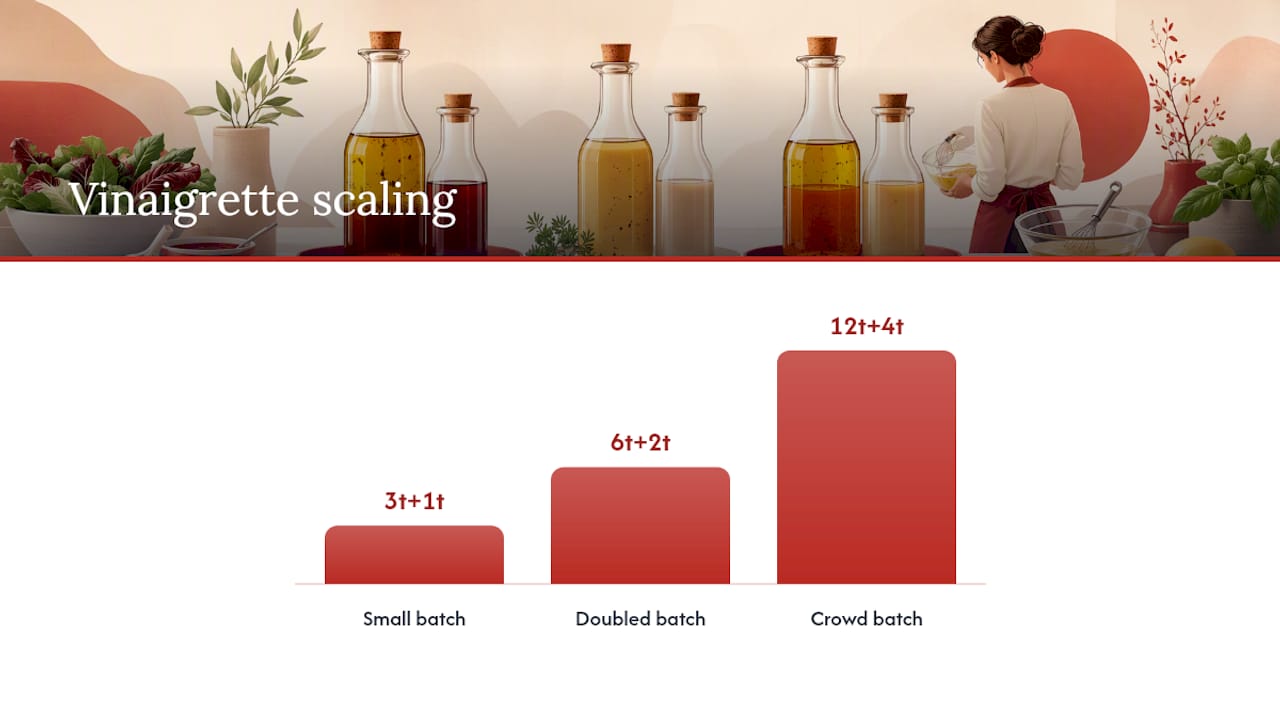
In real measurements, that means 3 tablespoons of oil to 1 tablespoon of vinegar, whisked together with a pinch of salt. Scale it up to a quarter cup of vinegar and three-quarters cup of oil, and you’ve got enough for a big dinner party salad. The math never changes, only the volume.
Where this baseline gets interesting is technique. A recent Los Angeles Times piece on basic vinaigrette points out that how you build the dressing, especially the order you add ingredients, often matters more to the final taste than shaving a tablespoon of acid one way or the other. Ratio sets the frame. Technique fills it in.
When to break from 3:1: brighter, bolder, and richer variations
The 3:1 ratio is a starting point, not a rulebook. Once you taste your greens and your acid, you’ll often want to nudge the balance one direction or the other.
A 2:1 ratio (twice as much oil as acid) delivers a brighter, punchier dressing. Some chefs and recipe developers now favor this range specifically because it lets more assertive greens shine through rather than get coated in a heavy oil finish. A 1:1 ratio balances equal parts oil and acid, resulting in a bold, tangy dressing suited more to grain bowls or roasted vegetables than delicate greens. On the other end, a 4:1 ratio mellows everything out, producing a rich, almost buttery dressing that suits heartier greens and stronger cheeses.
Here’s how ratio tends to map to what’s on your plate:
- 4:1 (rich): Kale, radicchio, or other bitter, sturdy greens that can handle extra fat without wilting under it.
- 3:1 (classic): Mixed greens, romaine, or a basic house salad where you want balance without a strong lean either way.
- 2:1 (bright): Peppery arugula, watermelon and halloumi combinations, or fruit-forward salads where acid needs to cut through sweetness.
- 1:1 (bold): Grain bowls, roasted vegetable salads, or dressings meant to double as a marinade.
Push toward more acid when dressing naturally sweet ingredients like stone fruit or roasted beets. Use more oil when the greens are bitter or the main ingredient rich, such as avocado or nuts.
How your oil and acid choice changes the math
Not all oils and vinegars carry the same intensity, and that changes how much of each you need. Extra-virgin olive oil has a peppery, sometimes bitter finish that can dominate a dressing. That assertiveness is why some cooks lean toward a 2:1 ratio when working with a bold EVOO instead of sticking rigidly to 3:1. Neutral oils like grapeseed or a light avocado oil barely register on their own, so they let you stay closer to the classic ratio without a fight for dominance. Nut oils, like walnut or hazelnut, bring their own strong flavor and usually work best in smaller amounts blended with a neutral oil.
Acids vary just as much. Sherry vinegar and balsamic bring sweetness and depth, so they can carry a slightly higher oil ratio. Citrus juice, especially lemon or lime, tastes brighter and less harsh than most vinegars, which is part of why bright, higher-acid dressings built on citrus feel balanced even past the 2:1 mark. The rule of thumb: when either your oil or your acid tastes especially strong, increase the other side of the ratio to keep it from overpowering the dressing. A splash of white wine vinegar and grapeseed oil, for instance, needs no adjustment. Aged balsamic and a heavy EVOO probably does.
Building the dressing: technique that makes or breaks the ratio
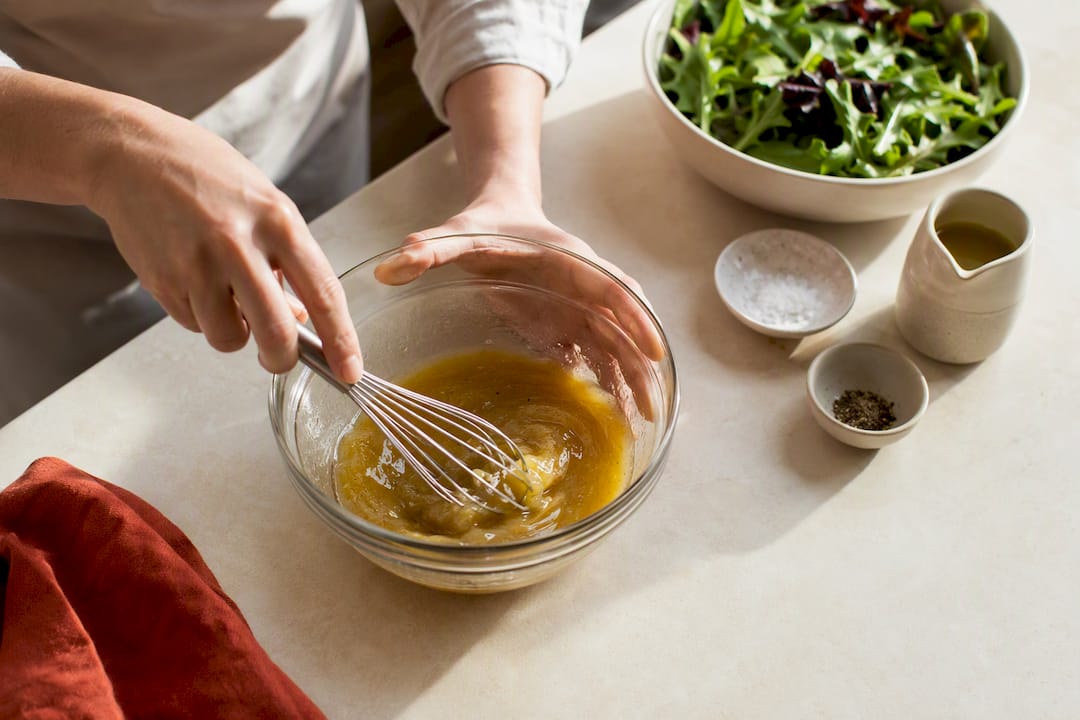
Getting your ratio right doesn’t matter much if you build the dressing in the wrong order. Salt and mustard need to dissolve into the acid before oil enters the picture. Add them straight to the oil and they never fully distribute, leaving parts of your dressing under-seasoned no matter how carefully you measured.
- Whisk salt and Dijon mustard into your vinegar or citrus juice first, letting the salt dissolve completely.
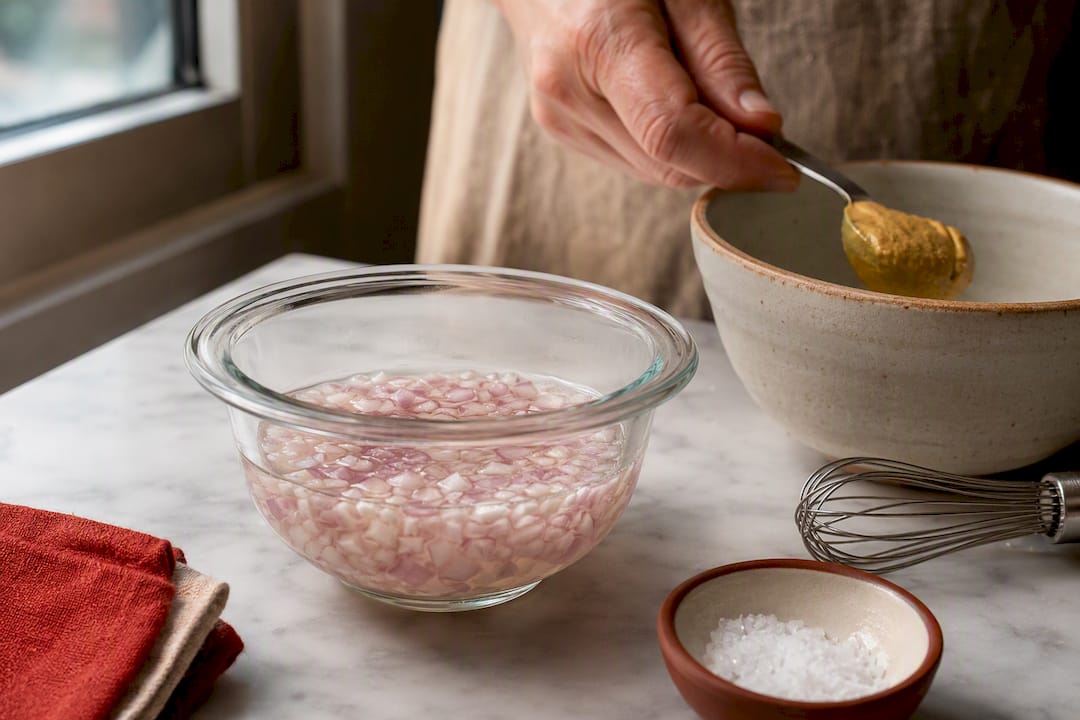
- If using shallot or garlic, mince it and let it sit in the acid for 10 to 20 minutes to mellow its raw bite before moving on.
- Drizzle the oil in slowly while whisking, or shake everything together in a sealed jar for a faster, looser emulsion.
- For a thicker, more stable texture, use a blender instead of a whisk. It creates something closer to a thin mayonnaise that holds together longer.
Mustard isn’t just for flavor here. It works as a natural emulsifier, helping bind oil and vinegar into something that won’t separate the second it hits the plate. If your dressing turns out thicker than you’d like, a teaspoon or two of water loosens it up without throwing off the oil to acid balance.
Pro Tip: Mince your shallot and drop it straight into the vinegar before you do anything else. By the time you’ve measured your oil and mustard, the shallot has lost its raw sting and blended into the background instead of overpowering every bite.
Tasting, scaling, and storing your vinaigrette
Taste before you plate, every time. If the dressing tastes flat, it usually needs more salt or a touch more acid. If it’s sharp enough to make you wince, whisk in a bit more oil. If it feels heavy or greasy on the tongue, a small splash of vinegar or citrus almost always fixes it.
Scaling is just arithmetic once you’ve picked a ratio. A basic batch for four servings runs about 3 tablespoons oil to 1 tablespoon vinegar, roughly a quarter cup total. Double that to 6 tablespoons oil and 2 tablespoons vinegar for eight servings, or scale straight up to three-quarters cup oil and a quarter cup vinegar for a full cup of dressing, enough for a crowd of 12 to 16.
Refrigerated vinaigrette holds up well for about a week, though citrus-based dressings lose their brightness faster than vinegar-based ones and are best used within a few days. If it separates in the fridge, a quick shake or a fresh whisk brings it right back together.
Three vinaigrette formulas you can make right now
Stop calculating and start whisking. These three formulas cover the classic baseline, a brighter option, and a richer one, each scaled for about four servings.
- Classic 3:1: 3 tablespoons olive oil, 1 tablespoon red wine vinegar, 1 teaspoon Dijon mustard, salt to taste. Works on nearly any mixed green salad.
- Bright 2:1 lemon: 2 tablespoons neutral oil, 1 tablespoon fresh lemon juice, ½ teaspoon Dijon mustard, salt and cracked pepper. Best on peppery arugula or a citrus-forward salad like the one in Forkward’s pomelo and charred snap pea salad.
- Rich 4:1 sherry: 4 tablespoons extra-virgin olive oil, 1 tablespoon sherry vinegar, ½ teaspoon honey, salt to taste. Suited to heartier greens like kale or radicchio.
What testing in Forkward Kitchen’s test kitchen taught us
Testing enough vinaigrettes teaches you where recipes usually go wrong, and it’s rarely the ratio itself. Letting minced shallot sit in the acid for 10 to 20 minutes before adding oil consistently produced a smoother, less harsh dressing than skipping that step. Seasoning the acid first, salt and mustard dissolved before any oil goes in, also made a noticeable difference in how evenly the final dressing tasted from the first bite to the last.
On tools, Forkwardkitchen leans toward a whisk for everyday vinaigrettes because it produces a lighter texture that coats greens without weighing them down. A blender comes out only for dressings meant to double as a thicker dip or marinade, where a heavier, more stable emulsion actually helps.
Why more cooks are reaching for brighter dressings
The shift toward higher-acid vinaigrettes isn’t a fad so much as a correction. For years, dressings leaned heavy on oil because that’s what the classic ratio taught. Now more cooks are discovering that a 2:1 or even 1:1 ratio lets delicate greens taste like themselves instead of getting buried in fat. Start at 3:1, taste, then nudge the acid up in small steps rather than jumping straight to bold. The classic ratio is still the anchor worth keeping in your head, even when you drift from it.
— Oloru
Try These Tested Vinaigrette Recipes From Forkward Kitchen
Reading about ratios only gets you so far. Recipes are tested and tagged with honest difficulty ratings, so you know what to expect before you start chopping shallots.
If you want to see a brighter vinaigrette in action, the lime-cumin dressing on our cowboy caviar leans into that 2:1 style with citrus doing most of the work. For something closer to the richer end of the spectrum, the yuzu-chili vinaigrette on our watermelon and halloumi salad shows how acid and fat play off each other with unexpected ingredients. Browse the full recipe collection to find a salad that matches your skill level and your weeknight schedule, from five-minute dressings to weekend projects worth the extra effort.
Sources
FAQ
What is the 3:2:1 salad dressing ratio?
Some recipes use a 3:2:1 formula of oil, acid, and a flavoring agent like honey or mustard, but it’s a variation rather than the standard. The core baseline most cooks rely on is still the 3:1 oil-to-vinegar ratio.
How much salad dressing do I need for 20 people?
Plan on roughly 2 tablespoons of dressing per serving, so 20 servings needs about 2½ cups total. Using a 3:1 ratio, that breaks down to about 1¾ cups oil and just under ½ cup vinegar or citrus.
How do you make a basic vinaigrette?
Dissolve salt and mustard into your vinegar or lemon juice, then whisk in oil slowly until it forms a stable emulsion. Whisking, shaking in a sealed jar, or blending all work, though a blender produces a thicker, more stable texture.
What is the typical fat-to-acid ratio in a vinaigrette?
The typical starting ratio is 3 parts oil to 1 part vinegar, though many cooks now use 2:1 for brighter dressings, especially with assertive greens or fruit-forward salads.
Does Forkwardkitchen have vinaigrette recipes I can try?
Yes. Forkwardkitchen’s recipe collection includes tested vinaigrettes ranging from classic 3:1 dressings to brighter, citrus-forward options, each with an honest difficulty rating.