August 26, 2026
Fish Sauce Substitute: Fast Pantry Swaps & Vegan Picks
Need a fish sauce substitute? Discover quick pantry swaps and vegan options that enhance your dishes without missing a beat!
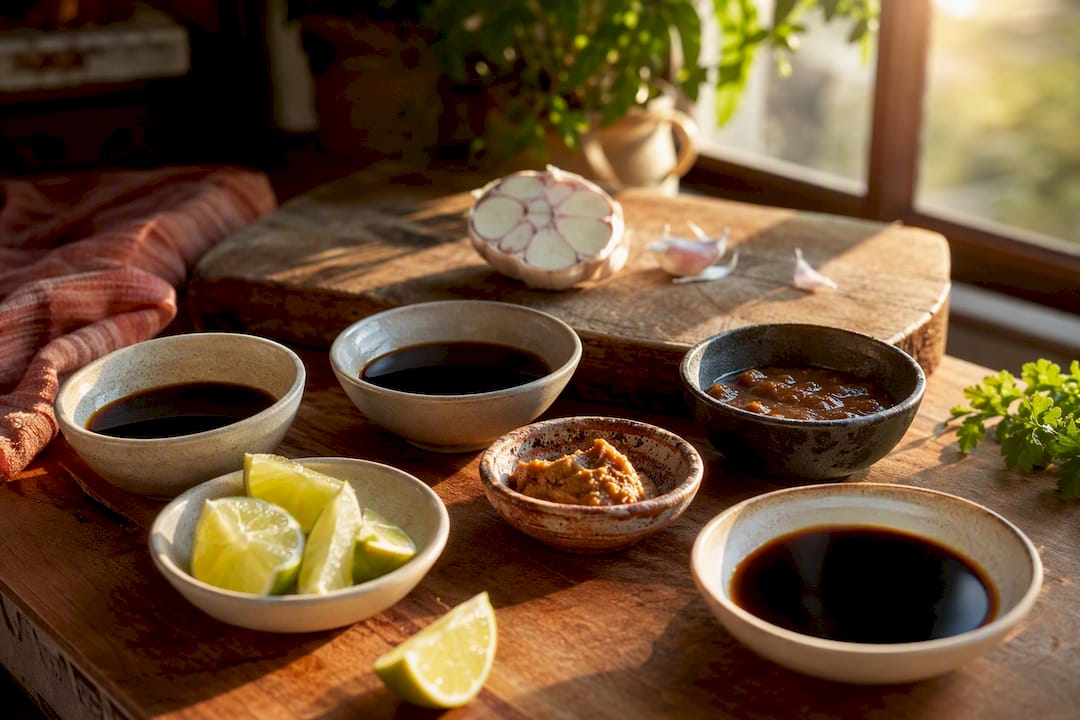
Fish Sauce Substitute: Fast Pantry Swaps & Vegan Picks
Out of fish sauce mid-recipe? Use soy sauce (or tamari) plus a splash of acid. It’s the fastest pantry swap that actually works, and you probably already have both bottles in your kitchen.
The ratio: 1 tablespoon soy sauce or tamari plus 1/2 teaspoon lime juice or rice vinegar, in place of 1 tablespoon fish sauce.
- Works in stir-fries, marinades, and dressings within seconds
- Tamari keeps it gluten-free
- If fish sauce is the star of the dish (think nước chấm dipping sauce), you’ll want a deeper umami option, which we cover below
Key Takeaways
The fastest fish sauce fix is soy sauce or tamari plus a splash of lime or vinegar, while vegan cooks and dipping sauces call for a shiitake-kombu simmer or pineapple nước mắm chay.
| Point | Details |
|---|---|
| Fastest pantry swap | Mix 1 tablespoon soy sauce or tamari with 1/2 teaspoon lime juice or rice vinegar per tablespoon fish sauce. |
| Closest non-vegan match | Dilute 1/2 teaspoon anchovy paste with 1 teaspoon water for real fermented-fish flavor. |
| Best vegan fish sauce option | Simmer dried shiitake and kombu with soy sauce for a glutamate-rich, 1:1 replacement. |
| Match substitute to the dish | Save pineapple nước mắm chay or shiitake-kombu for dipping sauces where fish sauce is exposed. |
| Test before committing | Taste a small spoonful against the finished dish before adjusting the whole batch. |
| See it in practice | Forkward Kitchen’s tested recipes show these swaps working in real dishes, with honest difficulty ratings attached. |
Where This Guide Pulled Its Information
- Healthline: practical ratios and quick pantry swaps
- Food Republic: the glutamate science behind why substitutes work
- Medical News Today: dietary context for low-sodium and soy-free swaps
- FoodVietnamese: practitioner-ranked substitutes and dish-specific guidance
Table of Contents
- Best Fish Sauce Alternatives for Your Pantry
- Vegan Fish Sauce Substitute Options That Actually Taste Right
- Which Substitute Fits Which Dish?
- Allergy, Gluten-Free, and Low-Sodium Substitutes
- Sources
Best Fish Sauce Alternatives for Your Pantry
Not every dish needs the same fix. Some just need salt and funk in the background; others need real depth. Here’s what to reach for, in order of how often you’ll actually use them.
-
Soy sauce or tamari + acid. The standard fix: 1 tablespoon soy sauce mixed with 1/2 teaspoon lime juice replaces 1 tablespoon fish sauce, according to Healthline’s ranking of fish sauce substitutes. Tamari swaps in cleanly for gluten-free cooking.
-
Coconut aminos. Use it with a small pinch of salt to make up for its milder edge. It’s soy-free and naturally lower in sodium, which makes it a go-to for anyone avoiding soy or watching salt intake, per Medical News Today’s rundown of substitute options.
-
Anchovy paste, diluted. For the closest non-vegan match, stir a small amount of anchovy paste diluted with water for each equivalent amount of fish sauce needed. This gets you real fermented-fish funk without the fish sauce bottle, a trick Stonesoup’s substitute guide backs up with a similar minced-anchovy version.
-
Worcestershire sauce. Swap in equal amounts in marinades, braises, and stews. Skip it for light dipping sauces since the molasses and spice mix reads as muddy rather than clean, and check the label since most brands include anchovies anyway.
-
Oyster sauce, thinned with water. Good where a little sweetness and body are welcome, like glazes and heartier stir-fries. Less good anywhere you want a clean, salty backbone.
-
Store-bought vegan fish sauce or plain liquid aminos. Use in equal amounts, but taste before you commit since salt levels vary widely between brands. Food52’s guide to substituting fish sauce notes that oyster sauce and Worcestershire both do better in cooked, saucier applications than in raw dipping sauces.
Quick gut-check: if you’re making a soup, stew, or marinade, small flavor gaps get absorbed. If you’re making a dipping sauce where the fish sauce sits right out in the open, differences show up fast, and you’ll want the next section.
Vegan Fish Sauce Substitute Options That Actually Taste Right
Plain soy sauce is salty. Fish sauce is salty and deeply savory, thanks to the glutamates that build up during months of fermentation. Mushrooms and kelp carry some of the densest natural glutamate concentrations in the plant world, which is exactly why they’re the backbone of the best vegan fish sauce substitute options, according to Food Republic’s explanation of what makes fish sauce work.
-
Shiitake-kombu simmer. Combine dried shiitake mushrooms, a strip of kombu, soy sauce, and a little salt in water. Simmer 15 to 20 minutes, then reduce until it concentrates. Dried shiitake and kombu together produce a liquid that works as both stock and a straight 1:1 fish sauce replacement in most recipes, per Healthline’s method.
-
Pineapple nước mắm chay. This is the vegan fish sauce option most English-language sites skip, but it’s a real Vietnamese tradition built specifically for dipping sauces. Blend pineapple with sugar, lime, chili, and salt to lean on fruit acidity and natural sweetness instead of fermented funk, an approach detailed by FoodVietnamese’s practitioner ranking.
-
Bottled vegan fish sauce. Faster, more consistent, and fine for weeknight cooking. Save the homemade simmer for when you have 20 minutes and want maximum depth, like a pho broth or a braise that needs to carry the whole dish.
Pro Tip: Batch the shiitake-kombu simmer on a Sunday and freeze it in ice cube trays. Each cube is roughly one tablespoon, ready whenever a recipe calls for fish sauce.
Which Substitute Fits Which Dish?
There’s no single universal swap here, since the right choice depends on whether fish sauce is background seasoning or the whole point of the sauce, an idea FoodVietnamese’s ranked guide makes clear. Match the substitute to the job:
- Dipping sauces (nước chấm): Use pineapple nước mắm chay or a shiitake-kombu reduction. These sauces sit exposed on the plate, so weak substitutes get caught immediately.
- Soups and broths: Shiitake-kombu liquid or a mushroom-soy broth deepens the base without muddying the color too much.
- Stir-fries and fried rice: Soy sauce plus lime, or thinned oyster sauce, holds up fine against the caramelized flavors already in the pan.
- Braises: Soy or tamari with a splash of acid stirred in near the end. Long simmer times blur any color differences from the substitute.
Pro Tip: Before committing a substitute to the whole pot, spoon a little of the finished dish into a small bowl, stir in your substitute, and taste. It takes ten seconds and saves you from over-salting a full batch.
Allergy, Gluten-Free, and Low-Sodium Substitutes
Fish allergy in the house? Skip anchovy paste and any bottled sauce listing fish on the label. Shiitake-kombu simmer or pineapple nước mắm chay covers you completely.
- Gluten-free: Tamari or coconut aminos. Double-check that any bottled liquid aminos are actually labeled gluten-free, since cross-contamination varies by brand.
- Low-sodium: Coconut aminos or reduced-sodium tamari, and cut the total amount while adding a splash of mushroom broth for extra depth. Coconut aminos and seaweed generally beat straight soy-based sauces for anyone managing sodium intake, per Medical News Today.
- Read labels every time. Formulas change between brands, and testing a small spoonful first beats fixing an oversalted dinner.
How Forkward Kitchen Tests These Swaps
Forkward Kitchen builds every recipe from scratch and rates real difficulty, not marketing difficulty, so substitute advice gets checked the same way: cook it, taste it, adjust it.
- Mix a small sample of your substitute before touching the full batch
- Heat or rest it briefly to let flavors settle
- Taste against the actual dish components and adjust salt or acid from there
Always test a substitute in a small sample first. Umami strength and saltiness swing by brand and by homemade batch, so what worked last week might need a tweak this week.
These three steps got run across stir-fry sauces, broths, and dipping sauces during recipe testing, and the same taste-first logic applies no matter what substitute you’re reaching for.
Why Soy and Lime Became My Go-To Swap
I found the soy-plus-lime trick mid-recipe once, mid-panic, out of fish sauce with guests already seated. It worked. Since then, I keep a small tube of anchovy paste and a sachet of kombu on hand at all times. Cheap insurance for a dish that needs real depth.
— Oloru
Try These Swaps in a Real Recipe
Reading ratios is one thing. Watching them work in an actual dish is another. Forkward Kitchen tests every recipe from scratch, with honest difficulty ratings attached, so you’re never guessing whether a substitute will hold up under real heat.

Start with the master stir-fry sauce recipe, where soy-based swaps slot in cleanly. If you want to see where fish sauce carries real weight in a dish, the Pad Thai recipe with shrimp and tamarind shows exactly why a deeper substitute matters for dishes built around that flavor. For meat-forward cooking, the beef stir-fry with oyster sauce demonstrates the thicker, sweeter substitute options in action. If you’re building out a broader plant-based rotation, Wild Foodz’s seasonal vegan menu ideas is worth a look too.
Browse the full recipe collection to find your next dish, or head straight to the advanced recipe collection if you’re ready for something that actually tests these swaps under pressure.
Sources
- 8 Tasty Fish Sauce Substitutes
- The Best Fish Sauce Substitute Is Probably Already In Your Kitchen
- What is the best fish sauce substitute?
- Fish Sauce Substitute: 8 Options Ranked by a Viet Cook