August 29, 2026
Host Tested Make Ahead Appetizers for 8, 16, or 30 Guests
Host tested make ahead appetizers with scaling math for 8, 16, or 30 guests. Printable recipes, timing windows, and serving tricks to keep you out of the...
Host Tested Make Ahead Appetizers for 8, 16, or 30 Guests
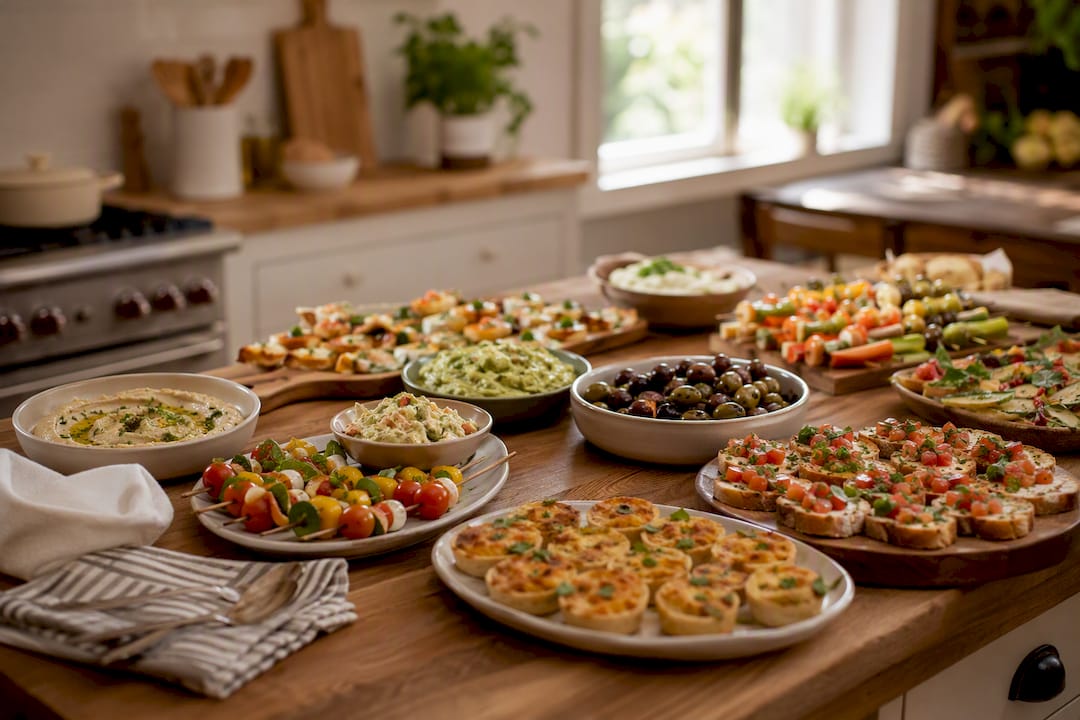
Feed a crowd without spending the whole party in the kitchen by leaning on four categories: big dips and spreads, warm baked bites, handheld finger foods, and make-ahead cold apps. Build your table from proven names like deviled eggs, spinach-artichoke dip, pigs in a blanket, buffalo chicken dip, shrimp cocktail, meatballs, sliders, and bruschetta, and you’ve covered every texture and temperature guests expect. The rest of this guide breaks down exact portions, make-ahead windows, and scaling math so nothing runs out and nothing burns you at the last minute.
TL;DR:
- Most make-ahead cold apps like deviled eggs and shrimp cocktail can be prepared up to two days in advance, easing last-minute stress.
- Hot appetizers such as dips and meatballs should be assembled early and baked or reheated just before serving to maintain optimal texture.
- Scaling recipes for larger groups requires doubling or tripling ingredients, with dips lasting well two days ahead and hot dishes better cooked fresh or from frozen.
- Using simple staging tricks like varying table height and refreshing garnishes can make even modest spreads appear abundant and inviting.
- Clear allergen labeling and using serving tools help accommodate dietary restrictions without complicating the entire menu.
Table of Contents
- Easy Appetizers for a Crowd, Sorted by Category
- How Far Ahead You Can Actually Prep
- Big-Batch Dips That Scale Without Guesswork
- Handheld Bites That Keep the Party Moving
- Vegetarian and Vegan Options That Don’t Feel Like an Afterthought
- Scaling Your Menu for 8, 16, or 30 Guests
- Small Staging Tricks That Make the Table Look Full
- What Forkwardkitchen Learned Testing These Recipes for Real Parties
- Planning Around Allergies and Dietary Restrictions
- The Serving Ware That Actually Gets Used
- Balancing Flavors and Textures Across the Table
- Why the Simplest Recipe on the Table Usually Wins
- Get the Full Recipes, Printable and Tested
- Sources
Easy Appetizers for a Crowd, Sorted by Category
A good party menu isn’t a random pile of snacks. It’s a deliberate mix of textures, temperatures, and effort levels, so you’re not baking six things at once at 6:45 p.m. Here’s how to build that mix, organized by the role each dish plays on your table.
Make-ahead cold apps do the heavy lifting for stress reduction. These can sit in the fridge, ready to plate the moment guests arrive.
- Deviled eggs — the classic for good reason. Boil, peel, and fill up to two days out, then refrigerate until service. One dozen eggs yields 24 halves, enough for roughly 12 guests as one of several apps.
- Shrimp cocktail — thaw, cook if needed, and chill with the sauce a day ahead. Figure 3 to 4 shrimp per guest if you’ve got four or more other apps on the table.
- Cheese ball — mix and shape up to 48 hours ahead; some versions freeze unbaked for up to a month according to The Pioneer Woman’s make-ahead appetizer roundup. One standard ball serves enough people for a typical small gathering when served with crackers.
- Bruschetta — chop the tomato topping a few hours ahead (not a full day, or it turns watery) and toast the bread same-day for crunch.
Warm, must-serve-hot apps need oven or stovetop time close to the event, but the prep work can happen well before.
- Buffalo chicken dip — assemble completely, refrigerate, and bake right before guests arrive, or hold it warm in a slow cooker through the whole party. This is one of the most requested buffalo chicken dip recipes for a reason: it reheats without losing texture.
- Spinach-artichoke dip — assemble a day ahead, bake fresh. Plan on 3 ounces per guest.
- Meatballs — cook and sauce up to three days ahead, then reheat gently in a slow cooker on low. A pound of ground meat makes roughly 20 to 24 small meatballs.
- Stuffed mushrooms — stuff the caps up to a day ahead and bake right before serving so they don’t turn rubbery from sitting.
Finger foods and handhelds are what guests grab while standing, talking, and not really paying attention to portion size, which is exactly why they disappear fastest, a pattern that shows up again and again across Food Network’s crowd-pleaser roundups.
- Pigs in a blanket — assemble uncooked and freeze up to a month, then bake straight from frozen. Plan on 3 to 4 per guest.
- Sliders — prep patties or pulled meat ahead, assemble just before serving so the buns don’t go soggy. One slider per guest as a light bite, two if it’s a main-event food.
Shortcuts worth taking: store-bought puff pastry or crescent dough for pigs in a blanket, rotisserie chicken for buffalo dip or sliders, and a slow cooker to hold two or three dishes warm at once without babysitting the oven. An air fryer earns its counter space here too, crisping frozen apps in batches while your oven handles something else.
How Far Ahead You Can Actually Prep
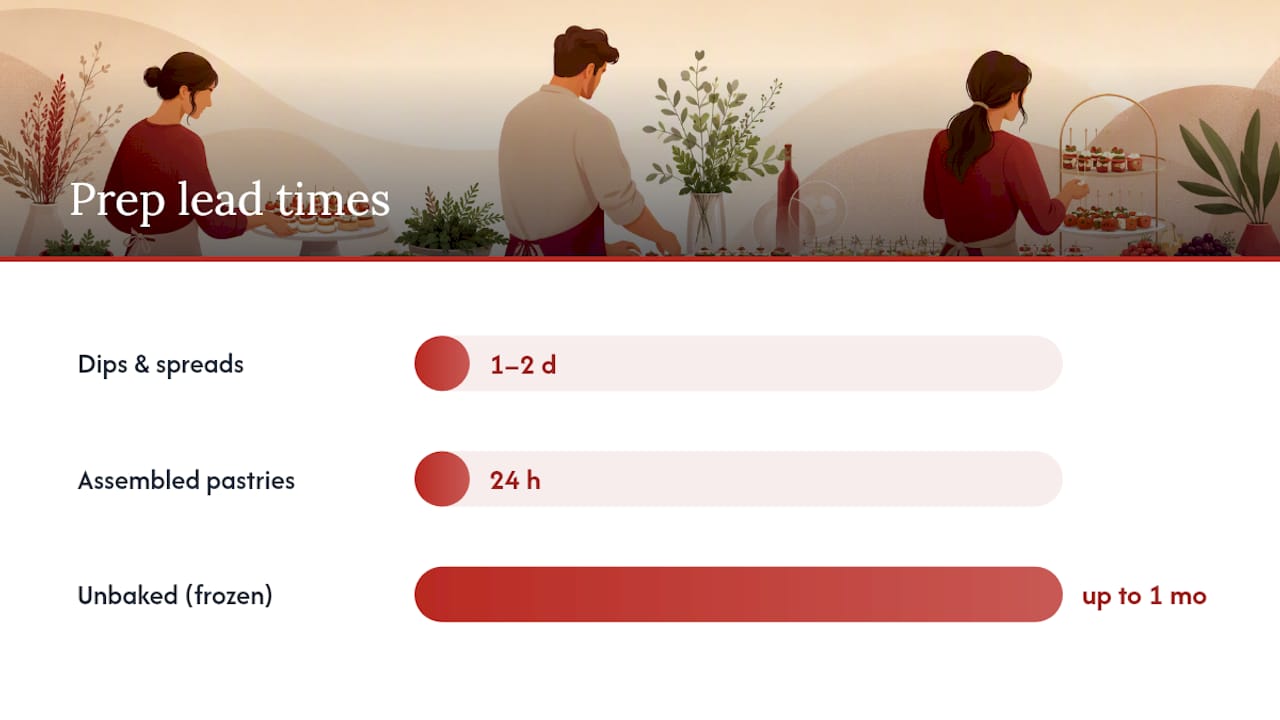
The single biggest fear hosts have is that make-ahead means “worse.” Mostly it means better. Flavors in dips and marinated toppings tend to deepen after a rest, and The Pioneer Woman and The Kitchn both recommend prepping dips and many assembled apps 24 to 48 hours before serving.
Here’s how the timing breaks down by type:
- Dips and spreads: 1 to 2 days ahead, covered and refrigerated. Stir before serving to redistribute any separated oil.
- Assembled pastries (pigs in a blanket, spanakopita-style bites): assemble raw and refrigerate up to 24 hours, or freeze unbaked up to a month, then bake straight from frozen with a few extra minutes added.
- Stuffed items (mushrooms, deviled eggs): prep components separately. Cook the filling, keep it chilled, and stuff shells or caps within a few hours of baking so texture stays intact, an approach WhatsinthePan’s 48-hour make-ahead guide recommends for anything with a filling that can turn soggy.
- Fried bites: fry fresh if you can. If you must prep ahead, freeze raw and fry or air-fry from frozen rather than trying to reheat something already cooked.
For reheating, the oven beats the microwave for anything you want crisp. A slow cooker on low is the right call for dips and sauced meatballs you need to hold warm for hours without drying out. Once food comes off the heat, get it below 70°F within two hours and into the fridge in an airtight container, standard food-safety practice that matters as much for a backyard party as a catered event.
Pro Tip: Freeze unbaked pigs in a blanket and stuffed mushroom caps on a sheet pan first, then transfer to a bag once solid. They won’t clump together, and you can pull out exactly as many as you need.
Big-Batch Dips That Scale Without Guesswork
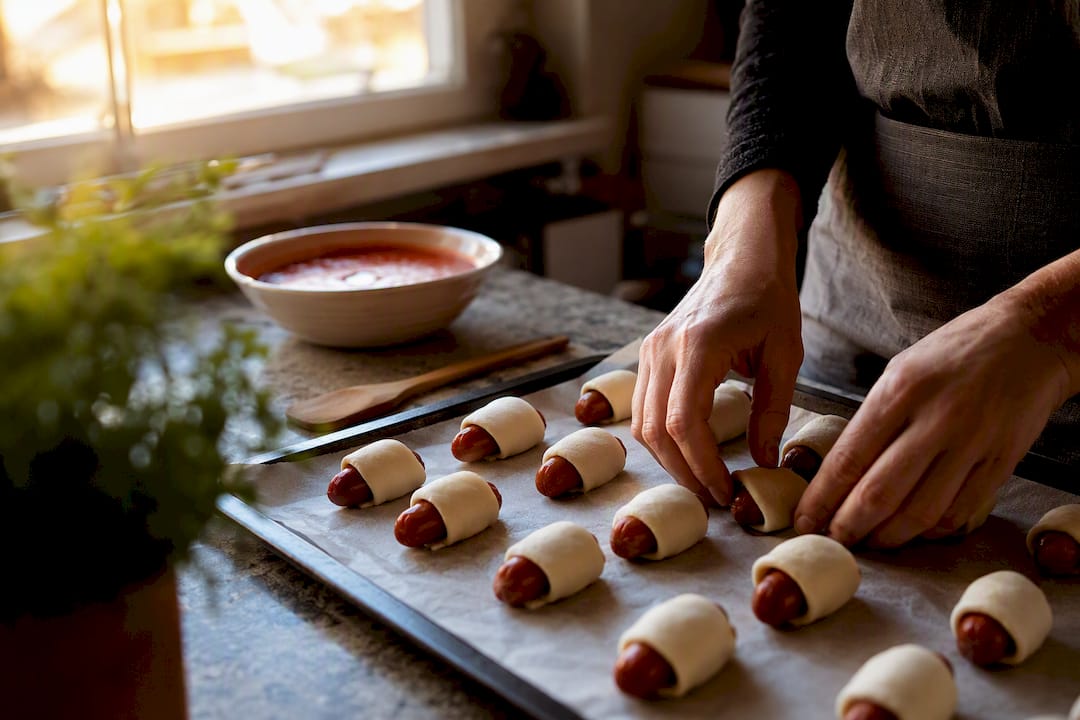
Dips are the most forgiving food on any party table because they scale almost mathematically. The Kitchn’s make-ahead guide puts the target at roughly 2 to 4 ounces of dip per guest, depending on how many other apps are competing for stomach space.
Reliable dip options for a crowd:
- Spinach-artichoke dip — bakes in a shared casserole dish, holds well in a low oven.
- Buffalo chicken dip — thrives in a slow cooker on warm for the whole event.
- Seven-layer dip — build it in a wide, shallow dish so every layer is visible and scoopable.
- Guacamole — best made same-day or a few hours ahead with lime juice to slow browning.
- Hummus — one of the easiest vegetarian dips to double or triple without any recipe adjustment.
- French onion dip — a genuine 10-minute assembly if you’re short on time.
- Queso — needs a heat source at the table; a mini slow cooker works better than a chafing dish here.
For portioning math: a party of 16 guests eating dip as one of four or five apps needs roughly 32 to 64 ounces total, or about 4 to 8 cups. Split that across two dips instead of one giant bowl. It looks more generous and lets guests with different tastes find something they like.
Serve wet dips in smaller bowls set into a larger tray of chips or vegetables rather than one oversized bowl. It looks fuller, refills are easier to manage without disturbing the whole display, and a scattering of fresh herbs, a drizzle of olive oil, or a pinch of smoked paprika on top revives a dip’s appearance after the first wave of guests have already dug in.
Handheld Bites That Keep the Party Moving
Handhelds solve the biggest logistical problem at any party: plates. Guests holding a plate, a drink, and trying to shake hands will drop something. Bite-sized food they can eat in one or two motions keeps the room moving instead of clustered around a buffet.
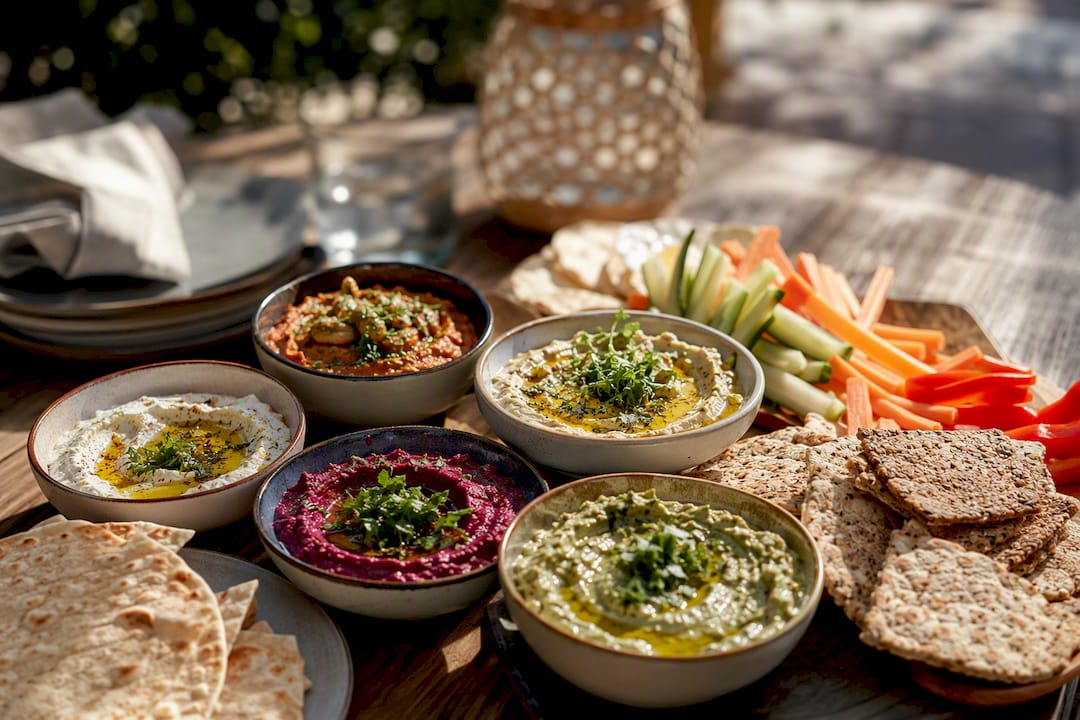
- Pigs in a blanket — wrap cocktail sausages in crescent or puff pastry, bake at 375°F until golden. Plan 3 to 4 per guest for a grazing party, 5 to 6 if it’s the main food.
- Sliders — Hawaiian rolls, a simple patty or pulled pork filling, and a quick bake covered in foil to melt the cheese without drying the bun. A tray of Hawaiian roll sliders cuts apart clean and travels well if you need to bring it somewhere.
- Meatball skewers — thread a cooked meatball with a cherry tomato and basil leaf for a one-bite presentation that needs zero cutlery.
- Stuffed mushrooms — sausage, cream cheese, and herb filling in button mushroom caps, baked 20 minutes.
- Jalapeño poppers — halve, seed, fill with cream cheese and cheddar, wrap in bacon, and bake or air-fry until the bacon crisps.
For a grazing-style party where appetizers are the whole meal, double your per-person counts. For a shorter cocktail hour before dinner, the lighter numbers above hold up fine. Pigs in a blanket and meatballs both hold their texture well over an hour or two, so they’re the safer bet if your guest list tends to trickle in late.
Vegetarian and Vegan Options That Don’t Feel Like an Afterthought
Vegetarian apps get treated as filler far too often, which is a mistake when done right, they’re often the first tray to empty.
- Hummus with vegetables and pita — naturally vegan, holds for hours at room temperature.
- Caprese skewers — cherry tomato, mozzarella, basil, and a balsamic drizzle; swap in marinated tofu cubes for a dairy-free version.
- Stuffed mushrooms (vegetarian filling) — swap sausage for a mix of breadcrumbs, garlic, and parmesan, or a vegan cheese blend.
- Bruschetta — vegan by default if you skip the cheese, and it’s one of the most make-ahead-friendly options on this list for the topping.
- Roasted vegetable platter — a warm tray of roasted potatoes or root vegetables reads as substantial, not like a consolation prize; pair it with a garlicky dip.
- Vegan spinach-artichoke dip — cashew cream or a store-bought vegan cream cheese gets remarkably close to the real thing.
Label vegetarian and vegan trays clearly on small cards rather than trusting guests to ask, a habit that Delish’s entertaining guide points out reduces friction at the buffet. Vegan swaps in dips sometimes read as slightly less rich to guests expecting dairy, so pair a vegan dip with a bolder mix-in like roasted garlic or smoked paprika to keep the flavor forward.
Scaling Your Menu for 8, 16, or 30 Guests
Recipe cards are written for a dinner party of four to six. Parties don’t work that way, so here’s the math that actually holds up.
- For 8 guests: one dip, one warm baked item, and one handheld covers a two-hour gathering. A single batch of most recipes as written is plenty.
- For 16 guests: double every recipe, and add a second dip or handheld option so you’re not relying on one dish to stretch. For deviled eggs specifically, that’s 24 eggs (two dozen) yielding 48 halves.
- For 30 guests: triple base recipes rather than scaling a single batch up 4x in one pot, dips especially cook and cool more evenly in multiple batches. Plan on 5 to 6 different apps so no single dish runs dry before the crowd thins out.
A simple 48-hour countdown keeps prep from piling up on party day: two days out, shop and make dips; one day out, assemble pastries and stuff any fillable items; morning of, bake what needs to be hot and set out cold apps an hour before start time. Stock pantry basics like extra foil, toothpicks, and one backup bag of chips before the countdown even starts, so a forgotten item doesn’t turn into a last-minute store run.
Running out of the vehicle for your dip is more disappointing to guests than running low on the dip itself.*
Small Staging Tricks That Make the Table Look Full
A spread looks generous based on how it’s arranged, not just how much food is actually there. Varying height with cake stands, upturned bowls, or a stack of books under a tablecloth breaks up a flat table and makes even a modest spread read as abundant, a trick Wild Foodz’s food presentation guide leans on heavily for exactly this reason.
- Put wet or saucy items (dips, guacamole) in smaller bowls nested into a larger tray, never in one giant serving dish.
- Group by flavor or color rather than by category, so the table doesn’t look like three separate stations.
- Refresh garnishes (fresh herbs, a squeeze of citrus) halfway through the party to make dishes look freshly made.
- For passed apps, use trays that let guests grab with one hand; for buffet-style, leave serving tongs or small forks at every dish.
- Hold back a second batch of anything that goes fast (sliders, meatballs) in the oven on low, and swap it in once the first tray empties instead of putting everything out at once.
What Forkwardkitchen Learned Testing These Recipes for Real Parties
Every recipe on Forkwardkitchen gets built from scratch and tested with an honest difficulty rating attached, not borrowed from somewhere else and repackaged. That matters more for party food than almost any other category, because a recipe that looks simple on paper can fall apart under real conditions: a full oven, a doubled batch, three hours of holding time.
Three recipes from the site hold up especially well under those conditions. The buffalo chicken dip with blue cheese and sharp cheddar bakes once and then holds beautifully in a slow cooker, so it survives a three-hour party without drying out or separating. The Hawaiian roll sliders with black forest ham and Swiss bake as one connected tray and cut apart cleanly, which means no assembly line at party time. And for hosts ready to stretch beyond the basics, the site’s weekend cooking projects collection includes freezer-friendly options built for exactly this kind of make-ahead planning.
Every recipe comes with printable directions and a difficulty rating that reflects actual testing, not a guess at how hard something looks.
Planning Around Allergies and Dietary Restrictions
Beyond vegetarian and vegan needs, three restrictions come up at almost every party: gluten intolerance, nut allergies, and dairy sensitivity. Handling them well doesn’t require a separate menu, just a few adjustments to what you’re already making.
For gluten-free guests, swap regular crackers for a gluten-free brand alongside the regular ones, and skip the bread base on bruschetta in favor of endive leaves or cucumber rounds as a scoopable alternative. Deviled eggs, shrimp cocktail, and most dips are naturally gluten-free as long as you check labels on things like Worcestershire sauce, which sometimes contains gluten.
For nut allergies, keep any nut-containing dish (a pesto with pine nuts, a garnish with candied pecans) on its own separate tray, clearly labeled, and use a separate serving utensil so there’s no cross-contact with other dishes.
For dairy-free guests, dips are the trickiest category since so many rely on cream cheese or sour cream. A cashew-based or store-bought dairy-free cream cheese swaps into spinach-artichoke or French onion dip without much flavor loss.
The simplest fix across all three: small labeled cards in front of each dish naming common allergens (contains dairy, contains nuts, gluten-free), so guests can self-select without having to ask you directly mid-party while you’re juggling a tray.
The Serving Ware That Actually Gets Used
You don’t need a rental company for a home party, but a few specific pieces make service noticeably smoother.
Small tongs or mini serving spoons for every dish, not just the main ones, keep hands out of the food and speed up the line. A stack of small plates (not full dinner plates) signals to guests that this is a grazing event, not a sit-down meal, and they’ll take smaller, more frequent portions instead of piling one plate high and disappearing to a corner. Cocktail napkins in a stack near every station catch drips before they hit the carpet.
For hot dishes, a slow cooker or two on the warm setting beats a chafing dish for home use, it’s cheaper, easier to clean, and doesn’t require sterno fuel. Toothpicks or small skewers turn almost anything into a one-handed bite: meatballs, cheese cubes, cherry tomatoes. And a few extra serving bowls in reserve mean you can refresh a dish with a clean container instead of topping off a half-empty, picked-over one, which looks far less appetizing no matter how good the food actually is.
Balancing Flavors and Textures Across the Table
A table full of cheesy, creamy dishes gets monotonous fast, even if every single one tastes great on its own. The fix is thinking in contrasts rather than favorites.
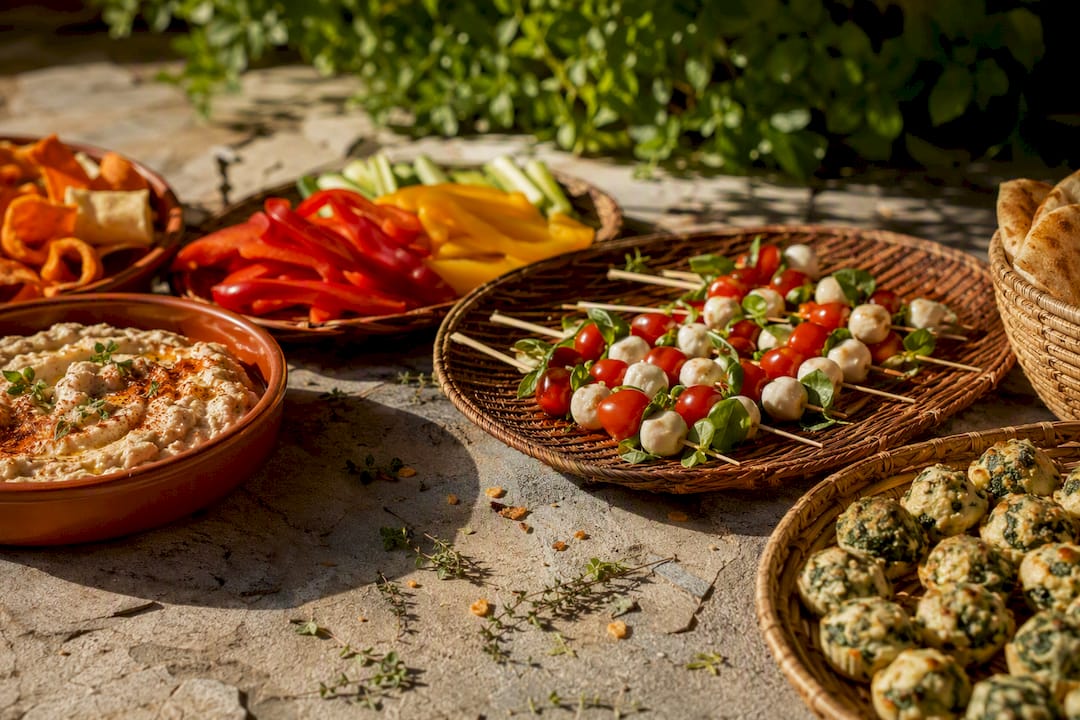
Pair something rich (buffalo chicken dip, a cheese ball) with something bright and acidic (bruschetta, a citrusy shrimp cocktail) so guests’ palates get a break between bites. Balance soft textures (dips, meatballs) against something crunchy (chips, crostini, stuffed mushroom caps with a crisp topping) so the table doesn’t feel like a uniform mush of dairy and starch. And don’t skip heat entirely, one appetizer with real kick, whether that’s jalapeño poppers or a spicier buffalo dip, gives the table an edge that a completely mild spread lacks.
The easiest gut check: could a guest eat their way across the whole table without ever tasting the same base flavor twice? If yes, you’ve built a menu, not just a pile of snacks.
Why the Simplest Recipe on the Table Usually Wins
Deviled eggs are the appetizer I come back to more than anything else, not because they’re impressive, but because they’re nearly impossible to mess up and they disappear every single time. That combination of low risk and high payoff is what actually matters when you’re hosting, not how complicated something sounds on a menu card.
My honest advice for a first-time host: pick two make-ahead dishes you genuinely love eating yourself, not what you think will impress people. Confidence in the food you’re serving reads to guests far more than an ambitious dish you’re nervous about. A relaxed host with a simple, reliable spread beats a stressed one juggling five last-minute bakes every time.
— Oloru
Get the Full Recipes, Printable and Tested
Every appetizer in this guide has a full version on Forkwardkitchen, built from scratch and rated honestly instead of dressed up to look easier than it is. That’s the real difference here: you’re not gambling on a recipe pulled from somewhere else and reposted, you’re working from something tested in a real kitchen under real party conditions, with a difficulty rating that actually matches the effort involved.
Head to Forkwardkitchen’s recipe collection for the complete instructions, printable directions, and exact ingredient lists behind every dip, dish, and handheld covered here. If you’re ready to stretch beyond party snacks, the advanced recipe collection has weekend-scale projects for whenever you want to push past the basics. Start with the recipes you already know you’ll make again.
Sources
- 32 Easy Make-Ahead Appetizers to Make for a Crowd — The Pioneer Woman
- 40 Make-Ahead Appetizers Guaranteed to — The Kitchn
- 80 Easy Appetizers That Are Perfect for Any Occasion — Food Network
- Make Ahead Appetizers for Stress-Free Entertaining — WhatsinthePan