Authentic Khao Soi Recipe: Northern Thai Coconut Curry Noodles
Master this authentic khao soi recipe featuring a hand-pounded curry paste, braised chicken, and a signature nest of crispy noodles in a rich coconut broth.
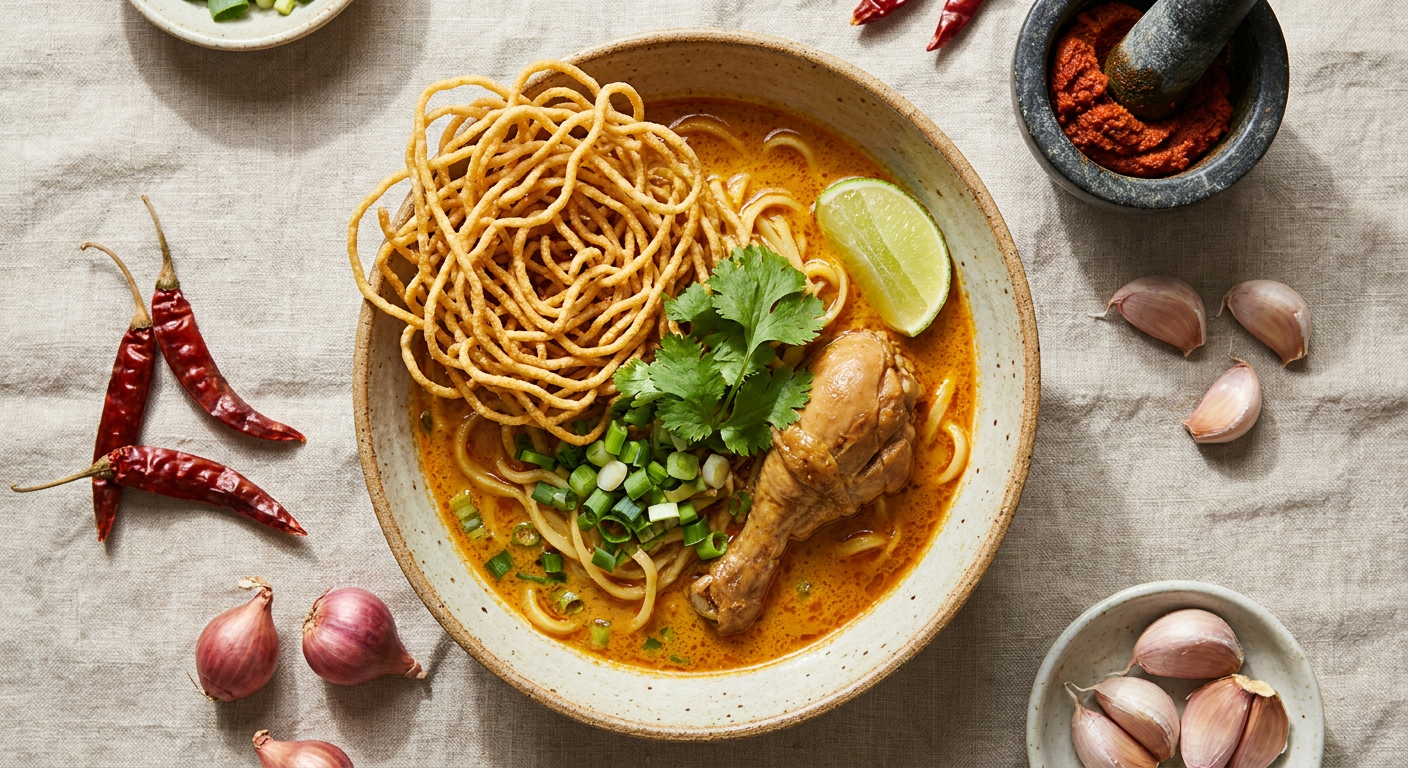

Cracking the code to a restaurant-quality khao soi recipe at home starts with one non-negotiable step: blooming your curry paste in thick coconut cream until the oil separates. This technique, traditional to northern Thai khao soi, unlocks deep aromatic complexity that a simple simmer can't touch.
Known as the crown jewel of Chiang Mai coconut curry noodles, this dish is a masterclass in textures. You get the snap of pickled mustard greens, the bite of raw shallots, and the dual-noodle experience of silky, boiled egg noodles submerged in broth topped with a golden, shattered nest of fried ones.
While many versions use store-bought red curry paste as a shortcut, we’re making a dedicated northern-style paste from scratch. It’s heavier on warm spices like ginger and black cardamom, setting it apart from the brighter, lemongrass-forward curries of the south.
Ingredients
Northern Curry Paste
- 8 large dried guajillo or spur chilies, deseeded and soaked in hot water
- 4 small shallots, peeled and sliced
- 5 cloves garlic
- 1 tablespoon chopped fresh ginger
- 1 tablespoon chopped fresh cilantro roots or stems
- 1 tablespoon turmeric powder
- 1 teaspoon coriander seeds, toasted
- 1/2 teaspoon black peppercorns
- 1 whole black cardamom pod, seeds toasted and ground
- 1 teaspoon shrimp paste (gapi)
The Curry & Chicken
- 4 whole chicken legs (thigh and drumstick attached)
- 2 cans (800ml) full-fat coconut milk, divided (do not shake)
- 2 cups (475ml) low-sodium chicken stock
- 2 tablespoons palm sugar or brown sugar
- 3 tablespoons fish sauce
- 1 pound (450g) fresh thin egg noodles (Chinese-style)
Garnishes & Sides
- Vegetable oil for frying
- 1/2 cup pickled mustard greens, chopped
- 2 shallots, thinly sliced
- Fresh cilantro sprigs
- Lime wedges
- Roasted chili oil (optional)
Instructions
- 1
Pound the curry paste ingredients in a mortar and pestle (or blitz in a small food processor with a splash of water) until a smooth, uniform paste forms.
- 2
Skim about 1/2 cup of the thickest coconut cream from the top of the cans and add it to a heavy pot over medium heat; cook, stirring constantly, until it reduces and the clear oil begins to separate from the white solids.
- 3
Add the curry paste to the split coconut cream and fry for 3–5 minutes until the paste is fragrant, darkened, and the oil is stained red.
- 4
Add the chicken legs to the pot, coating them thoroughly in the paste, then pour in the remaining coconut milk and chicken stock.
- 5
Bring to a gentle simmer, cover, and cook for 45 minutes or until the chicken is tender and nearly falling off the bone.
- 6
Season the broth with palm sugar and fish sauce; adjust to taste—it should be rich, savory, and slightly sweet.
- 7
Heat 2 inches of oil in a small skillet; take a handful of the raw egg noodles and fry them for 30–60 seconds until puffed and golden, then drain on paper towels.
- 8
Boil the remaining egg noodles according to package instructions (usually 2–3 minutes), then drain and divide among deep bowls.
- 9
Ladle the rich curry broth and one chicken leg over each bowl of soft noodles.
- 10
Top with a generous nest of crispy fried noodles and serve immediately with mustard greens, sliced shallots, cilantro, and lime wedges on the side.
Nutrition (per serving)
Estimates only — not medical or dietary advice.
- Calories
- 985 kcal
- Protein
- 38 g
- Carbs
- 64 g
- Fat
- 66 g
- Fiber
- 5 g
- Sugar
- 11 g
- Sodium
- 1420 mg
Tips
- → Don't shake the coconut milk cans before opening. You need the thick cream on top to properly 'fry' the curry paste and achieve that characteristic oily sheen.
- → If you can't find black cardamom, use a tiny pinch of cloves or extra black pepper; it provides a smoky depth that green cardamom lacks.
- → Rinse your fresh egg noodles under cold water before boiling to remove excess starch; this prevents the curry broth from becoming too thick or gummy.
FAQ
Can I use chicken breast for this khao soi recipe?
You can, but chicken legs or thighs are highly recommended. The long simmering time required to develop the broth's flavor will dry out breast meat, whereas dark meat stays succulent.
How do I make the broth spicier?
The heat comes from the dried chilies in the paste. To kick it up, add a tablespoon of Thai roasted chili oil (Nam Prik Pao) to the finished bowl.
Why does my coconut milk not split?
Modern stabilized or 'homogenized' coconut milk often contains emulsifiers like guar gum that prevent splitting. Look for brands with only coconut and water on the label for the best results.
You might also like
 Soups
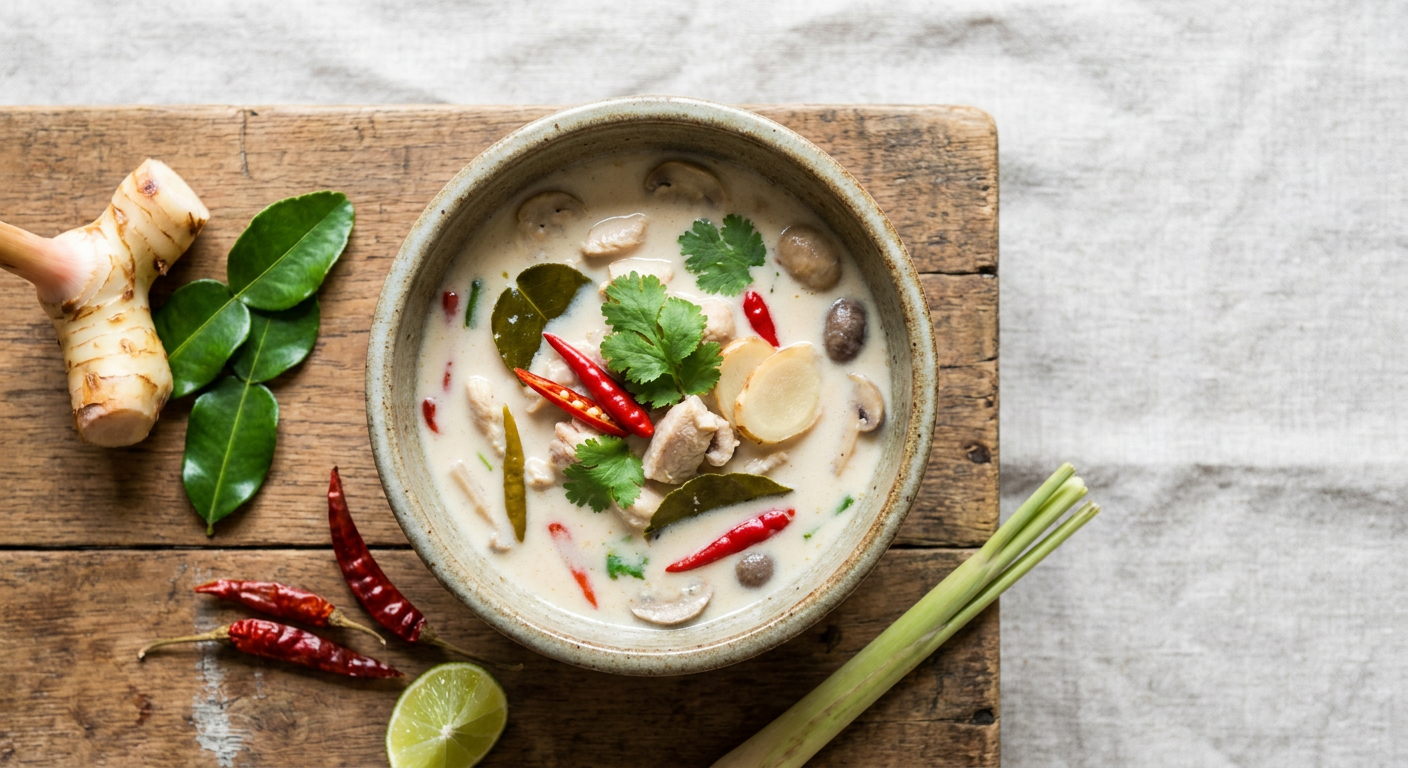
SoupsAuthentic Tom Kha Gai Recipe (Thai Coconut Galangal Soup)
This authentic tom kha gai recipe creates a silky, aromatic thai coconut galangal soup. Learn the secret to poaching chicken in coconut milk without curdling the broth.
 Soups
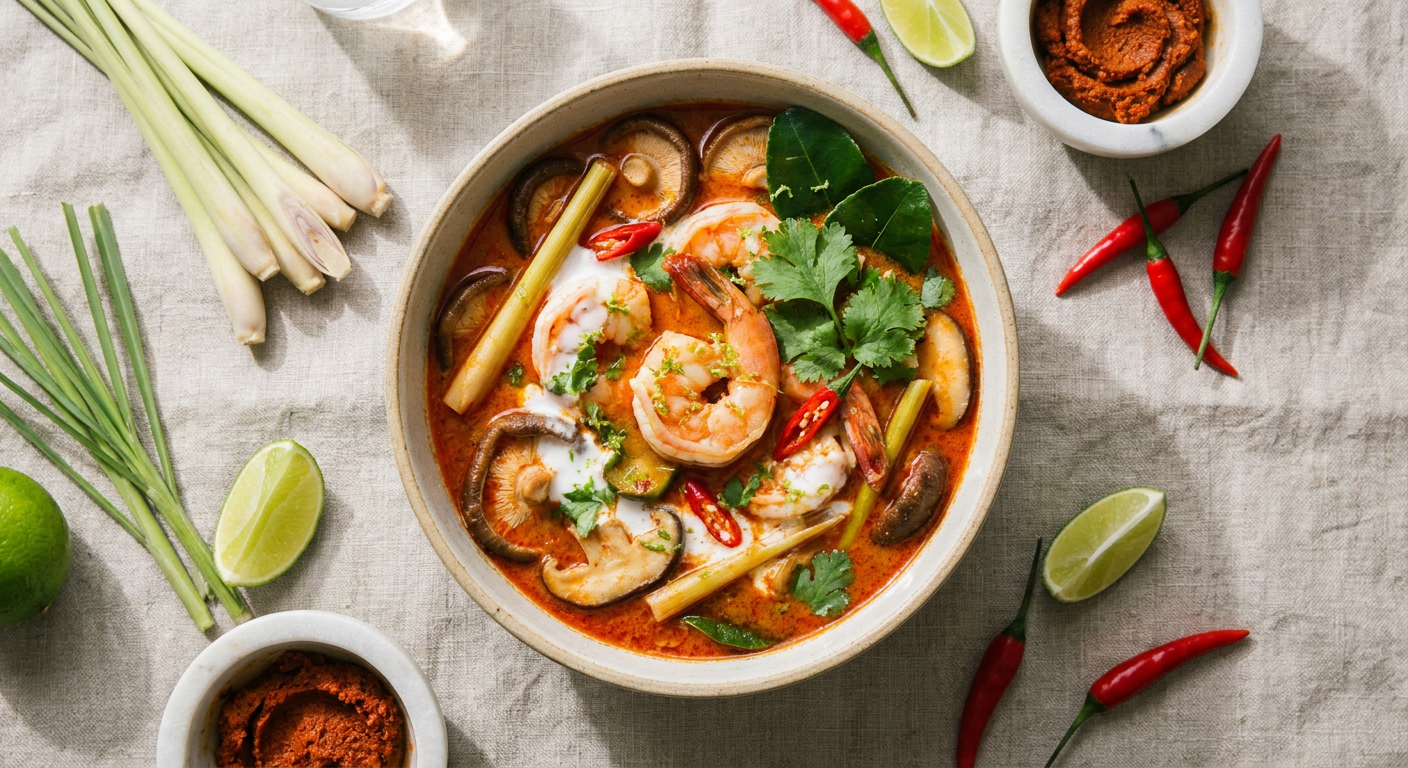
SoupsThai Coconut Curry Soup with Shrimp and Lemongrass
This easy Thai coconut curry soup features a rich red curry broth, succulent shrimp, and earthy mushrooms. A 30-minute dinner that rivals any takeout spot.
 Soups
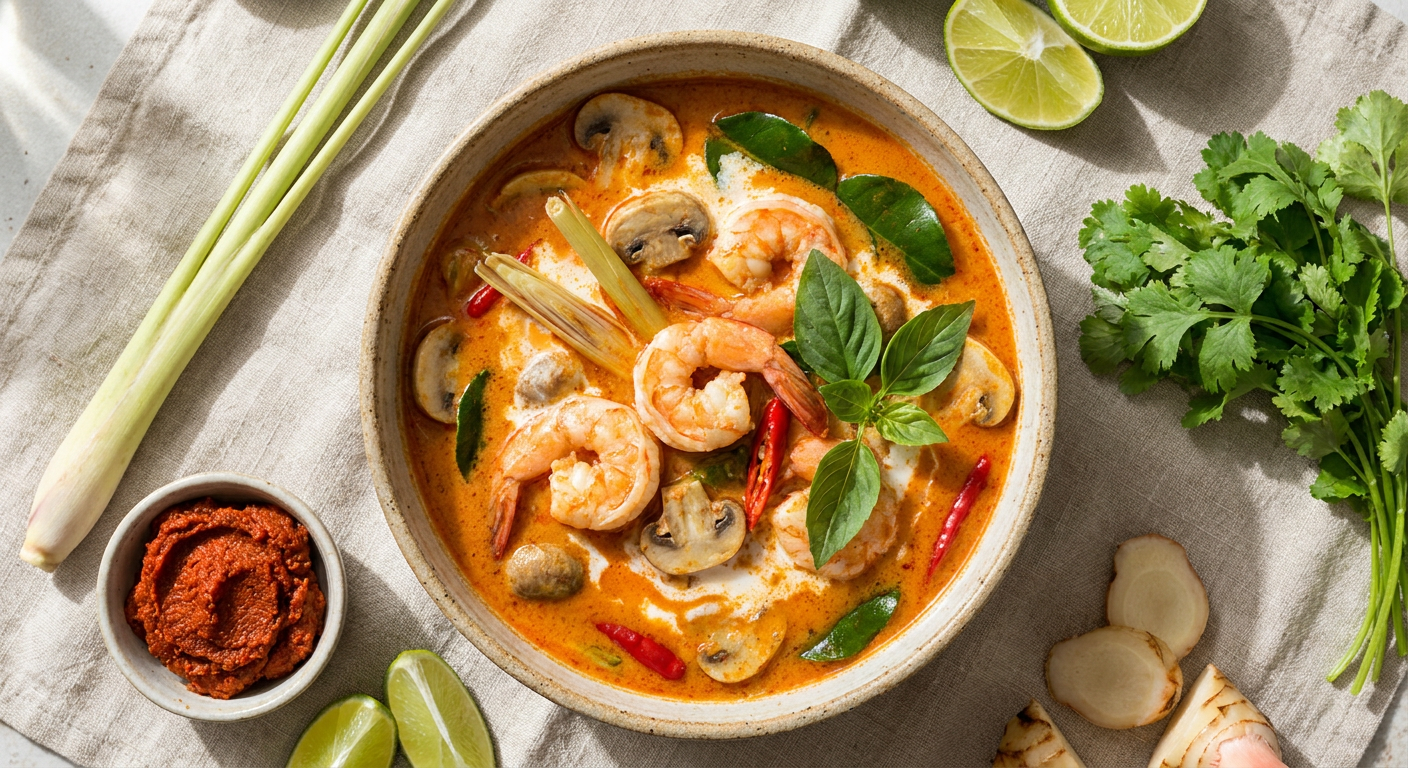
SoupsThai Coconut Curry Soup with Shrimp and Lemongrass
An aromatic Thai coconut curry soup featuring red curry paste, full-fat coconut milk, juicy shrimp, and mushrooms. A vibrant 30-minute meal for weeknight comfort.
 Soups
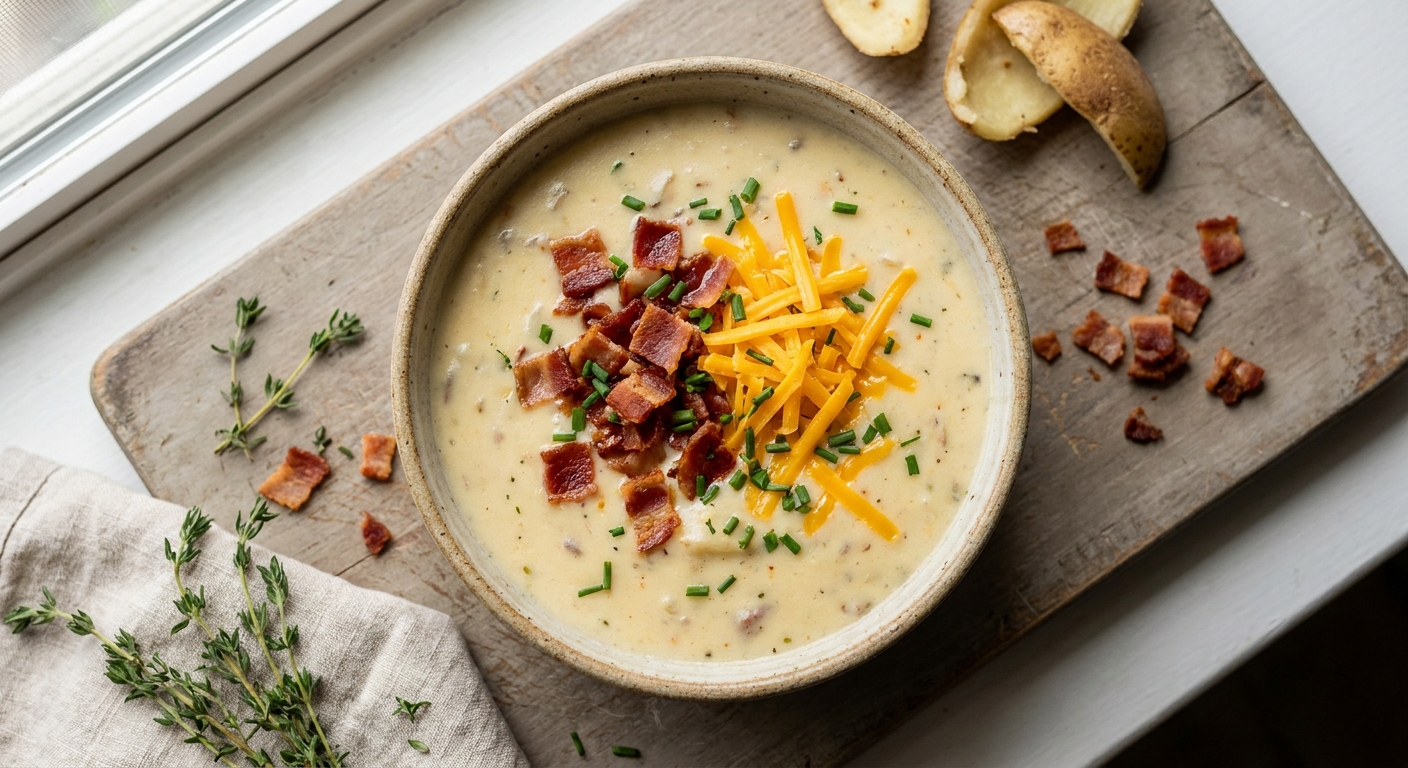
SoupsLoaded Baked Potato Soup with Bacon and Cheddar
This loaded baked potato soup is thick, creamy, and packed with russet potatoes, sharp cheddar, and crispy bacon. The ultimate comfort food in a single bowl.