August 30, 2026
Home Cooks: What Is Miso? Chef Tested Ratios (1–2 tbsp per cup)
Practical miso primer for home cooks: how it's made, chef tested ratios (1–2 tbsp per cup), timing and storage tips, plus Forkward Kitchen recipes to try...
Home Cooks: What Is Miso? Chef Tested Ratios (1–2 tbsp per cup)
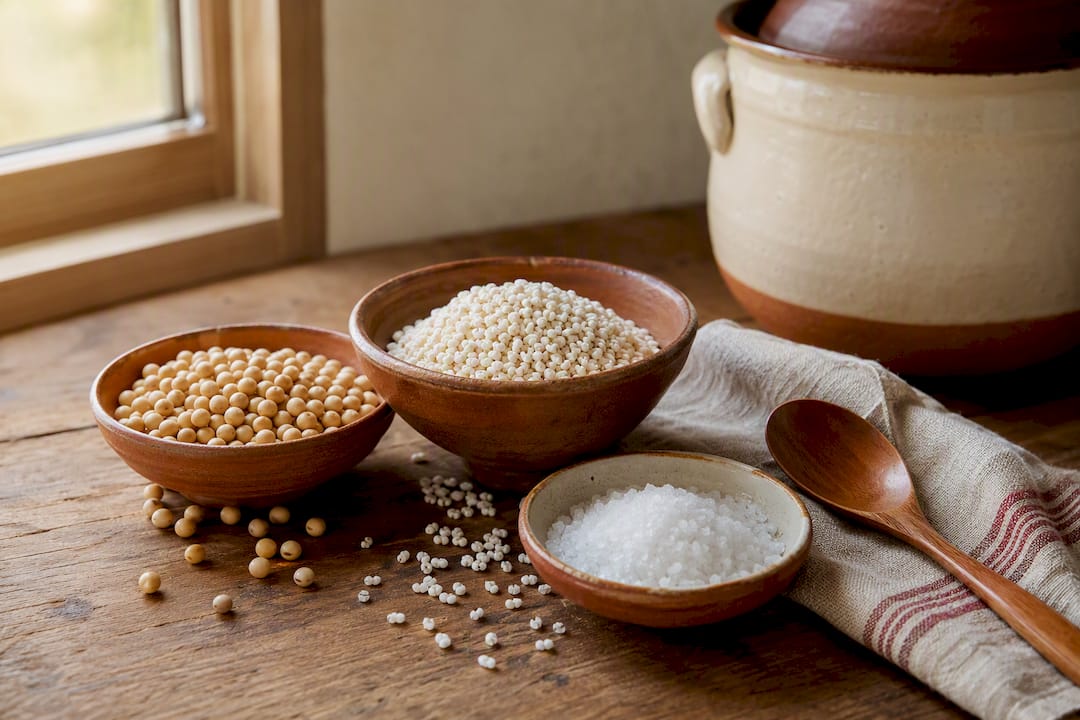
Miso is a fermented soybean paste made with salt and koji, the mold culture that unlocks its savory depth. Some varieties add rice or barley, and the flavor spans from mellow and sweet to deeply salty and pungent. Cooks use it in soup, marinades, glazes, and dressings, though it’s worth watching your sodium intake since even a small spoonful carries a real punch.
TL;DR:
- Shorter fermentation produces lighter, sweeter miso like white or yellow, while longer aging results in darker, saltier, and more complex red miso.
- The balance of koji type, fermentation time, and salt concentration directly influences flavor, color, and intensity, with no correlation between darker color and quality.
- When cooking with miso, add it at the end or off the heat to preserve its aroma and probiotic benefits, and adjust salt levels accordingly.
- Substitutes such as soy sauce with tahini or anchovy paste with soy sauce can work in a pinch but lack miso’s fermentation qualities and complexity.
- Due to its high sodium content, miso should be used in moderation, especially for people managing blood pressure or on sodium-restricted diets, and stored properly in the fridge after opening.
Table of Contents
- What Is Miso Made Of?
- How Is Miso Made? Koji, Fermentation, and Why Timing Matters
- Types of Miso: White, Yellow, and Red Compared
- How to Cook With Miso: Ratios and Techniques That Work
- What Can You Substitute for Miso?
- Is Miso Healthy? Sodium, Probiotics, and Who Should Watch Intake
- How to Buy, Taste, and Store Miso
- Forkward Kitchen’s Tested Miso Recipes
- Why Miso Deserves a Permanent Spot in Your Fridge
- Try Forkward Kitchen’s Miso Recipes Tonight
- Sources
What Is Miso Made Of?
Soybeans are the backbone of nearly every miso, providing the protein that fermentation eventually breaks down into the amino acids responsible for that deep, savory taste. On their own, soybeans are bland. What transforms them is koji, a culture of Aspergillus oryzae mold grown on steamed rice, barley, or occasionally soybeans themselves. Koji produces enzymes that digest starches and proteins, essentially pre-chewing the ingredients so fermentation can go to work.
Salt does more than season the paste. It controls which microorganisms can survive the fermentation process, keeping unwanted bacteria out while allowing beneficial ones to thrive. Salt concentration also slows the whole process down, which is part of why a saltier miso tends to need a longer aging period to develop its flavor.
Grains matter more than most people realize. Rice koji produces a rounder, slightly sweeter miso, while barley koji leans earthier and more rustic. Some misos are made entirely from soybeans with no added grain at all, resulting in a darker, more assertive paste. This basic combination, soybeans, salt, and koji, with grain as an optional variable, is what makes miso miso, regardless of the dozens of regional variations you’ll find on a label.
If you’re new to reading Japanese pantry labels, a few terms come up constantly: “shiro” means white, “aka” means red, and “awase” refers to a blend of two or more miso types mixed together for a balanced flavor. None of this is complicated once you know what you’re looking at.
How Is Miso Made? Koji, Fermentation, and Why Timing Matters
Making miso happens in two distinct stages. First, koji is cultivated separately: steamed rice or barley gets inoculated with Aspergillus oryzae spores and incubated for a day or two until it’s covered in a soft, fragrant mold. That koji is then mixed with cooked soybeans and salt, packed into a vessel, and left to ferment.
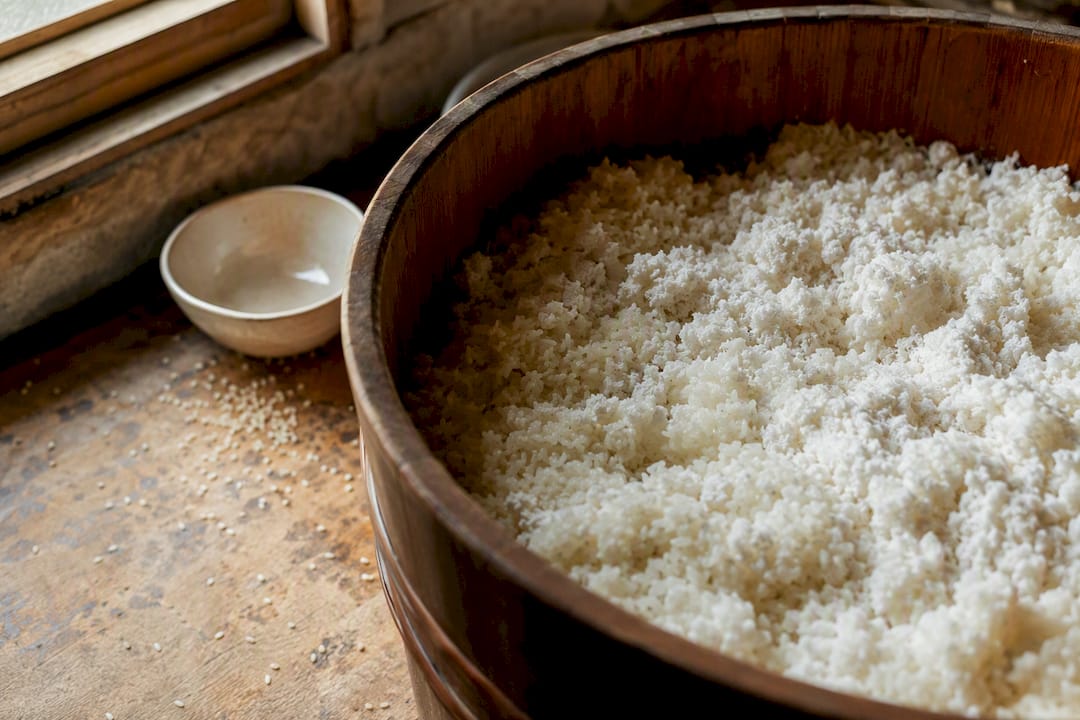
Fermentation time is the single biggest driver of flavor, more than color or brand. Short ferments produce a lighter, sweeter paste, while long ferments produce something saltier, darker, and more complex. According to WebMD, a typical white miso ferments for a short period, while red miso can age for a long time, often many months. That difference in time is why a spoonful of white miso tastes almost like sweet custard next to red miso’s deep, almost bourbon-like intensity.
The chemistry driving this is straightforward. Koji enzymes break soybean proteins down into free amino acids, including glutamate, the compound responsible for umami. Longer fermentation gives enzymes more time to work, which concentrates both flavor and salt perception. The Maillard reaction, the same browning process that darkens seared steak, also plays a role over long aging, contributing to red miso’s deeper color and roasted notes.
A few practical notes worth knowing:
- Commercial miso is fermented in controlled, food-safe conditions, which is why it’s consistent batch to batch. Home fermentation is possible but riskier without careful salt ratios and temperature control.
- Miso rarely spoils in a dangerous way because of its salt content, but mold or off smells still mean it’s time to toss it.
- Color is a rough guide to age and intensity, but two misos of the same shade can still taste quite different depending on region and grain.
Types of Miso: White, Yellow, and Red Compared
Choosing the right miso for a recipe comes down to matching fermentation length and salinity to what you’re cooking. Here’s how the main types stack up.
White miso (shiro). Fermented for just a week or two, white miso is mild, slightly sweet, and light in color, ranging from pale cream to soft gold. It’s the go-to for delicate miso soup, salad dressings, and anywhere you want umami without overpowering saltiness. Because it’s less fermented, its flavor is more subtle and forgiving if you’re new to cooking with miso.
Yellow miso. Sitting between white and red in both color and fermentation time, yellow miso is the workhorse of everyday cooking. It balances sweetness and saltiness well enough to use in almost anything, soups, glazes, stir-fries, without needing to think too hard about whether it fits.
Red miso (aka). This is the long-aged, deeply savory end of the spectrum, sometimes fermented for a year or more. Its color runs from reddish brown to nearly black, and its flavor is bold, salty, and almost meaty. Red miso holds up in braises, hearty marinades, and any dish where you want miso to be a dominant flavor rather than a background note. According to Olive Magazine’s expert guide, miso’s concentrated flavor and salt content also make it an effective marinade base, since its enzymes help tenderize proteins while it seasons them.
A few things to check on the label and jar:
- Look for “koji” and “soybeans” near the top of the ingredient list; fillers or added sugars usually signal a lower-quality product.
- Texture varies from smooth and spreadable to slightly chunky with visible soybean bits, both are normal depending on style.
- Darker doesn’t always mean better. It means longer fermentation and stronger flavor, which isn’t right for every dish.
Pro Tip: Keep both a white and a red miso in your fridge. White handles delicate work like dressings and quick soups, while red carries braises and marinades that need to stand up to long cooking times. Together they cover almost everything.
How to Cook With Miso: Ratios and Techniques That Work
Miso is concentrated, so a little goes further than you’d expect. The biggest technique to learn early is timing: add miso at the end of cooking or off the heat entirely, rather than letting it simmer for a long stretch. High heat dulls its aroma and, per EatHealthy365’s chef guidance, boiling can also diminish the beneficial microbes fermentation produces. Dissolving miso into warm, not boiling, liquid before adding it to a pot is the trick most home cooks skip and shouldn’t.
Here are the ratios and mini-methods that cover most everyday cooking:
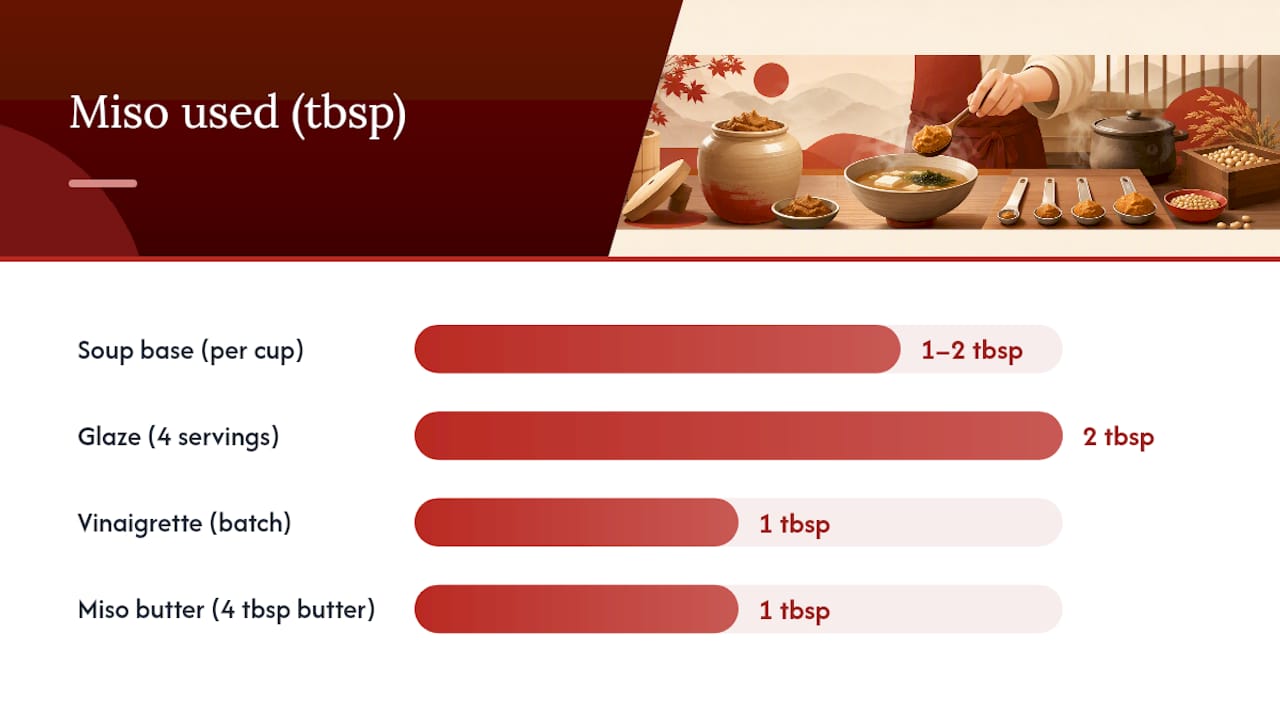
- Miso soup base. Whisk one to two tablespoons of miso per cup of warm dashi or broth. Ladle a bit of hot liquid into a small bowl, whisk the miso smooth there first, then stir it back into the pot off the heat. This avoids the clumping that happens when you dump paste straight into a simmering pot.
- Miso glaze for salmon or vegetables. Combine equal parts miso, mirin, and a touch of sugar or honey, roughly two tablespoons each for four servings. Brush it on and broil for the last five minutes of cooking; the sugars caramelize fast, so watch closely to avoid burning.
- Miso vinaigrette. Whisk one tablespoon of miso with two tablespoons of rice vinegar, one tablespoon of oil, and a touch of honey. The miso replaces some or all of the salt you’d normally add, so taste before reaching for the salt shaker.
- Miso butter. Mash one tablespoon of miso into four tablespoons of softened butter. Spread it on grilled corn, melt it over steak, or stir a pat into pasta for an instant umami boost.
A couple of adjustments make a real difference once you’re comfortable with the basics. Because miso already carries salt, cut back on other salty ingredients in a recipe, soy sauce, bouillon, or added salt, by about half until you taste and adjust. And because sugars in miso caramelize quickly under direct heat, glazes and marinades using miso brown faster than you’d expect, so pull things a minute or two earlier than your instinct says.
Pro Tip: If a miso soup or sauce tastes flat, it’s almost never a miso problem. Add a squeeze of citrus or a splash of vinegar before adding more miso. Acid often does more to wake up the flavor than extra paste does.
What Can You Substitute for Miso?
Running out of miso mid-recipe isn’t a dead end, though nothing replicates it perfectly. The closest combinations rely on layering salt, fermentation, and a bit of body:
- Soy sauce plus tahini or peanut butter. Start with one tablespoon of soy sauce and one teaspoon of tahini or peanut butter per tablespoon of miso called for. This mimics the saltiness and thick texture reasonably well.
- Anchovy paste plus soy sauce. A small dab of anchovy paste with soy sauce brings a similar savory depth, useful in soups and braises where fish notes won’t clash.
- Other fermented bean pastes, like doubanjiang or Korean doenjang, work in a pinch since they share miso’s fermented soybean base, though the flavor will skew spicier or funkier depending on the paste.
None of these substitutes bring miso’s live cultures or its layered aroma, and the texture tends to be thinner. They’ll get a dish to a reasonable place, but they’re a stand-in, not a replacement, so treat them as a one-time fix rather than a permanent swap.
Is Miso Healthy? Sodium, Probiotics, and Who Should Watch Intake
Miso brings real nutritional upside alongside a sodium number worth knowing before you go heavy-handed with it. It contains protein, B vitamins, and minerals like manganese and copper, plus fermentation compounds that broader research on fermented foods has tied to digestive and metabolic benefits, according to Teohl’s guide on cooking with miso. That said, high heat during cooking reduces the live culture benefits, so if you’re after the probiotic upside specifically, added-at-the-end preparations matter more than long-simmered ones.
Sodium check: One tablespoon of miso contains roughly 634 milligrams of sodium, close to 28% of the commonly cited 2,300 milligram daily limit. A generous bowl of miso soup can use two or three tablespoons of paste, which adds up fast if you’re not tracking it.
People managing blood pressure or on a sodium-restricted diet should treat miso the way they’d treat soy sauce: a flavor accent measured in teaspoons, not ladled in freely. Diluting miso further into a larger volume of broth or vegetables, or blending it with unsalted stock, stretches the flavor without stretching the sodium as much.
How to Buy, Taste, and Store Miso
Grocery shelves usually carry two categories: pasteurized, shelf-stable miso that sits at room temperature until opened, and raw or “live” miso that’s sold refrigerated and contains active enzymes still working slowly. Neither is inherently better. Pasteurized versions are more consistent and convenient; live versions often carry a slightly fresher, more complex flavor since fermentation hasn’t been halted by heat.
Tasting before you buy, or right after opening a new jar, tells you a lot. A good miso should smell fermented and a little funky, not sour or ammonia-like. Flavor should hit sweet, salty, and umami in some balance depending on type, never flat or one-note.
A few storage habits keep miso tasting like it should:
- Refrigerate miso once opened, even if the label says shelf-stable, since cold slows further fermentation and keeps flavor from drifting.
- Press plastic wrap directly onto the paste’s surface before sealing the lid; this cuts down on oxidation and the dark crust that forms on exposed miso.
- Buy smaller tubs if you cook with miso occasionally rather than committing to a large container that sits half-used for months. According to Just One Cookbook’s miso guide, well-stored miso keeps for months in the fridge without losing much quality.
Forkward Kitchen’s Tested Miso Recipes
Forkward Kitchen has built and tested several recipes around miso’s range, from quick weeknight bowls to slower weekend projects. The 20 minute ramen with miso garlic butter broth leans on yellow miso for a broth that comes together fast without sacrificing depth. A variation, miso garlic butter ramen with charred corn, swaps in sweet corn against miso’s saltiness for contrast. For a slower build, the tonkotsu ramen broth from scratch shows how miso layers into a long-simmered pork base. Swap in red miso for more intensity, or white miso if you want the broth lighter.
Why Miso Deserves a Permanent Spot in Your Fridge
Most home cooks treat miso as a one-dish ingredient, something reserved strictly for miso soup, and that’s the real miss. The paste that makes soup taste like soup is the same one that turns a plain butter sauce into something you’d order at a restaurant. I’d argue the biggest unlock isn’t a Japanese recipe at all: stir a spoonful of white miso into brown butter for pasta, or whisk red miso into a pot roast braise. It disappears into the background and just makes everything taste more like itself. Start with the 20 minute miso ramen if you want proof in under half an hour.
— Oloru
Try Forkward Kitchen’s Miso Recipes Tonight
Forkward Kitchen tests every miso recipe the way we’d cook it at home: real ratios, real timing, no guesswork about when to add the paste or how much salt it’s really bringing to the pot. That’s the gap most recipe sites leave open, vague amounts and no explanation of why miso goes in off the heat.
If tonight calls for something fast, the 20 minute ramen with miso garlic butter broth gets a full bowl of depth on the table before a delivery order would even arrive. Want to push further into miso’s range beyond noodles? Miso works beautifully stirred into a brown butter pasta sauce, and Forkward’s pasta recipes are a solid place to experiment with that pairing. For cooks ready to commit a weekend to something bigger, browse Forkward’s advanced and chef-level recipes for miso-forward projects with real technique behind them. Start with one recipe, taste as you go, and adjust the salt from there.
Sources
For fermentation timelines and ingredient basics, the Wikipedia entry on miso is a solid technical starting point. For sodium figures and health context, see WebMD’s miso soup breakdown. For hands-on technique, Olive Magazine’s expert guide and Just One Cookbook’s miso guide cover shopping and storage in practical detail.
- Miso: Is Miso Soup Good for You? — WebMD
- Miso — Wikipedia
- Miso paste: the expert guide — Olive Magazine
- Miso guide — Just One Cookbook