September 6, 2026
7 Day Make Ahead Thanksgiving Sides Plan for U.S. Hosts
Use a U.S. host tested 7 day make ahead plan for Thanksgiving sides. Exact fridge and freezer windows, one line day of reheats, and Forkward tested recipes.
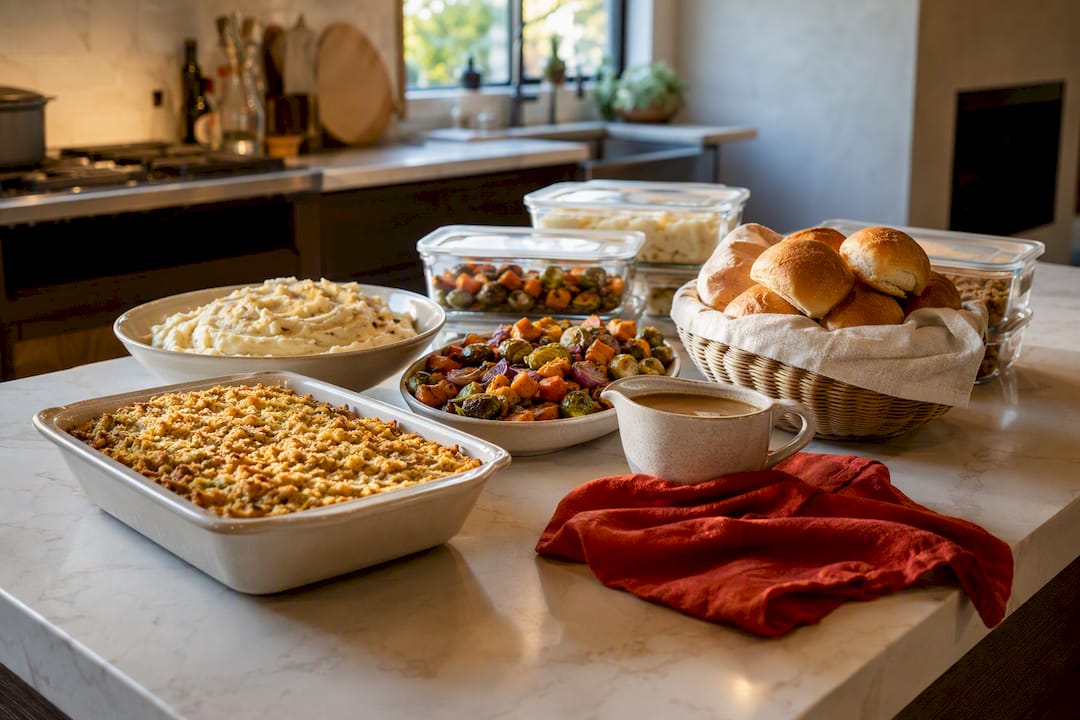
7 Day Make Ahead Thanksgiving Sides Plan for U.S. Hosts
Yes, you can make almost every Thanksgiving side ahead of time. Casseroles, stuffing, sauces, most vegetable components, and nearly all desserts hold up fine in the fridge or freezer. The exceptions are crisp breads, tossed green salads, and a couple of mashed potato methods that turn gummy if you rush them. Fridge-safe prep runs two to three days; freezer prep stretches to a month or more for the right dishes. Below is the exact schedule to follow.
TL;DR:
- Most Thanksgiving sides like casseroles, sauces, and desserts can be made 2 days to a month in advance, but crispy breads and green salads should be fresh.
- Preparing components like stock, gravy, and pies early in the week reduces stress, with typical freeze and refrigerator timeframes outlined for each.
- Mashed potatoes benefit from either a par-finish or full make-ahead method, avoiding over-mixing to prevent a gluey texture during reheating.
- Final assembly steps, especially for casseroles and vegetables, should be kept simple and added just before baking to prevent sogginess and maintain texture.
- Prioritizing only three to five dishes for full make-ahead preparation helps manage kitchen space and reduces reheat complications on the holiday.
Table of Contents
- Which Thanksgiving Sides to Make Ahead First
- Your 7-Day Make-Ahead Timeline
- The Two Best Make-Ahead Mashed Potato Methods
- Stuffing and Casserole Assembly Without the Sogginess
- Prepping Green Beans, Brussels Sprouts, and Root Vegetables
- Which Breads to Bake Fresh vs. Ahead
- Making Gravy, Stock, and Cranberry Sauce Ahead
- Prepping Salads and Cold Sides for Freshness
- Desserts You Can Bake Days Before Thanksgiving
- Storage, Labeling, and a Day-Of Reheating Schedule
- Forkward Kitchen Recipes That Fit This Exact Plan
- Why Fewer Make-Ahead Dishes Beats More
- Get More Tested Recipes for Your Holiday Table
- Sources
Which Thanksgiving Sides to Make Ahead First
Not every dish deserves the same slot on your calendar. Start with the ones that actually improve after a rest in the fridge, then work down to same-day finishes.
- Green bean casserole components — blanch beans and make the mushroom sauce up to 3 days ahead in the fridge, or freeze the sauce for months; fried onions keep 1 to 3 months in an airtight container, according to Ask The Food Geek’s component breakdown. Assemble and bake day-of.
- Sweet potato casserole — mash and season the filling 2 days ahead, refrigerated; add the pecan or marshmallow topping right before baking so it doesn’t get soggy.
- Mashed potatoes — cook and finish up to 2 days ahead if you follow a ricer-based method (more on that below).
- Stuffing or dressing — assemble unbaked and refrigerate 1 day ahead; bake day-of for the best texture.
- Cranberry sauce — make 3 to 5 days ahead, or freeze up to 2 months.
- Gravy and stock — make the base a week or more ahead and freeze it solid.
- Roasted Brussels sprouts or carrots — partially roast 1 day ahead, finish with a quick re-roast.
- Bean salad or slaw — dress and chill up to 2 days ahead; it often tastes better after resting.
- Sweet potatoes, roasted whole or in wedges — a chili-maple roasted sweet potato holds up well reheated in a hot oven.
- Pumpkin or pecan pie — bake 1 to 2 days ahead.
Spread the finishing steps across your oven, microwave, and a slow cooker so you’re not fighting for rack space at 3 p.m. Thursday. The slow cooker alone can free up an entire oven shelf if you use it to hold mashed potatoes or gravy warm.
Your 7-Day Make-Ahead Timeline
Chefs increasingly treat Thanksgiving as a multi-day project rather than a single frantic cook day, and Allrecipes’ advice to front-load big components like stock and gravy backs that up. Here’s how to spread the work.
- Day 7 to 4 before: Make and freeze stock. Cook the gravy base and freeze it flat in a bag. Bake and freeze pumpkin or pecan pie if you’re going that route.
- Day 3 to 2 before: Assemble casseroles (but don’t top them yet). Make stuffing mix and refrigerate unbaked. Blanch green beans and Brussels sprouts, then shock and store dry. Make cranberry sauce.
- Day 1 before: Finish any chilled prep. Mash potatoes if using the make-ahead method. Label every container with contents and reheat instructions, then organize the fridge and freezer by what needs to come out first.
- Day of: Pull items in reheating order, starting with anything that needs the longest oven time and working down to quick microwave or stovetop finishes.
Pro Tip: Write your reheat times directly on the masking tape label. “Sweet potato casserole, 350°F, 25 min covered” saves you from guessing while six other pans are competing for oven space.
Use shallow, wide containers for anything cooling in the fridge. They chill faster and more evenly than a deep stockpot, which matters for food safety and for stopping the cooking process before things overcook.
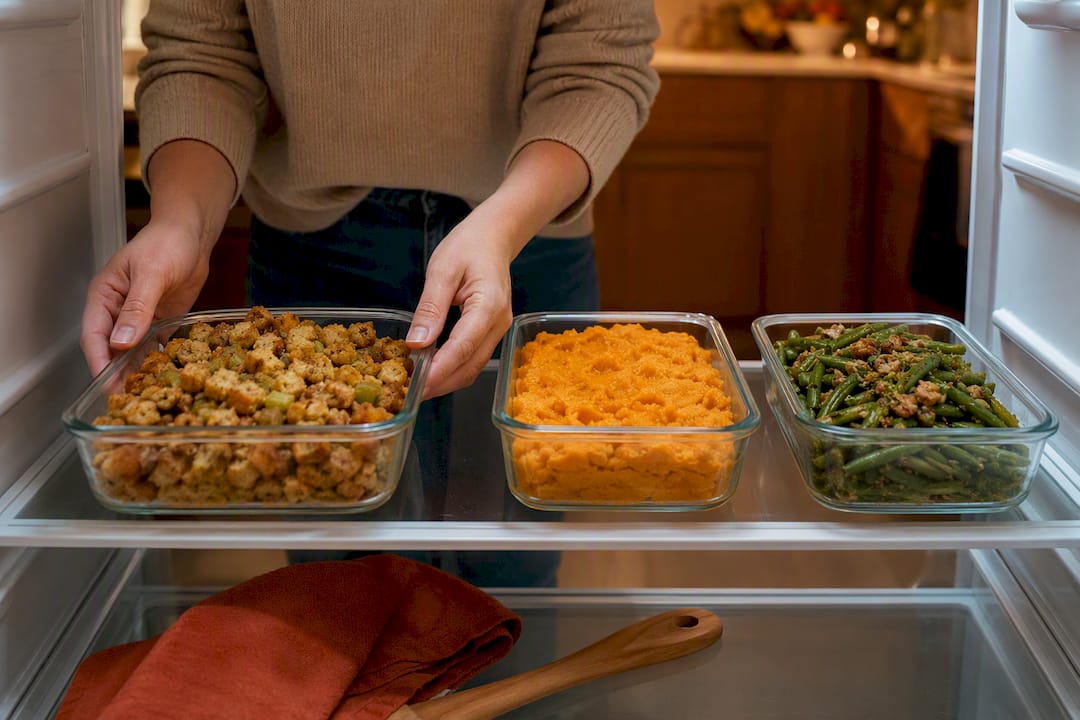
The Two Best Make-Ahead Mashed Potato Methods
Mashed potatoes are the dish most likely to go wrong when made ahead, which is exactly why chefs quoted by Food & Wine warn against certain shortcuts. Get the method right and you can genuinely finish this two days early.
Method A, the par-finish approach: Boil or roast Yukon Gold potatoes, mash them, and stop just short of fully creamy. Refrigerate slightly under-mixed. On serving day, warm gently over low heat while whisking in warm milk or cream until the texture comes back together.
Method B, the full make-ahead approach: Cook the potatoes, pass them through a ricer for a smooth, lump-free base, and chill in a shallow pan so they cool fast. Bon Appétit’s tested version holds up to 2 days in the fridge this way, reheated with warm cream and butter stirred in slowly rather than dumped in cold.
- Use Yukon Golds. Their starch content stays smoother through a chill and reheat cycle than a russet.
- A ricer beats a hand mixer for make-ahead potatoes because it avoids overworking the starch.
- If your potatoes turn gluey, you likely over-mixed them warm. Add extra warm dairy and reheat slower next time rather than mixing harder.
Pro Tip: Forkward’s brown butter mashed potatoes uses the ricer method and holds beautifully for a make-ahead Thanksgiving table.
Stuffing and Casserole Assembly Without the Sogginess
The biggest casserole mistake is topping something crunchy before it sits in the fridge overnight. Keep any fried onions, breadcrumbs, or nuts in a separate container until you’re ready to bake.
- Assemble stuffing or dressing in the baking dish, cover tightly, and refrigerate up to 1 day unbaked; bake fresh for the best crust.
- For casseroles like green bean, assemble the base a day ahead but add the crispy topping only in the final 10 minutes of baking.
- Fully baked casseroles generally reheat better than you’d expect. Cover with foil and warm at 350°F until the center hits a safe temperature, then uncover for the last few minutes to recrisp the top.
- Freezing works for most unbaked casseroles. Thaw overnight in the fridge before baking, and add 10 to 15 extra minutes to the covered bake time since it’s starting cold.
Prepping Green Beans, Brussels Sprouts, and Root Vegetables
Vegetables are where make-ahead prep pays off the most, because a quick blanch now buys you a five-minute finish later. Blanching vegetables to just tender, then shocking them in ice water, locks in color and snap according to Serious Eats’ testing, and it means the final sauté tastes freshly cooked instead of reheated.
- Blanch green beans 3 to 4 days ahead, shock in ice water, and store dry in the fridge; toss with sauce and finish just before serving.
- Partially roast Brussels sprouts and carrots a day ahead at a slightly lower temperature, then re-roast hot and fast on Thanksgiving to crisp the edges back up.
- Make glazes, vinaigrettes, or brown butter sauces separately and store in the fridge; toss with vegetables only at the last minute so nothing goes limp.
- Trim and chop aromatics like onion, celery, and garlic up to 3 days ahead and keep them in sealed containers.
Forkward’s roasted vegetable and potato sides collection is a good place to browse for variations that hold up to this exact prep style.
Which Breads to Bake Fresh vs. Ahead
Bread is the one category where “make ahead” mostly means “don’t.” Chef consensus gathered by Food & Wine points to breads and rolls as items that lose the most quality when made too far in advance.
- Cast-iron cornbread and biscuits are almost always best baked day-of; the texture drops off fast once cooled and reheated.
- Yeast rolls freeze well after baking. Wrap tightly, freeze up to a month, and thaw at room temperature before a quick warm-up.
- To refresh any bread, wrap it in foil with a few drops of water and warm at 300°F for 10 minutes. The steam brings back softness without drying it out.
- If you’re bringing bread to someone else’s table, transport it unwrapped in a paper bag rather than sealed plastic, which traps steam and turns the crust soft.
Making Gravy, Stock, and Cranberry Sauce Ahead
Gravy causes more Thanksgiving panic than almost any other dish, and it’s also one of the easiest things to solve in advance. Stock reduces down and freezes for weeks, and Allrecipes specifically recommends freezing gravy and stock ahead to cut day-of workload.
- Make turkey or vegetable stock up to a week ahead, or freeze it up to 3 months.
- Build a gravy base without pan drippings a week ahead and freeze flat in a bag for faster thawing.
- On Thanksgiving, whisk the frozen gravy base with hot stock over low heat, then finish with a small pat of butter to bring the emulsion back together.
- Cranberry sauce keeps 5 days refrigerated or 2 months frozen; try a version with orange zest or ginger for variety.
Prepping Salads and Cold Sides for Freshness
Cold sides seem simple until the lettuce wilts by noon. The fix is separating every component that shouldn’t touch until serving time.
- Wash and dry salad greens up to 2 days ahead, then store wrapped in paper towels inside a sealed bag.
- Keep dressing in its own jar and toss only right before serving; a dressed green salad does not hold.
- Bean salads and slaws are the exception. Both improve after 1 to 3 days in the fridge as the flavors settle in.
- Pack cold sides in shallow containers with lids for the car ride, and keep them in a cooler if travel runs longer than an hour.
Desserts You Can Bake Days Before Thanksgiving
Pie is one of the easiest wins on this entire list. Pumpkin and pecan pies both bake beautifully 1 to 2 days ahead and hold their structure at room temperature or in the fridge; warm slices briefly in a low oven if you want that fresh-baked feel.
- Custard-based pies like pumpkin keep well refrigerated for 2 days; cover loosely so the top doesn’t sweat.
- Meringue-topped desserts have a short window. Make the base ahead, but add and torch the meringue within a few hours of serving.
- Many pies freeze well unbaked or baked; thaw overnight in the fridge and re-crisp the crust in a 300°F oven for 10 minutes before serving.
Storage, Labeling, and a Day-Of Reheating Schedule
Food safety windows matter more than most people realize once you’re juggling six dishes across three days of prep. Cool anything hot in shallow pans, not deep containers, so it drops below 40°F quickly instead of sitting in the danger zone for hours.
- Refrigerated sides are generally good for 3 to 4 days; most freezer items hold safely for 1 to 3 months without a real quality drop.
- Use metal pans for anything going straight from freezer to oven; they conduct heat faster than glass or ceramic.
- Label every container with the dish name, the date, and the reheat method so nobody on cleanup duty has to guess.
- Stack similar-sized containers together in the fridge so you’re not excavating for the cranberry sauce behind the turkey stock.
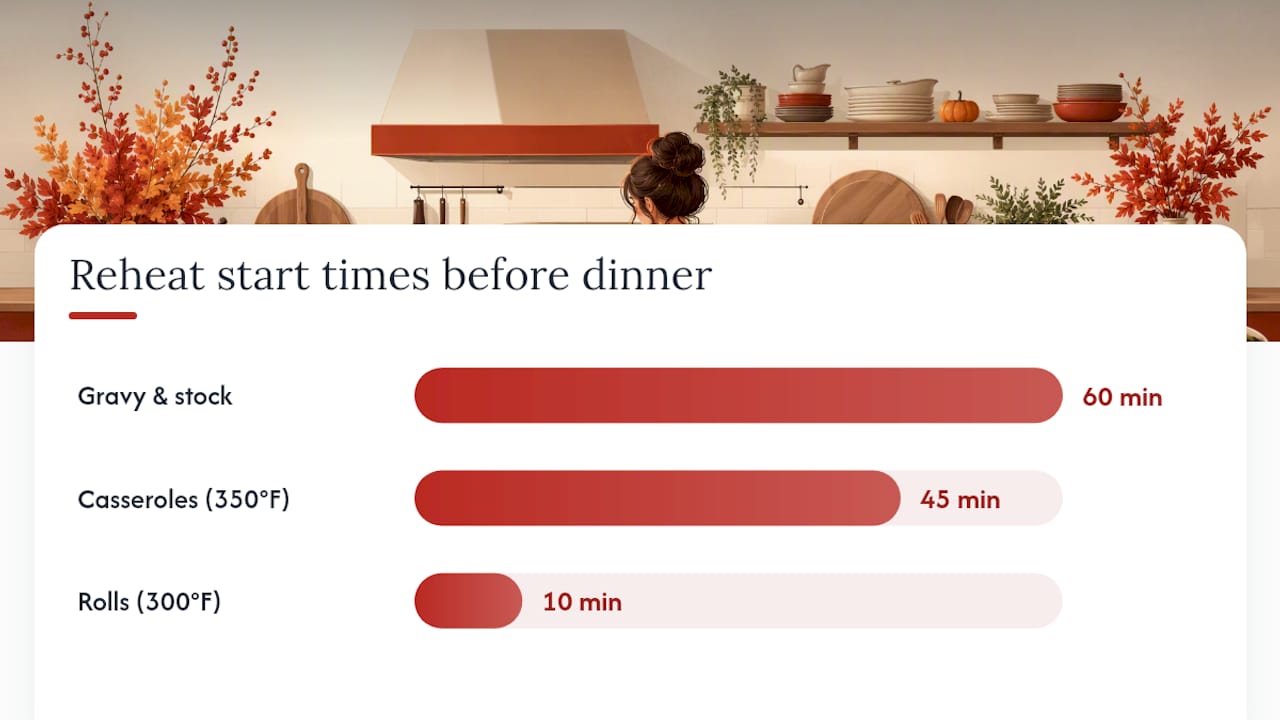
Pro Tip: Build your reheating order backward from serving time. Anything needing 45 minutes at 350°F goes in first; quick stovetop or microwave items get slotted in during the last 15 minutes.
A sample schedule for six sides: gravy and stock go on the stovetop starting an hour before dinner, casseroles go into a 350°F oven 45 minutes out, mashed potatoes hold in a slow cooker on low, rolls get 10 minutes at 300°F right before you sit down, and cold sides come straight from the fridge. For more coordination tips on timing multiple dishes, Wild Foodz’s holiday meal prep guide covers similar scheduling logic for busy home cooks.
Forkward Kitchen Recipes That Fit This Exact Plan
Every recipe on Forkward Kitchen carries an honest difficulty rating and comes from real testing in a home kitchen, not just a recipe pulled from somewhere else and lightly edited. That matters most on a holiday where a failed dish means a scramble with no backup plan.
A handful of Forkward recipes slot directly into the timeline above:
- Brown butter mashed potatoes for the Day 1 make-ahead mash.
- Chili-maple roasted sweet potato as a make-ahead-friendly vegetable side.
- Extra crispy smashed potatoes if you want a texture-forward alternative to classic mash.
- The sides and vegetables collection for browsing more roasted options that hold up to blanch-and-shock prep.
- Make-ahead appetizers for a crowd if you’re also hosting an early gathering before the main meal.
Drop any of these into Day 2 or Day 1 of your schedule and treat the reheat notes in each recipe as your day-of script.
Why Fewer Make-Ahead Dishes Beats More
The instinct every host has is to make everything ahead, freeze it, and coast through Thanksgiving morning. That instinct backfires. A fridge and freezer stuffed with a dozen containers becomes its own logistics problem, and reheating six things at once in one oven is how a green bean casserole ends up cold while the stuffing burns.
The better rule: pick three dishes to fully make ahead, not ten. Let one side stay simple and flexible, something like a bagged slaw or a store-bought cranberry sauce dressed up with fresh orange zest, so you have a built-in backup if timing runs long. Write out your equipment list the week before. Knowing you have exactly one slow cooker, one oven, and two stovetop burners forces realistic choices instead of an overambitious menu that assumes infinite kitchen space.
Component-level thinking helps most here. Freezing the fried onions and mushroom sauce separately for green bean casserole, rather than committing to the whole dish weeks out, keeps your options open until closer to the day. Lean on a tested recipe like those with honest difficulty ratings and make-ahead notes, then spend your actual Thanksgiving morning on the parts that need a human, not a checklist.
— Oloru
Get More Tested Recipes for Your Holiday Table
The recipe library is built to be tested first, rated honestly, and written so you know exactly what you’re getting into before you start cooking. This approach offers an advantage over recipe sites that recycle content without testing recipes. Each recipe lists an actual difficulty level and includes make-ahead and reheating notes like those in this guide, so you’re not guessing whether a technique will hold up two days in the fridge.
If this planner covered your sides, your mains deserve the same treatment. Browse the full recipe collection for weeknight staples and weekend projects alike, check out advanced recipes if you’re ready for a cooking challenge beyond the holiday table, or start with the homepage to see what’s new. Pick one recipe, read the difficulty rating, and add it to your Day 1 prep list this week.
Sources
- Make Thanksgiving Easier: 8 Classic Sides You Can Prep Days in Advance
- Make-Ahead Thanksgiving Dishes —and What Not to Make Ahead
- Make-Ahead Mashed Potatoes Recipe | Bon Appétit
- 5 Things You Should Absolutely Do Ahead for Thanksgiving
- Make-ahead green bean casserole (from scratch) - Ask The Food Geek