September 14, 2026
26 Tested Make Ahead Breakfasts That Keep You Full All Week
26 tested make ahead breakfast recipes: protein forward, freezer friendly, and no cook options with storage and reheating tips for busy mornings.
26 Tested Make Ahead Breakfasts That Keep You Full All Week
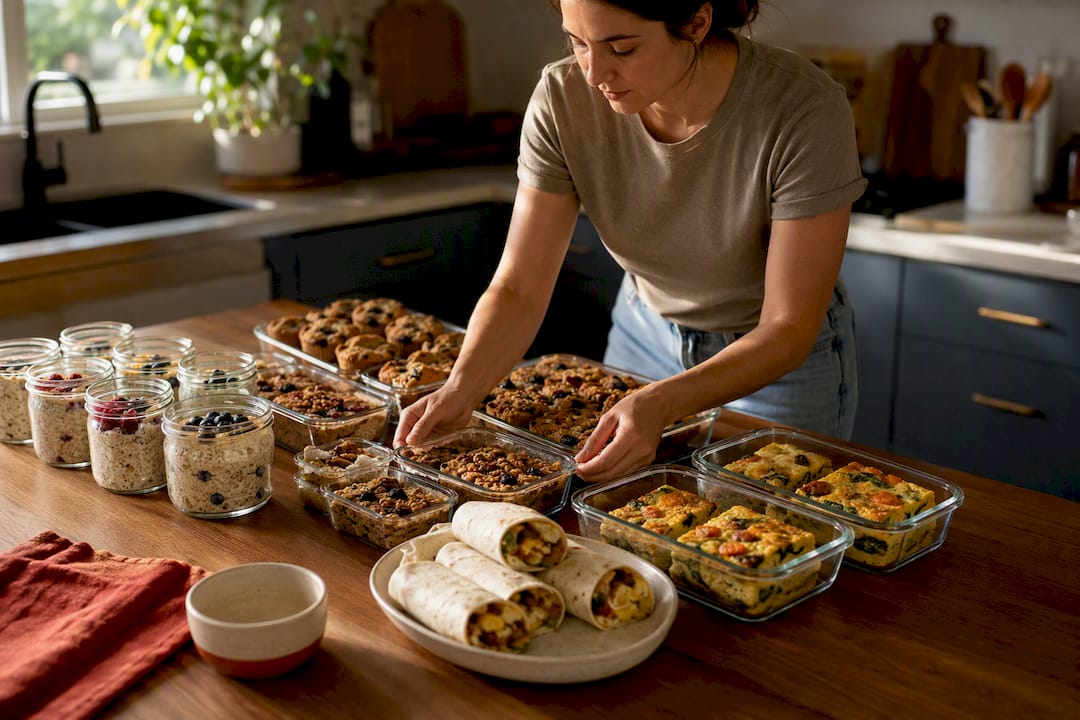
Make-ahead breakfasts are meals you assemble or cook in advance, chilled or frozen, so a busy morning only requires grabbing, reheating, or eating them straight from the fridge. The payoff is fewer decisions before 8 a.m. and less reliance on cereal or a coffee shop drive-through. Five formats cover almost every craving and schedule: overnight oats, egg bakes and muffins, baked oats and quick breads, freezer burritos and sandwiches, and portable bars or smoothie packs.
TL;DR:
- Freeze burritos and egg casseroles in individual portions to prevent sogginess and ensure even reheating, extending their storage life up to three months.
- Incorporate protein sources like Greek yogurt, cottage cheese, eggs, or nut butter into your meals to improve satiety and prevent hunger before midday.
- Reheat baked oats, muffins, and quick breads in a toaster oven to preserve texture, avoiding microwave reheating which can cause gummies and uneven heating.
- Use clear labeling with prep dates and reheating instructions to save time and reduce food waste during busy mornings.
- Focus on pairing high-protein, egg-based, or yogurt-based breakfasts in your rotation, as they are more likely to keep you full longer than pastries or plain oatmeal.
Table of Contents
- Which Make-Ahead Breakfast Fits Your Morning?
- 26 Make-Ahead Breakfast Recipes Worth Prepping
- How Long Do Make-Ahead Breakfasts Actually Keep?
- Making Breakfast Actually Keep You Full
- Where to Find Recipes That Actually Work
- Why Most Meal-Prep Advice Skips the Part That Matters
- Get the Full Recipe Collection From Forkwardkitchen
- Sources
- FAQ
Which Make-Ahead Breakfast Fits Your Morning?
Not every format suits every kitchen or every schedule. Someone without an oven-safe dish on a Tuesday needs a different answer than someone who batch-cooks every Sunday afternoon.
- Overnight oats and yogurt jars — best for no-cook mornings. Combine oats, milk, and yogurt at night; eat cold or reheat. Prep time: 5 minutes. Holds 4 to 5 days in the fridge.
- Egg bakes, frittatas, and muffins — best for oven-batch cooking and feeding a household at once. A veggie and turkey breakfast casserole bakes in under an hour and slices into single servings. Fridge life: 4 days; freezer life: up to 3 months.
- Baked oats, muffins, and quick breads — best for a hand-held, semi-sweet option that still delivers fiber. Prep time: 10 minutes plus baking. Fridge life: 5 days; freezer life: 2 to 3 months.
- Burritos and breakfast sandwiches — best for the freezer stockpile that reheats in minutes. Wrap individually; freezer life: up to 3 months.
- Bars, cookies, and smoothie packs — best for the truly rushed morning or the car commute. Prep once, freeze in portions, and blend or grab on the way out. Freezer life: 2 to 3 months.
Doubling a recipe and portioning it into single-serve containers the moment it comes out of the oven or off the counter is what actually makes any of these formats grab-and-go rather than a Sunday chore that repeats itself daily.
26 Make-Ahead Breakfast Recipes Worth Prepping
Overnight oats and no-cook jars
- Classic Greek yogurt overnight oats — rolled oats, milk, and Greek yogurt soften overnight into a creamy, protein-rich base. No stovetop needed. Fridge life: 5 days. Eat cold, straight from the jar.
- Peanut butter banana overnight oats — mashed banana and a spoonful of peanut butter turn plain oats into something that tastes like dessert. Fridge life: 4 days.
- Chocolate protein overnight oats — cocoa powder plus a scoop of protein powder for a mocha-leaning jar. Fridge life: 4 days.
- Chia seed pudding — chia seeds swell in milk overnight into a pudding-like texture, dairy-free with almond or oat milk. Fridge life: 5 days.
- Cottage cheese and berry jars — cottage cheese layered with berries and a drizzle of honey needs zero cooking and delivers a hefty protein hit. Fridge life: 3 days.
Protein-boosted overnight oats scale especially well for a full week of prep since the base recipe barely changes between flavors.
Egg bakes, frittatas, and muffins
- Veggie and turkey breakfast casserole — eggs, spinach, peppers, and ground turkey baked in one dish, then cut into squares. This tested version reheats in the microwave in 90 seconds. Freezer life: 3 months.
- Mini crustless quiche muffins — eggs, cheese, and diced ham baked in a muffin tin for portion control built right in. Fridge life: 4 days; freezer life: 2 months.
- Spinach and feta frittata wedges — a stovetop-to-oven frittata sliced into wedges for grab-and-go plates. Fridge life: 4 days.
- Sausage and hash brown egg bake — a heartier version layered with shredded potatoes for anyone skipping bread altogether. Freezer life: 3 months.
- Breakfast egg muffin cups with hidden veggies — a flexible base recipe; swap in whatever vegetables need using up. Fridge life: 5 days.
Pro Tip: Eggs can turn rubbery after a freeze and reheat. Whisking in about 1 teaspoon of cornstarch and a tablespoon of milk per 4 eggs before baking helps the proteins hold their texture through that cycle.
Baked oats, muffins, and quick breads
- Baked oatmeal squares — oats, mashed banana, and eggs baked in a sheet pan, then cut into bars. Fridge life: 5 days; freezer life: 3 months.
- Banana nut muffins — a classic quick bread turned portable; freeze extras the day they’re baked for best texture. Freezer life: 3 months.
- Pumpkin protein muffins — canned pumpkin and a scoop of protein powder keep these moist without added oil. Fridge life: 4 days.
- Zucchini breakfast bread — shredded zucchini keeps this loaf tender; slice and freeze individually. Freezer life: 3 months.
Burritos, wraps, and freezer sandwiches
- Freezer breakfast burritos with chorizo and potato — scrambled eggs, chorizo, and roasted potatoes rolled tight and wrapped for the freezer. The full recipe includes fold-and-wrap steps that prevent sogginess. Freezer life: 3 months.
- Black bean and egg breakfast wraps — a vegetarian swap using black beans and cheese in place of meat. Freezer life: 2 to 3 months.
- English muffin breakfast sandwiches — egg, cheese, and Canadian bacon assembled cold, then frozen individually wrapped. Freezer life: 3 months.
Bars, cookies, and smoothie packs
- No-bake protein oat bars — oats, nut butter, and honey pressed into a pan, no oven required. Fridge life: 1 week.
- Frozen smoothie packs — pre-portioned fruit, spinach, and yogurt bagged flat for the freezer; blend straight from frozen. Freezer life: 3 months.
- Breakfast cookies with oats and dried fruit — a firmer, less sweet cookie meant to double as a real breakfast. Fridge life: 1 week; freezer life: 3 months.
Most of these recipes tolerate substitutions freely. Swap dairy milk for oat or almond milk, ground turkey for plant-based crumbles, or regular flour for a gluten-free blend without changing the method.
How Long Do Make-Ahead Breakfasts Actually Keep?
Storage windows vary more than most people assume, and guessing wrong is how good food ends up in the trash.
- Overnight oats and chia pudding: 4 to 5 days refrigerated; they don’t freeze well due to texture breakdown.
- Egg bakes, frittatas, and muffins: 4 days refrigerated, up to 3 months frozen.
- Baked oats and quick breads: 5 days refrigerated, 2 to 3 months frozen.
- Burritos and sandwiches: best frozen rather than refrigerated beyond 2 days; up to 3 months frozen.
- Bars and smoothie packs: 1 week refrigerated, 3 months frozen.
Wrap burritos individually in parchment or foil before bagging, and lay them flat on a sheet tray to freeze before stacking. That flat-freeze step keeps them from fusing into a single frozen block and helps them reheat evenly instead of cold in the center. For egg bakes and muffins, an airtight container or a double layer of plastic wrap does more to prevent freezer burn than a single bag ever will.
Reheating is where texture is won or lost. Microwave egg dishes in 30-second bursts to avoid overcooking the edges. Toaster ovens revive muffins and baked oats better than a microwave, which tends to make them gummy. Frozen burritos reheat best wrapped in a damp paper towel in the microwave for 2 to 3 minutes, then finished in a toaster oven for a crisp exterior if time allows.
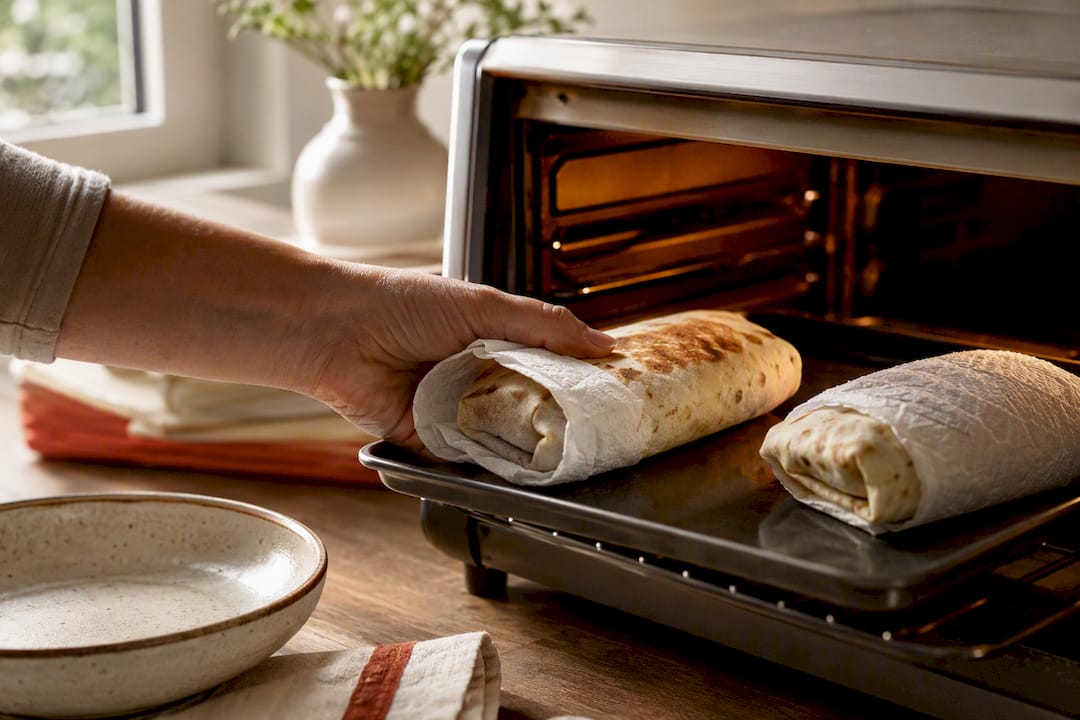
A simple label with the prep date and reheating method saves real time on a Monday morning scramble. Batching two or three recipes at once and portioning them immediately into containers turns a single hour of Sunday prep into a full week of breakfasts without repeating the same meal twice.
Making Breakfast Actually Keep You Full
Protein is the variable most make-ahead plans get wrong. A bowl of plain oatmeal or a muffin heavy on flour and sugar burns off fast, leaving you hungry well before lunch. Research on breakfast composition shows higher protein at breakfast improves satiety and can reduce mid-morning hunger compared to carbohydrate-heavy meals.
Practical ways to push protein higher without extra cooking steps:
- Stir Greek yogurt or cottage cheese into oats or smoothie packs.
- Add a scoop of unflavored or vanilla protein powder to baked oats or pancake batter.
- Use whole eggs generously in casseroles rather than diluting with egg whites alone.
- Spread nut butter on muffins or quick bread slices.
- Fold in tofu crumbles for a vegetarian egg-bake swap.
A balanced plate looks something like a slice of veggie egg casserole, a piece of fruit for fiber and vitamins, and a smear of avocado or nut butter for healthy fat. That combination holds up far better than toast alone.
Where to Find Recipes That Actually Work
The site tests every recipe from scratch and rates each one honestly for difficulty, so a “beginner” label means beginner, not a marketing softener. The breakfast casserole and freezer burrito recipes referenced above both include the exact wrapping and reheating steps that made them freezer-stable in testing. The full breakfast recipe collection covers everything from egg bakes to overnight oats variations for anyone building out a full week’s rotation.
Why Most Meal-Prep Advice Skips the Part That Matters
Most articles on this topic hand you a list of 20 recipes and call it done. The actual bottleneck for busy cooks isn’t recipe ideas, it’s the freezer-to-plate mechanics: wrapping technique, reheating method, and whether the eggs turn rubbery after a freeze cycle. Skip those details and even a great recipe fails on a Wednesday morning.
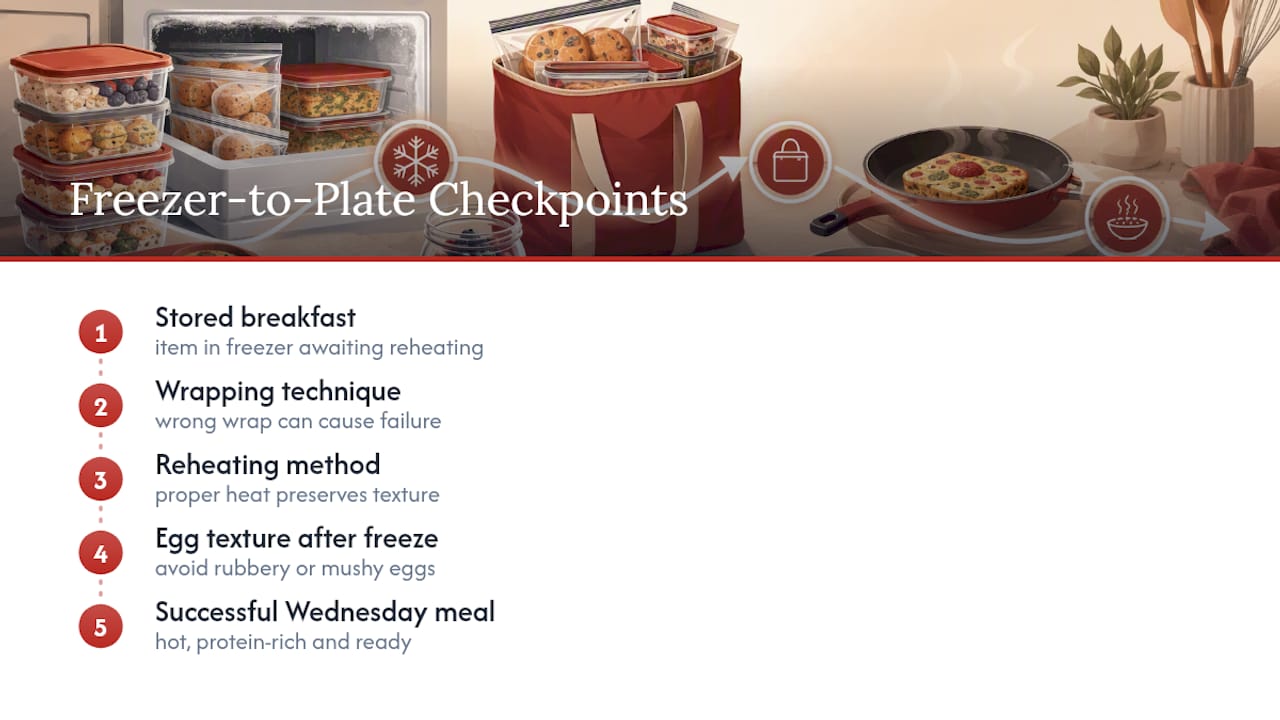
The conventional wisdom that “any breakfast prepped ahead saves time” also undersells how much protein content changes the outcome. A muffin-only week leaves you hungry by 10 a.m. no matter how organized your fridge looks. Pairing at least one egg-based or yogurt-based option into every week’s rotation does more for how the whole plan performs than any new recipe would.
If there’s one place to start, it’s the freezer burrito and the egg casserole. Both survive freezing and reheating without turning to rubber or mush, which is the actual failure point for most make-ahead attempts. Overnight oats are the easy win everyone already knows about. The harder, more valuable skill is getting a hot, protein-rich dish to come out of the freezer tasting like it just left the oven.
— Oloru
Get the Full Recipe Collection From Forkwardkitchen
The site tests every recipe from scratch before it goes live, with honest difficulty ratings instead of vague labels that oversell how easy something actually is.
Start with the full recipes hub to browse everything by difficulty and prep style, or jump straight into the breakfast casserole recipe to have something ready in the fridge by tomorrow. Bookmark the collection now and pull from it every Sunday when you plan the week’s prep.
Sources
FAQ
What are some good make-ahead breakfasts?
Overnight oats, egg casseroles, muffins, freezer burritos, and baked oat squares all hold up well; egg-based and yogurt-based options tend to keep you fuller longer than pastries or plain oatmeal.
What do cardiologists say to eat for breakfast?
Heart-focused guidance generally favors fiber-rich whole grains, fruit, and lean protein over refined sugar and processed meats, which lines up with combinations like oatmeal with fruit or an egg-and-vegetable bake.
What can I prepare for breakfast the night before?
Overnight oats, chia pudding, and assembled egg-muffin batter (baked fresh in the morning or the night before) are the easiest night-before options, along with pre-portioned smoothie packs ready to blend.
What is the first thing you should eat in the morning?
There’s no single food that must come first, but starting with protein rather than sugar or refined carbs alone tends to reduce hunger later in the morning.
How long do frozen breakfast burritos last?
Wrapped individually and stored in an airtight freezer bag, breakfast burritos keep for up to 3 months without a major drop in texture or flavor.