September 12, 2026
25–40 Minute No Soak Instant Pot Beans That Actually Work
Skip soaking. One tested Instant Pot template cooks most dried beans in 25–40 minutes at high pressure, with seasoning, storage, and foam fixes.
25–40 Minute No Soak Instant Pot Beans That Actually Work
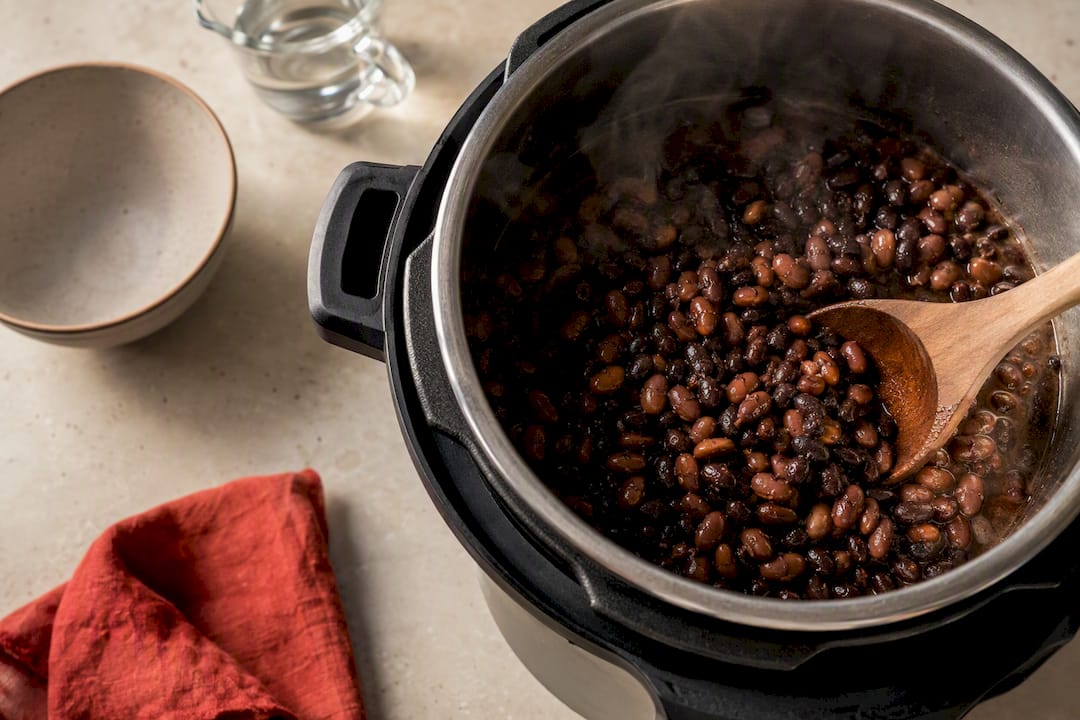
Skip the soak: cook dried beans with water or broth on high pressure for a time depending on the variety, then let the pot natural release for a few minutes. Cooking times vary by bean type. Keep beans and liquid below the halfway mark on the pot’s inner liner. That’s the whole method, and it works for almost every bean in your pantry.
TL;DR:
- Skipping soaking shortens preparation but may result in more skin splitting and requires longer cooking times, especially for older beans.
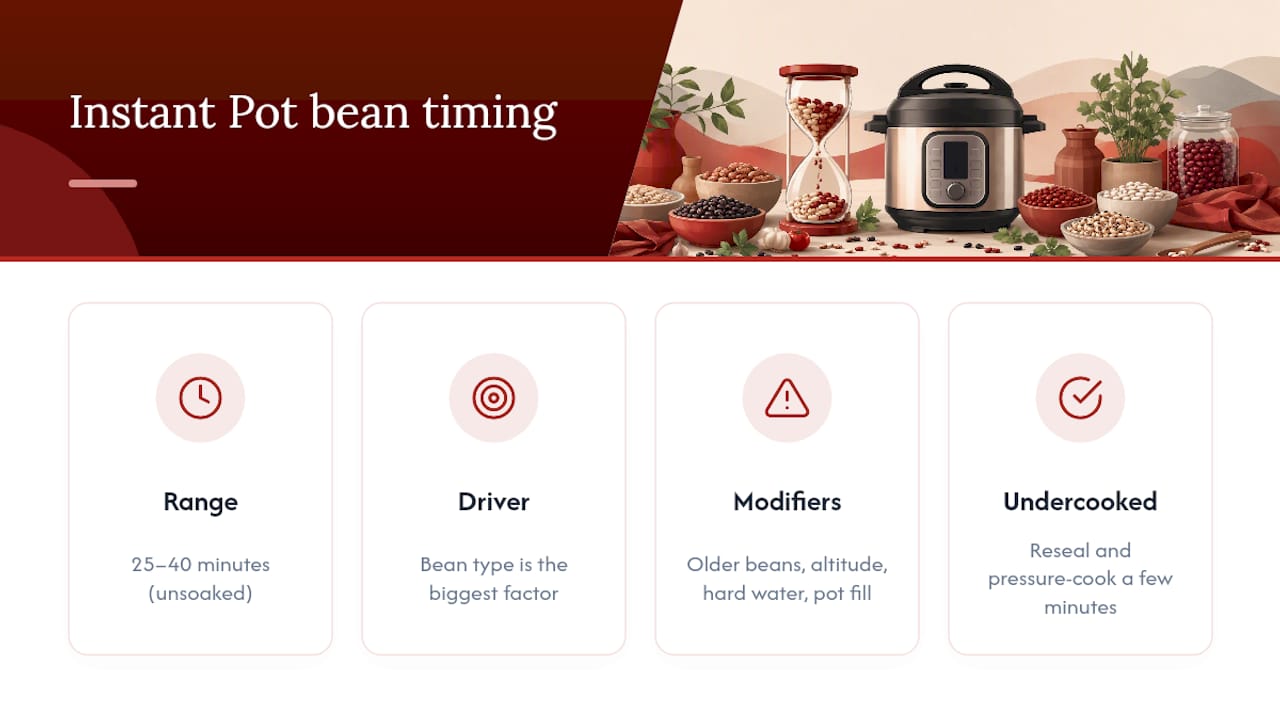
- Cooking times for unsoaked beans typically range from 25 to 40 minutes on high pressure, varying significantly by bean type and age.
- Filling the Instant Pot beyond halfway can cause foam buildup and overflow, so keeping it below the line and adding oil helps prevent valve clogging.
- Adding aromatics like garlic, onion, or bay leaf before sealing enhances flavor, but salt should be added after cooking to avoid skin toughening.
- Natural release is recommended over quick release to reduce foam and improve bean texture, with resealing and additional pressure cooking needed if beans remain hard.
Table of Contents
- How to Cook Instant Pot Beans From Scratch
- Should You Soak Beans Before Pressure Cooking?
- How Long Do You Cook Beans in an Instant Pot?
- Why Do Beans Foam and Overflow in the Instant Pot?
- What’s the Best Way to Season and Store Instant Pot Beans?
- How Forkward Kitchen Tested This Bean Method
- Why Homemade Instant Pot Beans Beat the Can
- Where to Find Tested Bean Recipes
- Sources
- FAQ
How to Cook Instant Pot Beans From Scratch
Forget presoaking. One pound of dried beans, roughly 2 cups, expands into about 5 cups cooked, so this template scales cleanly whether you’re feeding two people or stocking the freezer for a month.
What you need:
- dried beans, rinsed and picked over for stones or shriveled beans
- water or low-sodium broth
- neutral oil (olive or avocado work fine)
- Salt: hold off until after cooking, or add a small amount if seasoning during cooking
- Optional aromatics: onion, garlic cloves, bay leaf
The steps:
- Rinse the beans and dump them in the inner pot with water, oil, and any aromatics.
- Lock the lid and set the valve to sealing.
- Pressure cook on high for the time your bean variety needs (see the chart below).
- Let the pot natural release for 10 to 20 minutes before venting any remaining pressure.
- Fish out the bay leaf and onion, taste, then salt.
| Yield & storage | Detail |
|---|---|
| Cooked yield | Several cups per pound of dried beans |
| Fridge storage | Several days in an airtight container, submerged in their liquid |
| Freezer storage | A few months, portioned in suitable containers |
Storing beans in their own cooking liquid keeps them from drying out and actually improves flavor the next day, a trick worth carrying into other batch-cooked legumes like the lentil soup recipe in Forkward’s archive.
Should You Soak Beans Before Pressure Cooking?
Soaking shortens the pressure cook time and produces beans with fewer split skins, since presoaked beans rehydrate more evenly under pressure. Skipping the soak is faster to start but requires additional cooking time and may cause slightly more skin splitting, a tradeoff many cooks accept.
If you do soak, pick your method:
- Overnight soak: cover beans with 3 inches of water and refrigerate 8 to 12 hours.
- Hot soak: boil beans for 2 minutes, then let sit covered for 1 hour.
- Delay-start hack: use the Instant Pot’s delay timer to soak beans in the pot itself before cooking begins.
Any soak longer than four hours needs to happen in the refrigerator, not on the counter, to avoid bacterial growth. Beyond four hours at room temperature, you’re gambling with food safety for a texture difference most people can’t taste anyway.
How Long Do You Cook Beans in an Instant Pot?
Cook time swings by bean type more than almost any other variable, which is why a single “set it and forget it” number doesn’t exist.
These ranges come from tested no-soak methods rather than guesswork, and Simply Recipes’ testing backs the 25 to 40 minute window for common unsoaked varieties. Bean age matters too: beans sitting in your pantry for over a year take noticeably longer, since they lose moisture over time. Altitude, hard water, and a half-empty versus fully loaded pot also shift timing by a few minutes in either direction. If beans are undercooked, resealing and pressure cooking for a few additional minutes is recommended to finish cooking evenly.
Why Do Beans Foam and Overflow in the Instant Pot?
Bean foam is starchy residue that rises with the boiling liquid, and if it reaches the pressure valve, it can clog the release mechanism or cause a messy blowout during venting.
- Never fill the pot past the halfway line when cooking beans, even with liquid included.
- Add 1 to 4 tablespoons of neutral oil to the water. The fat breaks up surface tension and keeps foam from climbing as high, a trick backed by NDSU Extension’s pressure cooking research.
- Favor natural release over quick release. The slower pressure drop gives foam time to settle instead of surging toward the valve.
- If the valve does clog with foam, turn off the pot, let it sit a few extra minutes, then try venting again in short bursts.
Pro Tip: If your beans are undercooked after natural release, don’t switch to Sauté and simmer, since that dries out the pot and scorches the bottom. Reseal, add a splash more liquid if the pot looks dry, and pressure cook another 5 to 10 minutes instead.
What’s the Best Way to Season and Store Instant Pot Beans?
Aromatics cooked directly in the pot do more work than seasoning added afterward, since the pressure and heat push flavor into the beans themselves.
- Add a bay leaf, half an onion, smashed garlic, or a strip of kombu to the pot before sealing, then pull them out once cooking finishes.
- Swap water for low-sodium broth if you want deeper flavor without cranking up the salt.
- Salt after cooking if you’re freezing beans for later, since salt added early can occasionally toughen the skins on longer cooks.
- Portion cooled beans into 1 to 2 cup containers before freezing so you’re not thawing a giant block for a single batch of soup.
- Reheat straight from frozen in a saucepan with a splash of water, or microwave in 90 second bursts, stirring between.
Batch-cooked beans hold up well in dishes that already lean on pantry staples, an idea covered in more depth in this meal prep guide for busy home cooks.
How Forkward Kitchen Tested This Bean Method
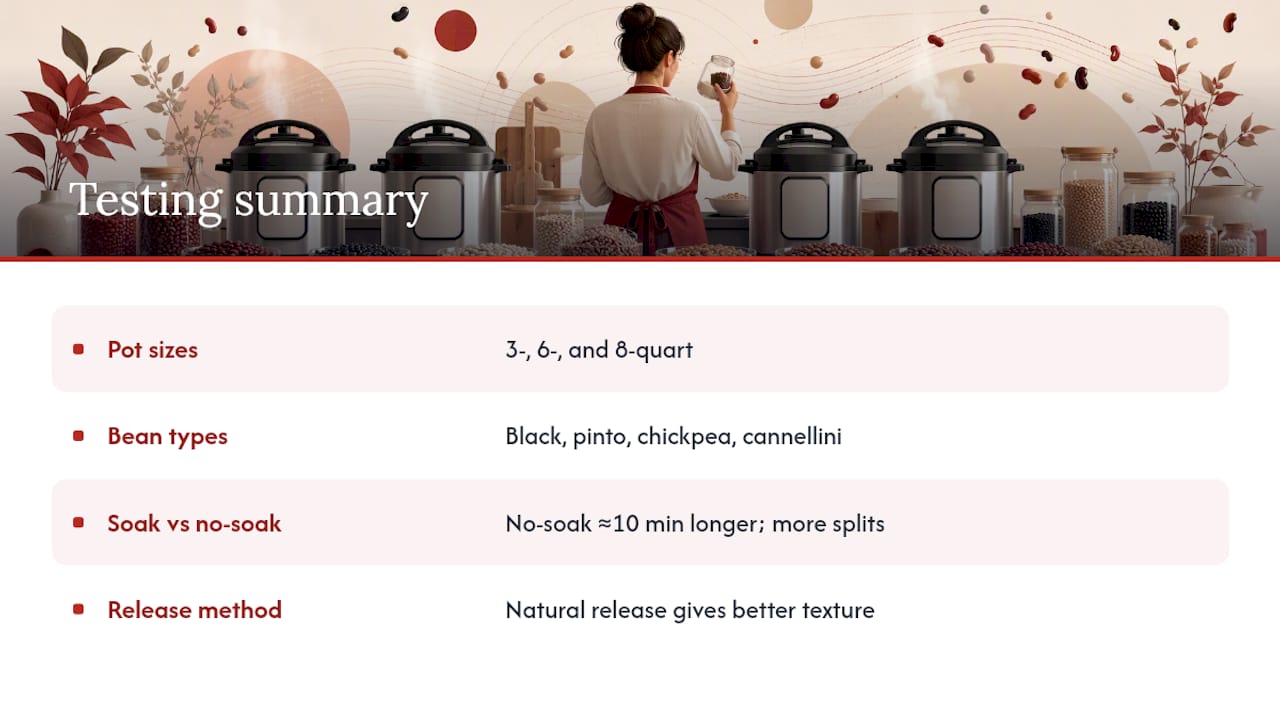
Forkward ran this method across multiple pot sizes, from the 3 quart Mini to the 8 quart, testing black beans, pintos, chickpeas, and cannellini both soaked and unsoaked. The pattern held steady: no-soak beans needed roughly 10 extra minutes but produced more split skins, while natural release consistently beat quick release for texture. Those repeated runs shaped the cook-time chart above and informed the technique notes used across Forkward’s broader Instant Pot recipe testing, where pressure timing and release method get the same scrutiny.
Why Homemade Instant Pot Beans Beat the Can
Batch-cooking a pound of dried beans costs a fraction of canned equivalents and gives you control over texture, sodium, and flavor that a can never will. Reach for homemade whenever you have 90 minutes and a freezer to fill; keep canned beans around for the nights you genuinely have five minutes, not fifty. Try a few varieties before settling on one method. Texture preference is personal, and the only way to find yours is by running the pot a few times.
— Oloru
Where to Find Tested Bean Recipes
Every recipe is tested with multiple runs, real notes on what went wrong, and an honest difficulty rating instead of a marketing one. That means when you land on a recipe, you’re not gambling on someone’s untested guess.
Once your beans are cooked and portioned, put them to work. The lemon white bean and kale soup uses a full batch of cannellini beans and takes well to whatever aromatics you cooked into the pot. For heartier cooking, the Instant Pot beef stew shows how the same pot handles a bigger batch without losing texture control, and the batch cooking guide covers freezer portioning in more depth than we could fit here. Browse the full recipe collection to find your next dish, or start with the homepage if you want to see what else Forkward has tested this month.
Sources
- Pressure cooking dry beans: tested methods — NDSU Extension PDF
- How To Make Fast, No-Soak Beans in the Pressure Cooker — Simply Recipes
FAQ
How Long Should Beans Cook in an Instant Pot?
Most unsoaked beans need 25 to 40 minutes on high pressure depending on variety, while presoaked beans usually finish in 6 to 12 minutes.
What’s the Bean-to-Water Ratio for an Instant Pot?
Use 5 to 6 cups of water or broth per pound of dried beans, though some cooks prefer a simpler 1 cup beans to 3 cups liquid ratio for smaller batches.
What Does the “Bean/Chili” Setting Do on an Instant Pot?
It’s a preset that defaults to roughly 30 minutes at high pressure, a reasonable starting point for medium-sized beans like pintos or black beans, but it won’t match the precision of setting your own time from the chart above.
How Many Minutes Does It Take to Cook Beans in a Pressure Cooker?
Total minutes vary by bean and soak status, ranging from about 6 minutes for soaked black-eyed peas to 40 minutes for unsoaked chickpeas, plus 10 to 20 minutes of natural release.
What Do I Do if My Beans Are Still Hard After Cooking?
Reseal the lid and pressure cook for another 5 to 10 minutes rather than switching to simmer, since the extra pressure time finishes the job faster and more evenly.