November 13, 2026
High Fiber Recipes: Hearty Meals That Actually Fill You Up
High fiber recipes for breakfast, dinner and weeknights: which foods carry the fiber, how much you need, and how to add it without bloating.

High Fiber Recipes: Hearty Meals That Actually Fill You Up
The easiest high fiber meals are built on beans, lentils, and whole grains such as barley and farro, with vegetables piled on top. A bowl of soup, a chili, or a grain salad built that way can deliver a large share of your daily fiber in one sitting, and none of them needs special equipment or hard-to-find ingredients. Below you will find how much fiber you need, which ingredients do the heavy lifting, how to plan dinners around them, and recipes from our kitchen that put the idea to work.
TL;DR
- Beans, lentils, barley, and farro are the workhorses: one cup of cooked lentils has about 15.6 g of fiber.
- Adult targets run from 22 to 34 g a day depending on age and sex, and add fiber gradually to avoid gas and bloating.
- Soups, chilis, and grain salads make the most forgiving high fiber dinners, and most can be made ahead.
- Vegetarian high fiber meals are easy: legumes carry the fiber and the protein together.
- Our soup and salad recipes below are original and tested in our own kitchen, with honest difficulty ratings.
Table of Contents
- How much fiber you need each day
- Where the fiber in a recipe comes from
- High fiber dinner recipes for busy weeknights
- High fiber vegetarian recipes that feel like a full meal
- Tips for adding fiber without wrecking the dish
- A sample week of high fiber dinners
- Our perspective: fiber is a cooking question first
- Find your next high fiber recipe
- FAQ
- Sources
How much fiber you need each day
The federal Dietary Guidelines for Americans 2020-2025 set daily fiber targets by age and sex. As summarized by Cleveland Clinic, the numbers are:
| Group | Daily fiber target |
|---|---|
| Women 19-30 | 28 g |
| Women 31-50 | 25 g |
| Women 51 and older | 22 g |
| Men 19-30 | 34 g |
| Men 31-50 | 31 g |
| Men 51 and older | 28 g |
Most recipe roundups use a per-serving cutoff to define “high fiber.” The pages that rank for this topic draw the line at 5 or 6 grams per serving for everyday meals, and some go up to 10 grams for the most fiber-dense dishes. A simple way to plan: if three meals each land near 8 to 10 grams, you are in range for most adults without counting anything else.
That is a bigger ask than it sounds. Typical American intake is often cited at around 15 grams a day, which is why a few well-chosen dinners make such a visible difference.
Add fiber slowly
If your current meals are low in fiber, ramping up too fast can cause gas and bloating. Cleveland Clinic registered dietitian Beth Czerwony recommends adding no more than 5 grams of fiber per week until you reach your personal goal. Drink water along with it, since fiber works with fluid. If you have a digestive condition such as irritable bowel syndrome, Crohn’s disease, or diverticulitis, or you are managing a medical diet, talk with your doctor or a registered dietitian before changing how much fiber you eat.
Where the fiber in a recipe comes from
When you read a recipe, look for these ingredients. They are the ones that move the number.
Legumes. Beans, lentils, chickpeas, and split peas are the single biggest lever. One cup of cooked lentils provides about 15.6 grams of fiber, along with roughly 18 grams of protein. That one ingredient covers more than half of many adults’ daily goal.
Whole grains. Barley and farro are the stars here. Cleveland Clinic calls barley an often-overlooked grain with a nutty flavor and a strong nutritional resume, and describes farro as an ancient grain whose nutty flavor makes it a hit at the dinner table. Whole-wheat wraps, brown rice, quinoa, and oats belong in the same group.
Vegetables and fruit. Winter vegetables, leafy greens, avocado, and apples add fiber and bulk. They also make a pot of beans or grains taste like a complete meal.
Nuts and seeds. A spoonful over a salad or soup adds crunch and a little more fiber.
Here is how those ingredients show up in published recipes with listed fiber counts:
| Recipe | Fiber per serving | Main fiber sources |
|---|---|---|
| Roasted Winter Vegetable Ragout | 19 g | Winter vegetables |
| Meatless Black Bean Chili | 17 g | Black beans |
| Moroccan Lentil Stew with Raisins | 13 g | Lentils |
| Tex-Mex Black Bean and Chicken Wrap | 11 g | Black beans, whole-wheat wraps, avocado |
The pattern is obvious: every one of these dishes leans on a legume, a whole grain, or a big pile of vegetables. Once you see that, you can read any recipe and estimate whether it will be high in fiber before you cook it.
High fiber dinner recipes for busy weeknights
A weeknight dinner has to survive a tired cook. The best high fiber options share three traits: they use pantry staples, they cook in one pot, and they reheat well.
Start with beans and lentils
Canned beans and chickpeas need no soaking and go straight into the pot. Dried lentils do not need soaking either, which is why lentil soup is one of the most reliable pantry dinners there is. Our lentil soup recipe is written around pantry ingredients, so you can make it on a night when you have not shopped.
For something creamier and more filling, our Creamy Tuscan White Bean Soup with Sausage and Kale pairs white beans with leafy greens. If you want a lighter bowl, the Zesty Lemon White Bean soup with kale is one of our best healthy soup recipes, with bright lemon cutting through the richness of the beans.
Use grains as the base
A grain salad is a dinner that tastes better the next day. Our Turmeric Toasted Farro and Spiced Chickpea Salad combines two fiber sources in one bowl: a whole grain and a legume. Make a double batch on Sunday and you have two dinners or a few lunches.

Barley does the same job in soup. Our beef barley soup with red wine and the version built on toasted aromatics and pearl barley are both hearty cold-weather meals where the barley thickens the broth and adds chew.
Weeknight versus weekend
Be realistic about your evening. Soups made from canned beans or lentils suit a weeknight. Dishes that call for browning meat and simmering a long time, like beef barley soup or Traditional Moroccan Harira Soup with Lamb and Lentils, are better weekend projects. They reward the time, and the leftovers carry you through the week. Every recipe on our site carries a difficulty rating, so you can tell before you start which kind of night it suits.
Make soups thick without flour
Bean and lentil soups can be thickened using the fiber-rich ingredients already in the pot. Our guide to thickening soup with pantry staples covers methods that use no flour or dairy, so the soup stays focused on beans, vegetables, and grains.
High fiber vegetarian recipes that feel like a full meal
Vegetarian cooking has a built-in advantage here. Legumes supply fiber and protein together, so a bean or lentil dish is filling without any meat. The ranking pages for this topic lean on the same ideas: chilis, stews, pasta with beans, grain bowls, and tacos.
A few combinations that work reliably:
- Black bean chili. Black beans, tomatoes, onion, and spices. The chili in the table above reaches 17 g per serving, among the highest of any dinner listed.
- Lentil stew with warm spices. Lentils with carrots, onion, and a little sweetness from raisins, as in the Moroccan-style stew listed above at 13 g.
- Chickpea and farro salad. A cooked grain, canned chickpeas, a punchy dressing, and herbs.
- White beans and greens. Simmered with garlic and lemon, served with whole-grain bread.
- Roasted vegetable ragout. Winter vegetables roasted until caramelized, then stewed. The version in the table above has 19 g per serving.
If you want the same idea in a bowl you can finish in an evening, start with our lentil soup or the farro and chickpea salad and skip the sausage or lamb. Both lean on the legume for body. If you are looking for pasta, our pasta recipes are a good place to see how beans and vegetables can share the plate with noodles.
Tips for adding fiber without wrecking the dish
High fiber cooking goes wrong when fiber is treated as an add-on rather than a design decision. These habits keep the food tasting good.
Build the plate around the fiber. Pick the legume or grain first, then add flavor. A pot of beans with onion, garlic, acid, and herbs needs very little else.
Add acid and salt at the end. Lemon juice, vinegar, or a splash of wine at the finish lifts a bean soup that tastes flat.
Cook grains in advance. Barley and farro hold up for days in the refrigerator. Cook a batch, then use it in soup, salads, and breakfast bowls.
Pair fiber with protein. Fiber slows you down at the table, and protein keeps you satisfied. Beans do both, and so do lentils. If you are planning meals around higher protein intake, for example while following a GLP-1 medication plan, this GLP-1 meal planning guide covers protein targets, and fiber-rich legumes sit comfortably alongside it. As with any change to your diet while on medication, check with your prescriber.
Raise your total slowly. Remember the 5-gram-a-week guideline from earlier. A new dish every few days works better than switching everything at once.
Freeze in portions. Soups with beans, lentils, and barley freeze well. Portion them into containers, and the hard part of a weeknight dinner is already finished.

A sample week of high fiber dinners
This is a plan, not a prescription. Swap in what you have.
| Day | Dinner | Why it works |
|---|---|---|
| Monday | Lentil soup with whole-grain bread | Pantry staples, fast |
| Tuesday | Leftover soup, plus a side salad | Zero new cooking |
| Wednesday | Farro and chickpea salad | Made ahead, served cold or warm |
| Thursday | White bean and kale soup | One pot |
| Friday | Black bean wraps with avocado | Similar to the 11 g wrap above |
| Saturday | Beef barley soup | Weekend project, makes extra |
| Sunday | Reheated barley soup, plus fruit | Leftovers, easy finish |
Two cooking sessions, soup on Monday and a grain salad on Wednesday, cover most of the week. That is the idea behind high fiber meal prep: cook a base once, then change it with toppings.
Our perspective: fiber is a cooking question first
Most people who search for high fiber meals are not looking for a nutrition lecture. They want dinner, and they want it to taste good.
That is why we develop every recipe from scratch and test it in our own kitchen. A recipe built around beans, lentils, or barley has to be seasoned properly, cooked to the right texture, and written clearly enough that a beginner gets the same result as a seasoned cook. We give each recipe an honest difficulty rating, because a soup that suits a Tuesday night is a different thing from a long weekend project, and you should know which one you are starting.
Our approach is to treat fiber-rich ingredients as the main event. Barley thickens a broth and gives it body. Lentils turn pantry staples into a full dinner. White beans and greens become a creamy, satisfying soup. When the ingredients carry the flavor, the fiber comes along without effort.
Whether you are new to cooking or ready for a bigger project, we want you to open a recipe and trust it.
Oloru
Find your next high fiber recipe
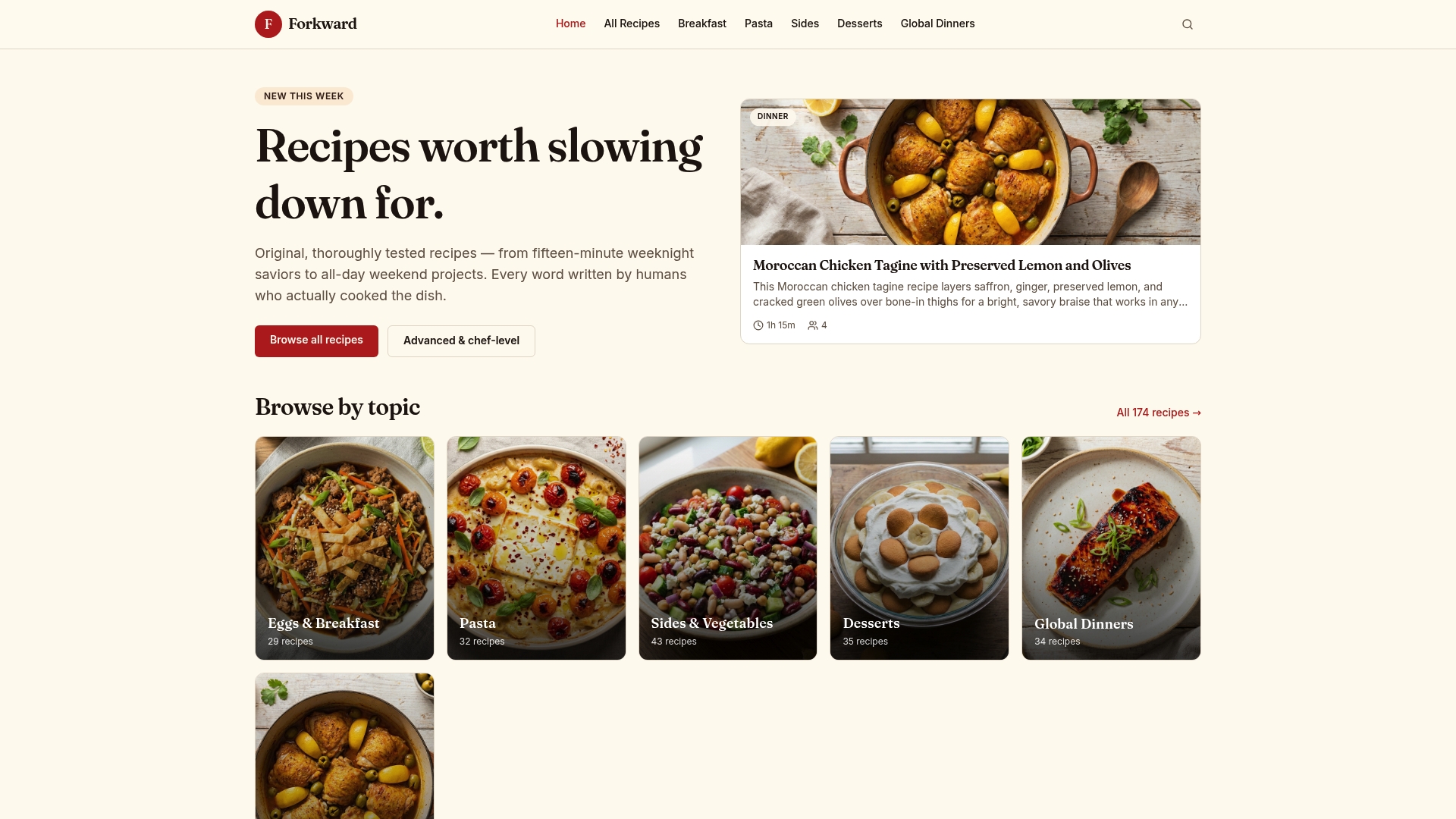
We publish original recipes, from quick weeknight soups to advanced weekend projects, each with complete instructions, practical tips, and a difficulty rating you can rely on. Start with the soups and salads above, or browse the full collection of Forkward recipes to build your own week around beans, grains, and vegetables.
If you are ready for something more ambitious, our advanced recipes are for cooks who want a challenge, and many of the technique lessons carry over to everyday cooking.
FAQ
What counts as a high fiber meal?
Most recipe collections set the bar at 5 grams of fiber per serving or more, and some use 6 or even 10 grams for their top picks. Meals built on beans, lentils, whole grains, and vegetables reach those numbers easily. A single cup of cooked lentils has about 15.6 grams.
How much fiber should I eat in a day?
The Dietary Guidelines for Americans 2020-2025 recommend between 22 and 34 grams a day, depending on your age and sex. Women 19-30 are advised 28 g, and men 19-30 are advised 34 g. The target drops with age, to 22 g for women and 28 g for men over 50.
How can I eat more fiber without gas and bloating?
Increase gradually. A Cleveland Clinic dietitian recommends adding no more than 5 grams of fiber per week until you reach your goal, and drinking enough water along the way. If you have a digestive condition, check with your doctor or a registered dietitian first.
What are the easiest high fiber vegetarian dinners?
Bean chili, lentil soup, chickpea and farro salad, and white beans with greens are the simplest. Legumes provide fiber and protein together, so the meal is filling without meat. Most can be made in one pot and reheat well for leftovers.
Sources
- High-Fiber Recipes: 10 Tasty Options (Cleveland Clinic)
- How Much Fiber Do You Need per Day? (Cleveland Clinic)
- Tex-Mex Black Bean and Chicken Wrap (American Heart Association)
- Lentils: Nutrition, Benefits, and How to Cook Them (Healthline)