August 11, 2026
Crispy Tofu for Home Cooks: Fast, Reliable Methods
Discover how to achieve perfectly crispy tofu at home with fast, reliable methods. Get the best texture with expert tips and tricks.
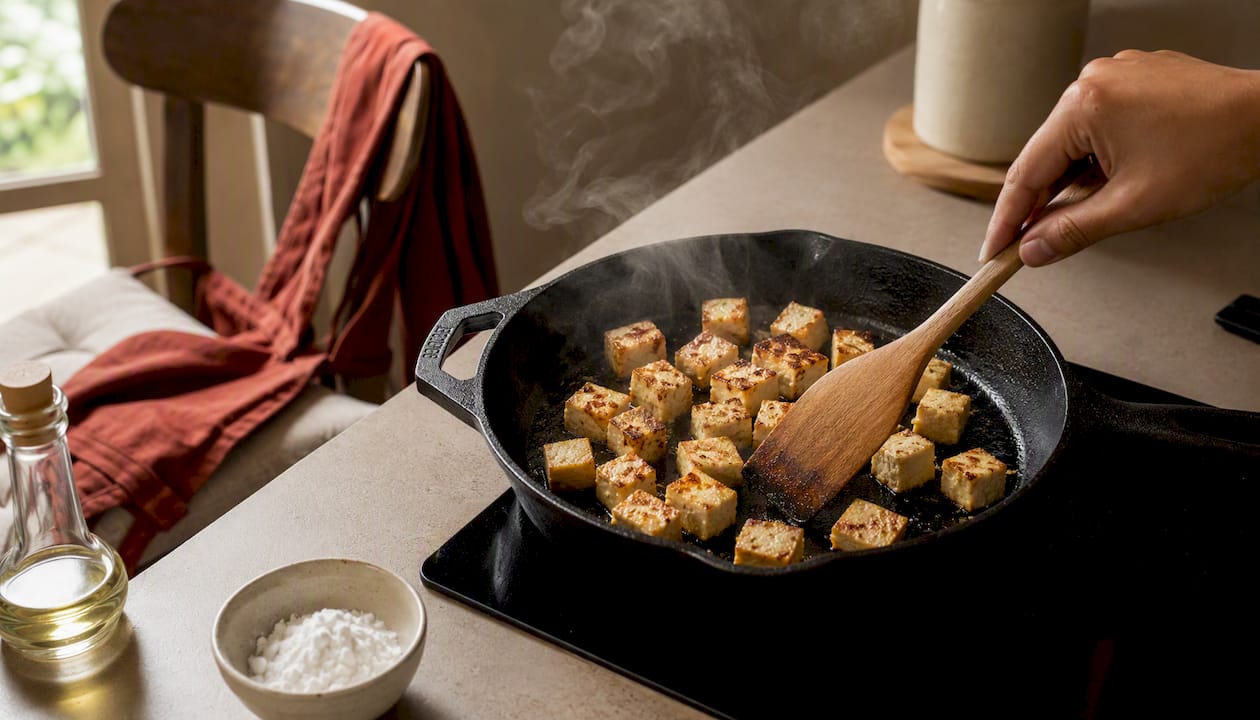
Crispy Tofu for Home Cooks: Fast, Reliable Methods
The fastest, most reliable way to get shatteringly crispy tofu is to start with extra-firm tofu, remove as much surface moisture as possible, and either coat it in starch before pan-frying or deep-frying, or freeze and thaw it before baking or air-frying. Both routes work. The difference is time and texture priority.
Here is a quick-reference cheatsheet before you dive in:
- Pan-fry: Heat oil to a high temperature, cook a few minutes per side. Best for fast weeknight batches.
- Deep-fry: Oil heated until hot enough, cook a few minutes total. Most intensely crisp result.
- Oven-bake: 425°F for 25–30 minutes, flipping once. Best for low-oil meal prep.
- Air-fry: 400°F for 15–18 minutes, shaking halfway. Faster than the oven, nearly as good.
No matter which method you choose, the single biggest lever is moisture removal. Wet tofu steams instead of crisps. Get that right and everything else follows.
Key Takeaways
Extra-firm or super-firm tofu, thorough moisture removal, and a starch coating at high heat are the three non-negotiable steps for reliably crispy tofu across every cooking method.
| Point | Details |
|---|---|
| Start with the right tofu | Extra-firm or super-firm tofu has lower water content and holds its shape under high heat. |
| Remove moisture first | Press for 15–60 minutes or freeze-thaw overnight; wet tofu steams instead of crisping. |
| Use a starch coating | Cornstarch or rice flour forms a brittle shell; rice flour gives the lightest, most durable crust. |
| Match method to your goal | Pan-fry for speed, deep-fry for maximum crispness, oven or air-fry for low-oil meal prep. |
| Forkwardkitchen’s tested recipes | Fully tested pan-fry, oven, and air-fry methods with honest difficulty ratings at forkwardkitchen.com/recipes. |
Table of Contents
- How does tofu actually get crispy?
- Which tofu should you buy for the crispiest results?
- Fast and thorough ways to press and prep tofu
- Step-by-step cooking methods: pan-fry, deep-fry, oven, and air-fry
- Which coating gives you the crispiest crust?
- How to season and marinate tofu without losing the crisp
- How to store and reheat crispy tofu so it stays crisp
- Common mistakes and how to fix them
- Forkwardkitchen testing notes: what we tried and what won
- Why these methods matter more than most recipes admit
- Forkwardkitchen’s tested crispy tofu recipe is ready for you
- Sources
How does tofu actually get crispy?
Crispness is rapid surface dehydration combined with a rigid structure, either from denatured protein or a starch shell. Tofu is mostly water by weight, and that water has to go somewhere before the surface can brown and harden.
When you drop tofu into hot oil, the surface water flashes to steam. If the oil is hot enough, that steam escapes fast and the surface dries out before it can absorb oil. If the oil is too cool, the steam lingers, the tofu sits in a greasy bath, and you get a soft, oily cube instead of a crisp one. That is why oil temperature is not a suggestion.
A starch coating changes the equation further. Cornstarch, potato starch, and rice flour each help form a thin, brittle shell around the tofu as they cook. The starch granules absorb surface moisture, gelatinize in the heat, and then set into a crackly layer that the tofu’s own protein network cannot produce on its own.
Pro Tip: Drop a small cube of tofu into the oil before adding the batch. If it sizzles immediately and vigorously, the oil is ready. If it just sits there, wait another 60 seconds.
Which tofu should you buy for the crispiest results?
Extra-firm or super-firm tofu is the right starting point. Both have lower water content than firm or silken varieties, which means less pressing time and a more durable texture that holds up to high heat without crumbling.
Super-firm tofu, sometimes sold vacuum-packed rather than water-packed, is the most convenient option. It comes pre-pressed and can go straight to the cutting board with just a quick blot. Extra-firm from a water-packed container needs some pressing but delivers excellent results.
Frozen-and-thawed tofu is a third option worth knowing. Freezing ruptures the protein structure, which squeezes out water more efficiently than pressing alone and leaves a spongier, more porous interior. That porosity means it soaks up marinades faster and crisps up beautifully in the oven, as the New York Times crispy tofu method demonstrates.
What to avoid at the store:
- Silken tofu: too fragile, too wet, will fall apart
- Soft tofu: similar problem, not worth the effort
- Water-packed firm tofu without pressing: will steam instead of crisp
- Tofu stored past its use-by date: texture degrades and it crisps unevenly
Fast and thorough ways to press and prep tofu
You must remove surface water before cooking. How thoroughly depends on your method and how much time you have.
| Method | Time | Best For |
|---|---|---|
| Quick blot (paper towels) | a few minutes | Pan-sear, immediate meals |
| Folded-towel press | some time | Pan-fry, air-fry |
| Weighted press | longer time | Oven-bake, deep-fry |
| Freeze-thaw | extended time | Oven-bake, marinated tofu |
Quick blot: Slice the tofu, lay the pieces on a clean kitchen towel or several layers of paper towels, and press firmly with your palm for 30 seconds per side. Good enough for stovetop searing when you want a tender interior.
Folded-towel press: Wrap the whole block in a clean towel, set a heavy skillet or a few books on top, and leave it for 15–30 minutes. This removes significantly more water than blotting and works well for air-frying.
Weighted press: Same as above but with more weight and more time. A cast-iron skillet loaded with a few cans works well. Thirty to sixty minutes produces noticeably drier, chewier tofu that holds its shape in the oven.
Freeze-thaw: Freeze the tofu block in its original packaging, then thaw it overnight in the fridge or for a few hours at room temperature. Squeeze out the water gently with your hands once thawed. The texture becomes spongy and almost meaty, and it crisps in the oven without any coating.
A dedicated tofu press (brands like TofuBud or EZ Tofu Press are widely available) makes the weighted-press step hands-free, but a sheet pan, a cooling rack, and a heavy pot work just as well.
Step-by-step cooking methods: pan-fry, deep-fry, oven, and air-fry
Quick guide: Pan-fry for speed and small batches. Deep-fry for the crispiest possible result. Oven-bake for low-oil meal prep. Air-fry when you want oven results in half the time.
Pan-frying
Stovetop pan-searing is the fastest route to golden, crispy tofu and takes about 20 minutes from start to finish.
- Press or blot tofu dry, then cut into 3/4-inch cubes or slabs.
- Toss with 1–2 tablespoons of cornstarch until lightly coated.
- Heat a cast-iron or stainless-steel skillet over medium-high. Add enough neutral oil to coat the bottom generously (about 2–3 tablespoons).
- Add tofu in a single layer. Do not crowd the pan.
- Cook a few minutes undisturbed until golden. Flip and repeat on remaining sides.
- Transfer to a wire rack, not paper towels, to stay crisp.
Deep-frying
Deep-frying produces the crispiest shell of any method because the tofu is surrounded by consistently hot oil on all sides at once. Serious Eats’ testing found that deep-fried batches developed thin, airy shells that pan-fried tofu simply could not match.
- Fill a heavy pot with 2–3 inches of neutral oil. Heat to 375°F.
- Coat pressed tofu in rice flour or cornstarch.
- Fry in small batches for a few minutes, turning once.
- Drain on a wire rack. Season immediately.
Keep batches small. Adding too much tofu at once drops the oil temperature and leads to greasy results.
Oven-baking
- Preheat oven to 425°F. Line a sheet pan with parchment.
- Use pressed or freeze-thawed tofu. Toss with 1 tablespoon oil and a pinch of salt.
- Spread in a single layer with space between pieces.
- Bake about half an hour, flipping once at the halfway point.
- Let rest 5 minutes on the pan before serving. The crust firms as it cools.
Freeze-thaw prep makes a real difference here. The porous texture bakes up crispier than pressed-only tofu, with no coating needed.
Air-frying
- Preheat air fryer to 400°F.
- Toss pressed tofu with a light coating of oil and cornstarch.
- Arrange in a single layer in the basket.
- Cook 15–18 minutes, shaking the basket once at the 8-minute mark.
The air fryer beats the oven on speed and produces a slightly drier, crunchier exterior because the circulating heat is more aggressive.
Method comparison
| Method | Best For | Crispiness | Total Time | Oil Use | Difficulty | Tofu Type |
|---|---|---|---|---|---|---|
| Pan-fry | Stir-fries, quick meals | Crispy | Around 20 minutes | Moderate | Easy | Extra-firm |
| Deep-fry | Dipping, salads | Very crispy | Around 20 minutes | High | Medium | Extra-firm |
| Oven-bake | Meal prep, bowls | Crispy | about half an hour | Low | Easy | Frozen-thawed |
| Air-fry | Meal prep, snacks | Very crispy | Approximately 20 minutes | Very low | Easy | Extra-firm |

Which coating gives you the crispiest crust?
A thin starch coating reliably produces a crisper, lighter crust than frying plain tofu. The coating choice affects fragility, staying power under sauce, and how the tofu holds up after a few minutes on the plate.
- Cornstarch: The most common choice. Produces a sturdy, golden crust that holds up well under a sauce toss. Slightly thicker shell than rice flour.
- Potato starch: Creates a delicate, very crispy crust quickly, but it softens faster than cornstarch once sauced.
- Rice flour: Lightest crust of the three. In Serious Eats’ controlled testing, rice flour balanced lightness and staying power better than any other coating, especially in deep-frying.
- All-purpose flour: Heavier crust, more batter-like. Works but lacks the shatter of starch.
Three quick coating methods:
- Dry dust: Toss tofu cubes in a bowl with 2 tablespoons of starch. Shake off excess. Simple and fast.
- Starch slurry: Mix equal parts cornstarch and water to make a slurry. Dip tofu pieces and let excess drip off before frying. Produces a more even, delicate shell that puffs in hot oil.
- Tempura-style batter: Whisk together rice flour, cold sparkling water, and salt. Dip tofu and fry immediately at a hot temperature. Produces a light, airy shell with good crunch.
Pro Tip: For the crispiest pan-fry without deep-frying, use a dry cornstarch dust and press the tofu firmly into the pan for the first 60 seconds. That initial contact sets the crust before you let it cook undisturbed.
How to season and marinate tofu without losing the crisp
The rule is simple: keep tofu dry for crisping. Wet marinades applied before cooking soften the surface and prevent browning. There are two ways around this.
Option 1: Season after cooking. Toss freshly crisped tofu in a sauce immediately after cooking off the heat. The hot surface absorbs flavor quickly, and the crust stays intact if served promptly. This works well for soy-ginger glazes, chili crisp, or sticky soy-honey finishes.
Option 2: Marinate frozen-thawed tofu. The spongy texture from freezing soaks up marinade efficiently. According to Rainbow Plant Life’s marinated tofu method, freezing and defrosting tofu before marinating produces a spongier texture that absorbs flavor deeply and still crisps well in the oven. Marinate for a moderate amount of time, pat dry, then bake or air-fry.
A simple marinade that works: Combine soy sauce, rice vinegar, sesame oil, and a sweetener. Marinate pressed or frozen-thawed tofu for a short period. Pat dry before cooking.
- Avoid marinating too long, as excess liquid re-saturates the tofu and reduces crispness.
- Avoid oil-heavy marinades before baking. They prevent the surface from drying out.
- For a glaze finish, brush on during the last 3–4 minutes of oven time or toss in a hot pan off the heat.
Pro Tip: If you want both deep flavor and a crisp crust, season the dry starch coating itself. Mix salt, garlic powder, and a pinch of white pepper into the cornstarch before dusting. The seasoning goes directly onto the crust without adding moisture.
How to store and reheat crispy tofu so it stays crisp
Crispy tofu does not stay crisp indefinitely, but with the right storage and reheating approach, you can get close.
Storage rules:
- Cool tofu at room temperature before storing. Covering hot tofu traps steam and softens the crust.
- Store in a loosely covered container or one with a paper towel lining to absorb moisture.
- Keep in the fridge for up to 4 days.
- Store sauce separately if you want to reheat with crispness intact.
Reheating steps:
- Oven: Spread tofu on a parchment-lined sheet pan. Bake at 400°F for 8–10 minutes. The crust firms back up as the moisture evaporates.
- Air fryer: Set to 350°F and cook for 4–5 minutes. This is the fastest and most effective reheating method.
- Stovetop: Heat a dry skillet over medium-high. Add tofu and press lightly with a spatula for 2 minutes per side. No oil needed if the tofu already has a starch coating.
Avoid microwaving, which softens the crust quickly.
Common mistakes and how to fix them
Soggy tofu:
- Cause: Too much surface moisture, oil too cool, or pan overcrowded.
- Fix: Press longer, check oil temperature before adding tofu, cook in smaller batches. Already cooked and soggy? Reheat in the air fryer at 375°F for 5 minutes.
Coating falls off:
- Cause: Tofu too wet when coated, or moved too soon in the pan.
- Fix: Blot thoroughly before coating, and do not touch the tofu for the first 3 minutes. It releases naturally when the crust has set.
Tofu crumbles:
- Cause: Tofu too soft, or cut too small.
- Fix: Use extra-firm or super-firm. Cut pieces no smaller than 3/4 inch. Handle gently when turning.
Burnt exterior, raw-feeling interior:
- Cause: Heat too high, pieces too thick.
- Fix: Lower heat slightly and cut tofu to a uniform 3/4-inch thickness so the interior heats through before the outside burns.
Oil absorption:
- Cause: Oil temperature dropped below 350°F during frying.
- Fix: Fry in smaller batches and let the oil return to temperature between batches.
Quick verification checks:
- Oil ready: a tofu cube sizzles vigorously on contact.
- Crust set: tofu releases cleanly from the pan without tearing.
Forkwardkitchen testing notes: what we tried and what won
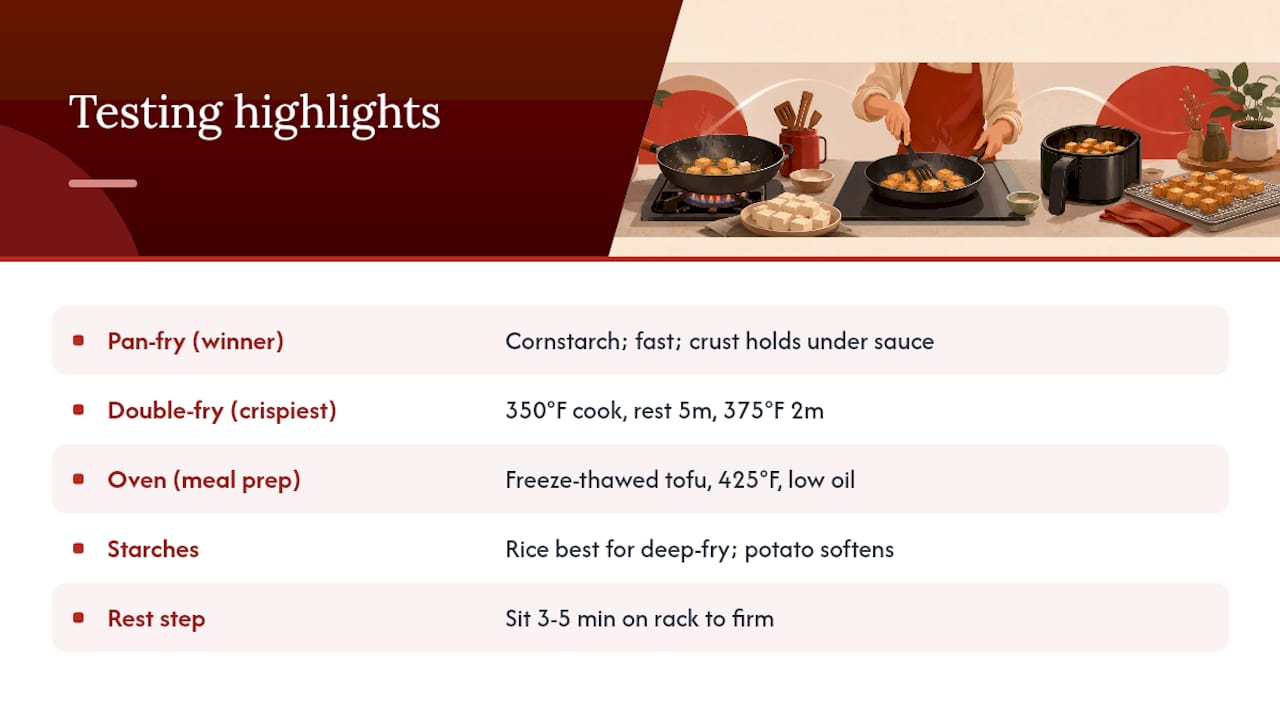
After testing multiple variations across pressing methods, starch types, and cooking methods, the clear winner for most home cooks is a cornstarch dry-dust combined with a high-heat shallow pan-fry in a cast-iron skillet. It is fast, requires minimal equipment, and produces a crust that holds up well under a sauce toss.
For the crispiest possible result with no time pressure, the double-fry method (fry at 350°F to cook through, rest 5 minutes, fry again at 375°F for 2 minutes) produced a shell that shattered on the first bite. For low-oil meal prep, freeze-thawed tofu baked at 425°F came closest to the pan-fry result without any coating.
Starch type mattered more than expected. Cornstarch won for pan-frying. Rice flour won for deep-frying, confirming what Serious Eats found in their own testing. Potato starch was excellent right out of the pan but softened noticeably within 10 minutes of saucing.
The single most underrated step is the rest. Letting baked or fried tofu sit on a wire rack for 3–5 minutes after cooking firms the crust significantly. Pull it too early and the steam from the interior softens the shell before it fully sets.
Pro Tip: For meal prep, cook a full batch using the oven method with freeze-thawed tofu. Store plain, reheat in the air fryer, and sauce to order. You get crispy tofu on demand all week.
Why these methods matter more than most recipes admit
Most crispy tofu recipes bury the most important variable in step three: moisture removal. They treat it as a quick note rather than the foundation the whole method rests on. The truth is that technique matters more than the recipe itself. You can use the exact same ingredients and get completely different results depending on whether you pressed the tofu for 5 minutes or 30.
The freeze-thaw method is the clearest example of this. It sounds like extra work, but it is mostly passive time, and it produces a texture that pressing alone cannot replicate. The porous interior crisps from the inside out in a hot oven, which is why it works so well for meal prep without any coating.
For home cooks who want reliable results without memorizing a new technique every time, the starch-plus-pan-fry method is the one worth mastering first. It is fast, forgiving, and produces a crust that works in stir-fries, rice bowls, and salads equally well. Once that is second nature, the oven and air-fryer methods open up a whole range of meal-prep possibilities.
Forkwardkitchen’s tested crispy tofu recipe is ready for you
Every method in this article has been tested in the Forkwardkitchen kitchen, with honest notes on what worked, what did not, and why. The full recipe collection covers everything from a fast weeknight pan-fry to a freeze-thaw oven method built for batch cooking, each with exact temperatures, timing, and difficulty ratings you can trust.
Whether you are making crispy tofu for the first time or trying to nail a specific texture for a bowl or stir-fry, the tested recipes at Forkwardkitchen give you a single reliable starting point with no guesswork. Browse the full collection and find the method that fits your week.
Sources
- I Tested 8 Ways to Make Crispy Fried Tofu—1 Was Clearly the Best
- Crispy Tofu Recipe
- Crispy Tofu {the best and easiest method!}
- Seriously Delicious Marinated Tofu - Rainbow Plant Life