September 22, 2026
Home Cooks: Cook 1 lb Dry Beans into 6 Cups on the Stovetop
Tested stovetop method for cooking dried beans. One pound yields about 6 cups. Save money, control texture, and pick soak or no soak.
Home Cooks: Cook 1 lb Dry Beans into 6 Cups on the Stovetop
The easiest reliable way to cook beans from dry is a stovetop gentle simmer: cover them in fresh water, bring it to a boil, then drop the heat until the surface barely moves. Soaking is optional but speeds things up. One pound of dry beans (about 2 cups) turns into roughly 6 cups cooked, and most varieties are tender somewhere between 45 minutes and 3 hours.
TL;DR:
- Soaking dried beans shortens cooking time but is optional, with overnight, quick, and hot soak methods suited for different bean types and schedules.
- Cooking beans at a gentle simmer and avoiding rapid boiling prevents skin breakage, with total cook time ranging from less than an hour to several hours depending on bean age.
- Pressure cooking speeds up the process, requires minimal prep, but kidney beans must be boiled properly to neutralize toxins regardless of the method.
- Proper timing for doneness varies by intended use, with beans needing to be firm or soft, and should be tested by pressing or biting one to check texture.
- Controlling salt, acid, and mineral content during cooking is essential for achieving the desired flavor and avoiding tough skins or prolonged cook times.
Table of Contents
- How to Prepare Dried Beans Before Cooking
- Should You Soak Beans Before Cooking?
- How to Cook Dried Beans on the Stovetop
- Can You Cook Dried Beans in a Pressure Cooker?
- How Do You Know When Beans Are Done?
- Common Bean-Cooking Mistakes and How to Fix Them
- What Forkwardkitchen’s Bean Tests Actually Showed
- Why Dried Beans Are Worth the Extra Time
- Try Forkwardkitchen’s Tested Bean Recipes
- Sources
- FAQ
How to Prepare Dried Beans Before Cooking
Spread the beans on a sheet pan and pick through them before anything else. You’re looking for small stones, shriveled beans, and stray bits of plant debris that show up even in packaged bags. Rinse them in a colander under cold water until it runs clear.
Pro Tip: Skip bottled broth if you want depth without sodium creep. Simmer beans in plain water with a smashed garlic clove, a bay leaf, and half an onion, then salt to taste at the end.
- Pick through beans on a flat surface, discarding shriveled ones and debris
- Rinse thoroughly in a colander
- Add aromatics (bay leaf, garlic, onion, dried chile) to the pot, not the soak
- Use stock instead of water for richer flavor in soups or stews
One pound of dry beans yields close to 6 cups cooked, and a 15-ounce can equals about 1.75 cups — handy math when you’re converting a canned-bean recipe. Bean age matters more than most cooks realize: beans sitting in a warehouse or your pantry for over a year take longer to soften and sometimes never fully do. Buy from a store with steady turnover, and use what you buy within six months to a year.
Should You Soak Beans Before Cooking?
Soaking isn’t mandatory, but it shortens cooking time and can make beans easier to digest. The right choice depends on the bean and your schedule.
- Overnight soak (8+ hours): submerge beans in cool water and let them sit at room temperature or in the fridge. This is the best option for older or larger beans like chickpeas and kidney beans.
- Quick soak: boil the beans for 2 to 3 minutes, then let them rest off the heat for about 1 hour before draining and cooking. Good when you forgot to soak the night before.
- Hot soak: boil for 2 to 3 minutes, then rest up to 4 hours. It splits the difference between the overnight and quick methods.
- No soak: skip it entirely for small, thin-skinned beans like lentils, split peas, or black-eyed peas. Expect a longer simmer, sometimes close to double the time.
The UNL Food guide lays out these exact windows, and all three soaked options land in roughly the same place once the beans hit the pot: less time boiling, more even texture.
How to Cook Dried Beans on the Stovetop
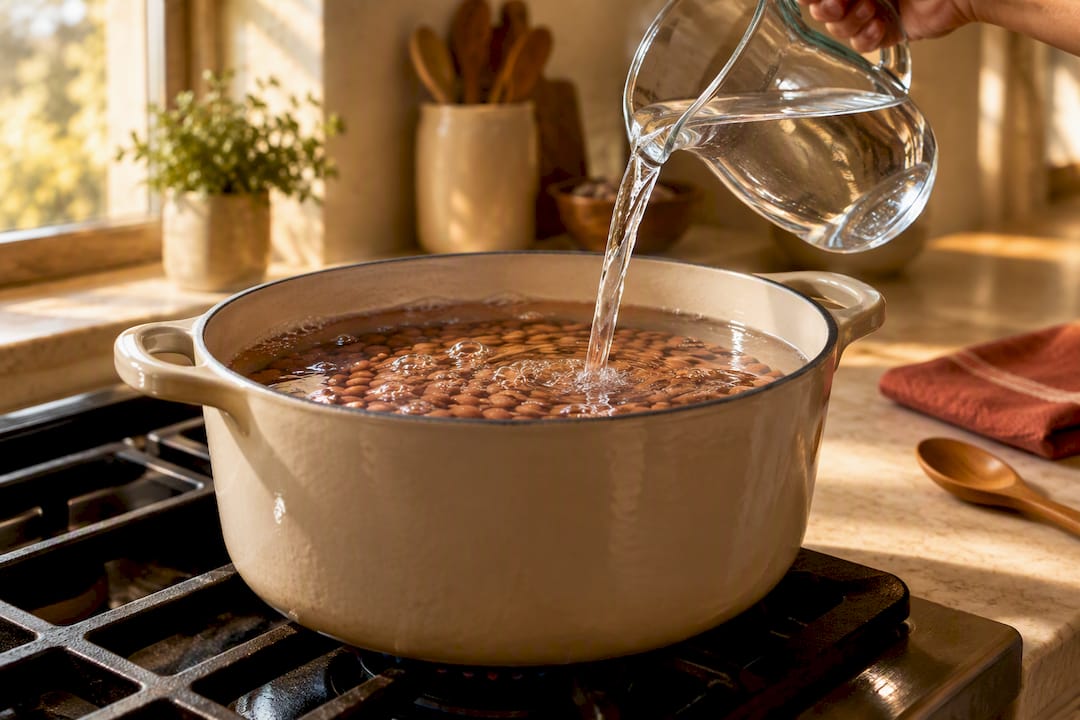
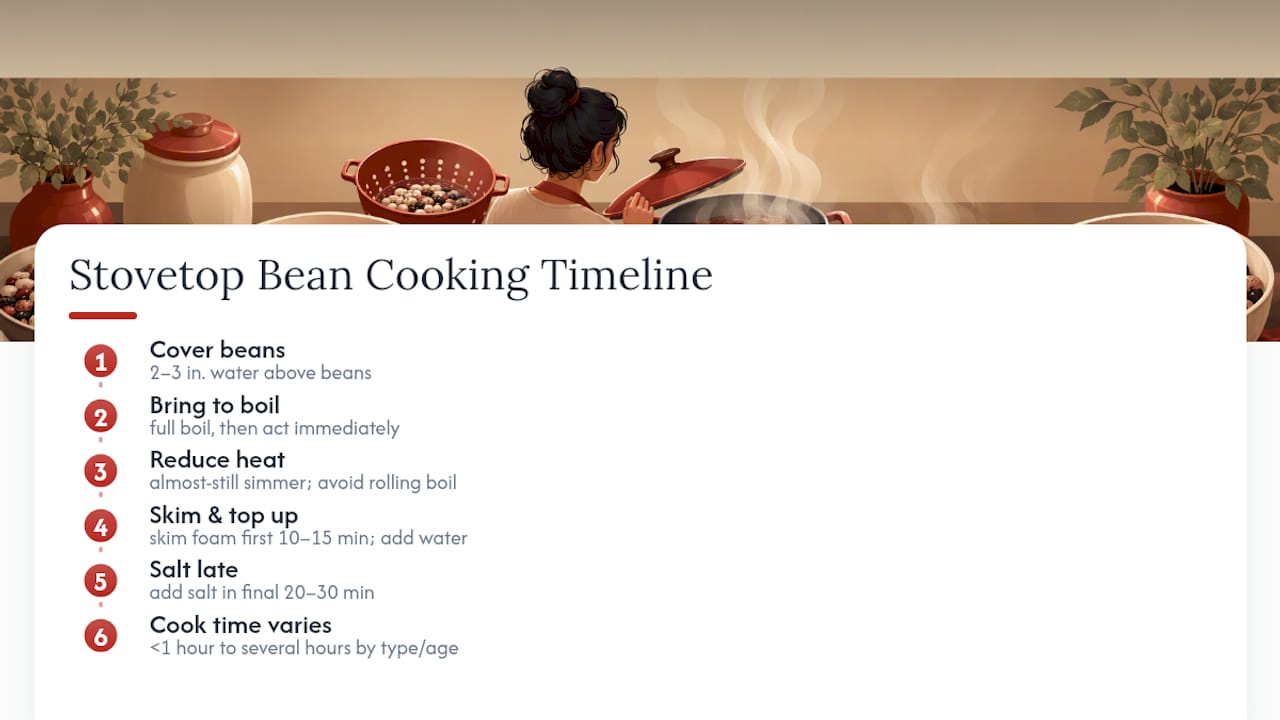
This is a common method for cooking nearly every bean recipe, soaked or not. Put the beans in a heavy pot and cover them with fresh water, about 2 to 3 inches above the beans, since they’ll absorb a surprising amount as they cook.
Bring the pot to a full boil, then immediately cut the heat back to what should look almost still, just the occasional bubble breaking the surface. This detail decides whether you get creamy, intact beans or a pot of split, blown-out skins. A rolling boil agitates the beans against each other and against the pot, which is exactly what breaks the skins and turns the texture mushy.
Timing depends on size and freshness, generally from less than one hour to several hours depending on the type and age of the beans
Skim the foam that rises in the first 10 to 15 minutes, and top off the water if the level drops below the beans. Salt toward the last 20 to 30 minutes of cooking, or stir it into the water partway through. Hold off on tomatoes, wine, lemon juice, or vinegar until the beans are already tender. Adding acid too early toughens the skins and stretches out the cooking time. If a batch runs long and starts turning soft at the edges, pull it early and finish it as a mash or blended soup instead of forcing it toward whole-bean texture.
Can You Cook Dried Beans in a Pressure Cooker?
An electric pressure cooker or Instant Pot cuts the timeline dramatically and skips the soak entirely if you want.
- Rinse and pick through the beans, then add them to the pot with water covering by about 2 inches.
- Stir in a tablespoon of oil and a pinch of salt. Both help tamp down foaming during the cook, and neither slows the beans down.
- Cook unsoaked black beans, pinto beans, and chickpeas for appropriate times at high pressure, generally in the ballpark of 15 to 40 minutes depending on the variety.
- Let the pressure release naturally rather than venting it manually. Natural release gives a better, less blown-out texture than a quick release.
- If beans still have a bite after depressurizing, simmer them a few extra minutes with the lid off.
Kidney beans need special handling regardless of method. They carry natural lectins that require a proper boil to neutralize, so follow tested safety steps rather than a low, slow cook straight from raw. If you want a dedicated no-soak Instant Pot workflow with exact timing, Forkwardkitchen’s 25 to 40 minute no-soak Instant Pot beans method walks through it start to finish.
How Do You Know When Beans Are Done?
The right texture depends on what you’re making. For a salad, you want beans that hold their shape with a slight bite, closer to al dente pasta. For a dip, spread, or refried beans, you want them fully soft, almost falling apart on their own.
Test doneness by fishing one out and biting it, or pressing one against the side of the pot with a fork. It should mash easily with almost no resistance once it’s truly done.
- Cool beans in their own cooking liquid rather than draining them right away; it keeps them from drying out and toughening on the surface
- Refrigerate cooked beans for 3 to 5 days in an airtight container
- Freeze portions for up to 3 months, labeled with the date and bean type
- Portion into 1.5 to 2 cup batches before freezing, roughly the size of a standard can, for easy recipe swaps later
Common Bean-Cooking Mistakes and How to Fix Them
Firm beans after an hour or two usually point to age, not technique. Check the purchase date if you have it, keep simmering in 15-minute increments, and if nothing changes after another half hour, a pinch of baking soda in the water can help soften stubborn skins, though it can dull flavor if you overdo it.
Mushy, blown-out beans still have a job: puree them into soup, mash them for tacos, or fold them into a dip with cumin and lime. Next time, drop the heat the moment the pot reaches a boil instead of letting it ride.
- Flat-tasting beans need acid and fresh herbs stirred in after cooking, not during
- Hard water can slow down softening; a splash of filtered water or a pinch of baking soda in the cooking water can offset mineral-heavy tap water
- Undersalted beans taste hollow even when perfectly tender, so taste and adjust right before serving
What Forkwardkitchen’s Bean Tests Actually Showed
Testing salt at different points changed both texture and flavor. Salting the soaking water produced evenly seasoned beans with skins that held together better than beans salted only at the very end.
- Lid on speeds cooking and traps moisture, but risks a rowdier simmer that needs closer watching
- Lid off, cracked slightly, gives more control over that barely-visible simmer
- A Dutch oven in a 250°F oven produces even, hands-off results for large batches and avoids the stovetop agitation that splits skins
- Doubling or tripling a batch for freezer stock works cleanly as long as the pot has room for the beans to expand without crowding
Why Dried Beans Are Worth the Extra Time
Dried beans cost a fraction of canned ones and let you control salt, texture, and seasoning from the first minute. That control is the whole reason Forkwardkitchen keeps testing bean recipes from scratch instead of defaulting to a can.
— Oloru
Try Forkwardkitchen’s Tested Bean Recipes
Once you’ve got a pot of beans on the stove, the next question is what to do with them. Forkwardkitchen’s recipe index has tested bean dishes with honest difficulty labels, so you know before you start whether you’re looking at a 20-minute weeknight dish or a slower weekend project.
If you’d rather skip the stovetop entirely, the no-soak Instant Pot beans guide covers the same beans in a fraction of the time, with exact pressure and release settings already worked out. And if you’re cooking a big pot for salads or bowls, the triple bean dense bean salad shows exactly how to finish beans with acid and dressing once they’re tender. Every recipe on the site is developed and tested in-house, with freezer-friendly notes built in for anyone batch-cooking on a Sunday. Start with the recipe index and pick one bean dish to try this week.
Sources
- How to Cook Dry Beans from Scratch | UNL Food
- Cooking dry beans | Colorado State University Extension
- Beans, peas, and lentils guidance (UAF Cooperative Extension)
- The truth about lectins — Blue Zones
FAQ
What Are the Most Common Mistakes When Cooking Beans?
The biggest one is boiling too hard, which splits skins and turns the texture mushy instead of creamy. Close behind that is adding salt too early in large amounts or adding acidic ingredients like tomatoes before the beans are tender, both of which slow down softening and toughen the skins.
What Is the Best Liquid to Cook Beans In?
Plain water with aromatics like bay leaf, onion, and garlic works well for most recipes and keeps the beans versatile for whatever you make afterward. Stock adds more upfront flavor, which is worth it for soups and stews where the beans are the main event.
How Long Does It Take to Cook Dry Beans Without Soaking?
Unsoaked beans generally take longer, often close to double the time of a soaked batch, and land anywhere from less than one hour to several hours depending on the variety and age. Small, thin-skinned beans like lentils and black-eyed peas handle a no-soak approach best since they cook in under an hour even without soaking.
Is It Better to Soak Dry Beans Before Cooking?
Soaking shortens cooking time and can improve digestibility, which makes it worthwhile for larger or older beans like chickpeas and kidney beans. It’s not required for every bean, though. Smaller varieties cook fine without it, just with a longer simmer.
Does Forkwardkitchen Have Tested Bean Recipes?
Yes. Forkwardkitchen’s recipe index includes tested bean dishes with honest difficulty ratings, plus a dedicated no-soak Instant Pot method for cooks short on time.