July 21, 2026
Sourdough Discard Recipes: Best Uses by Freshness
Discover the best sourdough discard recipes based on freshness. Use your discard for delicious pancakes, savory crackers, and more today!

Sourdough Discard Recipes: Best Uses by Freshness
Which sourdough discard recipes should you make first?
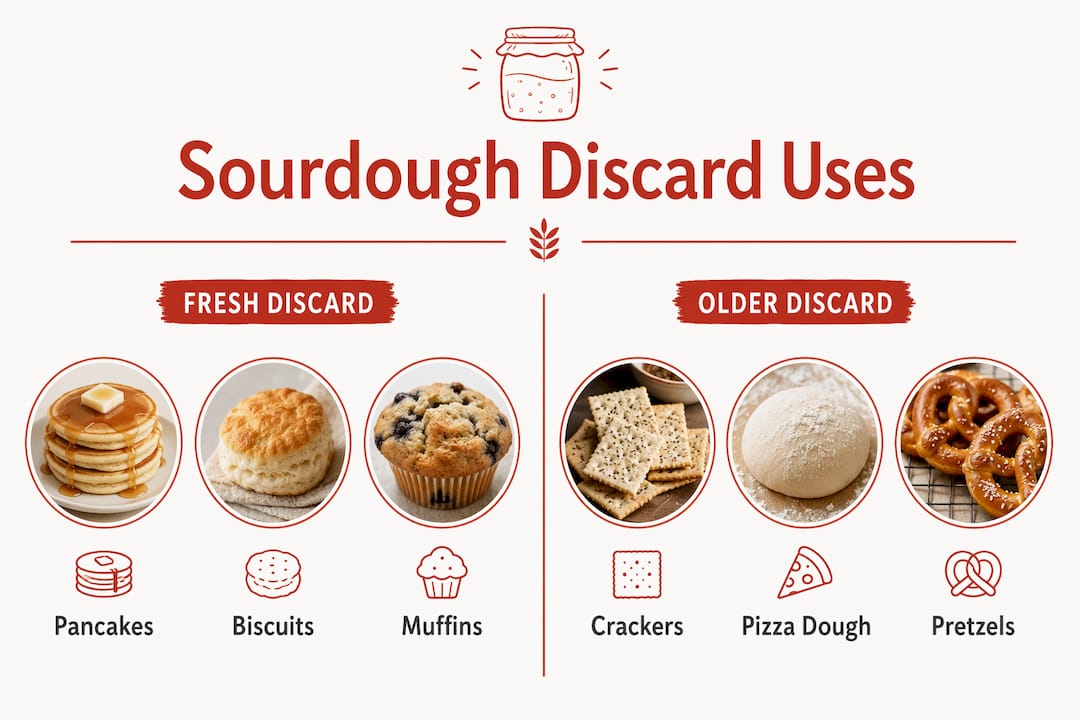
The answer depends almost entirely on how old your discard is. Fresh discard, used within the first week, has a mild, creamy tang that works beautifully in sweet recipes. Older discard, past the seven-day mark, develops sharper acidity from acetic acid buildup, and that bite is actually an asset in savory applications.
Here’s how to match your discard to the right recipe:
Fresh discard — mild and creamy:
- Sourdough discard pancakes and waffles
- Blueberry muffins
- Cinnamon rolls
- Chocolate chip cookies
- Banana bread
Older discard — sharper and more complex:
- Crackers (the tang is a feature here, not a flaw)
- Pizza dough
- Focaccia and flatbread
- Pretzels
- Savory biscuits
One thing worth understanding upfront: discard is a flavor enhancer, not a leavening agent. It adds fermented depth similar to cultured butter or crème fraîche, but it won’t make your baked goods rise on its own. Every recipe below relies on baking powder, baking soda, or commercial yeast for lift. The discard is there for flavor and texture.
Pro Tip: When you swap discard into an existing recipe, reduce the flour and liquid by roughly equal amounts. Since discard runs at a 1:1 flour-to-water ratio by weight, the math stays simple: 100g of discard means pulling back about 50g each of flour and liquid.
Table of Contents
- Easy sourdough discard recipes for quick weekday baking
- Recipes that reward older, more acidic discard
- How to store sourdough discard and keep it usable
- Key Takeaways
Easy sourdough discard recipes for quick weekday baking
These are the recipes to reach for when your discard jar is full and you have 30 minutes or less. All of them are forgiving, highly adaptable, and genuinely excellent entry points for anyone new to baking with discard.
The quick-start recipes use discard in easy, adaptable recipes.
1. Sourdough Discard Pancakes
Pancakes are the best first recipe for a reason. The batter is nearly impossible to mess up, and the result is noticeably better than anything from a box mix. The discard adds a subtle tang that pairs perfectly with butter and maple syrup.
The key technique: add your baking soda last, right before the batter hits the pan. It reacts immediately with the acid in the discard, creating bubbles that make these pancakes exceptionally fluffy. Work quickly once it’s mixed in. Cold discard straight from the fridge works fine here — you don’t need to bring it to room temperature before cooking.
2. Sourdough Discard Crackers
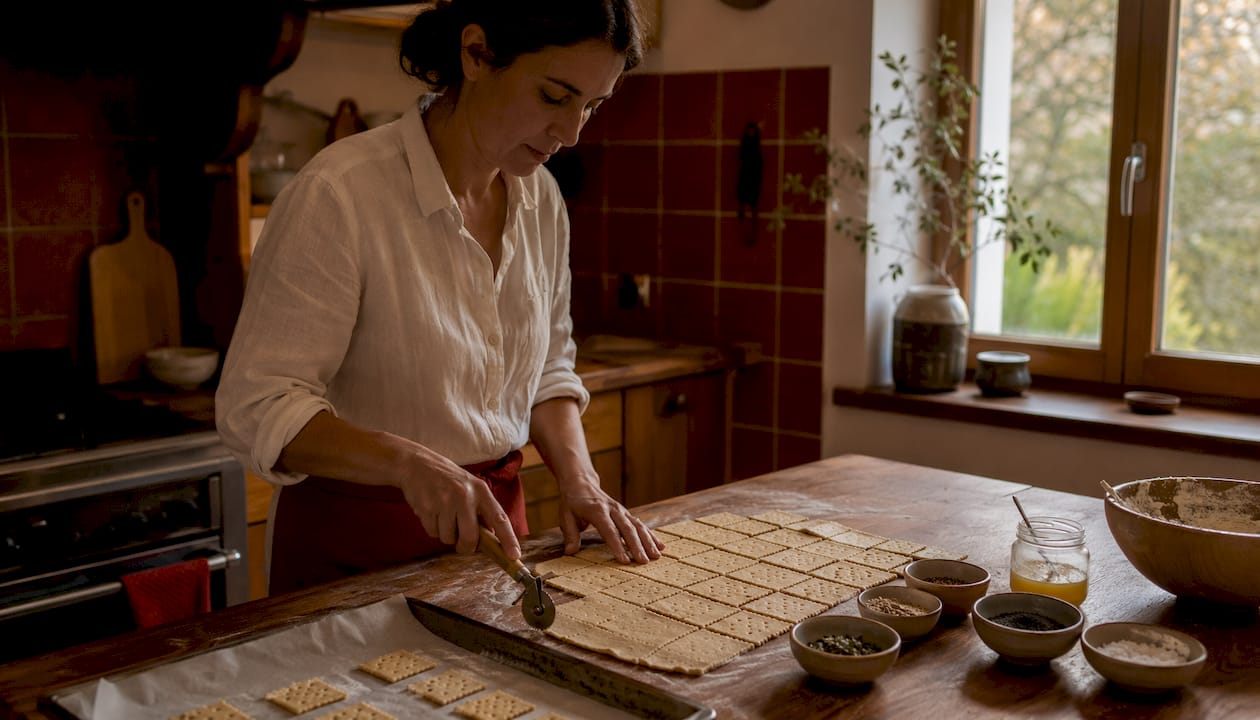
One cup of discard, melted butter, salt, and whatever seasonings you like. Spread it thin on a parchment-lined sheet, bake low and slow, and you get crackers that taste like they came from an artisan bakery. Rosemary, cracked pepper, sesame seeds, and smoked paprika all work well. These are also the best recipe for using up a large amount of discard quickly — a double batch clears two to three cups in one afternoon.
3. Sourdough Discard Biscuits
Flaky, tall, and rich. The discard adds tang and moisture that standard biscuit recipes lack. Using a lamination technique — rolling the dough, cutting it into quarters, stacking, and pressing down — creates distinct layers without any complicated pastry work. Cut them into rectangles rather than rounds; a round cutter can compress the edges and prevent a full rise.
4. Sourdough Discard Blueberry Muffins
A reliable weekday breakfast. The cornmeal in the batter adds a slight crunch against the soft blueberries, and the discard keeps the crumb tender for days. Bake at moderate oven temperature until done, and pull them from the pan shortly after to avoid steaming.
5. Chocolate Sourdough Discard Cookies
One bowl, no mixer, and the dough freezes well. The cocoa and milk chocolate chips offset the sourdough tang in a way that makes the flavor genuinely complex. Chill the dough for at least two hours before baking; it deepens the flavor and helps the cookies hold their shape. Bake at moderate oven temperature until the cookie tops look matte.
| Recipe | Prep Time | Difficulty | Discard Amount |
|---|---|---|---|
| Pancakes | — | Easy | 1 cup |
| Crackers | — | Easy | 1 cup |
| Blueberry muffins | 15 min | Easy | ½ cup |
| Biscuits | 20 min | Medium | 1 cup |
| Chocolate cookies | 15 min + chill | Easy | ½ cup |
| Banana bread | 15 min | Easy | ½ cup |
| Flatbread | — | Easy | 1 cup |
Recipes that reward older, more acidic discard
Once your discard passes the seven-day mark, the flavor profile shifts. Older discard with sharper acidity excels in crackers and savory applications where that tang reads as complexity rather than sourness. These recipes are built around that flavor, not despite it.
Crackers (the definitive older-discard recipe). A long bake time at a lower temperature mellows the sharpness while concentrating the fermented flavor. The result is something genuinely addictive. Seasonings like turmeric, black pepper, or smoked paprika work well; a small amount goes a long way. Store finished crackers in an airtight container at room temperature and they’ll stay crisp for several weeks.
Pizza dough. Discard gives same-day pizza dough the tangy complexity you’d normally only get from a 48-hour cold ferment. You still need instant yeast for the rise — discard alone won’t do it — but the flavor payoff is real. Bake at the highest temperature your oven can handle for a crust that’s crisp on the bottom and chewy in the middle.

Focaccia and flatbread. Flatbread is the fastest savory application: no rise time, no oven, just a hot cast iron skillet and ten minutes. The blistered spots and chewy texture come from the discard’s hydration interacting with high heat. Brush with garlic butter and fresh herbs right off the pan.
Pretzels. The alkaline baking soda bath that gives pretzels their characteristic chew and color also neutralizes some of the discard’s acidity, leaving a balanced, complex flavor. These take more time but reward the effort.
Savory pancakes and crepes. Thin the discard with water or milk, add an egg and a pinch of salt, and you have a crepe batter that works as a wrap, a side dish, or a base for savory fillings. The tang pairs well with cheese, herbs, and cured meats.
A few practical notes for working with older discard:
- If liquid (called “hooch”) has separated on top, stir it back in rather than pouring it off. It’s just alcohol from fermentation and adds to the flavor.
- Older discard is thicker and more sour, so taste it before adding to a recipe. If it’s very sharp, use it in a savory application or pair it with ingredients that can stand up to the acidity, like strong cheese or bold spices.
- For bread-adjacent recipes like focaccia or pizza dough, room temperature discard is easier to work with than cold. Let it sit out for 15–20 minutes if you want a more pliable dough.
If you’re ready to move beyond the basics, Forkwardkitchen’s advanced baking recipes include techniques that translate well to long-ferment discard projects.
How to store sourdough discard and keep it usable
Good storage habits make the difference between a jar of discard you actually use and one you throw out every week. The system is simple once you set it up.
The fridge jar method. Keep a dedicated jar in the refrigerator and add new discard to it each time you feed your starter. Stir gently, replace the lid loosely (discard still off-gasses slightly), and return it to the fridge. Cold temperatures slow yeast activity and acid development, giving you a stable, predictable jar to bake from. Use a wide-mouth mason jar or any container with straight sides that makes it easy to scoop.
Shelf life and flavor changes. Refrigerated discard stays viable for up to 14 days. The flavor is mild and creamy in the first seven days, then sharpens noticeably after that as acetic acid accumulates. Both stages are useful — the mild jar for sweet recipes, the sharper jar for crackers and savory dishes. Beyond 14 days, the wild yeast becomes mostly dormant, which matters less than you’d think since most discard recipes use chemical leaveners anyway.
Freezing for longer storage. Portion discard into zip-top bags, press them flat, and freeze for up to three months. Label each bag with the date. Thaw in the fridge overnight and use within 24 hours of thawing. Don’t refreeze — the texture gets gummy. Pancakes, muffins, and crackers all work well with frozen-then-thawed discard since they rely on baking powder and baking soda rather than wild yeast.
Dehydrating for shelf-stable storage. Spread discard in a thin layer on a parchment-lined sheet and let it dry completely, then break it into pieces and store in an airtight container. Dehydrated discard can last months to years without flavor degradation. To use it, rehydrate with warm water and let it rest for 30 minutes before adding to a recipe.
What not to do with discard:
- Never pour discard down the kitchen sink. It can harden in pipes and cause clogs. Compost it, use it in a recipe, or throw it in the trash.
- Don’t store discard in a sealed airtight container — a loose lid or plastic wrap is better since it allows minor off-gassing.
- Avoid leaving discard at room temperature for more than a day or two. Warm temperatures accelerate acetic acid production and the flavor turns sharp quickly.
For more tested recipes that put your discard to work across every skill level, Forkwardkitchen’s full recipe collection covers everything from fast weeknight bakes to weekend projects worth the extra time.
Key Takeaways
Sourdough discard is most useful when matched to the right recipe by age: mild fresh discard for sweet bakes, sharper older discard for savory and cracker applications.
| Point | Details |
|---|---|
| Match discard age to recipe type | Use fresh discard for pancakes and muffins; use older discard for crackers and savory dishes. |
| Discard adds flavor, not rise | Chemical leaveners like baking soda or baking powder are required for lift in every discard recipe. |
| Refrigerated discard lasts up to 14 days | Flavor turns sharper after 7 days; both stages are useful depending on the recipe. |
| Freeze discard for up to 3 months | Portion flat in zip-top bags; thaw overnight and use within 24 hours. |
| Adjust flour and liquid when substituting | Reduce each by the weight of flour and water the discard contributes, using a 1:1 ratio. |