July 22, 2026
Your Seasonal Produce Guide: Eat Fresh All Year Long
Discover the best seasonal produce guide for peak flavor, nutrition, and savings. Elevate your meals year-round with fresh choices.
Your Seasonal Produce Guide: Eat Fresh All Year Long
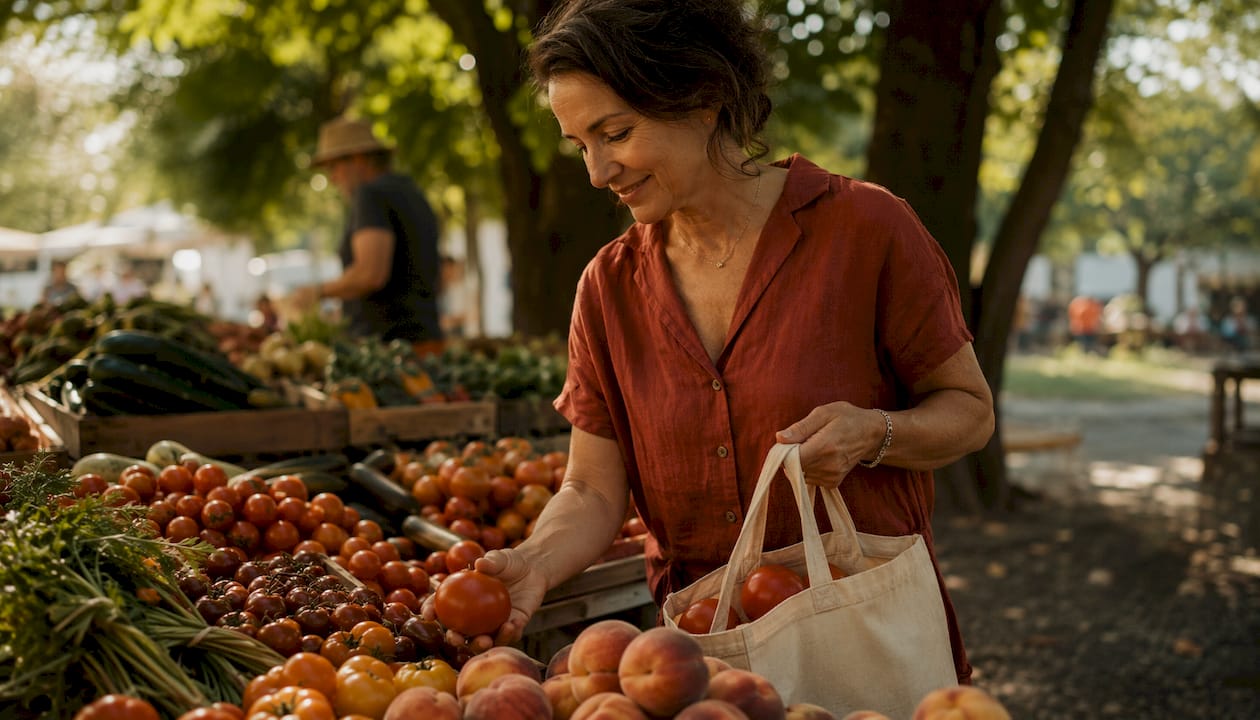
Seasonal produce means fruits and vegetables harvested at their natural peak, when flavor, texture, and nutrition are at their best. For home cooks across the U.S., eating with the seasons is one of the simplest ways to improve every meal you cook. The USDA SNAP-Ed makes clear that fresh, frozen, canned, and dried produce all contribute to strong nutrition goals, so seasonal eating stays accessible year-round, not just at the summer farmers market.
The core benefits of following a seasonal produce guide are hard to argue with:
- Better flavor: Produce harvested at peak ripeness has concentrated natural sugars and vibrant texture that out-of-season items simply cannot match.
- Lower cost: Abundant local supply during peak season pushes prices down, so you spend less on the best stuff.
- Higher nutrition: Nutrients are better preserved when produce goes from field to table quickly, without long storage or chemical treatment.
- Sustainability: Buying locally grown, in-season food reduces the environmental cost of long-distance transportation, as agricultural extension services consistently emphasize.
- Diet variety: Cycling through the seasons naturally rotates your nutrient intake across different food groups.
Table of Contents
- What produce is in season, broken down by season
- How seasonal produce improves the flavor and nutrition of your cooking
- How to select, store, and cook with seasonal produce
- Put seasonal produce to work with Forkwardkitchen recipes
- Key Takeaways
What produce is in season, broken down by season
The U.S. spans a wide range of climates, so no single calendar fits every zip code. Produce in Georgia can peak several weeks before the same item reaches its peak in Maine. Treat any national guide as a framework, then confirm timing with your local farmers market.
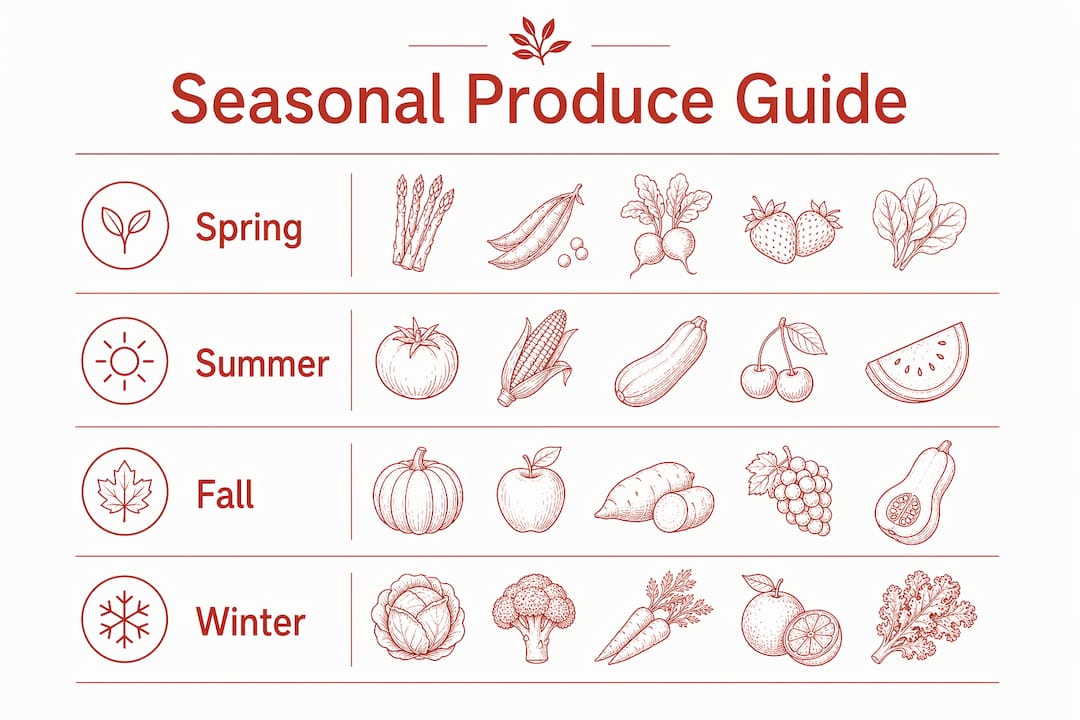
Spring (March through May)
Spring’s first signal is asparagus, and it arrives early in the South before working its way north through April and May. Peas, radishes, spinach, rhubarb, and spring greens follow quickly. Strawberries close out the season, arriving in the South by April and in northern states by late May or June.
| Produce | Peak months |
|---|---|
| Asparagus | March–May |
| Peas | April–June |
| Radishes | March–May |
| Spinach and spring greens | March–May |
| Rhubarb | April–June |
| Strawberries | May–June |
Summer (June through August)
Summer is the main event. Tomatoes, sweet corn, peaches, melons, cucumbers, zucchini, peppers, and berries pour into markets all at once. This is when a farmers market is at its fullest, cheapest, and most worth a weekly trip. Sour cherries appear only in July. Strawberry season wraps up by early July across most of the country, so buy them in quantity while they last.
| Produce | Peak months |
|---|---|
| Tomatoes | July–September |
| Sweet corn | July–August |
| Peaches and nectarines | July–August |
| Blueberries, raspberries, blackberries | June–August |
| Cucumbers and zucchini | June–August |
| Peppers and eggplant | July–September |
| Melons | July–August |
Fall (September through November)
Fall shifts toward produce built to last. Apples, pumpkins, winter squash, sweet potatoes, Brussels sprouts, and root vegetables take over as summer crops wind down. A winter squash or a bag of apples keeps for weeks in a cool spot, so a single fall market trip stretches a long way. October is peak season for fresh-pressed cider and just-picked apple varieties.
Key fall highlights: apples, pears, pumpkins, butternut squash, acorn squash, sweet potatoes, Brussels sprouts, cauliflower, kale, cranberries, and beets.
Winter (December through February)
Winter markets are quieter but far from empty. Citrus takes center stage: blood oranges, grapefruit, Meyer lemons, clementines, and cara cara oranges are at their best. Hardy greens like kale and collards, storage crops like potatoes, onions, beets, and carrots, and cold-hardy vegetables like leeks and Brussels sprouts carry the season. In warm regions like Florida, California, and Texas, markets run year-round and winter is prime citrus season. In colder states, many markets move indoors or shift to a monthly schedule.
Certain staples, including apples and sweet potatoes, remain high-quality well after harvest thanks to proper cold storage, which effectively extends their “in-season” window into winter and early spring.
Pro Tip: Treat any national seasonal harvest calendar as a starting point. The farmer selling the produce at your local market on a given day is the single most reliable source for exact local timing.
How seasonal produce improves the flavor and nutrition of your cooking
Flavor is the reason chefs prioritize seasonal produce above everything else. A summer tomato tastes completely different from a winter tomato, and the gap is not subtle. Culinary experts note that in-season fruits carry a depth and brightness that out-of-season produce simply cannot replicate, because produce harvested at peak ripeness contains higher natural sugar levels and superior texture.
Nutrition follows the same logic. Registered dietitian nutritionist Carlie Williams, quoted by Martha Stewart, explains that when produce is picked after being harvested at the right time, “the flavor tends to be the freshest, and the nutrients are better preserved.” Long storage and chemical treatments used to extend off-season availability can reduce nutrient content and carry environmental costs.
The practical upside for home cooks is real. When you start with a genuinely ripe ingredient, you need less technique to make it taste good. A peak-season peach needs nothing but a knife. A peak-season tomato needs salt and maybe basil. That simplicity is not laziness; it is the point.
Pro Tip: When you find peak-season produce at a great price, buy extra and freeze, can, or pickle it. A bag of frozen August corn or a jar of summer tomato sauce brings that flavor back in January.
How to select, store, and cook with seasonal produce
Selecting the best produce
When a crop is at peak season, it is abundant and local supply is high, which pushes market prices down. That means the pile that is highest and priced lowest at the market is almost always what is in season right now. Ask the farmer directly what is peaking that week. They will tell you what just started, what is at its best, and what is almost done. For seasonal snack sourcing or everyday grocery shopping, the same rule applies: volume and price are your clearest signals.
Beyond farmers markets, community-supported agriculture (CSA) subscriptions and roadside produce stands are reliable sources for locally grown, in-season fruits and vegetables. Many CSAs offer weekly boxes timed to what is actually being harvested, which removes the guesswork entirely.
Storing seasonal produce to maximize freshness
Good storage habits make a real difference in how long your produce stays at its best.
- Leafy greens: Wrap in a paper towel and store in a container or bag in the crisper drawer.
- Berries: Store loosely covered in the fridge, and wait to wash until just before eating since moisture speeds up spoilage.
- Tomatoes, peaches, and plums: Keep at room temperature until fully ripe, then refrigerate for a few extra days.
- Root vegetables: Remove the tops from carrots, beets, and radishes before refrigerating. The greens pull moisture from the roots and cause them to soften faster.
- Winter squash and potatoes: Store in a cool, dark, dry spot, not the refrigerator.
Cooking techniques that match the season
Shoulder seasons, the weeks just before and after peak harvest, offer excellent produce at lower prices and are ideal for slow cooking methods. A slightly underripe butternut squash roasts beautifully. Early-season asparagus that is a little thin is perfect for a quick sauté or a pasta toss. Peak-summer tomatoes and corn need almost no heat at all; raw preparations or a quick grill let the natural flavor do the work.
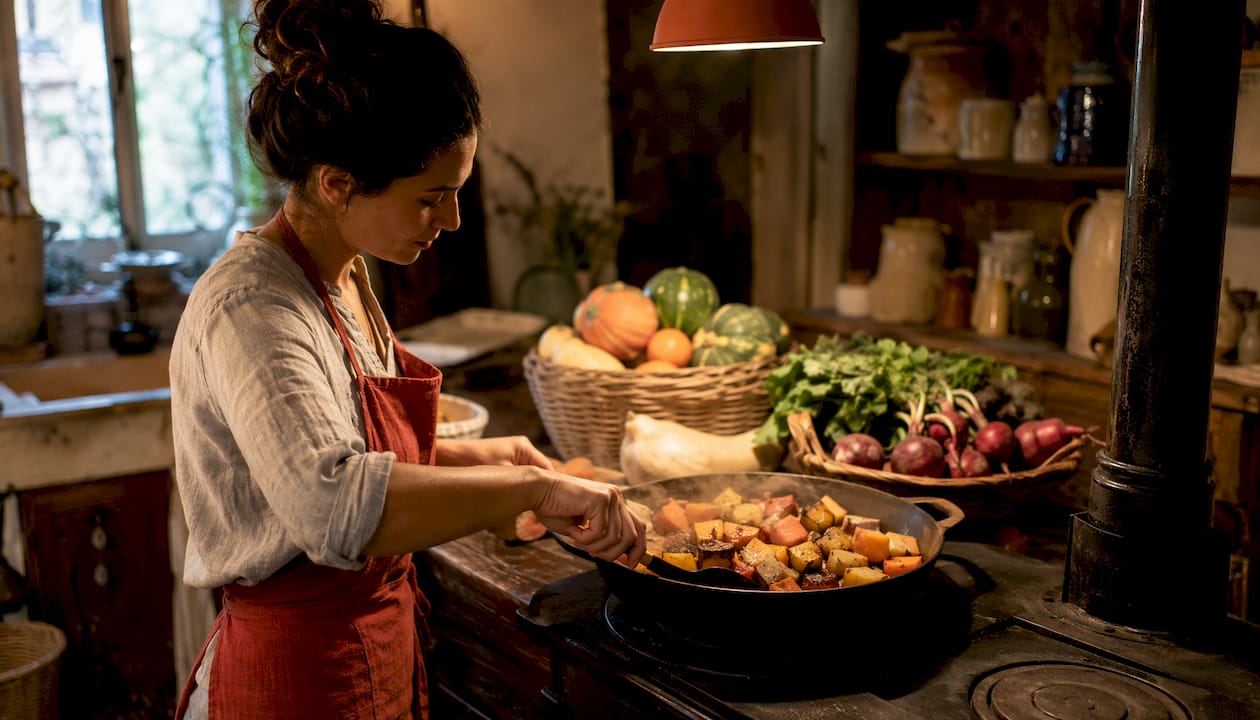
Braising, roasting, and slow-cooking suit fall and winter produce especially well. Root vegetables caramelize in the oven. Kale and collards soften and sweeten with a long braise. Matching your technique to the season’s produce is not a rule so much as a shortcut to a better result with less effort.
Put seasonal produce to work with Forkwardkitchen recipes
Knowing what is in season is only half the equation. The other half is knowing what to cook with it. Forkwardkitchen’s collection of original, tested recipes is built around exactly this: real dishes that make the most of what is fresh right now, with honest difficulty ratings so you always know what you are getting into before you start.
Whether you want a fast weeknight dinner built around summer zucchini and corn, or a weekend project that turns fall apples into something genuinely impressive, Forkwardkitchen has a recipe tested and ready.
- All recipes: Browse the full collection, organized to help you find dishes that match what is in season.
- Roasted vegetables and sides: Perfect for peak-season and shoulder-season produce, from spring asparagus to winter root vegetables.
- Seasonal pasta dishes: Fresh, weeknight-friendly recipes that put summer tomatoes, spring peas, and fall squash front and center.
- Seasonal fruit desserts: From summer berry crisps to fall apple cakes, baking with peak-season fruit makes every dessert better.
- Advanced seasonal recipes: For home cooks ready to push further, chef-level dishes that showcase seasonal ingredients at their most ambitious.
Start with what is piled high at your market this week, then find the recipe that does it justice.
Key Takeaways
Buying produce at its natural peak gives you better flavor, lower prices, and stronger nutrition than any other approach to grocery shopping.
| Point | Details |
|---|---|
| Seasonal flavor is real | Produce harvested at peak ripeness has higher natural sugar levels and superior texture that off-season items cannot match. |
| Regional timing varies | Produce in Georgia can peak several weeks before the same item in Maine, so treat national guides as frameworks. |
| Storage extends the season | Apples, sweet potatoes, and winter squash remain high-quality well after harvest due to proper cold storage. |
| Price signals peak season | When a crop is piled high and priced low at the market, that is almost always what is at its seasonal peak right now. |
| Shoulder seasons offer value | The weeks just before and after peak harvest bring excellent quality at lower prices, ideal for roasting and braising. |