August 31, 2026
12 Tested Game Day Snacks for Hosts Who Want to Watch the Game
12 tested game day snacks with make-ahead plans, holding tips, and difficulty ratings, built for hosts who want to enjoy the game, not babysit food.
12 Tested Game Day Snacks for Hosts Who Want to Watch the Game
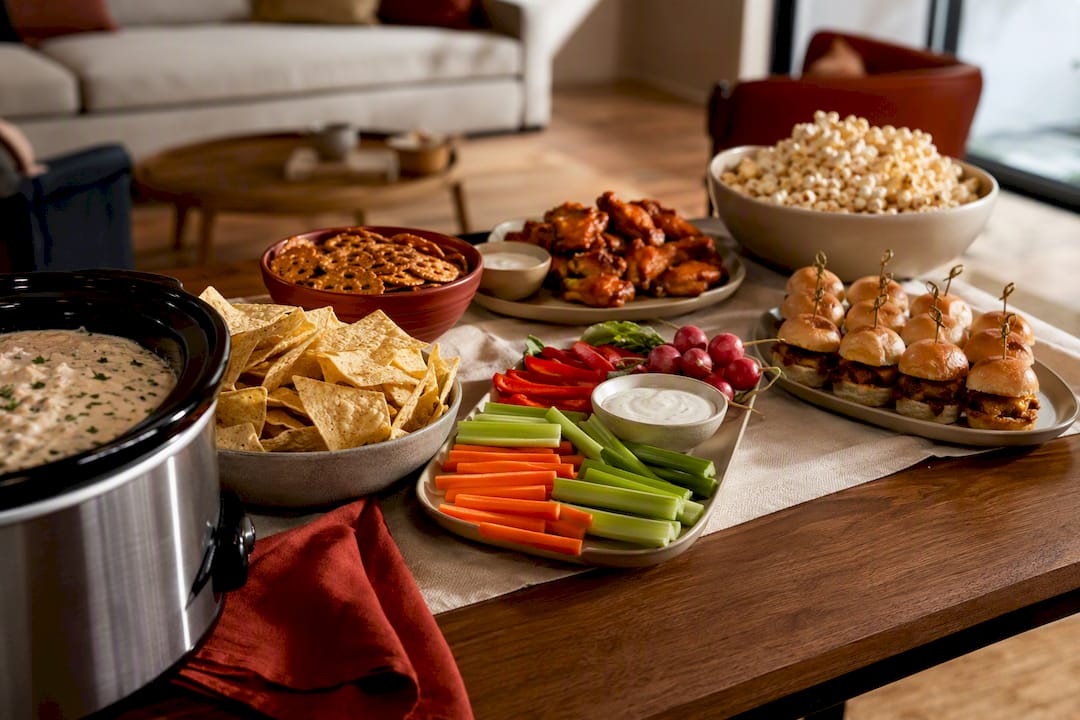
Your best bet is a mix of dips, poppable handhelds, and one warm main that holds well in a slow cooker. Start with Buffalo chicken dip, cheesy nachos, a slider bar, little smokies, air-fryer mozzarella sticks, and kettle corn for the sweet finish. Build the rest of your spread around categories, not one-off recipes, and lean on the ones that get better with time in the fridge.
TL;DR:
- Dips like Buffalo chicken and spinach-artichoke hold their texture well through slow cooker or oven storage and can be made a day in advance.
- Preparing sliders and wings the day before and assembling or reheating them last minimizes sogginess and keeps dishes crispy.
- Snacks such as kettle corn, snack mixes, and roasted chickpeas are naturally shelf-stable, easy to prepare ahead, and suitable for diverse dietary needs.
- Using slow cookers, chafing dishes, and insulated carriers helps maintain warmth and texture of the food during the game without constant attention.
- Building a menu around categories and choosing dishes with proven make-ahead and holding qualities ensures a balanced, stress-free hosting experience.
Table of Contents
- The Best Game Day Snacks to Start Planning Around
- Organize Your Menu by Category, Not by Recipe
- How to Make Snacks Ahead and Keep Them Warm
- How Much to Buy: Scaling Snacks for a Crowd
- Tools That Make Game Day Easier
- How Forkwardkitchen Tests Game Day Recipes
- Keeping the Table Safe for Every Guest
- What Actually Makes a Game Day Spread Work
- Where to Find Tested Recipes for Your Next Watch Party
- A Few More Resources Worth Bookmarking
- Sources
The Best Game Day Snacks to Start Planning Around
You don’t need thirty recipes to throw a good spread. You need a handful of proven ones that cover different textures, temperatures, and dietary needs, plus a plan for keeping them warm. Below are twelve that consistently work, pulled from what actually gets emptied at a party rather than what looks good in a photo.
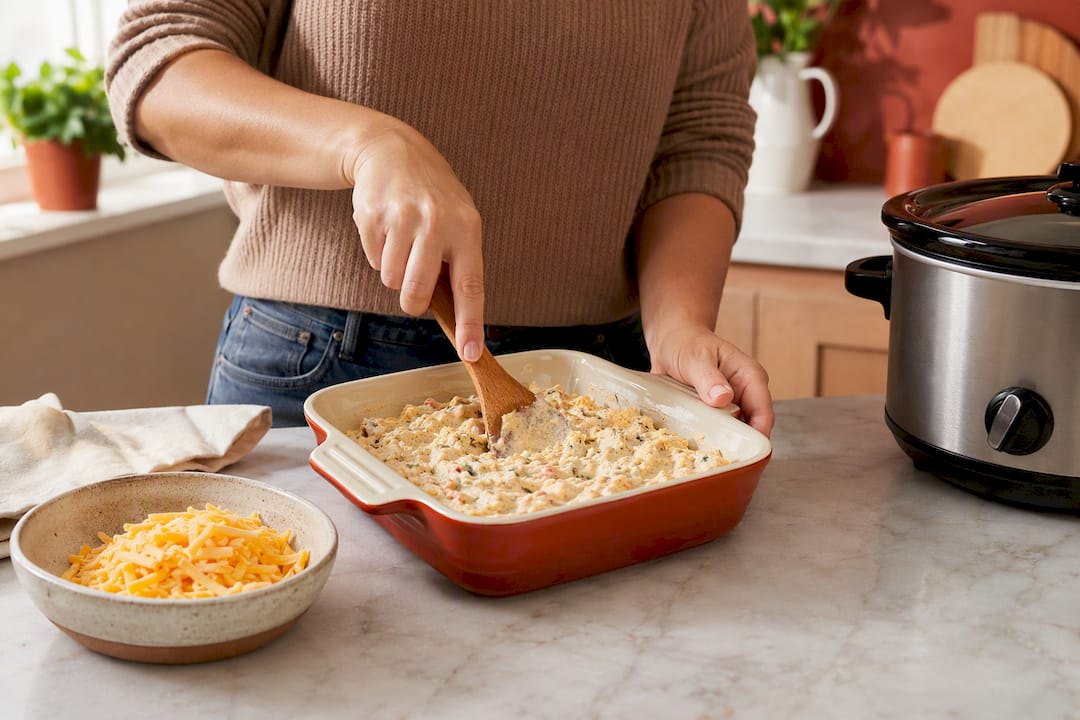
- Baked Buffalo Chicken Dip. Shredded chicken, cream cheese, hot sauce, and a blend of blue cheese and sharp cheddar. Easy, 15 minutes of prep, bakes for 25 minutes, and reheats beautifully in a slow cooker on low. Swap the chicken for shredded cauliflower for a vegetarian version.
- Spinach-artichoke dip. Milder than Buffalo chicken and a safe bet for guests who don’t do spicy food. Easy, holds well in a chafing dish, and can be assembled a day ahead, then baked right before kickoff.
- Cheesy loaded nachos. Medium difficulty only because timing the cheese melt with toppings takes a little practice. Best served fresh, not made ahead, but you can pre-chop toppings the night before.
- Slider bar (pulled pork or mini cheeseburgers). Medium effort, huge payoff. Cook the meat a day ahead and reheat in a low oven or slow cooker; assemble sliders fresh so buns don’t go soggy.
- Little smokies in barbecue-grape jelly sauce. Sounds strange, disappears fast. Dead simple, makes ahead completely, and holds in a slow cooker for hours without drying out.
- Air-fryer mozzarella sticks. Easy and fast, ready in under 10 minutes per batch. Air fryer and sheet-pan methods consistently deliver crisp results faster than deep frying, with less mess.
- Pigs in a blanket. Easy, kid-and-adult approved, and one of the most portable finger foods on this list since there’s no dip required.
- Crispy garlic parmesan wings. Medium difficulty, baked rather than fried for less cleanup. This tested wings recipe holds its crunch even after 20 minutes in a warm oven.
- Sticky Asian glazed meatballs. Easy and genuinely make-ahead friendly. The soy-honey glaze thickens as it sits, so day-old leftovers taste even better reheated.
- Snack mix (sweet and salty Chex-style). No-cook, easy, and can be made a week in advance if stored airtight. Swap pretzels for gluten-free pretzel sticks without changing the recipe.
- Honey garlic air-fryer salmon bites. A lighter, seafood-forward option that’s still finger food. This air-fryer salmon recipe cooks in batches of 12 to 15 pieces in about 8 minutes.
- Kettle corn. Easy, no-bake, sweet contrast to everything else on the table. Make it the morning of and store in a sealed container so it stays crisp.
Recipe roundups consistently organize game-day menus around this same mix of dips, sliders, and handhelds, and for good reason: they cover different appetites and different levels of hosting effort without anyone standing around with a fork.
Organize Your Menu by Category, Not by Recipe
Thinking in categories, rather than a random list of recipes, keeps your spread balanced and keeps you from ending up with five variations of cheese dip and nothing crunchy.
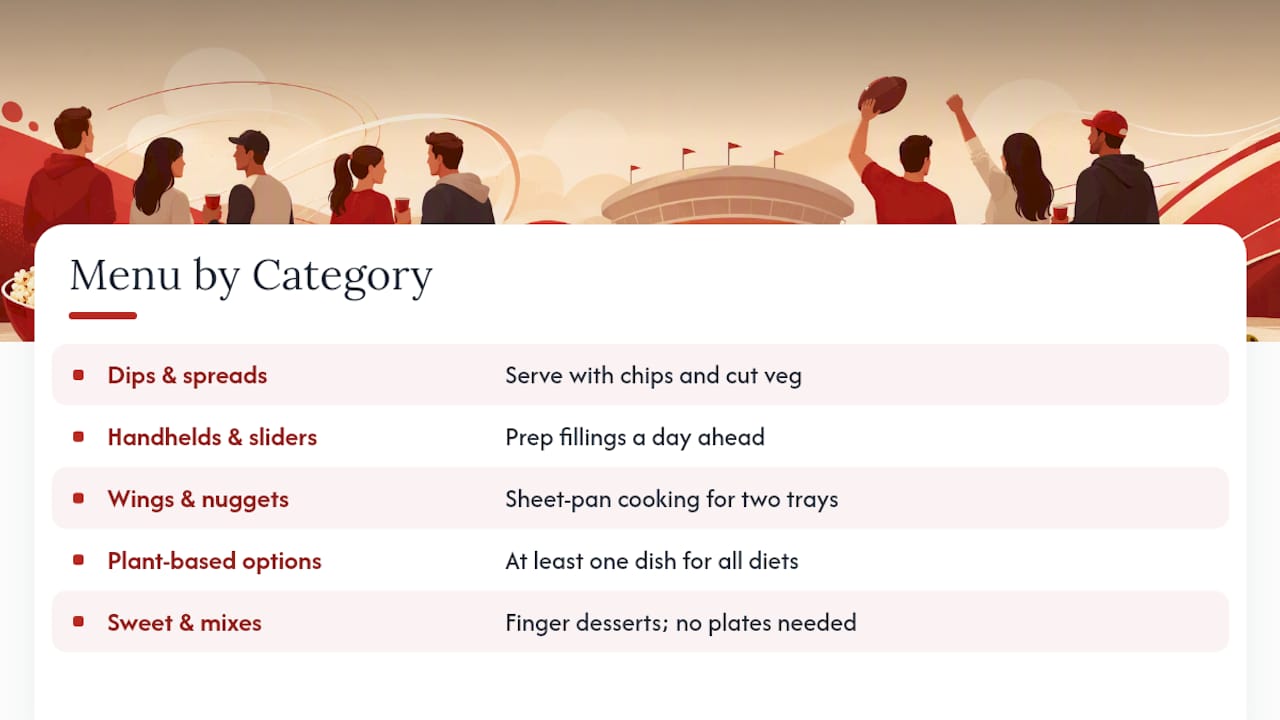
Dips and spreads. Buffalo chicken dip and spinach-artichoke are the anchors, but rotate in a warm queso or a cold layered bean dip for variety. Serve with tortilla chips, pretzel chips, and cut vegetables so gluten-free guests have an option too.
Handhelds and sliders. Pulled pork sliders, mini cheeseburgers, or pigs in a blanket. Prep the fillings a day ahead and assemble right before serving so bread doesn’t get soggy sitting in juices.
Wings and nuggets. Baked garlic parmesan wings or a batch of air-fried chicken bites tossed in Buffalo sauce. Sheet-pan cooking lets you do two full trays at once, which matters when you’re feeding more than eight people.
Plant-based and lighter options. Roasted chickpeas with smoked paprika, a white bean and rosemary dip, or air-fryer salmon bites for something that isn’t fried dough or melted cheese. These matter more than hosts think. Balance the table with at least one dish everyone can eat regardless of diet.
Sweet and snack mixes. Kettle corn, a simple snack mix, or mini brownie bites for dessert that doesn’t require plates or forks.
Pair salty items with pretzels or breadsticks, serve raw vegetables alongside anything spicy to cool the palate, and keep at least one bowl of plain chips on the table for guests who don’t like dip at all.
How to Make Snacks Ahead and Keep Them Warm
The difference between a host who enjoys the game and one who’s stuck in the kitchen during every commercial break comes down to planning. Dips and snack mixes actually improve after resting. Flavors in cheese and seasoning blends meld together over several hours in the fridge, so a Buffalo chicken dip made the night before often tastes better than one made same-day. Nachos and anything breaded, on the other hand, need to be assembled and cooked close to serving time or they turn soggy.
Here’s a simple holding system that works for most game-day spreads:
- Slow cooker on low or warm. Best for dips, little smokies, and meatballs. Stir every 30 to 45 minutes to prevent a skin from forming on top.
- Oven set to 200°F. Good for wings, sliders, and anything you want to stay crisp rather than steamy. Cover loosely with foil.
- Insulated carriers or coolers. Useful for transporting food to a tailgate or a friend’s house without losing heat.
- Chafing dish with a water bath. The classic option for buffet-style serving. Test your setup for a 30 to 45 minute holding window before guests arrive to make sure texture holds up.
Food sitting at room temperature shouldn’t linger past two hours. Reheat leftovers to at least 165°F before returning them to a warming setup.
Pro Tip: When batch-prepping dips ahead of time, double the wet ingredients but hold off on melting the cheese until you’re ready to serve. Reheating a fully melted dip a second time is what makes it turn grainy.
How Much to Buy: Scaling Snacks for a Crowd
Figuring out quantities is the part that trips up most first-time hosts. A good rule of thumb: plan for a reasonable number of appetizer-sized servings per guest over the party duration to ensure everyone is satisfied, since people graze steadily during a game rather than eating one big plate.
For dips specifically, 1.5 to 2 cups per 10 guests is a safe amount, paired with roughly one full bag of chips per 8 to 10 people. If you’re serving multiple dips, you can scale that ratio down slightly since guests will split their chips between bowls.
- Buy pantry staples like tortilla chips, pretzels, and hot sauce in bulk. They don’t spoil before the party.
- Reserve platters or prepared trays online in advance if you’re supplementing homemade dishes with store-bought options, especially for wings or guacamole.
- The night before, make anything that improves with resting. Chop vegetables and shred cheese so day-of prep is just assembly and reheating.
- Day of, work backward from kickoff: slow cooker items go in two to three hours early, oven items 45 minutes before, and anything fried or air-fried gets cooked last so it stays crisp.
Tools That Make Game Day Easier
A slow cooker set on low is the single most useful appliance for holding dips and meatballs without babysitting them. An air fryer earns its keep too, since it cooks wings, mozzarella sticks, and salmon bites in batches while your oven handles a larger dish.
- Insulated food carriers for tailgates or potlucks.
- A large chafing dish or two disposable foil pans set in a warm oven.
- A beverage dispenser filled with ice for canned drinks, freeing up cooler space.
- Wide, shallow bowls for chips. They hold more without spilling than deep bowls.
How Forkwardkitchen Tests Game Day Recipes
Every recipe on Forkwardkitchen goes through real testing in a home kitchen, not just a photo shoot. When we developed the baked Buffalo chicken dip, testing showed the blue cheese and sharp cheddar blend held its texture through a full slow-cooker holding window, where an all-cream-cheese version turned watery. Each recipe carries an honest difficulty rating, easy, medium, or advanced, so you know before you start whether it’s a 20-minute job or a project.
Keeping the Table Safe for Every Guest
A crowd of eight to ten people almost always includes someone avoiding gluten, dairy, or nuts, so build those options into the main spread rather than treating them as an afterthought. Kettle corn, roasted chickpeas, and most snack mixes are naturally gluten-free if you check the pretzel or cracker ingredients. For dairy-free guests, a bean dip or guacamole made with olive oil instead of sour cream covers the creamy-dip craving without the substitution feeling like an obvious swap.
Nut-free households need more caution around store-bought snack mixes and trail mix blends, since cross-contamination on shared equipment is common even when a package doesn’t list nuts as an ingredient. Reading labels matters more than assuming a recipe is safe. Little smokies, sliders, and most wing recipes are nut-free by default, which makes them easy anchor dishes when you’re not sure who’s coming.
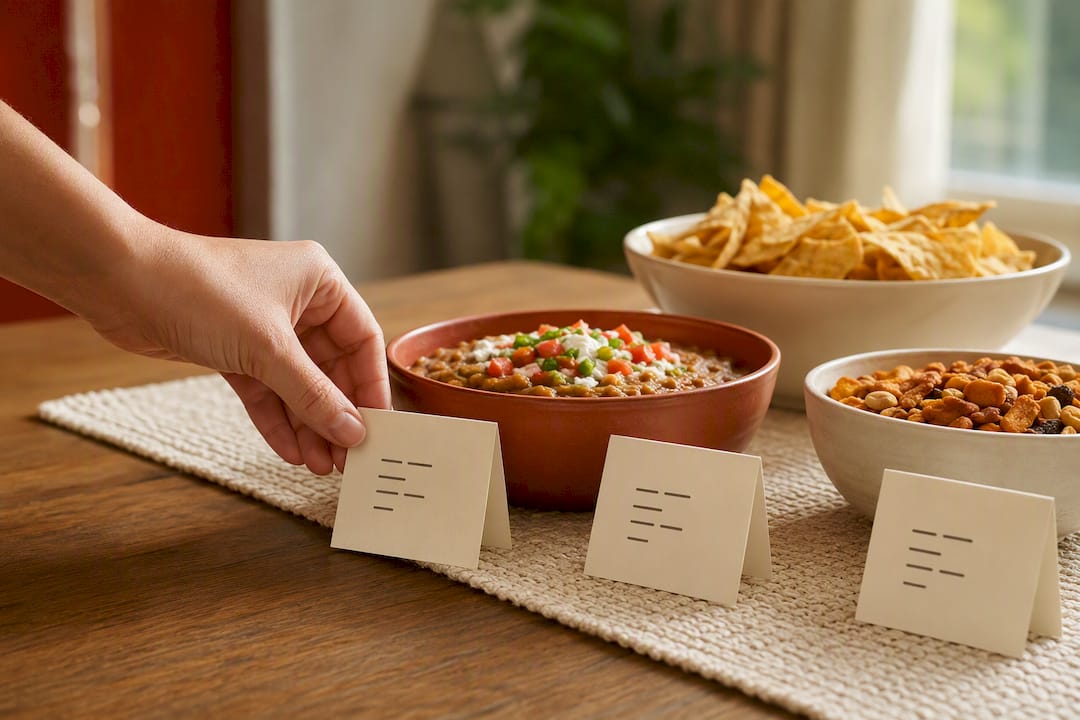
Labeling dishes with small cards, even handwritten ones noting “gluten-free” or “no dairy,” saves guests from having to ask and saves you from repeating the same explanation all afternoon. It’s a five-minute step that changes how comfortable people feel loading their plate.
What Actually Makes a Game Day Spread Work
Most game-day advice treats every recipe as equally worth your time, which is backwards. The recipes worth repeating are the ones that survive sitting out for two hours, not the ones that photograph best straight out of the oven. A nacho platter looks incredible for five minutes and turns to mush by halftime. A slow-cooker dip looks the same at kickoff and at the two-minute warning.
The bigger mistake hosts make is treating dietary accommodations as a separate, optional category instead of building them into the core menu. A bean dip or a batch of roasted chickpeas isn’t a consolation prize. It’s just a good snack that happens to work for more people.
Prioritize dishes that hold their texture over dishes that only look good fresh. Build your shopping list around servings per guest, not recipe count. And pick one or two make-ahead anchors before you touch anything that requires last-minute assembly. That order of operations, not the number of recipes on the table, determines whether you spend the fourth quarter in the kitchen or on the couch.
— Oloru
Where to Find Tested Recipes for Your Next Watch Party
Forkwardkitchen builds every recipe from scratch and tests it in a real kitchen before it goes online, so the difficulty rating on a slider recipe or a slow-cooker dip actually reflects how much work it takes, not a marketing guess. That matters more on game day than any other cooking occasion, since a recipe that flops mid-party is a lot harder to recover from than a weeknight dinner do-over.
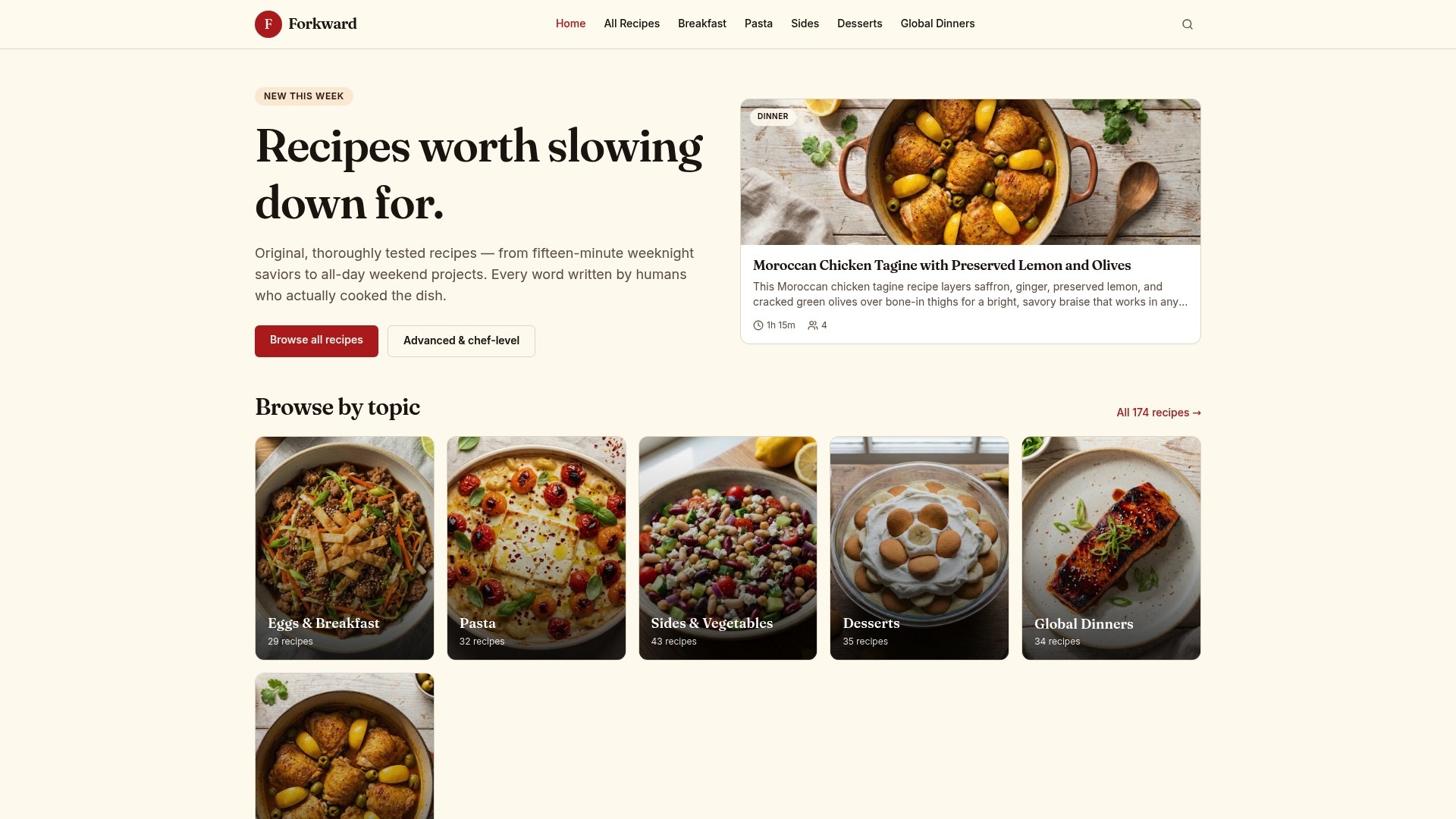
Browse the full recipe collection for more tested dips, sliders, and wings beyond this list, organized by difficulty so you can build a spread that matches how much time you actually have. If you’re feeding a crowd that wants more than snacks, the advanced recipe category has chef-level options for hosts ready to stretch beyond finger food. Save or print your shopping list before the week of the game, not the morning of, and you’ll spend Sunday watching the game instead of running back to the store.
A Few More Resources Worth Bookmarking
- Whole Foods Market: prepared platters and pickup ordering for low-lift hosting.
- AOL’s make-ahead roundup: recipes built specifically to be made in advance.
- Taste of Home’s collection: a broad range of dips, sliders, and sweet treats for inspiration.
Sources
- Easy Football Snacks for Game Day
- 11 Make-Ahead Game Day Snacks So You Can Actually Enjoy the Game
- 30 Game-Day Snacks: Dips, Sliders, Nachos and Sweet Treats