September 4, 2026
No Thaw Two Step Method Home Cooks Use for Frozen Vegetable Recipes
Learn a tested two-step, no-thaw method that turns frozen vegetables crisp and flavorful. Find quick 15–20 minute sides, stir-fries, casseroles, and...
No Thaw Two Step Method Home Cooks Use for Frozen Vegetable Recipes
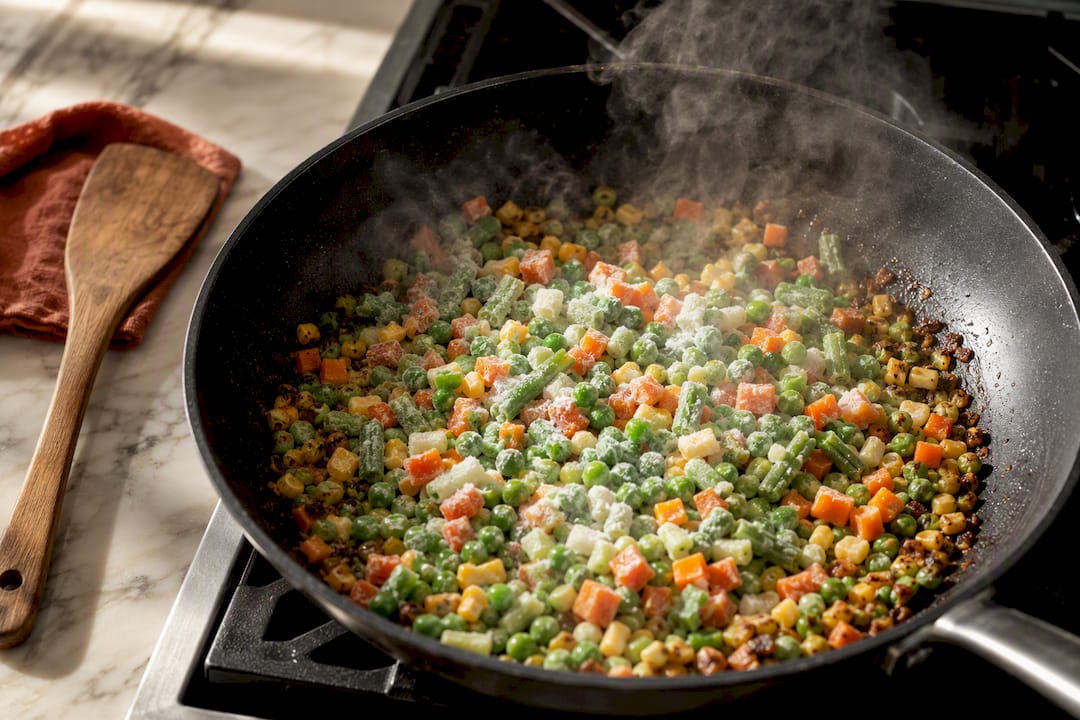
Treat frozen vegetables like they’re already halfway cooked, because they are. They just need heat to warm through and dry out, not a long simmer. Skip the boil, reach for a hot skillet or oven, and finish with something bold like Parmesan, chili crisp, or a squeeze of lemon. That’s the whole method. Everything below builds on it, from technique to real recipes you can make tonight.
TL;DR:
- Most frozen vegetables are partially cooked through blanching, so the goal is to warm and brown them rather than cook them fully.
- Dry heat methods like roasting and air frying are essential to evaporate moisture and achieve browning without steaming.
- Adding seasoning, acid, and umami elements should be layered after drying to enhance flavor, with acids added off the heat to maintain brightness.
- Frozen vegetables are ideal for quick, simple dishes such as roasted sides, stir-fries, soups, casseroles, and breakfast egg dishes when prepared properly.
- Correct technique involves dry heating first, then seasoning, to avoid sogginess and maximize flavor and texture in every cooking method.
Table of Contents
- Best Cooking Methods For Frozen Vegetables Recipes
- How To Make Frozen Vegetables Taste Good With Layered Flavor
- What To Make With Frozen Vegetables: Recipes By Use Case
- How frozen vegetable recipes are tested
- Why I Keep My Freezer Stocked With Vegetables
- Find More Tested Recipes For Weeknight Cooking
- Sources
Best Cooking Methods For Frozen Vegetables Recipes
Most bagged frozen vegetables were blanched in boiling water for a minute or two before freezing, which means they’re already partially cooked. The UNH Cooperative Extension confirms this is standard practice for home and commercial freezing alike. That single fact changes how you should cook them: the goal isn’t to cook the vegetable through, it’s to warm it, drive off the ice crystals turned meltwater, and get some color on the surface before it turns to mush.
The fix is a two-step move. First, hit the vegetables with dry heat alone, no oil, no seasoning, just heat, so the released water evaporates instead of pooling in the pan. Then add fat and seasoning once that moisture is gone. Taste of Home recommends roasting frozen vegetables unseasoned for about 15 minutes before adding oil, which lets the surface dry enough to brown rather than steam.
Here’s how that plays out by method:
- Oven roasting: Preheat to 400 to 450°F, spread vegetables in a single layer on a sheet pan, and give them 10 to 15 minutes dry before tossing with oil and salt, then another 10 to 15 minutes until edges char.
- Air fryer: Run it at 390 to 400°F straight from frozen. Don’t thaw first and don’t crowd the basket. A crowded basket steams instead of crisps, which defeats the entire point of the appliance.
- Skillet sauté: Use a wide pan on medium-high heat with vegetables spread out, not piled. Crowding traps steam the same way an overloaded air fryer basket does.
- Microwave or steam: Fastest option for a side dish, but it won’t brown anything. Use it when speed matters more than texture, then finish under a hot broiler for a minute if you want color.
Frozen vegetables generally need less total cooking time than fresh, since they’re partway there already. The most common mistake is thawing them first, which just adds a puddle of water to your pan before you’ve even started cooking. A close second is salting too early, which pulls out even more liquid right when you’re trying to evaporate it.
Pro Tip: Never season the pan until the vegetables stop hissing and steaming. That sound is water leaving. Once it quiets down, that’s your cue to add oil and salt.
How To Make Frozen Vegetables Taste Good With Layered Flavor
Bland frozen vegetables aren’t a texture problem, they’re a seasoning problem. Most people salt and call it done, then wonder why the dish tastes like a cafeteria tray. The fix is layering: bloom something aromatic in fat, cook the vegetables, hit them with acid off the heat, then finish with a fat or umami element right before serving.
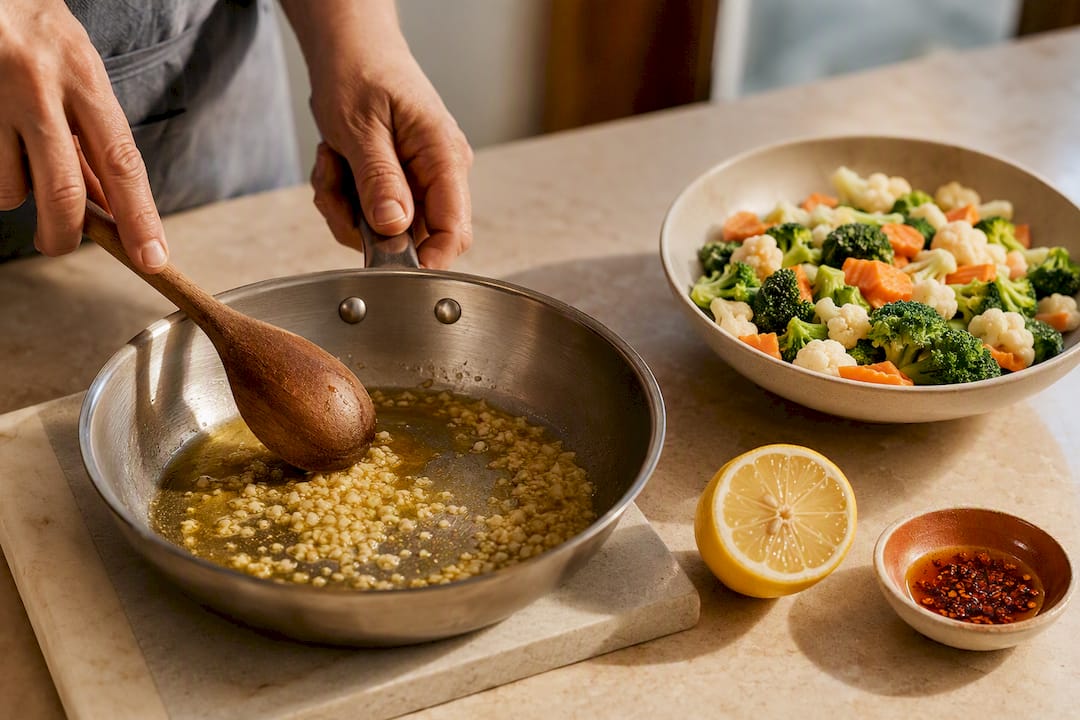
Start with the bloom. Toasting dry spices or minced garlic in hot oil for 30 seconds releases fat-soluble aroma compounds that plain seasoning can’t match, according to RawSpiceBar’s guide to toasting spices. Cumin, smoked paprika, and curry powder all wake up dramatically when they hit warm oil instead of a cold plate.
From there, Food Republic’s rundown on gourmet frozen vegetables points to a handful of combos that consistently work:
- Broccoli or cauliflower with chili crisp and a splash of rice vinegar
- Green beans with Dijon mustard, lemon zest, and toasted almonds
- Corn with lime juice, cotija cheese, and chili powder
- Peas with mint, butter, and flaky salt
- Mixed stir-fry vegetables with soy sauce, ginger, and toasted sesame oil
- Spinach with garlic, nutmeg, and a spoon of cream
- Brussels sprouts with balsamic glaze and Parmesan
Add acid, like lemon juice or vinegar, off the heat so it stays bright instead of cooking flat. Save cheese, fresh herbs, and any garnish for the very last second. A smashed cucumber salad with chili crisp uses the same acid-plus-heat-plus-crunch logic, and it translates directly to a bag of frozen broccoli.
Pro Tip: Keep a jar of chili crisp and a lemon in reach whenever you cook frozen vegetables. Between the two, you can rescue almost anything.
What To Make With Frozen Vegetables: Recipes By Use Case
Once the method and flavor logic click, frozen vegetables stop being a fallback and start being the fastest ingredient in your kitchen. Here’s how to put them to work across five categories of everyday cooking.
1. Quick sides in 15 to 20 minutes
Roasted broccoli with parmesan is the easiest win in this entire list. Spread frozen broccoli florets on a sheet pan at 425°F, roast dry for 12 minutes, then toss with olive oil, garlic, and grated Parmesan and roast 8 more minutes until the edges char. For a hands-off version, the 8-minute air fryer broccoli with Parmesan and panko skips the oven entirely and delivers crunchy panko on top. Mixed vegetables get the same treatment in the air fryer at 390°F, finished with lemon zest and a pinch of flaky salt instead of cheese.
2. Stir-fries and grain bowls
Frozen vegetables belong in the pan during the last three to four minutes of a stir-fry, added straight from the freezer so they don’t dump excess water in early. Build a sauce first, either soy-ginger, honey-garlic, or tahini-lemon, and have it ready before the vegetables hit the pan so nothing overcooks while you’re still mixing. The 20-minute honey garlic chicken stir-fry with crunchy vegetables uses exactly this timing, and it’s a solid template to riff on with whatever frozen mix is in your freezer. Spoon the finished stir-fry over rice, farro, or noodles for a full bowl in under half an hour.
3. Soups and stews
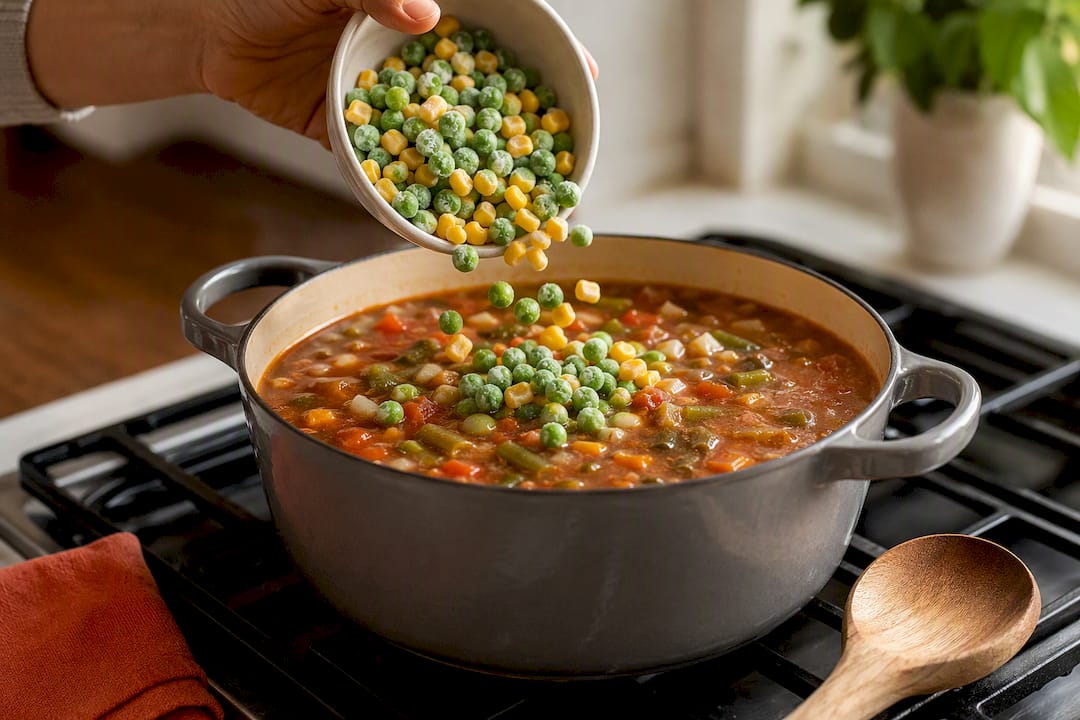
This is where timing matters most, because a simmering pot will turn soft frozen vegetables to baby food if you add them too early. Alex Guarnaschelli’s frozen vegetable minestrone adds frozen peas and corn in the final few minutes, treating them as something to warm through and drain, not something to simmer for an hour. Follow that same logic for any soup: build your broth and aromatics first, then stir in frozen vegetables once everything else is already tender.
4. Casseroles and sheet-pan bakes
Frozen vegetables go straight into a casserole with no thawing required, since the oven’s baking time does the work of both warming and evaporating moisture. Layer them under a cheese topping or mix them into a rice or pasta bake, and give the dish an extra five to ten minutes compared to a fresh-vegetable version to account for the frozen start. Sheet-pan dinners work the same way: scatter frozen vegetables around a protein, roast at 400°F, and expect slightly more liquid released onto the pan than you’d get from fresh, which is normal and mostly evaporates by the time everything’s done.
5. Breakfasts and snacks
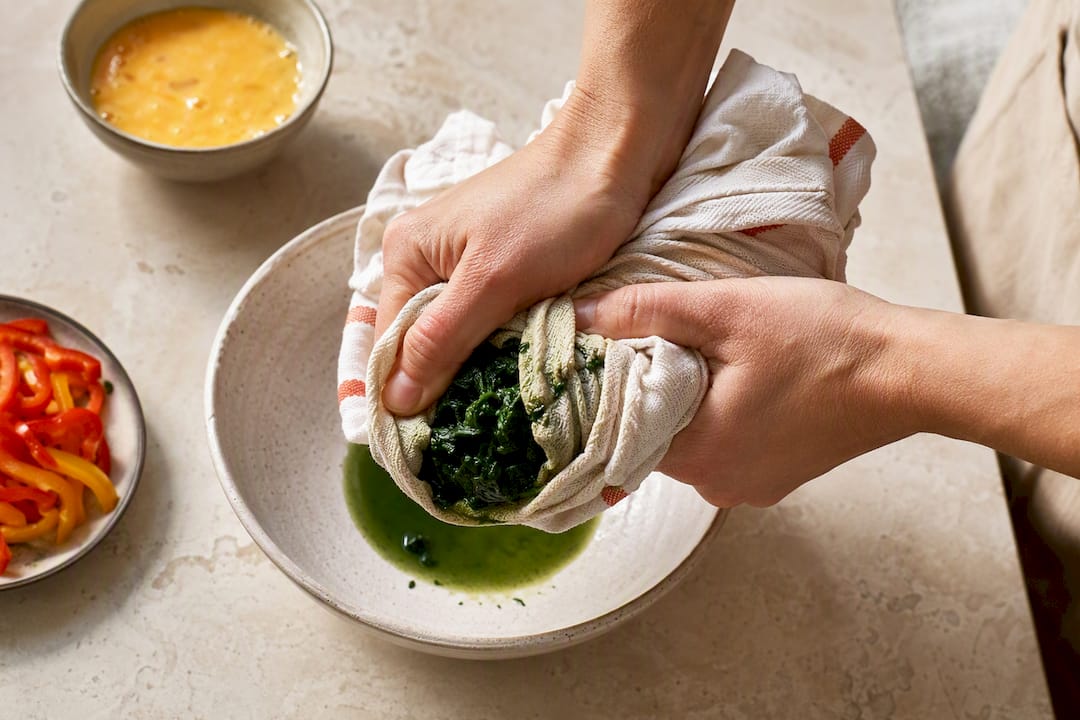
Frozen spinach, peppers, and onions work well in egg muffins and frittatas, but only if you deal with the water first. Microwave chopped frozen spinach for a minute and squeeze it dry in a paper towel before folding it into eggs, or you’ll end up with a soggy muffin bottom. The same drying step applies to savory pancakes or fritters made with shredded frozen zucchini or corn: press out the moisture, then mix into the batter. Skipping this step is the single most common reason frozen-vegetable egg bakes turn out watery instead of set.
How frozen vegetable recipes are tested
Recipes go through texture and timing checks before being published, with difficulty ratings indicating the complexity: easy for simple methods, moderate for multiple steps, and advanced for techniques requiring careful timing or sauce control.
Testing frozen vegetables involves comparing outcomes of a dry roast, a seasoned roast, and cooking straight from frozen without drying to observe the differences.
Frozen broccoli roasted for 12 minutes dry, then another 8 minutes with added olive oil and seasoning, comes out with charred edges and a tender center. Skipping the dry step results in steaming rather than browning, regardless of oven temperature.
That side-by-side is the whole reason the two-step method sits at the center of this article. For more tested options built the same way, browse Forkward’s easy side dishes and roasted vegetables collection.
Why I Keep My Freezer Stocked With Vegetables
My freezer door has held the same three bags for years: broccoli, mixed stir-fry vegetables, and peas. They’re the reason I never have an excuse to skip vegetables on a weeknight, since there’s no chopping, no wilting produce drawer, and no trip to the store. My go-to finish is embarrassingly simple: a hot pan, a hard sear until the water’s gone, then butter, garlic, and whatever citrus is on the counter.
If you take one thing from this article, try the dry-then-season method tonight on whatever’s already in your freezer. It costs nothing extra and it’s the difference between a side dish you tolerate and one you actually want.
— Oloru
Find More Tested Recipes For Weeknight Cooking
Recipes are developed from scratch and tested before publication, so the difficulty ratings reflect the cooking experience, providing reliable guidance for cooks pressed for time.
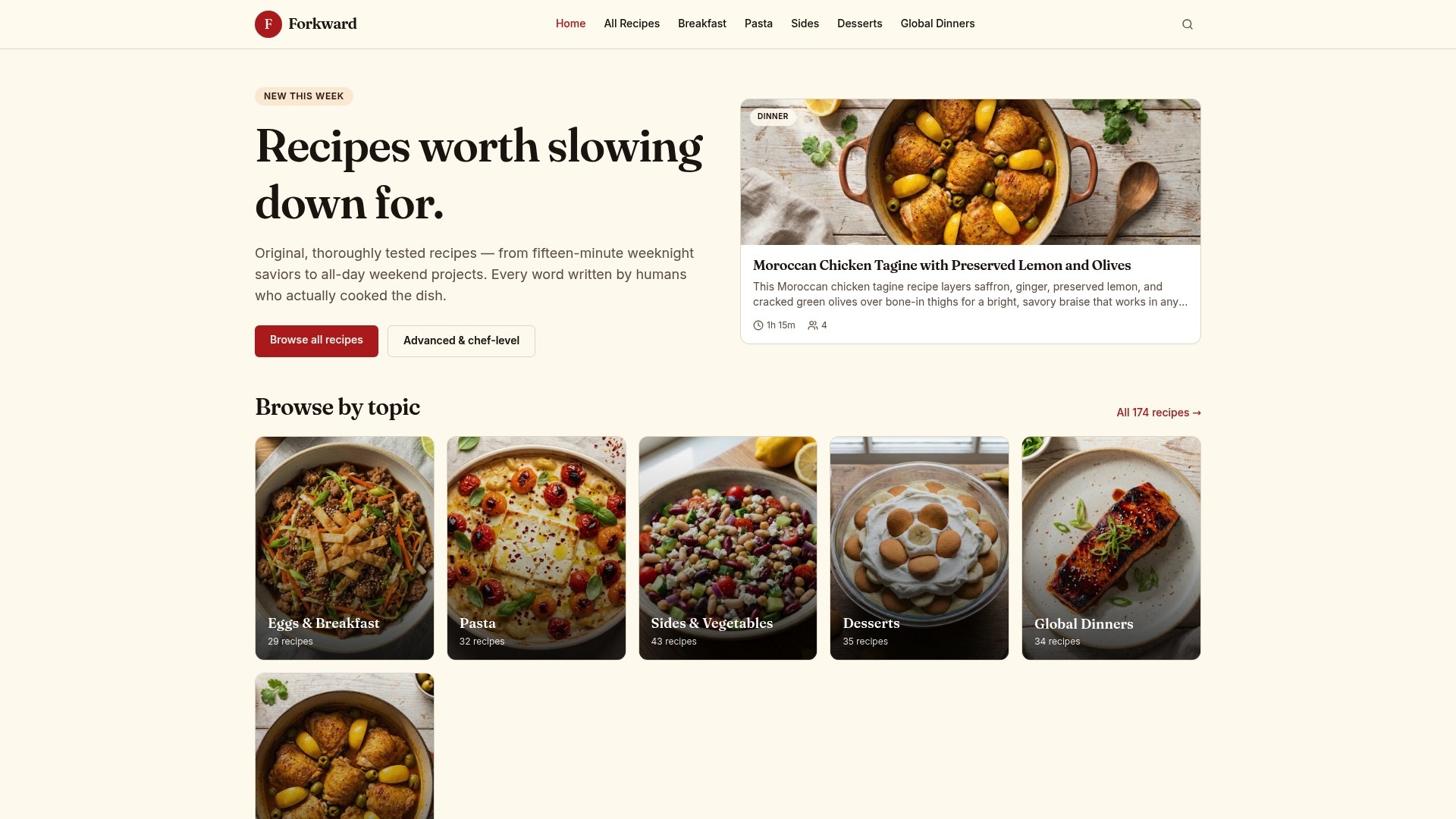
Browse the full recipe collection and filter by difficulty to find something that matches tonight’s energy level, whether that’s a five-ingredient sauté or a weekend project worth the extra effort. If you’re ready to build a full dinner around frozen vegetables, the global weeknight dinners collection has tested combinations that pair them with proteins and grains, so you’re not guessing at ratios or timing on your own.
Sources
- Freezing vegetables (UNH Cooperative Extension)
- Ways to Make Frozen Vegetables Taste Gourmet (Food Republic)
- Frozen Vegetable Minestrone Soup (Food Network, Alex Guarnaschelli)
- How to roast frozen veggies for perfect results every time (Taste of Home)