September 21, 2026
Two Minute Deglazing for Weeknight Cooks: 3 Pan Sauces to Practice
Turn fond into a glossy pan sauce in about two minutes. Follow step by step stove instructions, learn quick fixes, and practice with three easy weeknight...
Two Minute Deglazing for Weeknight Cooks: 3 Pan Sauces to Practice
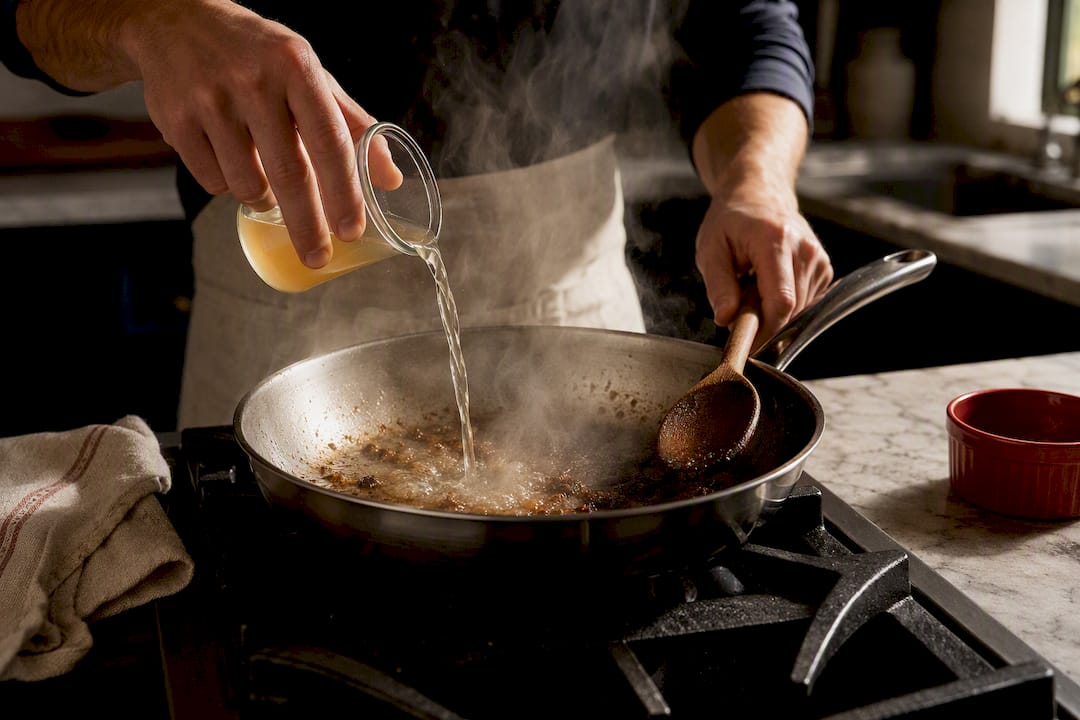
To deglaze a pan, add a splash of liquid, usually wine, stock, or water, to the hot pan right after cooking and scrape up the browned bits stuck to the bottom. Those bits, called fond, dissolve into the liquid and become the base of a pan sauce. Keep the heat moderate, stand back if you’re using wine near an open flame, and you’re done in just a few minutes.
TL;DR:
- Deglazing is most effective within 60 to 120 seconds after adding liquid, when fond visibly dissolves into the pan and flavors are extracted.
- Stainless steel and cast iron pans produce more fond than nonstick surfaces, making them better choices for richer sauces.
- Use moderate heat and add liquids gradually along the pan’s edge to prevent splattering, scorching, or damaging nonstick coatings.
- Alcohol, especially wine, should bubble for a minute or two to burn off raw edges before incorporating into sauces.
- Avoid deglazing on scorched fond or after the pan has cooled significantly, as burnt residue cannot be salvaged and ruins the sauce.
Table of Contents
- What Happens When You Deglaze a Pan
- When to Deglaze and Which Pans Work Best
- How to Deglaze a Pan Step by Step
- Choosing the Right Liquid for Your Sauce
- Protecting Your Pan and Choosing the Right Tools
- Fixing Common Deglazing Mistakes
- Three Pan Sauces to Practice Tonight
- Practicing on Recipes That Actually Test This Technique
- Why Most Advice on Deglazing Overcomplicates It
- Try It on a Real Recipe Tonight
- Sources
- FAQ
What Happens When You Deglaze a Pan
Fond is the crusty brown layer left behind after you sear meat, onions, or vegetables. It forms through the Maillard reaction, the same browning process that gives seared steak and toasted bread their color and depth. That layer is packed with flavor, but it’s stuck to metal, not on your plate, until liquid pulls it loose.
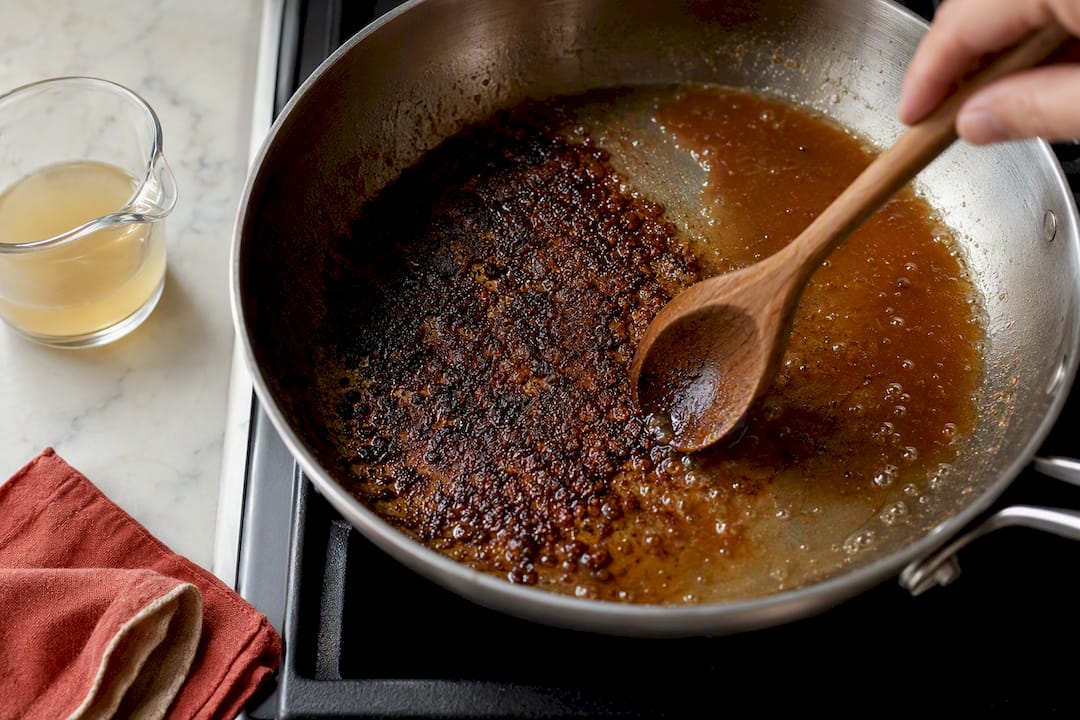
Different liquids grab different parts of that residue. Water lifts the water-soluble compounds. Alcohol and acid go further, pulling out fat-soluble aromas that water leaves behind entirely, which is one reason wine-based deglazes taste richer than a plain-water version.
There’s also a timing window that matters more than most home cooks realize:
- Fond typically dissolves within 60 to 120 seconds of the liquid hitting a hot pan.
- Watch for the speckled bits to visibly disappear into the liquid as your cue.
- Beyond that window, you’re not deglazing anymore. You’re reducing, and the sauce can develop bitterness.
When to Deglaze and Which Pans Work Best
Deglazing isn’t a one-trick move for steak night. Reach for it any time you’ve built up browned residue you don’t want to waste, and that covers more situations than beginners expect.
- Searing chicken thighs, pork chops, or steak in a hot pan.
- Caramelizing onions or mushrooms until they stick and darken.
- Roasting vegetables where the pan bottom picks up sugars and char.
- Browning tomato paste or aromatics before building a braise, which is exactly why it works beyond meat too.
Pan material changes the outcome. Stainless steel and cast iron brown food aggressively and hold onto visible fond, which is why they’re the go-to choice for anyone chasing a serious pan sauce. Nonstick surfaces are built to resist sticking, so they produce less fond to begin with, and they need gentler handling once you add liquid. As for fat, leave a thin coating in the pan for flavor, but spoon off anything beyond a tablespoon or two. Too much fat leaves your sauce greasy instead of silky.
How to Deglaze a Pan Step by Step
This is the part you can follow at the stove without a second glance at your phone. Once your protein or vegetables are done, here’s exactly what to do.
- Move the food off the heat. Transfer it to a plate to rest while the pan stays hot.
- Spoon off excess fat. Leave a thin film behind for flavor; drain anything more.
- Drop the heat slightly. Medium is usually enough. Screaming hot pans splatter and scorch fond fast.
- Add liquid in stages. Start with about 1/4 to 1 cup, adjusting for pan size, and pour it in a bit at a time rather than all at once.
- Scrape with a wooden spoon or silicone spatula. Work the fond loose for roughly 60 to 120 seconds, until the pan bottom looks clean and the liquid looks speckled with flavor, not char.
- Reduce to the thickness you want. A few more minutes of simmering will concentrate the sauce.
- Finish and taste. Swirl in cold butter, fresh herbs, or a splash of cream, then season. Tasting last keeps you from over-salting a sauce that’s still reducing.
Alcohol needs a moment of respect here. When you deglaze with wine, let it bubble for a minute or two to burn off the harsh raw-alcohol edge before it becomes part of your sauce. If you’re working near a gas flame, pour from the side rather than directly over the burner, and keep a lid nearby in case anything flares.
Pro Tip: Pour liquid along the edge of the pan rather than straight down the middle. It spreads heat more evenly and cuts down on the initial splatter and steam burst.
Choosing the Right Liquid for Your Sauce
The liquid you pick isn’t just a filler ingredient. It’s doing real chemical work, and matching it to your protein makes a noticeable difference.
- White wine or light chicken stock for poultry and fish, where you want brightness without overpowering delicate flavor.
- Red wine or beef stock for steak, lamb, or anything rich and fatty that can stand up to bolder flavor.
- Apple cider or hard cider for pork, which pairs naturally with the meat’s sweetness.
- Diluted vinegar, citrus juice, or grape juice plus stock as no-alcohol swaps that still deliver acidity or savory depth.
Here’s the mechanism worth remembering: alcohol and acid work together to pull both water-soluble and fat-soluble flavor compounds out of the fond, while plain stock adds savory depth without the extraction boost alcohol provides. That’s the real gap between a wine pan sauce and a stock-only version, the wine version simply pulls more flavor out of the same crust. If you’re skipping alcohol, lean on a stronger stock and a bigger hit of acid at the end to make up the difference.
Protecting Your Pan and Choosing the Right Tools
The wrong utensil or a badly timed splash of liquid can undo a good deglaze, or damage your cookware in the process.
- Use a wooden spoon or a sturdy metal spatula on stainless steel and cast iron. They can handle scraping against a rougher surface without issue.
- Switch to a silicone spatula on nonstick pans, since metal tools can scratch the coating over time.
- Never dump cold liquid straight into a screaming-hot nonstick pan. Lower the heat first, then add liquid gradually, to avoid warping or shocking the coating.
- Leave enough fat behind to carry flavor into the sauce, but not so much that the finished sauce separates or tastes oily.
Pro Tip: If your nonstick pan barely browns anything, that’s normal. Save your deglazing ambitions for stainless steel or cast iron when you want a sauce with real depth.
Fixing Common Deglazing Mistakes
Burnt fond is the most common disaster, and it’s easy to spot once you know what to look for. Usable fond is deep amber to brown. Burnt fond is black, flaky, and bitter, and no amount of liquid rescues it. If your pan looks scorched rather than browned, start over in a clean pan rather than trying to salvage a bitter sauce.
Other fixes worth knowing:
- Over-reduced or bitter sauce: Add a splash more stock or water, a small squeeze of acid, or a tiny pinch of sugar to balance it out, then strain if it’s gritty.
- Splatter risk: Lower the heat before adding liquid, and pour along the pan’s edge instead of the center.
- Liquid flares near a flame: Pull the pan off the burner briefly, or use a lid to smother it, then return it to lower heat once it settles.
Three Pan Sauces to Practice Tonight
Nothing builds confidence faster than repetition, so here are three simple builds to run through this week.
- Chicken with white wine or stock: Sear chicken breasts or thighs, deglaze with white wine or chicken stock, reduce for a few minutes, then finish with cold butter and a squeeze of lemon.
- Steak with red wine and shallot: After searing steak, sauté a minced shallot in the leftover fat, deglaze with red wine, add fresh thyme, reduce, and swirl in butter at the end.
- Pork or mushroom with cider: Deglaze with apple cider plus a splash of stock, then finish with a spoonful of mustard or a touch of cream for richness.
Practicing on Recipes That Actually Test This Technique
Reading about deglazing only gets you so far. You need a pan, a timer, and a recipe that walks you through it with a result you can judge for yourself. Many cooking sites build recipes from scratch and provide difficulty ratings to indicate if a dish is a fast weeknight option or a slower weekend project.
- The Chicken Marsala recipe walks through building a glossy pan sauce from mushroom fond, a textbook example of the technique in action.
- The French Onion Chicken skillet recipe deglazes with sherry and layers in Gruyère, showing how the same method scales up in complexity.
- Both recipes list clear steps and timing, so you can compare your own results against a tested benchmark instead of guessing.
Why Most Advice on Deglazing Overcomplicates It
Most guides treat deglazing like a delicate French technique reserved for special occasions. It isn’t. It’s a two-minute habit that rescues flavor you’d otherwise scrub down the drain, and the biggest thing holding beginners back isn’t skill, it’s hesitation. People let the pan cool too much before adding liquid, or they panic at the first sizzle and pull it off the heat too early.
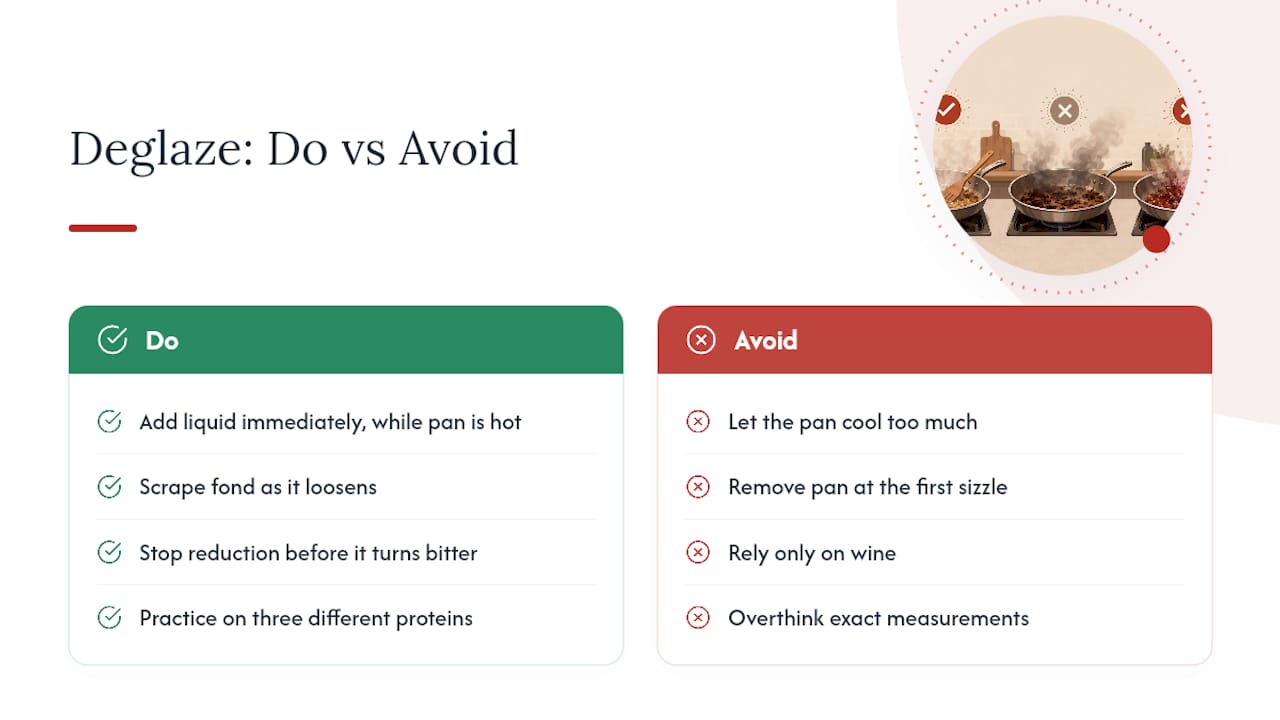
The conventional wisdom also overstates the importance of wine. Wine is great, but a decent stock with a squeeze of lemon does real work too, and it’s more useful for a Tuesday night than a bottle you have to open just for two tablespoons. What actually matters is timing: getting liquid into a hot pan fast, scraping while the fond is still loosening, and stopping the reduction before it turns bitter.
If you take one thing from this, prioritize practice over precision. Do it three times on three different proteins and it stops being a technique you read about and becomes something your hands just know how to do.
— Oloru
Try It on a Real Recipe Tonight
Reading the steps is one thing. Watching fond turn into an actual sauce in your own kitchen is where it clicks. Some recipe websites offer original content with in-house testing and difficulty ratings to help users gauge the actual cooking time required.
Start with the Chicken Marsala recipe if you want a straightforward pan sauce to practice on tonight, or browse the full recipe collection to find something that matches your skill level and your schedule. Either way, you’ll walk away with a sauce you made from scratch, and a technique you’ll actually reach for again next week.
Sources
- The Chemistry of Deglazing — Terumi Morita
- How to Deglaze a Pan for More Flavor | T-fal
- How to deglaze a pan - BBC Food
FAQ
What Liquid Is Best to Deglaze a Pan?
White or red wine works well for extracting rich, fat-soluble flavor, while stock or water are reliable no-alcohol options. The right choice depends on your protein: lighter wine or stock for chicken and fish, bolder wine or beef stock for red meat.
Can I Deglaze a Nonstick Pan?
Yes, but handle it gently. Lower the heat before adding liquid, use a silicone spatula instead of metal, and expect less visible fond than you’d get from stainless steel or cast iron.
How Long Does It Take to Deglaze a Pan?
Most fond dissolves within 60 to 120 seconds of the liquid hitting the hot pan. Watch for the browned speckles to disappear, that’s your cue to stop scraping and start reducing.
What if My Fond Is Burnt Instead of Browned?
Burnt fond turns black and bitter, and no amount of liquid fixes that. Start over in a clean pan rather than trying to build a sauce on scorched residue.
Does Forkwardkitchen Have Recipes That Use Deglazing?
Yes. The Chicken Marsala and French Onion Chicken skillet recipes both walk through building a pan sauce from scratch, with honest difficulty ratings so you know what you’re taking on.